Kirjojen hintavertailu. Mukana 11 627 220 kirjaa ja 12 kauppaa.

Kirjahaku

Etsi kirjoja tekijän nimen, kirjan nimen tai ISBN:n perusteella.

1000 tulosta hakusanalla Frederick Locker

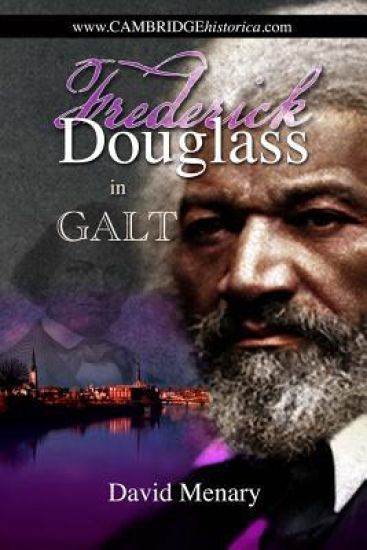
Frederick Douglass in Galt

Frederick Douglass in Galt

David Menary

Lulu.com
2014
nidottu
Before the American Civil War, and almost a decade before Confederation, abolitionist and former slave Frederick Douglass visited Galt (present-day Cambridge, Ontario), Canada West. It was mid-December 1857, and he lectured about "The Brotherhood of Nations." Douglass was a familiar figure on the lecture circuit, having helped many fugitive slaves flee to Canada through the Underground Railroad. Although Douglass had been a close associate of radical abolitionist John Brown, he also developed a friendship with President Abraham Lincoln that lasted until Lincoln's assassination by John Wilkes Booth. The lecture series that winter in Galt included other well-known speakers, but all other speeches were free to the residents of the town, except for the Douglass lecture, for which there was a 12-and-a-half cent admission charge. Proceeds helped defray travel costs for Douglass, and fund his anti-slavery newspaper in Rochester, N.Y. When he died in 1895, he was one of the best-known men in America.
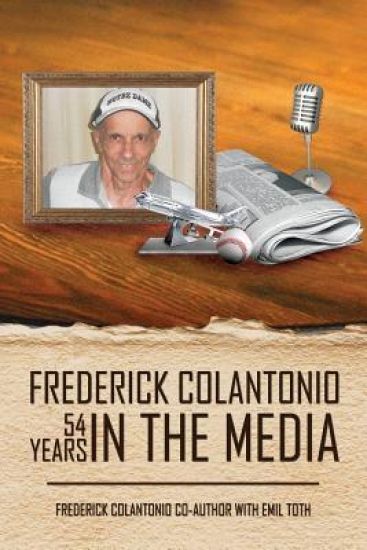
Frederick Colantonio 54 Years in the Media

Frederick Colantonio 54 Years in the Media

Frederick A. Colantonio; Emil Toth

Lulu.com
2015
nidottu
This inspirational biography reveals the persecution of Fred Colantonio as a child, boy and man. The reason for his trials was being small in stature. His earliest memories of school were taunts, bruises and bullies. Fred stood four feet seven inches tall and weighed 75 pounds upon entering St. Benedict's High School. His first day in high school a nun asked him, "Why are you here. You should be in grade school." Fred replied, "Sister, I've had ten years of grade school. I've had more than enough to last a lifetime." When he could no longer contend with the high school bullies, he sought help from Sister Superior Mary Patricuis. Because of her grace and understanding he escaped further persecution, when she warned the bullies there would be consequences if they persisted in bullying Fred. In adulthood, Fred turned his life around by utilizing a positive mental attitude at work and in his relationships.
Narrative of the Life of Frederick Douglass, an American Slave
Written by Douglass himself, this is his treatise against slavery that expresses his hope for what life could be. Published in 1845, the text played a role in the Civil War by bolstering the abolitionist cause and promoting early African American intellectualism.In Douglass's time, slavery was viewed as a civilizing institution that maintained order. Douglass refuted these false notions with accounts of the inhumane treatment slaves frequently endured. He showed that slavery was keeping people in subservient roles, and in the worse cases slaves were treated in terrible ways that were far from civilized.Douglass argued slavery was not just dehumanizing to the slave, but also corrupted the slave owners: "Slavery proved as injurious to her as it did to me. When I went there, she was a pious, warm, and tender-hearted woman. Under its influence, the tender heart became stone, and the lamblike disposition gave way to one of tiger-like fierceness."It was the weight of such sentiments that made Douglass's text so influential to American history. This text is frequently required reading for students and allows us to better understand the full repercussions of slavery.
Frederick Douglass' Dream

Frederick Douglass' Dream

Lise Marlowe

Lulu.com
2016
nidottu
Camp William Penn in La Mott, Pennsylvania was the first official federal training camp for African American soldiers in the Civil War. Over 11,000 men, 40% of them former slaves, walked through the gates of Camp William Penn. Frederick Douglass was the main recruiter of the camp. The camp was on the land of the infamous abolitionist and women's rights suffragist, Lucretia Mott.
Frederick Scaates Towle
This work has been selected by scholars as being culturally important, and is part of the knowledge base of civilization as we know it. This work was reproduced from the original artifact, and remains as true to the original work as possible. Therefore, you will see the original copyright references, library stamps (as most of these works have been housed in our most important libraries around the world), and other notations in the work.This work is in the public domain in the United States of America, and possibly other nations. Within the United States, you may freely copy and distribute this work, as no entity (individual or corporate) has a copyright on the body of the work.As a reproduction of a historical artifact, this work may contain missing or blurred pages, poor pictures, errant marks, etc. Scholars believe, and we concur, that this work is important enough to be preserved, reproduced, and made generally available to the public. We appreciate your support of the preservation process, and thank you for being an important part of keeping this knowledge alive and relevant.
Speculation; a Comedy, in Five Acts. As Performed at the Theatre-Royal, Covent-Garden. Written by Frederick Reynolds. Second Edition
The 18th century was a wealth of knowledge, exploration and rapidly growing technology and expanding record-keeping made possible by advances in the printing press. In its determination to preserve the century of revolution, Gale initiated a revolution of its own: digitization of epic proportions to preserve these invaluable works in the largest archive of its kind. Now for the first time these high-quality digital copies of original 18th century manuscripts are available in print, making them highly accessible to libraries, undergraduate students, and independent scholars.Western literary study flows out of eighteenth-century works by Alexander Pope, Daniel Defoe, Henry Fielding, Frances Burney, Denis Diderot, Johann Gottfried Herder, Johann Wolfgang von Goethe, and others. Experience the birth of the modern novel, or compare the development of language using dictionaries and grammar discourses. ++++The below data was compiled from various identification fields in the bibliographic record of this title. This data is provided as an additional tool in helping to insure edition identification: ++++British LibraryT112298With two final leaves of epilogue and advertisements.London: printed for T. N. Longman, 1796. 4],76, 4]p.; 8
The Deaf Lover, a Farce in two Acts; by Frederick Pilon. As Performed at the Theatres Royal. The Fourth Edition
The 18th century was a wealth of knowledge, exploration and rapidly growing technology and expanding record-keeping made possible by advances in the printing press. In its determination to preserve the century of revolution, Gale initiated a revolution of its own: digitization of epic proportions to preserve these invaluable works in the largest archive of its kind. Now for the first time these high-quality digital copies of original 18th century manuscripts are available in print, making them highly accessible to libraries, undergraduate students, and independent scholars.Western literary study flows out of eighteenth-century works by Alexander Pope, Daniel Defoe, Henry Fielding, Frances Burney, Denis Diderot, Johann Gottfried Herder, Johann Wolfgang von Goethe, and others. Experience the birth of the modern novel, or compare the development of language using dictionaries and grammar discourses. ++++The below data was compiled from various identification fields in the bibliographic record of this title. This data is provided as an additional tool in helping to insure edition identification: ++++British LibraryT045399With an advertisement leaf following the titlepage.London: printed (by assignment) for J. Barker, 1793. 51, 1]p.; 8
A Practical Essay on the Most Perfect Cultivation and Most Useful Application of Buck Wheat. By Frederick August Ludowig Buchholtz, Commonly Called De Salis; a Prussian Gentleman, ... now a Prisoner in the Castle of York
The 18th century was a wealth of knowledge, exploration and rapidly growing technology and expanding record-keeping made possible by advances in the printing press. In its determination to preserve the century of revolution, Gale initiated a revolution of its own: digitization of epic proportions to preserve these invaluable works in the largest archive of its kind. Now for the first time these high-quality digital copies of original 18th century manuscripts are available in print, making them highly accessible to libraries, undergraduate students, and independent scholars.Medical theory and practice of the 1700s developed rapidly, as is evidenced by the extensive collection, which includes descriptions of diseases, their conditions, and treatments. Books on science and technology, agriculture, military technology, natural philosophy, even cookbooks, are all contained here.++++The below data was compiled from various identification fields in the bibliographic record of this title. This data is provided as an additional tool in helping to insure edition identification: ++++Bodleian Library (Oxford)T193571P.vii misnumbered viii.York: printed by E. and R. Peck, 1797. viii i.e.vii], 1],16, vi, 2]p.; 8
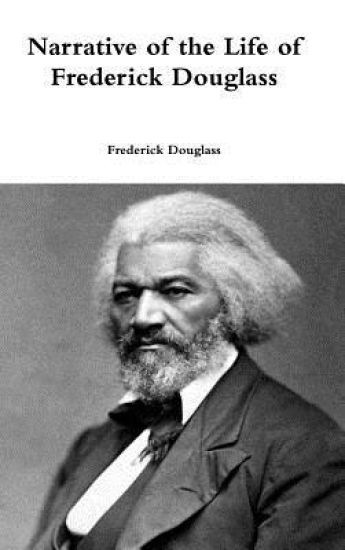
Narrative of the Life of Frederick Douglass
Of the many captivity stories or 'slave narratives' that emerged in the first half of the nineteenth century, the Narrative of the Life of Frederick Douglass is widely considered to be the most important. The author, known for his eloquence, brings the same mastery of the English language to his memoir. His book describes the events of his life and is considered to be one of the most influential pieces of literature to fuel the abolitionist movement of the early 19th century in the United States.
Narrative of the Life of Frederick Douglass
Of the many captivity stories or 'slave narratives' that emerged in the first half of the nineteenth century, the Narrative of the Life of Frederick Douglass is widely considered to be the most important. The author, known for his eloquence, brings the same mastery of the English language to his memoir. His book describes the events of his life and is considered to be one of the most influential pieces of literature to fuel the abolitionist movement of the early 19th century in the United States.
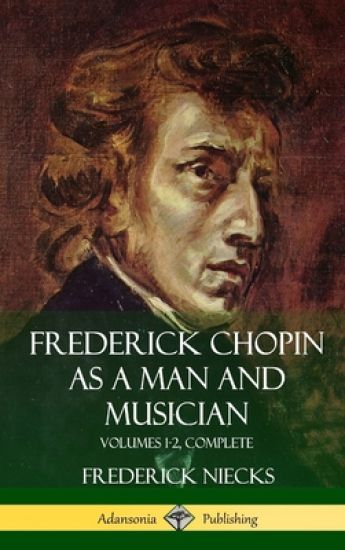
Frederick Chopin as a Man and Musician
Frederick Niecks' meticulous biography of Chopin is praised to this day as one of the finest accounts of the legendary composer's life ever written. In Niecks' painstakingly assembled work, we behold a chronologically arranged narrative of the upbringing, rise to fame, prominence, illness and death of Frederick Chopin. His tumultuous, strained relationship with French author George Sand is recounted, with the regular quotation of correspondences between the couple and others included in abundance. Frederick Chopin as a Man and Musician is a meticulous and voluminous work, perfect for fans and students of the composer who wish to gain intimate insights into Chopin's personal nature, habits, friends, family and the world in which he lived. His travels and struggle with a disease generally suspected to be tuberculosis, are much discussed. Tragically we hear accounts of the mental anguish suffered by the composer, as he grappled with both popular recognition and his worsening respiratory condition.
Frederick Chopin as a Man and Musician: Volumes 1-2, Complete (With illustrations and musical staves)
Frederick Niecks' meticulous biography of Chopin is praised to this day as one of the finest accounts of the legendary composer's life ever written.In Niecks' painstakingly assembled work, we behold a chronologically arranged narrative of the upbringing, rise to fame, prominence, illness and death of Frederick Chopin. His tumultuous, strained relationship with French author George Sand is recounted, with the regular quotation of correspondences between the couple and others included in abundance. Frederick Chopin as a Man and Musician is a meticulous and voluminous work, perfect for fans and students of the composer who wish to gain intimate insights into Chopin's personal nature, habits, friends, family and the world in which he lived. His travels and struggle with a disease generally suspected to be tuberculosis, are much discussed. Tragically we hear accounts of the mental anguish suffered by the composer, as he grappled with both popular recognition and his worsening respiratory condition.
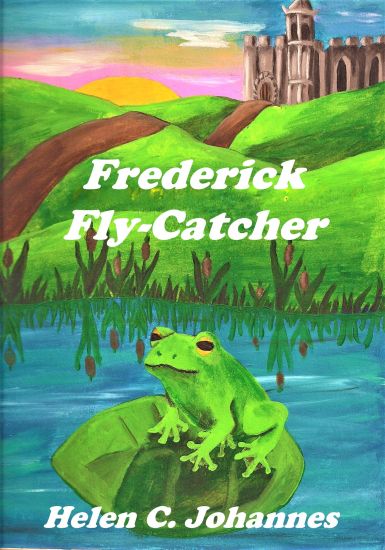
Frederick Fly-Catcher

Frederick Fly-Catcher

Helen C Johannes

Helen C. Johannes
2020
pokkari
Frederick the frog isn't looking for adventure. His life in the family pond--hanging out and catching flies--is perfect. Or it would be if a bully wasn't harassing the youngest frogs. To defend them, Frederick accepts a fly-catching challenge, but what he catches isn't an insect. It's a magic ring, and Frederick has swallowed it Whenever he burps or coughs, something terrifying happens to the pond. "Frogs shouldn't have anything to do with human things," says wise Uncle Ben, so to protect his family, Frederick must leave the only world he knows. The world beyond the pond is frightening, but rather than hide or mope, Frederick sets out to get rid of this dangerous human thing. His only hope is to find the small human who tossed the ring into the pond, the boy chased by big men and bigger horses. The boy is in trouble, too, but how can Frederick, one little frog, save a human, much less the pond from an evil sorcerer? A middle grade chapter book, 16 chapters, approximately 18,000 words.
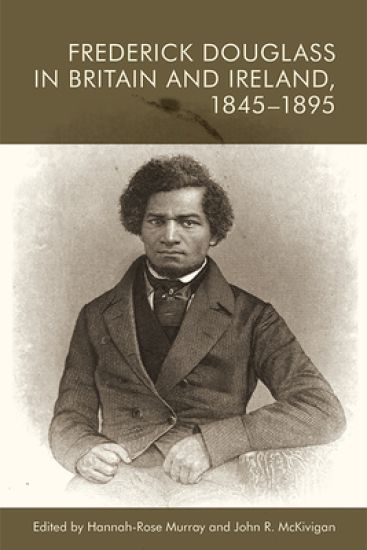
Frederick Douglass in Britain and Ireland, 1845-1895
The first and only anthology dedicated to Douglass's three journeys to Britain, covering oratory, print and visual culture The only monograph and anthology to focus on Frederick Douglass's relationship with Britain through unexplored oratory and print culture Provides a monograph-length introduction focusing on Douglass' experiences in the British Isles, from his first visit in 1845, to 1859 and 1886 (the latter two visits have received scant attention from scholars in comparison to his first visit in 1845) Provides specialist and general audiences with political and cultural insights into Frederick Douglass' transatlantic visits Presents speeches, letters and poetry in relation to Douglass' visit (including his own testimony) that have never been published before Examines Douglass' impact on British culture with a section on songs, images and poetry written in response to his lectures Radically updates Douglass' speaking locations in Britain, which is printed alongside a visual map of these locations Provides several images new to scholarship (for instance, the ticket to one of Douglass' lectures in Cambridgeshire) This critical edition documents Frederick Douglass's relationship with Britain through unexplored oratory and print culture. With an unprecedented and comprehensive 60,000-word introduction that places the speeches, letters, poetry and images printed here into context, the sources provide extraordinary insight into the myriad performative techniques Douglass used to win support for the causes of emancipation and human rights. Editors examine how Douglass employed various media letters, speeches, interviews and his autobiographies to convince the transatlantic public not only that his works were worth reading and his voice worth hearing, but also that the fight against racism would continue after his death.