Le collier en or de Madame Richard a disparu Heureusement, Gabriel le D tective m ne l'enqu te... Indices, suspects, Gabriel le D tective trouvera-t-il le voleur ?Offrez le bonheur de lire votre enfant avec Les Aventures de mon pr nom, des livres personnalis s son pr nom, illustr s en p te modeler, lire avant de dormir.Choisissez parmi les 14 th mes des Aventures de mon pr nom (pirate, astronaute, cowboy, ballerine...), et personnalisez le livre au pr nom de votre enfant. En quelques jours, votre livre sera disponible la commande
Bref roman m connu, Gabriel Lambert pourrait au premier abord passer pour une simple illustration de l'adage: l'habit ne fait pas le moine. En effet, personnage veule, l che et trop dou , Gabriel, malgr toutes ses pr tentions, ne parviendra jamais faire croire sa noblesse, trahi encore davantage par sa fa on d' tre que par les preuves tangibles de ses modestes origines. Le roman s'impose ainsi comme un questionnement sur la noblesse: peut-elle s'acqu rir ou est-elle inn e en chaque individu? Gabriel, qui veut se faire passer pour noble, est l che jusqu' son pseudo-suicide, rat , dont personne n'est dupe. Toutefois, Dumas d passe largement cette question pour en poser d'autres, plus cruciales: celle de la condition des prisonniers et celle de la peine de mort. Une vie inf me (la bagne ou le d shonneur) vaut-elle mieux que la mort? Rien n'est moins s r dans ce roman o la honte et les remords rongent le menteur. Il est aussi question de justice: Gabriel est puni et choisit lui-m me cette punition en refusant l' chafaud.
When what you want the most could mean the death of you... Gabriel Loveman is a born genius who must choose between the opportunity of a lifetime, his responsibility to his family and his devotion to the woman he loves. One path will lead to a bright future and a broken heart. The other path will lead to love and a broken spirit. As he struggles over the tortuous decision, Gabriel finds himself in the throes of a threat against his life. In a world where being black can be a death sentence, finding a way to stay alive as he determines his fate will take much more than courage and determination. Gabriel will need a miracle. Taking place in an era when the remnants of slavery rule the day, Gabriel's Balloon reveals the depth of the agonizing dilemma of a boy wonder entering into manhood and yearning for a future beyond the drudgery of the Deep South. A coming of age that unfolds on a plantation plagued with the horrors of racism and family secrets that, if ever revealed, may make the difference between life and death, this novel is a reminder of the timeliness of love and hate. Gabriel's plight will break open the hearts of readers who will find themselves hoping that he decides to chase after his dreams, as page by page, they come to understand why he has the very best of reasons to let them go. Indeed, inside Gabriel's Balloon, hope floats but only when there is enough air. Hope Michelle Ayers currently lives in Atlanta, Georgia and Washington, D.C., where she works as an attorney and advisor for the U.S. Department of Homeland Security/FEMA. In addition to her first novel, Gabriel's Balloon, she has authored two collections of poetry, Love Defined and Acquaintances, along with a series of children's books entitled The Chelsea Tales. A graduate of Alabama State University (Bachelor of Arts) and the University of Alabama (Juris Doctorate), she is the CEO of Hope & Air, Inc., a lifelong supporter of the Boys and Girls Clubs of America and an active member of Delta Sigma Theta Sorority, Inc., ASU National Alumni Association and the Alabama State Bar Association.
What would you do if an angel came to live with you in your hour of need? In this literary fantasy that readers describe as "GLORIOUS" and "UNIQUE," the angel Gabriel writes his memoir to recount his early spiritual formation on Earth with the Hanson family. Sent in 2015 by the Trinity to the Philadelphia suburbs as a guardian for a grieving boy, Gabriel, himself, grows up before traveling back through the ages to announce Christ's birth. "Mixing the lighthearted with the dire, this family story makes for a brief though nuanced look at the human condition." Kirkus Reviews
The struggle of the Métis of the Saskatchewan River against the government of Canada culminated in the Riel Rebellion of 1885—an event of central importance in shaping almost all of the key polarities of Canadian history. If Riel provided the intellectual inspiration for the Rebellion, it was Gabriel Dumont who provided its strategy, and arguably its soul. Dumont, a leading figure in the Métis society of hunters along the South Saskatchewan, had been president of the short-lived local government, and became "Adjutant General of the Métis people" when a Provisional Government was declared in 1885. After the defeat of the Rebellion by the Canadian militia Dumont lived for several years in the United States, and was for some time a performer in Buffalo Bill's Wild West Show. In his last years he returned to his old home near Batoche (site of the final defeat of the Métis forces in 1885), where he died in 1906. George Woodcock's biography of Dumont displays the author's remarkable gift for evocative narration and description. In the wake of its 1975 publication Canadians had a new reference point in the way they thought of the Riel Rebellion; alongside the spirituality and impulsiveness of Riel was the calm commitment of Dumont, whose intuitive feel for the land and for the moods of his people have now become part of the Canadian historical imagination. For this re-issue of Woodcock's classic biography noted historian J.R. Miller has written a substantial introduction setting Gabriel Dumont in the context of Canadian history as we now understand it, in the context of Canadian historiography, and in the context of Woodcock's other work. As Miller convincingly argues, the biography is richly deserving of a lasting place in Canada's historical literature.
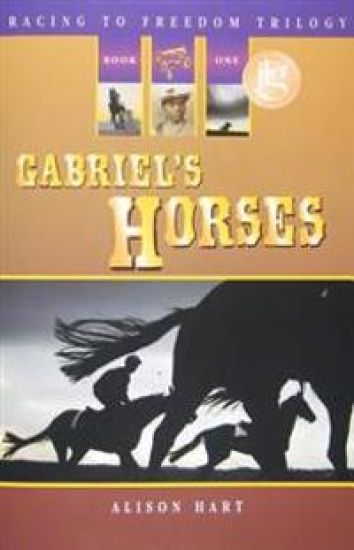
In 1864 Kentucky, an enslaved boy dares to pursue his dream of becoming a jockey. Twelve-year-old Gabriel loves to help his father--one of the best horse trainers in Kentucky--care for the thoroughbred racehorses on Master Giles's farm until the violence of war disrupts their familiar daily routine. When Gabriel's father enlists in a Colored Battalion, Gabriel is both proud and worried. But his father's departure brings the arrival of Mr. Newcastle, a white horse trainer with harsh, cruel methods for handling both horses and people. Now it is up to Gabriel to protect the horses he loves from Mr. Newcastle and keep them safely out of the clutches of Confederate raiders. In this first book in the Racing to Freedom trilogy, Alison Hart explores the complex relationships of the Civil War in a gripping work of historical fiction. The result is a gripping story that vividly brings to life the danger and drama of a time when war and issues of race and freedom divided the country. Background historical material and photos are included.
Twelve-year-old Gabriel is too young to join the fifth U.S. Colored Calvary of the Union Army, his father's regiment, as a soldier in the Civil War. He finds a job as personal groom to Champion, the unruly horse that belongs to Colonel Waite, the white commander. The Calvary receives orders to join white regiments in an attack on the Virginia salt works, so Gabriel gets ahold of a horse and a uniform and joins the troops. When his father and Colonel Waite are not among the weary and wounded who return from battle, Gabriel mounts Champion and rides to the battlefield in search of them. In the final book of the Racing to Freedom trilogy, Alison Hart continues to explore the complex relationships of the Civil War. The result is a gripping story that vividly brings to life the danger and drama of a time when war and issues of race and freedom divided the country. Background historical material, photos, and suggestions for further reading are included.
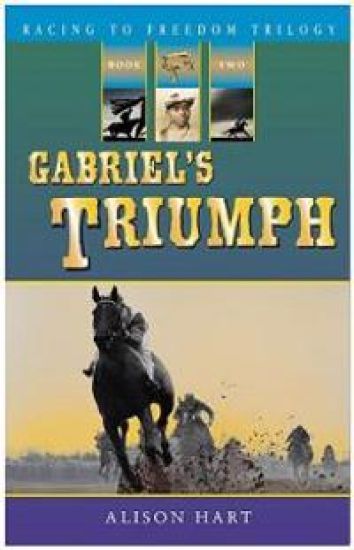
Recently freed from slavery, Gabriel is burning up the horse track as jockey and stacking up wins for his former master. When Mister Giles asks him to ride Aristo, a powerful but unpredictable horse, in the prestigious Saratoga Chase, Gabriel jumps at the chance to compete against some of the greatest jockeys in the business. But as he begins the journey to Saratoga, he finds that high-stakes horse racing can be a nasty business as he works to keep Aristo safe and fend off horse poachers and jealous jockeys. Gabriel also learns the difficult lesson that being freed is not the same as being free. More than ever, Gabriel misses his father, who is fighting with the Union Army. Who else can he trust? In the second book of the Racing to Freedom trilogy, Alison Hart continues to explore the complex relationships of the Civil War. The result is a gripping story that vividly brings to life the danger and drama of a time when war and issues of race and freedom divided the country. Background historical material and photos are included.
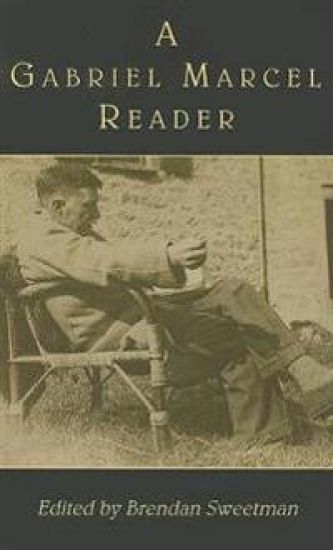
French philosopher and dramatist, Gabriel Marcel (1888-1973), who belonged to the movement of French existentialism, is one of the most insightful thinkers of the twentieth century. Unlike some of his contemporaries who took existentialism in an atheistic, even nihilistic, direction, Marcel approaches human existence from a theistic perspective, and gives priority to the themes of hope, fidelity and faith in the human search for meaning in a challenging world. Author of seventeen major works of philosophy, Marcel also wrote more than thirty plays, including tragedies and comedies, many of which were staged in theaters in Paris, Germany, Belgium, England, Ireland and the United States. Marcel regarded dramatic art as having priority in both a chronological and an intellectual sense. His plays deal with challenging experiences and issues of contention that arise between people, especially families, in day-to-day life. Describing his own style as “post-Ibsen,” because it involves a sense of realism, depictions of passion and sincerity, and a sense of moral duty, Marcel’s plays rarely provide complete or settled answers to the difficulties they confront, but suggest possibilities both of interpretation and with regard to the choices on life’s journey. One of his aims is to allow audiences (and readers) not only to arrive at their own conclusions, but to feel the echo of the dramatic action in their own lives, and so provoke both insight and critical reflection on the dramas of existence. The plays in this new volume were written early in his career, and were published together under the title Le Seuil invisible (The Invisible Threshold) in 1913. The first play, Grace, explores the theme of religious conversion. The drama depicts a crisis between characters of genuine depth and sincerity, who are struggling with different interpretations of shared experiences. After a serious illness, Gerard, one of the main protagonists, undergoes a religious conversion, an experience which allows of two different and irreconcilable interpretations. The first is the interpretation of the scientific materialist; the second regards Gerard’s illness not as a cause but as an occasion to exercise the subject’s creative freedom. The play also raises the question of grace: the role that God may play in the choice of faith. Marcel asks us to consider the sincerity of our choices, and those attitudes and temptations that play a role in our motivations, in a profound dramatization of the experience of the religious as it emerges through challenging life situations. Similar themes are addressed but developed differently in the second play, The Sandcastle. Through the character of Moirans, this drama explores the confrontation between one’s beliefs and their consequences when faced with challenging family and social circumstances. The play asks us to think about what happens when our beliefs and theories, especially about religion, morality and politics, come up against situations in life that can test them. Marcel raises issues of moral character, commitment and sincerity, and introduces the role doubt plays in the way we form and hold our convictions. The springboard for the unfolding of the drama is Moirans’ egotism, and his growing realization of the difference between accepting Christianity in an intellectual and cultural sense, and a Christianity that is lived. This predicament then provokes his daughter, Clarisse, into some profound soul-searching of her own. Drama of this profundity offers audiences and readers a mirror that reflects their own problems, which leads to further awareness and understanding. Marcel’s dramatic works deal with the difficulties in acknowledging many of life’s most profound experiences, in reacting to them in an authentic way, and often illustrates our failures with regard to them. One of the major themes of both his dramatic and philosophical work is that life’s most profound, fulfilling experiences are being compromised more than ever in what he describes as the modern, broken world (le monde cassé), one unfortunately characterized by alienation, loss of meaning and feelings of despair. These new plays of Marcel’s, here translated into English for the first time, will appeal to all who are interested in the role of grace in everyday life, in the influence of culture on belief, the relationship between faith and reason, the choice of faith in a secular world, and the struggle between inauthentic and authentic existence. Marcel raises profound questions about these and related topics, but does not offer final answers. In his plays, he leaves that to us.
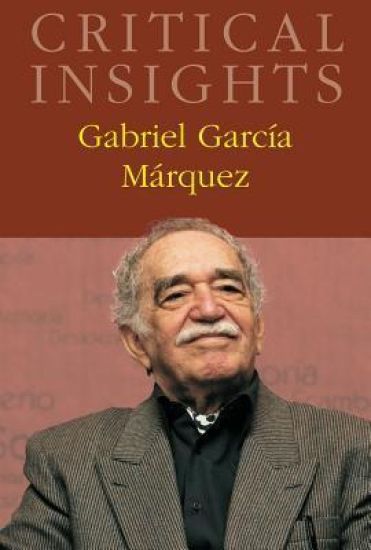
This title presents in-depth critical discussions of his life and works. Volume editor Ilan Stavans accurately point out that Gabriel Garcia Marquez, winner of the Nobel Prize for Literature in 1982, 'is credited for almost single-handedly reinventing Latin America'. Garcia Marquez, a trained journalist, made his indelible mark on literature with the 1967 publication of ""One Hundred Years of Solitude"" which heralded what was later dubbed ""El Boom"", the Latin American literary movement that came to define Latin American literature. Edited and introduced by Ilan Stavans, Lewis-Sebring Professor in Latin American and Latino Culture and Five College-Fortieth Anniversary Professor at Amherst College, this volume collects varying perspectives on Garcia Marquez, his work and its lasting importance. Stavans' introduction places Garcia Marquez squarely in the Latin American literary culture noting that 'the majority of people in Latin America approach Garcia Marquez with utter reverence'. Stavans' introduction is followed by a brief biography after which Caitlin Roper, the managing editor of ""The Paris Review"", draws on ""The Paris Review"" interview with Garcia Marquez in highlighting some of the writer's achievements. The critical contexts section of this volume features original essays by Amy Sickels, Amy Green, and John Cussen as well as a contribution from volume editor Stavans. Sickels offers a timeline of Garcia Marquez's achievements and considers his influence on a younger generation of writers. Stavans' contribution combines biographical information with a broad overview of how ""One Hundred Years"" was received by the literary world-placing that volume at the center of Garcia Marquez's body of work. Amy Green also considers ""One Hundred Years"", with her focus being the mystical character of Remedios. John Cussen finishes this section with a comparison between Garcia Marquez's travelogue ""90 dias"" and ""Don Quixote de La Mancha"". The section of republished essays brings together a variety of perspectives on Garcia Marquez's major works. Seasoned Garcia Marquez scholar Gene H. Bell-Villada considers Garcia Marquez's shorter works after which Moylan C. Mills and Enrique Gronlund offer a brief history of how the concept of Magical Realism evolved. Deborah Cohn places the influence of William Faulkner on Garcia Marquez alongside those of James Joyce and Virginia Wolf. Cohn's essay is followed by Rosa Simas' examination of patterns of time in One Hundred Years of Solitude through various perspectives. Brian Conniff concentrates his attention in Jose Arcadio Buendia and One Hundred Years while Stephen M. Hart shifts the attention to ""Chronicle of a Death Foretold"". Michael Palencia-Roth, another scholar well-versed in Garcia Marquez's works, considers intertextuality in The Autumn of the Patriarch while Lourdes Elena Morales-Gudmundsson concentrates on the concepts of justice and human rights expounded in the Judeo-Christian tradition as adapted into the novella ""No One Writes to the Colonel"" and ""The Autumn of the Patriarch"". M. Keith Booker argues for a deeper reading of ""Love in the Time of Cholera"" and compares the novel to Madame Bovary and Lolita. In the volume's concluding essay, Efrain Kristal suggests that Garcia Marquez, like many memoirists, sanitizes his past and ultimately comes to the conclusion that Garcia Marquez remains difficult to pin down. Each essay is 5,000 words in length, and all essays conclude with a list of 'Works Cited', along with endnotes. Finally, the volume's appendixes offer a section of useful reference resources.
"Gabriel Zaid . . . is a jewel of Latin American letters, which is no small thing to be. Read him--you'll see."--Paul BermanThe first appearance in English of the poetry of Gabriel Zaid, this book comprises forty-two poems (in both English and the original Spanish), translated by a variety of English-speaking poets. Renowned in Mexico as one of his country's leading writers, Zaid has published two books in English, "So Many Books" and "The Secret of Fame" (both from Paul Dry Books).Late AgainTranslated by Eliot Weinberger"It's so hard to coordinate: one hand over your headlike a halothe otherperpendicularto your navel.""Nevertheless it's a universal law: people begin soapingat their bellieswhile other worldsturn around in their heads.""Think with your stomach, said the happy Buddha.But weruminate with our heads."Gabriel Zaid's poetry, essays, social and cultural criticism, and business writings have been widely published throughout the Spanish-speaking world. He lives in Mexico City, Mexico, with the artist Basia Batorska, her paintings, three cats, and ten thousand books. Paul Dry Books has published his "So Many Books" and "The Secret of Fame."