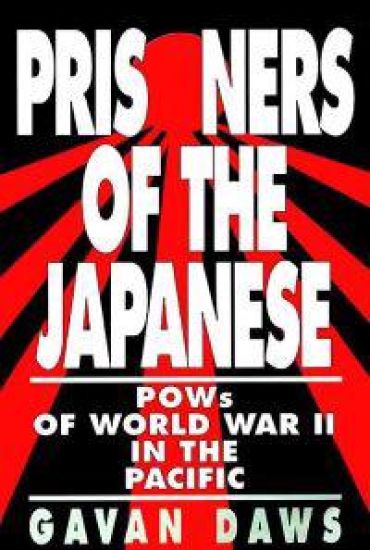
Gavan Daws combined ten years of documentary research and hundreds of interviews with surrviving POWs to write this explosive, first-and-only account of the experiences of the Allied POWs of World War II. The Japanese Army took over 140,000 Allied prisoners, and one in four died the hands of their captors. Here Daws reveals the survivors' haunting experiences, from the atrocities perpetrated during the Bataan Death March and the building of the Burma-Siam railroad to descriptions of disease, torture, and execution.
A young aspiring violinist learns the value of family ties and team spirit in this picture book lushly illustrated by Caldecott Medal winner E.B. Lewis about a down-on-their-luck baseball team and the music that turns their season around. Reginald loves to create beautiful music on his violin. But Papa, manager of the Dukes, the worst team in the Negro National League, needs a bat boy, not a "fiddler," and traveling with the Dukes doesn't leave Reginald much time for practicing. Soon the Dukes' dugout is filled with Beethoven, Mozart, and Bach--and the bleachers are filled with the sound of the Dukes' bats. Has Reginald's violin changed the Dukes' luck--and can his music pull off a miracle victory against the powerful Monarchs?
Reginald loves to create beautiful music on his violin. But Papa, manager of the Dukes, the worst team in the Negro National League, needs a bat boy, not a "fiddler," and traveling with the Dukes doesn't leave Reginald much time for practicing. Soon the Dukes' dugout is filled with Beethoven, Mozart, and Bach and the bleachers are filled with the sound of the Dukes' bats. Has Reginald's violin changed the Dukes' luck and can his music pull off a miracle victory against the powerful Monarchs? Gavin Curtis's beautifully told story of family ties and team spirit and E. B. Lewis's lush watercolor paintings capture a very special period in history.
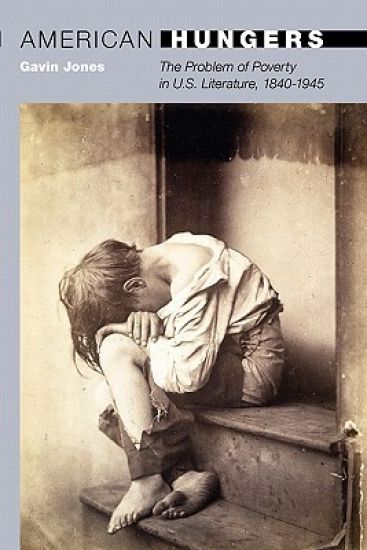
Social anxiety about poverty surfaces with startling frequency in American literature. Yet, as Gavin Jones argues, poverty has been denied its due as a critical and ideological framework in its own right, despite recent interest in representations of the lower classes and the marginalized. These insights lay the groundwork for American Hungers, in which Jones uncovers a complex and controversial discourse on the poor that stretches from the antebellum era through the Depression. Reading writers such as Herman Melville, Theodore Dreiser, Edith Wharton, James Agee, and Richard Wright in their historical contexts, Jones explores why they succeeded where literary critics have fallen short. These authors acknowledged a poverty that was as aesthetically and culturally significant as it was socially and materially real. They confronted the ideological dilemmas of approaching poverty while giving language to the marginalized poor--the beggars, tramps, sharecroppers, and factory workers who form a persistent segment of American society. Far from peripheral, poverty emerges at the center of national debates about social justice, citizenship, and minority identity. And literature becomes a crucial tool to understand an economic and cultural condition that is at once urgent and elusive because it cuts across the categories of race, gender, and class by which we conventionally understand social difference. Combining social theory with literary analysis, American Hungers masterfully brings poverty into the mainstream critical idiom.
Money On My Street is your personal guide to Financial Empowerment and Wealth Accumulation. To sum it up, it contains all of the information that I wish I would have known prior to starting my relationship with the financial system and before accepting my first credit card in college. If I would have practiced these principles, when I was 18 years old, I would be a multimillionaire right now. So, if you're a novice, trying to navigate your way through the concept of money management, this book is for you. If you have already made some financial mistakes and you're looking to get back on track, this book is for you. No matter where you are in your financial life, this book is a "must read" for you and your family.
To encompass and relay the idea of the human experience through the eyes of a confused kid and his poetry is the goal of Read This While You're Driving. Gathering bits and pieces of this thing we call life, Gavin ventures through the highs and lows of what being alive means to him. Read this and encounter the late night scrawlings of how wonderful stress can be, old childhood memories that won't be forgotten, the brilliance found in a smile, a spectacular party in which everyone is invited. Run through the pages, or take your time walking to observe the way the tone changes with the color of the leafs as the Earth continues to rotate. Follow how the words change as the book progresses from Spring to Summer to Autumn to Winter. Just remember that no matter how bad things may seem, Spring is right around the corner.
As the author-pay model spreads across academic publishing, what are the possible consequences? Will the current rage for open-source scholarship actually accomplish anything other than shifting the furniture around on the Titanic? Will not Open Source in combination with Digital Humanitiesfurther destroy the very idea of "slow" and "thoughtful" work in humanistic studies?...It would seem that the author-pay model (formerly attributed to predatory publishers) is just another way of extracting tribute for the "privilege" of being published-enforceable only because academia has ratcheted up the stakes by enforcing research metrics and citations, in the public universities a practice that is primarily enforced by external "industrial" connections. Almost all public and private universities are heading toward measuring output with metrics-many academics now tailoring their CVs to show why they are "important," mirroring the social-media campaigns of celebrities and politicians, and many universities now citing their own "corporate" rankings when promoting their product (the University, the Institute, the Department, the Professor). Where this is all going is toward increased precarity for anyone who does not play the game. Individual, solitary scholars will have few options. Gavin Keeney, "Symptom 'A': The End," Knowledge, Spirit, LawKnowledge, Spirit, Law - as project - is a de facto phenomenology of scholarship in the age of Cognitive Capitalism. The six essays (plus Appendices) presented here cover topics and circle themes related to the problems and crises specific to neo-liberal academia, while proposing creative paths around the various obstructions. The obstructions include metrics-obsessed academia, circular and incestuous peer review, digitalization of research as stalking horse for text- and data-mining, and violation by global corporate fiat of Intellectual Property Rights and the Moral Rights of Authors. These issues, while addressed obliquely in the main text, definitively inform the various implied proscriptive aspects of the essays and, via the Introduction and Appendices, underscore the necessity of developing new-old means to no obvious end in the production of knowledge - that is to say, a return to forms of non-instrumentalized intellectual inquiry. To be developed in two concurrent volumes, Knowledge, Spirit, Law will serve as a "moving and/or shifting anthology" of new forms of expression in humanistic studies.TABLE OF CONTENTS // Preface/Acknowledgments - Introduction: Radical Scholarship - Essay 1: Re-universalizing Knowledge - Essay 2: Estranged Dawns - Essay 3: The Film-essay - Essay 4: Film Mysticism and "The Haunted Wood" - Essay 5: Circular Discourses - Essay 6: Verb Tenses and Time-senses - Appendix A: Agence 'X' Publishing Advisory - Appendix B: Perpetual Petition for the Right of the Author to Have No Digital Rights - Appendix C: Symptom "A" The End - References
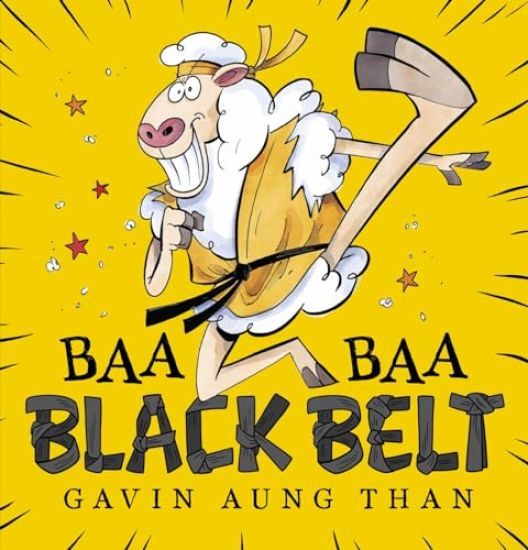
The hilarious new picture book by well known author and illustrator, Gavin Aung Than! Hi! Welcome to my farm. It's where I do my training. I practice martial arts when it's sunny, cold, or raining! My name is very famous. Do you know how it's spelt? Here, let me remind you: they call me . . . BAA BAA BLACK BELT! Baa Baa Black Belt thinks he's the greatest thing to ever walk the farm. His loyal sidekick, Pork Chop, knows better. Will Baa Baa show the animals his awesome martial arts moves? Or will he cause disaster? Comic book creator Gavin Aung Than brings his humour to the picture book scene With illustrations sure to make you snort with laughter The perfect picture book for budding martial artists
Designed specifically for modellers of the modern scene, this new book provides a comprehensive reference to all the livieries that have come and gone on the network since the wholesale privatisation of the mid 1990s.It is now more than 70 years since the first DMUs made their first appearance on the British railway system and more than 50 years since DMUs were introduced onto the BR network in large numbers. From the late 1950s onwards several thousand DMU vehicles were brought into service as replacement for steam services over branches and secondary routes and from the mid-1980s onwards this first generation of DMU was gradually replaced by a second-generation of DMU although the final elimination of the first-generation units did not occur until the first years of the 21st century. On the privatised railway of the 21st century, virtually all non-electrified passenger services are now operated by DMUs of one design or another and, on the preserved railways, many examples of the first generation of stock continue to earn their living.Although initially ill-favoured, as the years passed, so the humble DMU has attracted an ever-growing army of enthusiast fans and this is reflected in the number of web-sites devoted to the subject, to the increasing number of models that are emerging - a reflection of the fact that virtually no model railway covering the BR scene post 1955 can avoid operating DMUs. Fully illustrated throughout, this is the perfect volume for all serious modellers!
This book examines the militant Irish republican movement in the United States from the final months of the Irish Civil War through to the Second World War. The narrative carefully and creatively intertwines the personalities, events and policies that shaped the activism during this period and shows the evolution of its inherently transnational nature. Through a bottom-up historical analysis that incorporates an examination of more than eighty archival collections in the US, Ireland and Britain, the book presents for the first time an account of the anti-Treaty IRA veterans who arrived in the US after the Irish Civil War. Upon their settlement in Irish-American communities, these republicans directly influenced and guided the US-based militant republican organisation, Clan na Gael, transformed the overall dynamics of militant Irish republicanism in America and provided leadership and co-ordination for an IRA bombing campaign. With the inclusion of these veterans’ stories, the book provides a fresh interpretation of the inter-war movement in America that shows it to be far from as stagnant, wayward and detached from Irish affairs as has previously been claimed.
From park run to ultras, this book gives you the support and encouragement you need to start – and keep you – running injury-free This thorough handbook gives detailed practical advice to all adult runners. It covers everything you need to embark on a running career, but goes further and explains training needs and regimes to established runners. Written in an accessible easy style, it answers all your questions – before you’ve thought of them – and encourages everyone to get fit and enjoy your running safely.
Restructuring in the Service Industries: Management Reform and Workplace Relations in the UK Service Sector. An examination of the complex process of transformation in work organization, technology and labour and product markets that has occurred. The analysis moves between a broad appreciation of structural developments within the economies of the advanced industrial nations, and an in-depth study of enterprise and workplace. It is divided into four parts. The first part reviews the theoretical issues and debates raised by the growth of service industries and employment in the advanced industrial countries. Parts Two and Three are case studies of two service sectors - financial services and the National Health Service. Part Four relates the evidence to a broader appreciation of developments in management/workforce relations occurring in the service sector.
Katie Petherick is young, beautiful and successful, but not content. For three years she has been earning a good living as an upmarket monthly live-in maternity nurse, working closely with wealthy couples and gaining their trust. It is not enough. Now it is decision time. Katie has a devious plan to make some serious cash, but there is considerable risk. She knows she is playing with fire, and she realises people are likely to get hurt - not least her boyfriend, Peter Dunkett. He is crazy about her, and he is too scrupulous ever to be happy about what she has in mind, but his need for money is even more pressing than Katie's.
In Voltaire's British visitors, Sir Gavin de Beer and André-Michel Rousseau have collected accounts of one hundred and fifty visits by British travellers to Voltaire in Switzerland, where he spent the last years of his life on the shores of Lake Geneva. One hundred and twenty-three of these visitors have been identified, and they range from men as young as fifteen on a Grand Tour to Thomas Pitt, brother of William, and Edward Gibbon. As the Seven Years' War made Switzerland, rather than France, part of the normal route for Englishmen making their way to Italy, Geneva became a destination for more and more British travellers, and many of these, whether they held letters of recommendation from people known to Voltaire, or had merely read his work, wanted to see the famous Frenchman, their motives ranging, as Rousseau puts it in his introduction, from 'very superficial curiosity to downright admiration'. The accounts run from a bare mention of a visit, consisting of a few lines, to fascinating accounts of lively conversations with Voltaire about politics, religion and English literature and descriptions of his home at Ferney with its chapel and little playhouse. John Morgan in 1764, visiting with a Mr Samuel Powel, writes of his surprise when Voltaire saw a little dog in the room, turned to Mr Powel and 'as I thought, a little abruptly ask'd him, what think you of that little dog; has he any Soul or not, & what do the People in England now think of the Soul.' James Boswell, who stayed for three days in 1764, calls Voltaire's home an 'enchanted castle' and records conversation ranging from impassioned Biblical debate to Voltaire's comment on Scotland's painters when Boswell told him of the failure of an Academy of painting there: 'No; to paint well it is necessary to have warm feet. It's hard to paint when your feet are cold.' Together, these one hundred and fifty vignettes offer a fascinating and unusual glimpse into Voltaire's life from 1754 to 1778 through immediate and personal accounts of his conversation, hospitality and domestic life.
Demonstrates rituals and techniques for astral travel, scrying, accessing spritual guides, finding one's millennial path, and casting spells for luck, health, wisdom, and wealth
From the world's most widely acclaimed Witches, a spellbinding guide to the practical applications and earthly benefits of psychic powers. Witchcraft is a revered, centuries-old art, grounded in the natural energy of the universe and the untapped power of the human mind. Gavin Frost and Yvonne Frost, world-renowned experts and best-selling authors on the occult, have mastered the techniques of the Craft for enhancing everyday life on earth. THE WITCH'S MAGICAL HANDBOOK shows all mere mortals--men and women alike--how to unleash the amazing psychic force within them, while drawing energy from the world around them. Through a combination of practical and mystical tactics--including visualization, working with crystals and divining pendulums, putting goals on paper, and planting a garden--ordinary people will discover the wonder of Witchcraft to change life for the better. For those who follow the way of the Witch, the authors promise untold powers, including the ability to: - Predict the future and make dreams a reality - Improve personal health and aid in the healing of others - Create love spells for romance, passion, and lasting devotion - Reduce daily stress to achieve serenity - Balance the demands of work and home to discover true harmony Packed with persuasive real-life examples, The Witch's Magical Handbook is an empowering and wondrous guide to a happier, healthier, and more rewarding life.
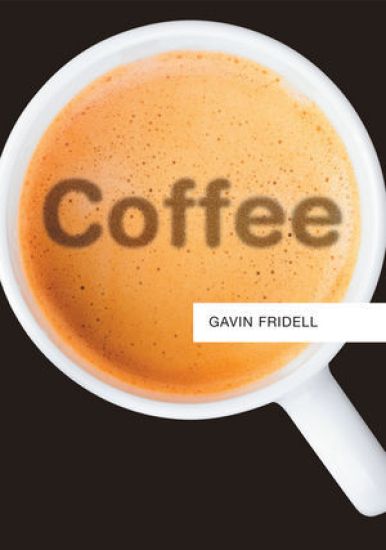
In a world of high finance, unprecedented technological change, and cyber billionaires, it is easy to forget that a major source of global wealth is, literally, right under our noses. Coffee is one of the most valuable Southern exports, generating billions of dollars in corporate profits each year, even while the majority of the world’s 25 million coffee families live in relative poverty. But who is responsible for such vast inequality? Many analysts point to the coffee market itself, its price volatility and corporate oligarchy, and seek to "correct" it through fair trade, organic and sustainable coffee, corporate social responsibility, and a number of market-driven projects. The result has been widespread acceptance that the "market" is both the cause of underdevelopment and its potential solution. Against this consensus, Gavin Fridell provocatively argues that state action, both good and bad, has been and continues to be central to the everyday operations of the coffee industry, even in today’s world of "free trade". Combining rich history with an incisive analysis of key factors shaping the coffee business, Fridell challenges the notion that injustice in the industry can be solved "one sip at a time" - as ethical trade promoters put it. Instead, he points to the centrality of coffee statecraft both for preserving the status quo and for initiating meaningful changes to the coffee industry in the future.
In a world of high finance, unprecedented technological change, and cyber billionaires, it is easy to forget that a major source of global wealth is, literally, right under our noses. Coffee is one of the most valuable Southern exports, generating billions of dollars in corporate profits each year, even while the majority of the world’s 25 million coffee families live in relative poverty. But who is responsible for such vast inequality? Many analysts point to the coffee market itself, its price volatility and corporate oligarchy, and seek to "correct" it through fair trade, organic and sustainable coffee, corporate social responsibility, and a number of market-driven projects. The result has been widespread acceptance that the "market" is both the cause of underdevelopment and its potential solution. Against this consensus, Gavin Fridell provocatively argues that state action, both good and bad, has been and continues to be central to the everyday operations of the coffee industry, even in today’s world of "free trade". Combining rich history with an incisive analysis of key factors shaping the coffee business, Fridell challenges the notion that injustice in the industry can be solved "one sip at a time" - as ethical trade promoters put it. Instead, he points to the centrality of coffee statecraft both for preserving the status quo and for initiating meaningful changes to the coffee industry in the future.