The Little Book of Scotland is a funny, fast-paced, fact-packed compendium of the sort of frivolous, fantastic or simply strange information which no-one will want to be without. Discover the most unusual crimes and punishments, eccentric inhabitants, famous sons and daughters and literally hundreds of wacky facts.Geoff Holder’s latest book contains historic and contemporary trivia including such gems as the real story of William ‘Braveheart’ Wallace, which king was murdered in a barn, and where the Second World War Commandos were formed. From Sir Walter Scott to Sir Sean Connery and Queen Victoria to Mary Queens of Scots, this is a remarkably engaging little book, essential reading for visitors and Scots alike.
Experience 100 key dates that shaped Swansea’s history, highlighted its people’s genius (or silliness) and embraced the unexpected. Featuring an amazing mix of social, criminal and sporting events, this book reveals a past that will fascinate, delight and even shock both residents and visitors of the city.
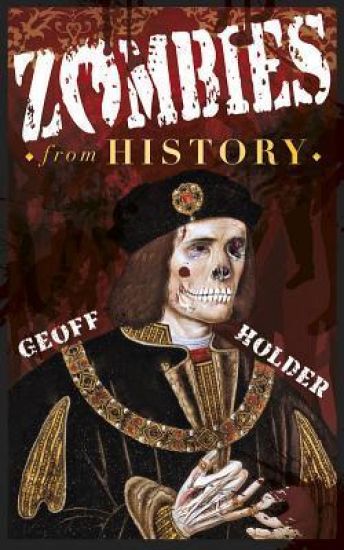
Full details of where to find – and how to kill – all of Britain’s most historic zombies. Fact files on the undead in history, including Roman revenants, people who were buried alive and some resurrected royal corpses! High-profile targets including Jane Austen, Henry VIII, Richard III and William Shakespeare. Are you worried about the zombie apocalypse? Kept awake imagining you’ll only manage to take out a few before that chap at No. 9 gets you? Well, fret no more! Clasp a copy of this book and get a better class of horrible death from one of Britain’s best-loved historical legends. With full zombie-hunting details – including the locations of tombs, any wounds and weaknesses and a carefully calculated difficulty rating – no apocalyptic history lover should leave home without it!
What are the current problems, pressures and opportunities facing journalists in advanced democratic societies? Has there been a 'dumbing down' of the news agenda? How can serious political, economic and social news be made interesting to young people? This book explores the current challenges faced by those working in the news media, focusing especially on the responsibilities of journalism in the advanced democracies. The authors comprise experienced journalists and academics from the UK and the other countries investigated. In the opening section they investigate the key issues facing twenty-first century journalism; while in section two they offer in-depth studies of the UK news media, discussing national newspapers; regional and local newspapers, both paid for and free; terrestrial, satellite and cable television news; radio news and online journalism. These detailed analyses provide the basis for a comparison with the media of a variety of other key advanced democracies: namely the USA, France, Germany, Italy and Japan. Drawing on this evidence, the authors map out possible future developments, paying attention to their likely global impact. The book's provocative conclusions will provide the groundwork for continuing debate amongst journalists, scholars and policy-makers concerned about the place of journalism in invigorating political processes and democratic functions.
The consideration of human factors issues is vital to the mining industry. As in other safety-critical domains, human performance problems constitute a significant threat to system safety, making the study of human factors an important field for improving safety in mining operations. The primary purpose of this book is to provide the reader with a much-needed overview of human factors within the mining industry, in particular to understand the role of human error in mine safety, explaining contemporary risk management and safety systems approaches. The approach taken is multidisciplinary and holistic, based on a model of the systems of work in the mining industry domain. The ingredients in this model include individual operators, groups/teams, technology/equipment, work organisation and the physical environment. Throughout the book, topics such as human error and safety management are covered through the use of real examples and case studies, allowing the reader to see the practical significance of the material presented while making the text rigorous, useful and enjoyable. Understanding Human Error in Mine Safety is written for professionals in the field, researchers and students of mining engineering, safety or human factors.
A fascinating guide to getting the edge in all areas of life from leading psychologist Geoff Beattie.Ever wondered how to win an argument? Or how you spend less money? Do you want to know how to stay happy? Or even how to read someone's mind? Geoff Beattie draws on cutting-edge research to answer all these questions and many more in this fascinating guide to getting what you want. With his impressive insight into what makes us tick, Geoff provides quick tips that will help you shake off your old, bad habits and quickly get into new, positive ones. Geoff's simple advice shows how you can improve your relationship with yourself and with others, sometimes in a matter of seconds.
Nature has provided every creature that roams the earth a diet designed to sustain and maximize its life. What these diets are composed of is based on a creature's location, climate, accessibility, and physical prowess. As humans, our ancient forefathers--and mothers--were raised and nourished in the same manner as the beasts that surrounded them. These Stone Age diets, now called Paleo diets, reflect the types of foods that nature intended us to eat. Unfortunately, we have lost touch with how nature intended us to live and mistakenly think we can eat anything sitting on our supermarket shelves. Paleo in a Nutshell is an eye-opening guide to restoring our health by eating the foods for which our bodies are designed to consume. Author Geoff Bond is a world-renowned scientist who has extensively researched forager societies of the past and present. What he has discovered is that our hunter-gatherer ancestors had never experienced the health disorders that plague us today. This is because their diets, environments, and daily activities were far more in touch with their bodies than our way of life today. Although our diet has become our most dysfunctional feature, other aspects of the Paleo lifestyle are essential to explore as well. In Part One of this book, we learn how and why our ancestors thrived and explore how things went wrong when we stopped behaving in agreement with our evolutionary past. In Part Two, we are provided with an "Owner's Manual"--a guide to appropriate and healthy foods with which to fuel our bodies--and a step-by-step plan for implementing this way of eating. While you may no longer have time to hunt and forage for your food, this book offers modern and simple substitutions for you to use, as well as several delicious recipes. Written in simple-to-understand language, Paleo in a Nutshell is all you need to find your way back to a healthier and more natural way of living.
'This book, informed by exceptionally wide inquiry into current history teaching practices in the English-speaking world, is a real achievement. The authors convey current context and challenges with great insight, and they move through possibilities in sequencing, content, skills and assessment, without strident comment, extending our knowledge of options and pitfalls in the process' - Peter N. Stearns, Provost, George Mason University 'Comprehensive, persuasive, and at all times accessible in style and argument, this text both encourages and empowers university historians to review and enhance their teaching practices. All key facets of programme development are explored with reference to an extensive and well-chosen range of international examples. The chapter on the historian's skills and qualities of mind is one of several that I will be referring to frequently' - Jeanine Graham, Senior Lecturer, History, University of Waikato '... the varied findings make fascinating reading ... this book should be required reading for everyone involved in teaching history: there is plenty here for us all to learn from' - ESCalate 'In providing such a clear, informative and thoughtful exploration of the current state of history in higher education, and in helping to raise the quality of critical debate about its future, this book contributes greatly to the growing scholarship of teaching and learning in the discipline. It should also become a vital resource for all historians who wish to honour the old dictum that, in teaching as in research, the one duty we owe history is to rewrite it' - Professor Paul Hyland, Director of History in the Subject Centre for History, Classics and Archaeology '[E]xtremely useful... provides a thought-provoking and useful discussion concerning the task of actually teaching history at university level... This timely book needs to be read widely, and the many issues it raises should command our closest attention' - Higher Education Review Over the last 10 years or so, history as an academic discipline has become steeped in controversy and introspection. Additional areas of interest have opened up, fresh perspectives and approaches have been offered, and new teaching and learning strategies have been advocated. There has been an increasing emphasis on producing well-qualified graduates equipped with the skills, knowledge and attitudes to cope with the changing demands of the world of work. This book suggests how these issues may be managed. The authors identify and discuss the underlying principles, and consider ways in which they can be applied at module and programme levels. The Teaching & Learning in the Humanities series, edited by Ellie Chambers and Jan Parker, is for beginning and experienced lecturers. It deals with all aspects of teaching individual arts and humanities subjects in higher education. Experienced teachers offer authoritative suggestions on how to become critically reflective about discipline-specific practices.
'This book, informed by exceptionally wide inquiry into current history teaching practices in the English-speaking world, is a real achievement. The authors convey current context and challenges with great insight, and they move through possibilities in sequencing, content, skills and assessment, without strident comment, extending our knowledge of options and pitfalls in the process' - Peter N. Stearns, Provost, George Mason University 'Comprehensive, persuasive, and at all times accessible in style and argument, this text both encourages and empowers university historians to review and enhance their teaching practices. All key facets of programme development are explored with reference to an extensive and well-chosen range of international examples. The chapter on the historian's skills and qualities of mind is one of several that I will be referring to frequently' - Jeanine Graham, Senior Lecturer, History, University of Waikato '... the varied findings make fascinating reading ... this book should be required reading for everyone involved in teaching history: there is plenty here for us all to learn from' - ESCalate 'In providing such a clear, informative and thoughtful exploration of the current state of history in higher education, and in helping to raise the quality of critical debate about its future, this book contributes greatly to the growing scholarship of teaching and learning in the discipline. It should also become a vital resource for all historians who wish to honour the old dictum that, in teaching as in research, the one duty we owe history is to rewrite it' - Professor Paul Hyland, Director of History in the Subject Centre for History, Classics and Archaeology '[E]xtremely useful... provides a thought-provoking and useful discussion concerning the task of actually teaching history at university level... This timely book needs to be read widely, and the many issues it raises should command our closest attention' - Higher Education Review Over the last 10 years or so, history as an academic discipline has become steeped in controversy and introspection. Additional areas of interest have opened up, fresh perspectives and approaches have been offered, and new teaching and learning strategies have been advocated. There has been an increasing emphasis on producing well-qualified graduates equipped with the skills, knowledge and attitudes to cope with the changing demands of the world of work. This book suggests how these issues may be managed. The authors identify and discuss the underlying principles, and consider ways in which they can be applied at module and programme levels. The Teaching & Learning in the Humanities series, edited by Ellie Chambers and Jan Parker, is for beginning and experienced lecturers. It deals with all aspects of teaching individual arts and humanities subjects in higher education. Experienced teachers offer authoritative suggestions on how to become critically reflective about discipline-specific practices.
`This clearly written and user-friendly book is ideal for students or researchers who wish to get a basic, but solid grasp of a topic and see how it fits with other topics. By following the links a student can easily and efficiently build up a clear conceptual map of social research' - Malcolm Williams, Reader in Sociology, Cardiff University `This is a really useful book, written in an accessible manner for students beginning their study of social research methods. It is helpful both as an introductory text and as a reference guide for more advanced students. Most of the key topics in methods and methodology are covered and it will be suitable as a recommended text on a wide variety of courses' - Clive Seale, Brunel University At last, an authoritative, crystal-clear introduction to research methods which really takes account of the needs of students for accessible, focused information to help with undergraduate essays and exams. The key concepts discussed here are based on a review of teaching syllabi and the authors' experience of many years of teaching. Topics range over qualitative and quantitative approaches and combine practical considerations with philosophical issues. They include several new topics, like internet and phone polling, internet searches, and visual methods. Each section is free-standing, can be tackled in order, but with links to other sections to enable students to cross-reference and build up a wider understanding of central research methods. To facilitate comprehension and aid study, each section begins with a definition. It is followed by a summary of key points with key words and guides to further reading and up-to-date examples. The book is a major addition to undergraduate reading lists. It is reliable, allows for easy transference to essays and exams and easy to use, and exceptionally clearly written for student consumption. The book answers the needs of all those who find research methods daunting, and for those who have dreamt of an ideal introduction to the subject.
`This clearly written and user-friendly book is ideal for students or researchers who wish to get a basic, but solid grasp of a topic and see how it fits with other topics. By following the links a student can easily and efficiently build up a clear conceptual map of social research' - Malcolm Williams, Reader in Sociology, Cardiff University `This is a really useful book, written in an accessible manner for students beginning their study of social research methods. It is helpful both as an introductory text and as a reference guide for more advanced students. Most of the key topics in methods and methodology are covered and it will be suitable as a recommended text on a wide variety of courses' - Clive Seale, Brunel University At last, an authoritative, crystal-clear introduction to research methods which really takes account of the needs of students for accessible, focused information to help with undergraduate essays and exams. The key concepts discussed here are based on a review of teaching syllabi and the authors' experience of many years of teaching. Topics range over qualitative and quantitative approaches and combine practical considerations with philosophical issues. They include several new topics, like internet and phone polling, internet searches, and visual methods. Each section is free-standing, can be tackled in order, but with links to other sections to enable students to cross-reference and build up a wider understanding of central research methods. To facilitate comprehension and aid study, each section begins with a definition. It is followed by a summary of key points with key words and guides to further reading and up-to-date examples. The book is a major addition to undergraduate reading lists. It is reliable, allows for easy transference to essays and exams and easy to use, and exceptionally clearly written for student consumption. The book answers the needs of all those who find research methods daunting, and for those who have dreamt of an ideal introduction to the subject.
`This book is a very worthwhile read for teachers, student teachers and teacher educators. It would be encouraging if politically based policy makers were to digest its contents also' - Citizenship, Social and Economics Education `I recommend this book as an enjoyable, thought provoking and politically important read' - Widenining Participation and Lifelong Learning `This important book challenges current educational policies in England in a style, for the most part, easily accessible to a wide audience. Geoff Whitty's assertions are supported by a wide variety of research findings and this is a book that should be of considerable interest to student of sociology and to all member of the teaching profession' - Mark Pepper, Equals `The particular strength of this book is Geoff Whitty's grasp on and insights into the politics of education... he is able to bring to bear an authoritative perspective which is unrivaled in the United Kingdom. there is no other current book which compares in terms of the breadth and depth of this' - Professor Stephen Ball, Institute of Education, University of London `This book represents a "struggle" by the director of the London Institute of Education, one of our foremost centres of teacher training and research in education, to understand what lies behind the education policies of recent governments. It is tempting to conclude that if a leading educational sociologist such as Geoff Whitty, who happens also to be brother of the former general secretary of the Labour party, has difficulty with this, there can be little hope for the rest of us. But now, at least, we have this personal odyssey to guide us' - Bob Doe, Times Educational Supplement This book aims to make sense of the changes in education policy over the past decade, using the resources of the sociology and politics of education. The author shows that wider sociological perspectives can help us to appreciate both the limits and the possibilities of educational change. Geoff Whitty illustrates this through studies of curriculum innovation, school choice, teacher professionalism and school improvement. He considers how far education policy can be used to foster social inclusion and social justice and the book concludes with an assessment of New Labour education policy in these terms. The book deals with education policy in England and Wales, as well as making comparisons with contemporary education policy in other countries. This book is relevant to students of education at masters and doctoral levels, students of social policy, and policy-makers.
`This book is a very worthwhile read for teachers, student teachers and teacher educators. It would be encouraging if politically based policy makers were to digest its contents also' - Citizenship, Social and Economics Education `I recommend this book as an enjoyable, thought provoking and politically important read' - Widenining Participation and Lifelong Learning `This important book challenges current educational policies in England in a style, for the most part, easily accessible to a wide audience. Geoff Whitty's assertions are supported by a wide variety of research findings and this is a book that should be of considerable interest to student of sociology and to all member of the teaching profession' - Mark Pepper, Equals `The particular strength of this book is Geoff Whitty's grasp on and insights into the politics of education... he is able to bring to bear an authoritative perspective which is unrivaled in the United Kingdom. there is no other current book which compares in terms of the breadth and depth of this' - Professor Stephen Ball, Institute of Education, University of London `This book represents a "struggle" by the director of the London Institute of Education, one of our foremost centres of teacher training and research in education, to understand what lies behind the education policies of recent governments. It is tempting to conclude that if a leading educational sociologist such as Geoff Whitty, who happens also to be brother of the former general secretary of the Labour party, has difficulty with this, there can be little hope for the rest of us. But now, at least, we have this personal odyssey to guide us' - Bob Doe, Times Educational Supplement This book aims to make sense of the changes in education policy over the past decade, using the resources of the sociology and politics of education. The author shows that wider sociological perspectives can help us to appreciate both the limits and the possibilities of educational change. Geoff Whitty illustrates this through studies of curriculum innovation, school choice, teacher professionalism and school improvement. He considers how far education policy can be used to foster social inclusion and social justice and the book concludes with an assessment of New Labour education policy in these terms. The book deals with education policy in England and Wales, as well as making comparisons with contemporary education policy in other countries. This book is relevant to students of education at masters and doctoral levels, students of social policy, and policy-makers.
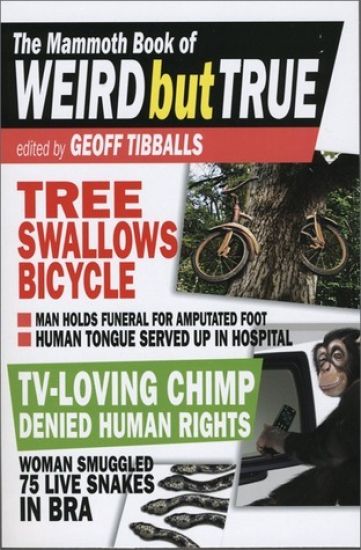
A giant humorous collection of funny news stories, whacky phenomena, hilarious blunders and gaffesover 1000 extraordinary cases from around the world. Who needs urban legends, when these are all true? It's everything readers love about Ripley's Believe it or Not! with an added punch of humor."
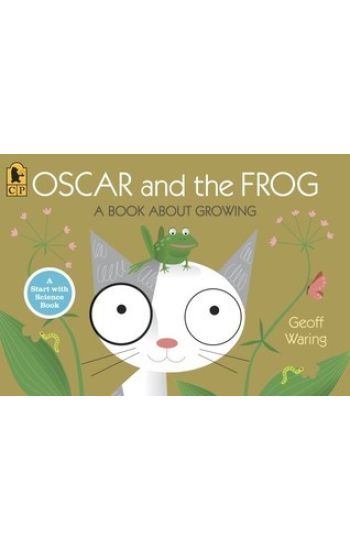
From butterflies to ducks, plants to kittens like him, Oscar finds out how living things begin, why they eat, and how they grow. Oscar is a curious kitten, and at the pond he is full of questions about growing things. Luckily, Frog can help with the answers -- after all, he's gone through some impressive changes himself Includes lesson summaries Back matter includes an index and supplemental activities.
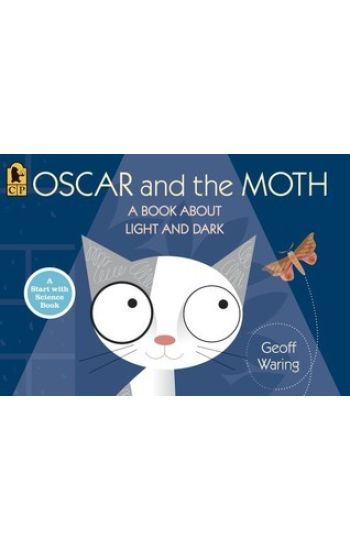
Oscar is a curious kitten As Oscar the kitten watches the sun set one evening, he has lots of questions about light and dark. Who better than Moth to help out? Moth shows how sources of light are as different as the sun, stars, fireflies, streetlights, and airplanes, and also explains how shadows are made and why darkness comes at night. Includes lesson summaries Back matter includes an index and supplemental activities.
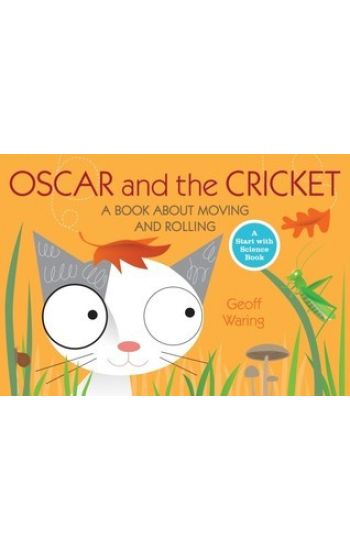
A Start with Science book about moving and rolling. One day Oscar sees a ball in the grass. "Try pushing it " says Cricket. Oscar learns that the ball rolls slowly in grass and faster on a path, until it bounces off a tree and changes direction. Some things need a push to move, and others use their muscles to move themselves -- and to move plenty of other things, too. Back matter includes an index and supplemental activities.
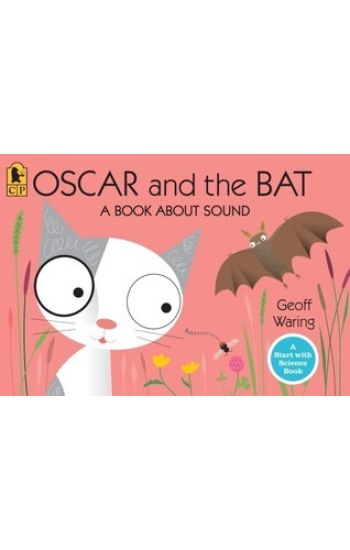
A Start with Science book about sound. When Oscar hears a blackbird singing in the meadow, Bat swoops in to talk to him about sound. A sudden thunderstorm and a visiting cow give Oscar lots of opportunities to learn about sounds that are loud or soft, near or far, deep or high.Back matter includes an index and supplemental activities.
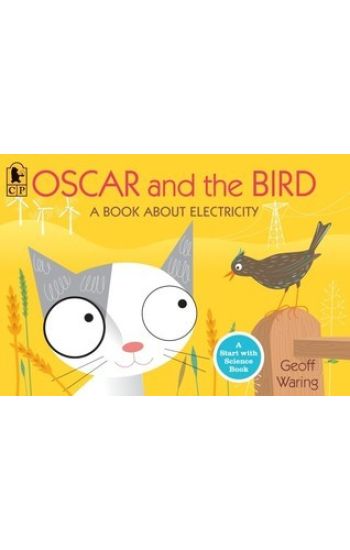
Start with Science books introduce kids to core science concepts through engaging stories, fresh illustrations, and supplemental activities. When Oscar the kitten finds a tractor in a field and accidentally turns on the windshield wipers, he is full of questions about electricity. Luckily, Bird knows the answers With the help of his friend, Oscar finds out how electricity is made and stored, which machines need electricity to work, and why we always need to be careful around wires, batteries, plugs, and sockets. Back matter includes an index and supplemental activities.
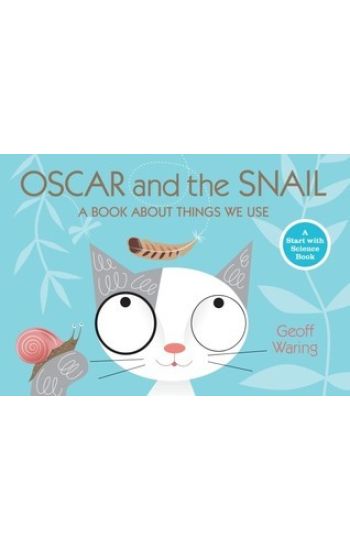
Start with Science books introduce kids to core science concepts through engaging stories, fresh illustrations, and supplemental activities.One day Oscar comes across a nest made of twigs and leaves, perfect for sheltering eggs. It makes him wonder about all the things we use in our daily lives -- like glass, paper, plastic, and cloth. With the help of his friend Snail, the curious kitten learns why we choose specific materials to do different jobs, where the materials come from, and what useful qualities they have. Back matter includes an index and supplemental activities.