Kirjahaku
Etsi kirjoja tekijän nimen, kirjan nimen tai ISBN:n perusteella.
1000 tulosta hakusanalla Goethe
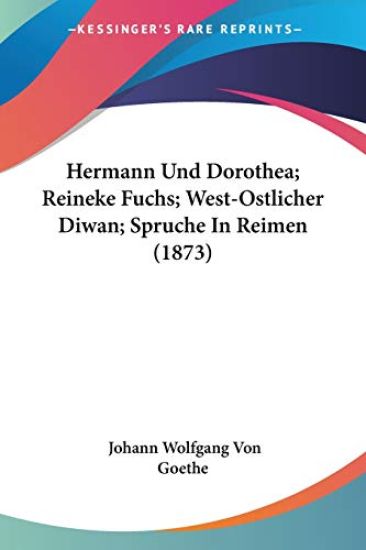
Goethe, J: Hermann Und Dorothea; Reineke Fuchs; West-Ostlich
Johann Wolfgang von Goethe
KESSINGER PUBLISHING, LLC
2009
nidottu

Goethe and Zelter spent a staggering 33 years corresponding or in the case of each artist, over two thirds of their lives. Zelter's position as director of the Sing-Akademie zu Berlin and Goethe's location in Weimar resulted in a wide-ranging correspondence. Goethe's letters offer a chronicle of his musical development, from the time of his journey to Italy to the final months of his life. Zelter's letters retrace his path as stonemason to Professor of Music in Berlin. The 891 letters that passed between these artists provide an important musical record of the music performed in public concerts in Berlin and in the private and semi-public soirées of the Weimar court. Their letters are those of men actively engaged in the musical developments of their time. The legacy contains a wide spectrum of letters, casual and thoughtfully composed, spontaneous and written for publication, rich with the details of Goethe's and Zelter's musical lives. Through Zelter, Goethe gained access to the professional music world he craved and became acquainted with the prodigious talent of Felix Mendelssohn. A single letter from Zelter might bear a letter from Felix Mendelssohn to another recipient of the same family, reflecting a certain community in the Mendelssohn household where letters were not considered private but shared with others in a circle of friends or family. Goethe recognized the value of such correspondence: he complains when his friend is slow to send letters in return for those written to him by the poet, a complaint common in this written culture where letters provided news, introductions, literary and musical works. This famous correspondence contains a medley of many issues in literature, art, and science; but the main focus of this translation is the music dialogues of these artists.
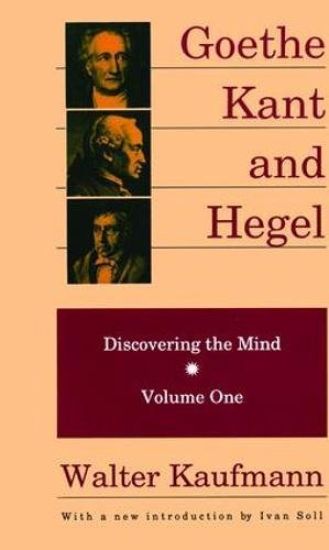
This immensely readable and absorbing book - the first of a three-volume series on understanding the human mind - concentrates on three major figures who have changed our image of human beings. Kaufmann drastically revises traditional conceptions of Goethe, Kant, and Hegel, showing how their ideas about the mind were shaped by their own distinctive mentalities.Kaufmann's version of psychohistory stays clear of gossip and is carefully documented. He offers us a radically new understanding of two centuries of intellectual history, but his primary focus is on self-knowledge. He is in a unique position to perform this task by virtue of being, according to Stephen Spender, "the best translator of Faust"; and in Sidney Hook's view, "unquestionably the most interesting and informative writer of Hegel in English."The foremost interpreter of Kant, Lewis White Beck, has called this book on Goethe, Kant, and.Hegel "fascinating" - a work which "will stir up a good many people by telling them things they have never heard, and providing an alternative to what is the accepted reading of that part of the history of philosophy. The story of how personality affects philosophy has never been better told." We are shown how Goethe advanced the discovery of the mind more than anyone before him, while Kant was in many ways a disaster. Hegel, like others between 1790 to 1990, tried to reconcile Kant and Goethe.Kaufmann shows this is impossible He paints a large picture, but he is always highly specific and details the major contributions of Goethe and Hegel as well as the ways in which Kant's immense influence proved catastrophic.
Goethe’s Path to Creativity provides a comprehensive psycho-biography of Johann Wolfgang von Goethe, a giant of modern German and European literary, political, and scientific history. The book brings this influential work by Rainer Matthias Holm-Hadulla to the English language for the first time in a newly elaborated edition.Goethe’s path to creativity was difficult and beset by a multitude of crises, beginning with his birth, which was so difficult that he was initially not thought to have survived it, and ending with an infatuation that left him, at the age of 74, toying with the same kind of suicidal thoughts he had entertained as a 20-year-old. Throughout his long life, he suffered bitter disappointments and was subject to severe mood swings. Despite being a gifted child, a widely recognized poet, and an influential scientist and politician, he spent his entire life loving and suffering; nonetheless, he had the exceptional ability to endure emotional pain and to transform his sufferings creatively. The way in which he mined his passions for creative impulses continues to inspire modern readers. Readers can apply the lessons they have learned from his life and use Goethe’s strategies for their own creative art of living.Goethe’s Path to Creativity: A Psycho-Biography of the Eminent Politician, Scientist and Poet will be of great interest to all engaged in the fields of creativity, literature, psychoanalysis, psychology, psychotherapy, and personal growth.
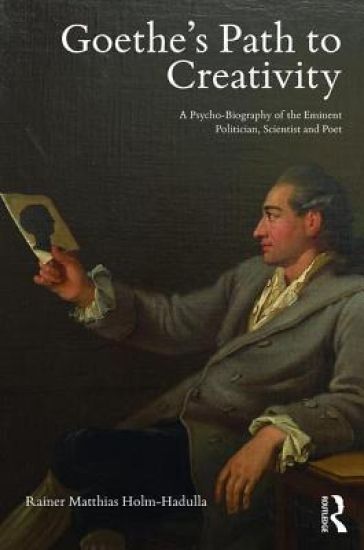
Goethe’s Path to Creativity provides a comprehensive psycho-biography of Johann Wolfgang von Goethe, a giant of modern German and European literary, political, and scientific history. The book brings this influential work by Rainer Matthias Holm-Hadulla to the English language for the first time in a newly elaborated edition.Goethe’s path to creativity was difficult and beset by a multitude of crises, beginning with his birth, which was so difficult that he was initially not thought to have survived it, and ending with an infatuation that left him, at the age of 74, toying with the same kind of suicidal thoughts he had entertained as a 20-year-old. Throughout his long life, he suffered bitter disappointments and was subject to severe mood swings. Despite being a gifted child, a widely recognized poet, and an influential scientist and politician, he spent his entire life loving and suffering; nonetheless, he had the exceptional ability to endure emotional pain and to transform his sufferings creatively. The way in which he mined his passions for creative impulses continues to inspire modern readers. Readers can apply the lessons they have learned from his life and use Goethe’s strategies for their own creative art of living.Goethe’s Path to Creativity: A Psycho-Biography of the Eminent Politician, Scientist and Poet will be of great interest to all engaged in the fields of creativity, literature, psychoanalysis, psychology, psychotherapy, and personal growth.
Goethe's Hermann Und Dorothea in Gemeinfasslicher Darstellung
Wilhelm Rudolf Hoffmann
Nabu Press
2010
pokkari
Goethe's Hermann Und Dorothea
Nabu Press
2010
pokkari


Goethe Und Die Romantik
Johann Wolfgang Von Goethe; Carl Schddekopf; Carl Schuddekopf
Nabu Press
2010
pokkari