Kirjojen hintavertailu. Mukana 12 379 133 kirjaa ja 12 kauppaa.

Kirjahaku

Etsi kirjoja tekijän nimen, kirjan nimen tai ISBN:n perusteella.

1000 tulosta hakusanalla Gottfried Hutter

The Correspondence of Christian Gottfried Krause: A Music Lover in the Age of Sensibility
The fascinating correspondence of the Berlin lawyer and musician Christian Gottfried Krause is an important document reflecting the trends and developments in aesthetics, music theory and music making in the Prussian capital during the reign of Frederick the Great. Krause's letters shed light on the rise of a bourgeois music culture, which during his lifetime gradually replaced the traditional musical institutions at court and in the churches, preparing the urban musical culture which to this day dominates German socio-cultural structures. This volume features Krause's letters to leading literary figures of his time, including Johann Wilhelm Ludwig Gleim, Carl Wilhelm Ramler, Ewald Christian von Kleist, and Johann Peter Uz. The letters provide importand information not found in other sources about musical performances, and express Krause's strong opinions about leading German musicians with whom he was acquainted, such as Carl Philipp Emanuel Bach, Georg Philipp Telemann, Carl Heinrich Graun, and Johann Friedrich Agricola. The letters provide news about the Berlin opera and gossip about the Prussian court as well as containing Krause's response to the Seven Years' War and his perception of the horrors - and benefits - of war in general. The correspondence vividly portrays the concern of a middle-class Prussian for the health and welfare of his family of six, in the very period when the Prussian middle class was beginning to come into its own. And - particularly in the exchanges with the lonely Gleim - the letters reveal a remarkable sympathy between this family man and a man without a family. They are presented in the original German, with English translations on facing pages. An introduction and abundant annotations help to reveal a picture of a pivotal cultural moment and will be of interest to anyone working on the roots of urban musical culture and the culture of the mid-eighteenth century in general.
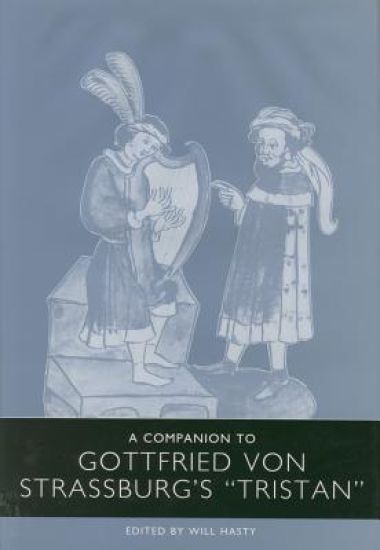
A Companion to Gottfried von Strassburg's Tristan
New essays by outstanding European and American medievalists on major aspects of the most enduring medieval epic. The legend of Tristan and Isolde -- the archetypal narrative about the turbulent effects of all-consuming, passionate love -- achieved its most complete and profound rendering in the German poet Gottfried von Strassburg's verse romance Tristan (ca. 1200-1210). Along with his great literary rival Wolfram von Eschenbach and his versatile predecessor Hartmann von Aue, Gottfried is considered one of three greatest poets produced by medieval Germany, andover the centuries his Tristan has lost none of its ability to attract with the beauty of its poetry and to challenge -- if not provoke -- with its sympathetic depiction of adulterous love. The essays, written by a dozen leading Gottfried specialists in Europe and North America, provide definitive treatments of significant aspects of this most important and challenging high medieval version of the Tristan legend. They examine aspects of Gottfried'sunparalleled narrative artistry; the important connections between Gottfried's Tristan and the socio-cultural situation in which it was composed; and the reception of Gottfried's challenging romance both by later poets inthe Middle Ages and by nineteenth- and twentieth-century authors, composers, and artists -- particularly Richard Wagner. The volume also contains new interpretations of significant figures, episodes, and elements (Riwalin and Blanscheflur, Isolde of the White Hands, the Love Potion, the performance of love, the female figures) in Gottfried's revolutionary romance, which provocatively elevates a sexual, human love to a summum bonum. Will Hasty is Professor of German at the University of Florida. He is the editor of Companion to Wolfram's "Parzival," (Camden House, 1999). Click here to view the introduction (PDF file 83KB)