Kirjojen hintavertailu. Mukana 12 489 619 kirjaa ja 12 kauppaa.

Kirjahaku

Etsi kirjoja tekijän nimen, kirjan nimen tai ISBN:n perusteella.

1000 tulosta hakusanalla Greg Mitchell

After the Flying Saucers Came

After the Flying Saucers Came

Greg Eghigian

OXFORD UNIVERSITY PRESS INC
2024
sidottu
Roswell, 1947. Washington, DC, 1952. Quarouble, 1954. New Hampshire, 1961. Pascagoula, 1973. Petrozavodsk, 1977. Copley Woods, 1983. Explore how sightings of UFOs and aliens seized the world's attention and discover what the fascination with flying saucers and extraterrestrial visitors says about our changing views on science, technology, and the paranormal. In the summer of 1947, a private pilot flying over the state of Washington saw what he described as several pie pan-shaped aircraft traveling in formation at remarkably high speed. Within days, journalists began referring to the objects as "flying saucers." Over the course of that summer, Americans reported seeing them in the skies overhead. News quickly spread, and within a few years, flying saucers were being spotted across the world. The question on everyone's mind was, what were they? Some new super weapon in the Cold War? Strange weather patterns? Optical illusions? Or perhaps it was all a case of mass hysteria? Some, however, concluded they could only be one thing: spacecrafts built and piloted by extraterrestrials. The age of the unidentified flying object, the UFO, had arrived. Greg Eghigian tells the story of the world's fascination with UFOs and the prospect that they were the work of visitors from outer space. While accounts of great wonders in the sky date back to antiquity, reports of UFOs took place against the unique backdrop of the Cold War and space age, giving rise to disputed government inquiries, breathtaking news stories, and single-minded sleuths. After the Flying Saucers Came traces how a seemingly isolated incident sparked an international drama involving shady figures, questionable evidence, suspicions of conspiracy, hoaxes, new religions, scandals, unsettling alien encounters, debunkers, and celebrities. It examines how descriptions, theories, and debates about unidentified flying objects and alien abduction changed over time and how they appeared in the United States, Europe, Latin America, Asia, and Russia. And it explores the impact UFOs have had on our understanding of space, science, technology, and ourselves up through the present day. Replete with stories of the people who have made up the ufology community, the military and defense units that investigate them, the scientists and psychologists who have researched these unexplained encounters, and the many novels, movies, TV shows, and websites that have explored these phenomena, After the Flying Saucers Came speaks to believers and skeptics alike.
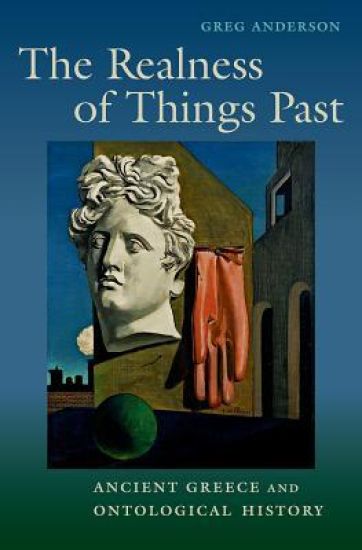
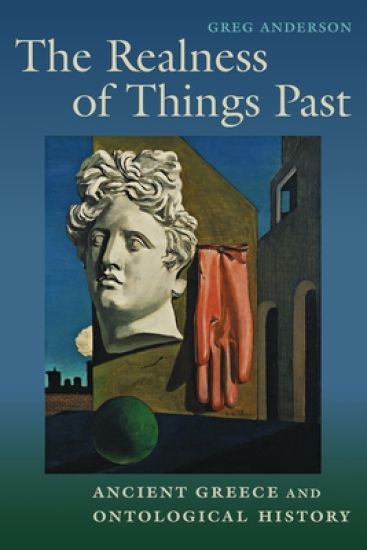
The Realness of Things Past

The Realness of Things Past

Greg Anderson

Oxford University Press Inc
2018
sidottu
The Realness of Things Past proposes a new paradigm of historical practice. It questions the way we conventionally historicize the experiences of non-modern peoples, western and non-western, and makes the case for an alternative. It shows how our standard analytical devices impose modern, dualist metaphysical conditions upon all non-modern realities, thereby authorizing us to align those realities with our own modern ontological commitments, fundamentally altering their contents in the process. The net result is a practice that homogenizes the past's many different ways of being human. To produce histories that are more ethically defensible, more philosophically robust, and more historically meaningful, we need to take an ontological turn in our practice. The book works to formulate a non-dualist historicism that will allow readers to analyse each past reality on its own ontological terms, as a more or less autonomous world unto itself. To make the case for this alternative paradigm, the book engages with currents of thought in many different intellectual provinces, from anthropology and postcolonial studies to the sociology of science and quantum physics. And to demonstrate how the new paradigm might work in practice, it uses classical Athens as its primary case study. The Realness of Things Past is divided into three parts. To highlight the limitations of conventional historicist analysis and the need for an alternative, Part I critically scrutinizes our standard modern accounts of "democratic Athens." Part II draws on a wide range of historical, ethnographic, and theoretical literatures to frame ethical and philosophical mandates for the proposed ontological turn. To illustrate the historical benefits of this alternative paradigm, Part III then shows how it allows us to produce an entirely new and more meaningful account of the Athenian politeia or "way of life." The book is expressly written to be accessible to a non-specialist, cross-disciplinary readership.
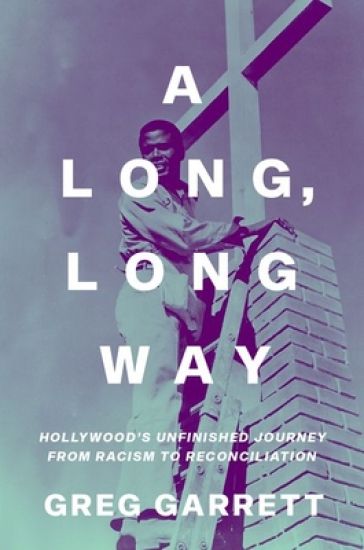
A Long, Long Way

A Long, Long Way

Greg Garrett

Oxford University Press Inc
2020
sidottu
From the beginning, American cinema has been both a powerful mythmaker and a social critic. D.W. Griffith's Birth of a Nation, arguably the first feature film, shows us just how early in its history cinema had established its influence. In 1915 it was the first movie to be screened at the White House. After the screening, President Woodrow Wilson is rumored to have said, "It's like history writ with lightning. And my only regret is that it is all terribly true." Birth of a Nation famously portrayed the Klu Klux Klan in a favorable light, a portrayal that contributed to the modern resurgence of the group and brought racist depictions of African Americans imported from the minstrel show to the silver screen. Such white fantasies of black American life have played out on our movie screens for the last century. In response, filmmakers of color have created nuanced and indelible portraits of race, as in Ava DuVernay's Selma or Barry Jenkin's Moonlight. Spike Lee's BlacKkKlansman shows us just how far into our culture Birth of a Nation has reached. In this powerful new book, Greg Garrett brings his signature brand of theologically motivated cultural criticism to bear on this history. After more than a century of cinema, he argues, movies have altered our cultural perspectives in the same way that religious narratives have. And in fact, religious traditions offer powerful correctives to our cultural narratives. A Long, Long Way incorporates both cinematic and religious truth-telling to the subject of race and reconciliation. In acknowledging the racist history of America's national art form, Garrett offers the possibility of hope for the future.
Rome

Rome

Greg Woolf

Oxford University Press
2022
nidottu
The complete history of the Roman Empire - how it was created, how it was sustained in crisis, and how it shaped the world of its rulers and subjects, from the eighth century BCE to the dawn of the Middle Ages. Rome in the archaic age was a minor satellite between the Etruscan and Greek world. This book traces the expansion of Roman influence first within Italy, then around the Mediterranean world and finally, at breakneck speed, deep into Europe, out to the Atlantic, along the edge of the Sahara and down the Red Sea. There had been other empires that had expanded rapidly; what made Rome remarkable was that it managed to sustain its position for so long. Rome's fall poses less of a mystery than its survival. Understanding this happened involves understanding the building blocks of imperial society - slavery, cities, the economy - and also the chaotic narrative of growth, civil war, stability, near disaster and then a managed downsizing. Rome: An Empire's Story tells the tale of the great ancient city in chapters that alternate with examination of key features of Roman society. This second edition has been fully revised and updated to take account of all the major new developments in the field since the publication of the first edition. Many of the chapters have been expanded, there is an expanded section on late antiquity, a new thematic chapter looking back from Constantinople to Rome, and a greater focus on material culture throughout.
Thermodynamics in Geochemistry

Thermodynamics in Geochemistry

Greg M. Anderson; David A. Crerar

Oxford University Press Inc
1993
sidottu
This textbook outlines the fundamentals required to understand the science of thermodynamics and describes the application of thermodynamics in geochemistry. The work is distinguished by its comprehensive, balanced coverage and its rigorous presentation of geological thermodynamics and geochemistry. The authors bring years of teaching experience to the work, and have attempted to particularly address those areas where other texts on the subject have provided inadequate coverage. A thorough review of the necessary mathematics is presented early on, both as a refresher for those with a background in university calculus, and for the benefit of those coming to the subject for the first time. The text is written for students in advanced undergraduate or graduate level geochemistry as well as for all researchers in this field.
Understanding Somatization in the Practice of Clinical Neuropsychology
Understanding Somatization in the Practice of Clinical Neuropsychology is written for neuropsychologists wishing to improve their ability to diagnose and treat, or recommend treatment for, patients with somatoform disorders. The author, a seasoned clinician, blends evidence-based information with sound practical advice within a conceptual framework helpful in understanding this group of difficult patients. A Continuing Education (CE) component administered by the American Academy of Clinical Neuropsychology is included.
Specialty Competencies in Clinical Neuropsychology

Specialty Competencies in Clinical Neuropsychology

Greg J. Lamberty; Nathaniel W. Nelson

Oxford University Press Inc
2012
nidottu
Whereas the roots of the clinical neuropsychology specialty can be found in fields over a century old, it has grown very rapidly during the past thirty years. Doctoral programs in clinical psychology and predoctoral internship programs have developed concentrations in this area, as the need for postdoctoral training in this specialty has become increasingly acknowledged. Typically thought of as the clinical and empirical study of brain-behavior relationships, clinical neuropsychology is firmly grounded in psychology, behavioral neurology, psychiatry, psychometrics, and statistics. In this volume, Drs. Lamberty and Nelson provide a comprehensive overview of the foundational and functional competencies related to the broad field of clinical neuropsychology. The authors distill not only the most important dimensions of the current science and practice, but also delineate important future directions and challenges. Anyone interested in obtaining an extensive survey of the extant literature related to this specialty, as well as insider knowledge on important professional issues, will find this volume to be an invaluable resource. Series in Specialty Competencies in Professional Psychology Series Editors Arthur M. Nezu and Christine Maguth Nezu As the field of psychology continues to grow and new specialty areas emerge and achieve recognition, it has become increasingly important to define the standards of professional specialty practice. Developed and conceived in response to this need for practical guidelines, this series presents methods, strategies, and techniques for conducting day-to-day practice in any given psychology specialty. The topical volumes address best practices across the functional and foundational competencies that characterize the various psychology specialties, including clinical psychology, cognitive and behavioral psychology, school psychology, geropsychology, forensic psychology, clinical neuropsychology, couples and family psychology, and more. Functional competencies include common practice activities like assessment and intervention, while foundational competencies represent core knowledge areas such as ethical and legal issues, cultural diversity, and professional identification. In addition to describing these competencies, each volume provides a definition, description, and development timeline of a particular specialty, including its essential and characteristic pattern of activities, as well as its distinctive and unique features. Written by recognized experts in their respective fields, volumes are comprehensive, up-to-date, and accessible. These volumes offer invaluable guidance to not only practicing mental health professionals, but those training for specialty practice as well.
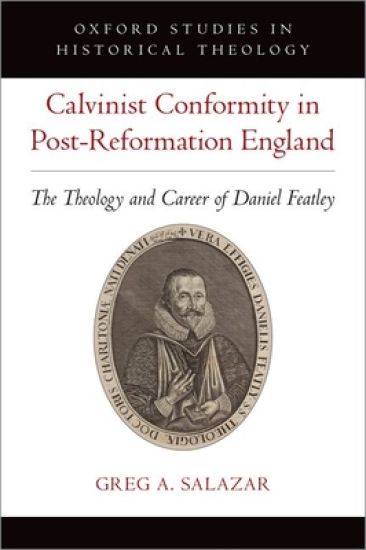
Calvinist Conformity in Post-Reformation England

Calvinist Conformity in Post-Reformation England

Greg A. Salazar

OXFORD UNIVERSITY PRESS INC
2022
sidottu
Calvinist Conformity in Post-Reformation England is the first modern full-scale examination of the theology and life of the distinguished English Calvinist clergyman Daniel Featley (1582-1645). It explores Featley's career and thought through a comprehensive treatment of his two dozen published works and manuscripts and situates these works within their original historical context. A fascinating figure, Featley was the youngest of the translators behind the Authorized Version, a protégé of John Rainolds, a domestic chaplain for Archbishop George Abbot, and a minister of two churches. As a result of his sympathies with royalism and episcopacy, he endured two separate attacks on his life. Despite this, Featley was the only royalist Episcopalian figure who accepted his invitation to the Westminster Assembly. Three months into the Assembly, however, Featley was charged with being a royalist spy, was imprisoned by Parliament, and died shortly thereafter. While Featley is a central focus of the work, this study is more than a biography. It uses Featley's career to trace the fortunes of Calvinist conformists--those English Calvinists who were committed to the established Church and represented the Church's majority position between 1560 and the mid-1620s, before being marginalized by Laudians in the 1630s and puritans in the 1640s. It demonstrates how Featley's convictions were representative of the ideals and career of conformist Calvinism, explores the broader priorities and political maneuvers of English Calvinist conformists, and offers a more nuanced perspective on the priorities and political maneuvers of these figures and the politics of religion in post-Reformation England.
The Realness of Things Past

The Realness of Things Past

Greg Anderson

Oxford University Press Inc
2021
nidottu
The Realness of Things Past proposes a new paradigm of historical practice. It questions the way we conventionally historicize the experiences of non-modern peoples, western and non-western, and makes the case for an alternative. It shows how our standard analytical devices impose modern, dualist metaphysical conditions upon all non-modern realities, thereby authorizing us to align those realities with our own modern ontological commitments, fundamentally altering their contents in the process. The net result is a practice that homogenizes the past's many different ways of being human. To produce histories that are more ethically defensible, more philosophically robust, and more historically meaningful, we need to take an ontological turn in our practice. The book works to formulate a non-dualist historicism that will allow readers to analyse each past reality on its own ontological terms, as a more or less autonomous world unto itself. To make the case for this alternative paradigm, the book engages with currents of thought in many different intellectual provinces, from anthropology and postcolonial studies to the sociology of science and quantum physics. And to demonstrate how the new paradigm might work in practice, it uses classical Athens as its primary case study. The Realness of Things Past is divided into three parts. To highlight the limitations of conventional historicist analysis and the need for an alternative, Part I critically scrutinizes our standard modern accounts of "democratic Athens." Part II draws on a wide range of historical, ethnographic, and theoretical literatures to frame ethical and philosophical mandates for the proposed ontological turn. To illustrate the historical benefits of this alternative paradigm, Part III then shows how it allows us to produce an entirely new and more meaningful account of the Athenian politeia or "way of life." The book is expressly written to be accessible to a non-specialist, cross-disciplinary readership.
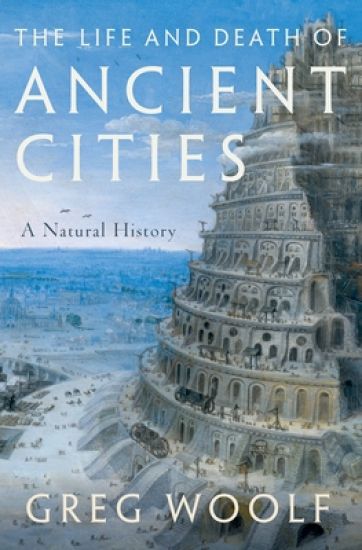
The Life and Death of Ancient Cities: A Natural History
The dramatic story of the rise and collapse of Europe's first great urban experiment The growth of cities around the world in the last two centuries is the greatest episode in our urban history, but it is not the first. Three thousand years ago most of the Mediterranean basin was a world of villages; a world without money or writing, without temples for the gods or palaces for the mighty. Over the centuries that followed, however, cities appeared in many places around the Inland Sea, built by Greeks and Romans, and also by Etruscans and Phoenicians, Tartessians and Lycians, and many others. Most were tiny by modern standards, but they were the building blocks of all the states and empires of antiquity. The greatest--Athens and Corinth, Syracuse and Marseilles, Alexandria and Ephesus, Persepolis and Carthage, Rome and Byzantium--became the powerhouses of successive ancient societies, not just political centers but also the places where ancient art and literatures were created and accumulated. And then, half way through the first millennium, most withered away, leaving behind ruins that have fascinated so many who came after. Based on the most recent historical and archaeological evidence, The Life and Death of Ancient Cities provides a sweeping narrative of one of the world's first great urban experiments, from Bronze Age origins to the demise of cities in late antiquity. Greg Woolf chronicles the history of the ancient Mediterranean city, against the background of wider patterns of human evolution, and of the unforgiving environment in which they were built. Richly illustrated, the book vividly brings to life the abandoned remains of our ancient urban ancestors and serves as a stark reminder of the fragility of even the mightiest of cities.
Gradual

Gradual

Greg Berman; Aubrey Fox

OXFORD UNIVERSITY PRESS INC
2023
sidottu
A call to tone down our political rhetoric and embrace a common-sense approach to change. Many experts believe that we are at a fulcrum moment in history, a time that demands radical shifts in thinking and policymaking. Calls for bold change are everywhere these days, particularly on social media, but is this actually the best way to make the world a better place? In Gradual, Greg Berman and Aubrey Fox argue that, contrary to the aspirations of activists on both the right and the left, incremental reform is the best path forward. They begin by emphasizing that the very structure of American government explicitly and implicitly favors incrementalism. Particularly in a time of intense polarization, any effort to advance radical change will inevitably engender significant backlash. As Berman and Fox make clear, polling shows little public support for bold change. The public is, however, willing to endorse a broad range of incremental reforms that, if implemented, would reduce suffering and improve fairness. To illustrate how incremental changes can add up to significant change over time, Berman and Fox provide portraits of "heroic incrementalists" who have produced meaningful reforms in a variety of areas, from the expansion of Social Security to more recent efforts to reduce crime and incarceration. Gradual is a bracing call for a "radical realism" that prioritizes honesty, humility, nuance, and respect in an effort to transcend political polarization and reduce the conflict produced by social media.
The Principles of Entrepreneurial Progress

The Principles of Entrepreneurial Progress

Greg Fisher

OXFORD UNIVERSITY PRESS INC
2025
sidottu
Entrepreneurship is messy, uncertain, complex, and risky. It's virtually impossible to devise a recipe for success when developing a new venture. But it need not be. In The Principles of Entrepreneurial Progress, business school professor and entrepreneur Greg Fisher breaks entrepreneurship down into twelve concrete, actionable, easy to understand principles. These principles can be applied across a diverse range of entrepreneurial endeavors, ranging from high-growth, venture capital funded, technology ventures to self-funded, slower growth, more lifestyle oriented new business enterprises. For each of the principles, Fisher shares intriguing stories and examples that illustrate the principle, distills research that validates the principle in easy-to-understand terms, and describes how the principle can be implemented in practice. Conveying decades of expertise and practical wisdom, this engaging book provides entrepreneurs with a practical, evidence-based guide for making meaningful progress on their entrepreneurial journey.
The Principles of Entrepreneurial Progress

The Principles of Entrepreneurial Progress

Greg Fisher

OXFORD UNIVERSITY PRESS INC
2025
nidottu
Entrepreneurship is messy, uncertain, complex, and risky. It's virtually impossible to devise a recipe for success when developing a new venture. But it need not be. In The Principles of Entrepreneurial Progress, business school professor and entrepreneur Greg Fisher breaks entrepreneurship down into twelve concrete, actionable, easy to understand principles. These principles can be applied across a diverse range of entrepreneurial endeavors, ranging from high-growth, venture capital funded, technology ventures to self-funded, slower growth, more lifestyle oriented new business enterprises. For each of the principles, Fisher shares intriguing stories and examples that illustrate the principle, distills research that validates the principle in easy-to-understand terms, and describes how the principle can be implemented in practice. Conveying decades of expertise and practical wisdom, this engaging book provides entrepreneurs with a practical, evidence-based guide for making meaningful progress on their entrepreneurial journey.
Inside the Political Mind: The Human Side of Politics and How It Shapes Development
Drawing on his experience of working with hundreds of politicians in more than sixty countries, Greg Power explores how social norms, public expectations and the personal interests of MPs influence the path of political development. Where states are weak, politicians solve problems by going around the state. From Tanzania and Nepal to Iraq and Ukraine, voters actually want MPs who can find informal fixes, and a reciprocal logic holds the system in place. But this also means that weak institutions tend to stay weak. Combining insights from behavioral economics, change management and comparative politics, this fascinating book argues for a different approach to political reform, one concerned less with institutional design and more with the existing logic of human behavior. One that starts inside the political mind, and works outwards from there.
The Nonprofit Crisis

The Nonprofit Crisis

Greg Berman

OXFORD UNIVERSITY PRESS INC
2025
sidottu
A bracing look at what's gone wrong in American nonprofits--and how it might be fixed. We rely on nonprofits every day to feed the hungry, care for the sick, and perform a host of other essential work, but American nonprofits have been under siege in recent years. Attacked by the left (for being part of the "nonprofit industrial complex") and the right (for advancing a "woke" agenda), nonprofits have also faced a serious threat from within: a rising generation of staffers who expect their employers to share their social justice convictions. In The Nonprofit Crisis, Greg Berman takes an in-depth look at the challenges faced by American nonprofits in the years since Donald Trump's first election. It highlights the very real problems that have plagued the nonprofit sector and shows how some organizations have lost their way during the culture wars. Berman, an award-winning nonprofit executive, argues that if nonprofit leaders cannot figure out a way to handle the challenges of racial justice, the generational divide, and political polarization effectively, we are doomed to a future of declining public trust in some of our most important American institutions. The Nonprofit Crisis offers nonprofits, and those that care about them, a way forward in trying times.
The Nonprofit Crisis

The Nonprofit Crisis

Greg Berman

OXFORD UNIVERSITY PRESS INC
2026
nidottu
A bracing look at what's gone wrong in American nonprofits--and how it might be fixed. We rely on nonprofits every day to feed the hungry, care for the sick, and perform a host of other essential work, but American nonprofits have been under siege in recent years. Attacked by the left (for being part of the "nonprofit industrial complex") and the right (for advancing a "woke" agenda), nonprofits have also faced a serious threat from within: a rising generation of staffers who expect their employers to share their social justice convictions. In The Nonprofit Crisis, Greg Berman takes an in-depth look at the challenges faced by American nonprofits in the years since Donald Trump's first election. It highlights the very real problems that have plagued the nonprofit sector and shows how some organizations have lost their way during the culture wars. Berman, an award-winning nonprofit executive, argues that if nonprofit leaders cannot figure out a way to handle the challenges of racial justice, the generational divide, and political polarization effectively, we are doomed to a future of declining public trust in some of our most important American institutions. The Nonprofit Crisis offers nonprofits, and those that care about them, a way forward in trying times.
Gradual

Gradual

Greg Berman; Aubrey Fox

OXFORD UNIVERSITY PRESS INC
2025
nidottu
A call to tone down our political rhetoric and embrace a common-sense approach to change. Many experts believe that we are at a fulcrum moment in history, a time that demands radical shifts in thinking and policymaking. Calls for bold change are everywhere these days, particularly on social media, but is this actually the best way to make the world a better place? In Gradual, Greg Berman and Aubrey Fox argue that, contrary to the aspirations of activists on both the right and the left, incremental reform is the best path forward. They begin by emphasizing that the very structure of American government explicitly and implicitly favors incrementalism. Particularly in a time of intense polarization, any effort to advance radical change will inevitably engender significant backlash. As Berman and Fox make clear, polling shows little public support for bold change. The public is, however, willing to endorse a broad range of incremental reforms that, if implemented, would reduce suffering and improve fairness. To illustrate how incremental changes can add up to significant change over time, Berman and Fox provide portraits of "heroic incrementalists" who have produced meaningful reforms in a variety of areas, from the expansion of Social Security to more recent efforts to reduce crime and incarceration. Gradual is a bracing call for a "radical realism" that prioritizes honesty, humility, nuance, and respect in an effort to transcend political polarization and reduce the conflict produced by social media.
Communication Within Animal Cells

Communication Within Animal Cells

Greg J. Barritt

Oxford University Press
1992
nidottu
This textbook brings together and puts into perspective current knowledge of intra-cellular signalling systems within animals. The ordered growth and functioning of animal cells requires the transfer of information from one part of the cell to another. This information comes from a variety of sources, both within and outside the cell. Hormones, neurotransmitters, growth factors and extra-cellular metabolites interact with specific receptors on the plasma membrane or in the cytoplasm. Inside the cell, information is relayed by intra-cellular messengers including cyclic nucleotides, inositol polyphosphates, diacylglycerol and calcium, GTP-binding proteins, protein kinases and DNA-binding proteins. Finely balanced interactions between these different signalling pathways ensure that the required response occurs and abnormalities in any of the components of the system can lead to a variety of diseases, including cancer.
Critique and Utopia in Postcolonial Historical Fiction
This bold and ambitious volume argues that postcolonial historical fiction offers readers valuable resources for thinking about history and the relationship between past and present. It shows how the genre's treatment of colonialism illustrates continuities between the colonial era and our own and how the genre distils from our colonial pasts the evanescent, utopian intimations of a properly postcolonial future. Critique and Utopia in Postcolonial Historical Fiction arrives at these insights by juxtaposing novels from the Atlantic world with books from the Indian subcontinent. Attending to the links across these regions, the volume develops luminous readings of novels by Patrick Chamoiseau, J. G. Farrell, Amitav Ghosh, Marlon James, Hari Kunzru, Toni Morrison, Marlene van Niekerk, Arundhati Roy, Kamila Shamsie, and Barry Unsworth. It shows how these works not only transform our understanding of the colonial past and the futures that might issue from it, but also contribute to pressing debates in postcolonial theory—debates about the politics of literary forms, the links between cycles of capital accumulation and the emergence of new genres, the meaning of 'working through' traumas in the postcolonial context, the relationship between colonial and panoptical power, the continued salience of hybridity and mimicry for the study of colonialism, and the tension between national liberation struggles and transnational forms of solidarity. Beautifully written and meticulously theorized, Critique and Utopia in Postcolonial Historical Fiction will be of interest to students of world literature, Marxist critics, postcolonial theorists, and thinkers of the utopian.
John Heywood

John Heywood

Greg Walker

Oxford University Press
2020
sidottu
John Heywood was an important literary and theatrical pioneer in his own right, but he is also a revealing lens through which to view the wider tumultuous history of the sixteenth century. He was, through the period from the mid-1520s to the 1560s, as near to a celebrity as Tudor England possessed, famed for his 'merry' persona and good humour. But his public image concealed a deeper engagement with religious and political history. Enduringly resistant to extremism, he variously entertained, counselled, and cautioned his readers and audiences through four reigns, finding himself, as regimes changed and religious policies shifted, successively celebrated, marginalised, anathematised, condemned to death, recuperated, and celebrated once more before finally retreating into exile on the Continent in 1564. He produced plays at the courts of Henry VIII, Edward VI, Mary and Elizabeth, performed and taught keyboard music, wrote lyric poetry and songs, and from the mid-sixteenth century turned to collecting and publishing highly successful volumes of proverbs and epigrams for which he was remembered well into the seventeenth century. Each of these works provides a subtle, often courageously critical engagement with the politics of its moment. To study Heywood's career takes us beyond the clichés of popular history, beyond Shakespeare and the Elizabethan playhouses, beyond the canonical Henrician court poets and the writers of the Elizabethan 'Golden Age', beyond even the experiences of the century's chief ministers, intellectuals, and martyrs, to a theatrical and literary world less visible in the conventional sources. It opens a window on a culture in which the actions of monarchs, their councillors, and their victims were witnessed and reflected upon at one remove from the centres of power. And it allows us to re-examine the significance of an individual who deserves our attention, not only for his considerable artistic achievements, but also for the determination with which, often against the odds, he used his talents in pursuit of wider humanist cultural principles for over half a century.