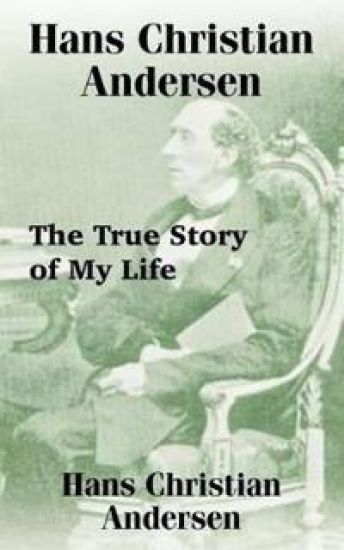
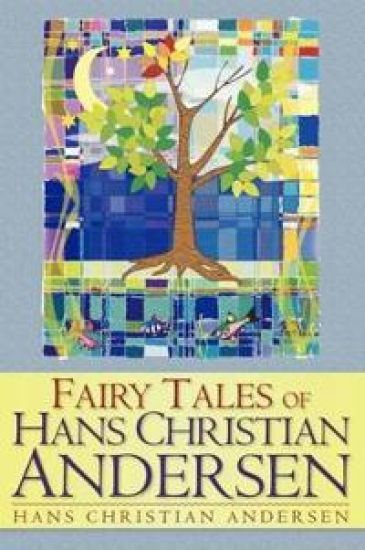
Hans Christian Andersen; often referred to in Scandinavia as H. C. Andersen; 2 April 1805 - 4 August 1875) was a Danish author. Although a prolific writer of plays, travelogues, novels, and poems, Andersen is best remembered for his fairy tales. Andersen's popularity is not limited to children; his stories, called eventyr in Danish, express themes that transcend age and nationality.Andersen's fairy tales, which have been translated into more than 125 languages, have become culturally embedded in the West's collective consciousness, readily accessible to children, but presenting lessons of virtue and resilience in the face of adversity for mature readers as well. Some of his most famous fairy tales include "The Emperor's New Clothes", "The Little Mermaid", "The Nightingale", "The Snow Queen", "The Ugly Duckling", "Thumbelina", and many more.His stories have inspired ballets, both animated and live-action films, and plays.
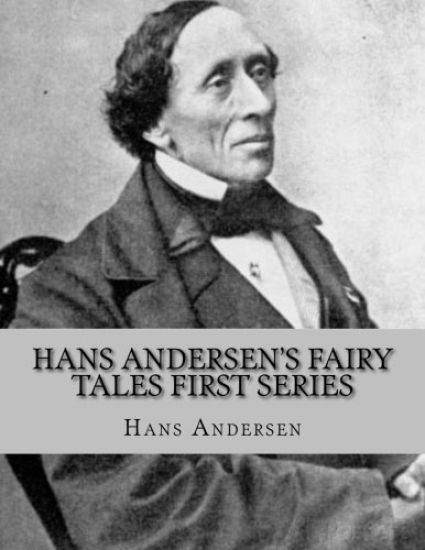
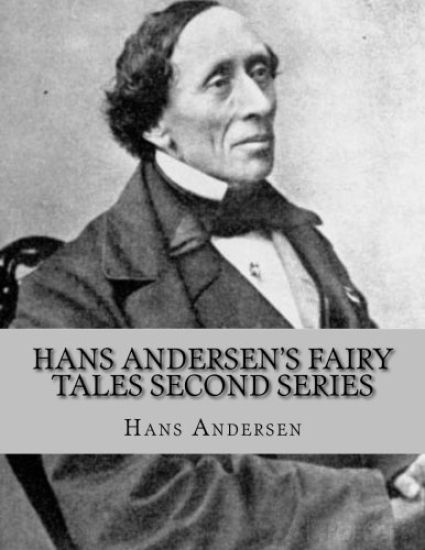
Hans Christian Andersen; often referred to in Scandinavia as H. C. Andersen; 2 April 1805 - 4 August 1875) was a Danish author. Although a prolific writer of plays, travelogues, novels, and poems, Andersen is best remembered for his fairy tales. Andersen's popularity is not limited to children; his stories, called eventyr in Danish, express themes that transcend age and nationality.Andersen's fairy tales, which have been translated into more than 125 languages, have become culturally embedded in the West's collective consciousness, readily accessible to children, but presenting lessons of virtue and resilience in the face of adversity for mature readers as well. Some of his most famous fairy tales include "The Emperor's New Clothes", "The Little Mermaid", "The Nightingale", "The Snow Queen", "The Ugly Duckling", "Thumbelina", and many more.His stories have inspired ballets, both animated and live-action films, and plays.
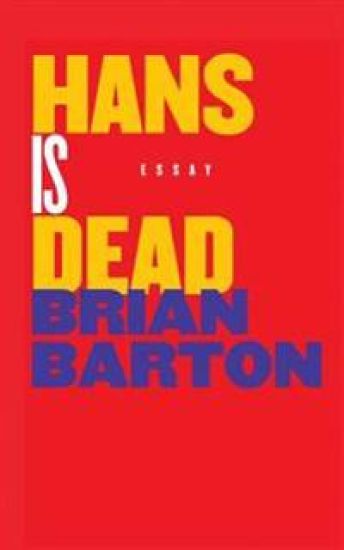
Miss Glenn Frey and Eagles? Join the essayist as he shares his passion for flying, a favorite dream, and the artistic legacies of Glenn Frey, David Bowie, and Alan Rickman. Hans Is Dead is about the power of collaborative art. Brian Barton (@realbrianbarton) is a USA Today featured author whose work has appeared in Esquire, The Times of London, and Time. He lives in New York City with his family and one adorable Labrador. Click his name at the top of this page to see all of his writing. NOTE: This essay is about 43 pages.
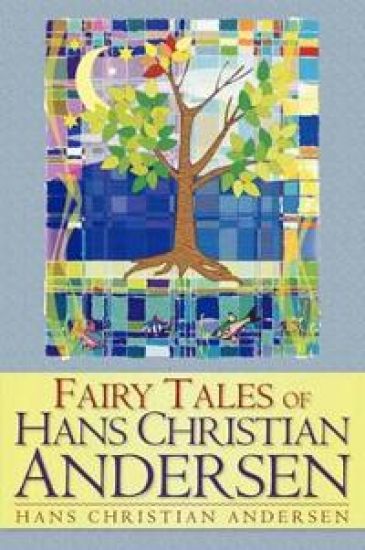
A complete collection of cherished fairy tales (over 100) that have enchanted children as well as adults for generations. Includes "The Ugly Duckling", "The Emperor's New Clothes", "Snow Queen", "Little Mermaid" and others not so well known. This is a wonderful collection of stories, some rather dark truth. They are fantastical, gritty, funny, sad and everything in between. Classic storytelling which will stand the test of time.
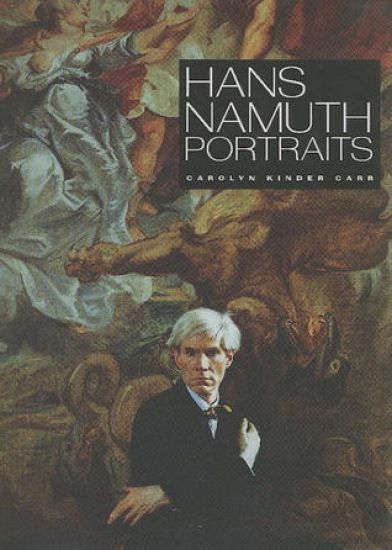
During the summer and early fall of 1950, as Jackson Pollock moved about the huge canvases on the floor of his Long Island studio, defining their surfaces with dripped and thrown paint, a young photographer named Hans Namuth documented the artist at work. The best of his nearly five hundred photographs, first published in Portfolio and Art News magazines, enhanced public understanding of Pollock's paintings and began for Namuth a forty-year career of photographing America's leading painters, sculptors, writers, musicians, and architects. Accompanied by a biographical essay by Carolyn Kinder Carr, this collection of seventy-five of Hans Namuth's photographic portraits, taken between 1950 and 1989, shows how his friendships with his often reclusive subjects and his determination to capture the essence of each artist's style resulted in revealing portraits of such notable painters as Willem and Elaine de Kooning, Mark Rothko, Roy Lichtenstein, Jasper Johns, Andrew Wyeth, Helen Frankenthaler, and Andy Warhol. Although Namuth identified most closely with the Abstract Expressionists who became famous in the 1950s and early 1960s, his repertoire included a new generation of 1980s artists, among them Julian Schnabel and David Salle. In both his black-and-white and color photographs, Namuth used subtle but telling poses, settings, and details: John Steinbeck appears with his famous dog Charley; Philip Johnson stands jauntily on a staircase in the Museum of Modern Art beside a painting that he donated; Louise Nevelson wears jewelry that echoes the sweeping lines of her wood sculpture. Carr sets the stage for Namuth's photographic career in America by describing his youth in pre-war Germany, his early work as a documentary photographer in Paris and Spain, his immigration to New York in 1941, and his wartime intellegence work for the United States Army. Returning to professional photography in 1949, he soon concentrated his efforts on photographic portraiture. While Namuth saw himself as an artist photographing ot
This gorgeously illustrated book examines the practice and materials of a prominent Abstract Expressionist The career of the German-American painter and educator Hans Hofmann (1880-1966) describes the arc of artistic modernism from pre-World War I Munich and Paris to mid-twentieth-century Greenwich Village. His career also traces the transatlantic engagement of modern painting with the materials of its own making, a relationship that is perhaps still not completely understood. In these interrelated narratives, Hofmann is a central protagonist, providing a vital link between nineteenth- and twentieth-century art practice and between European and American modernism. The remarkable vitality of his later work affords insight not only into the style but also the literal substance of this formative period of artistic and material innovation. This richly illustrated book, the fourth in the Getty Conservation Institute's Artist's Materials series, presents a thorough examination of Hofmann's late-career materials. Initial chapters present an informative overview of Hofmann's life and work in Europe and America and discuss his crucial role in the development of Abstract Expressionism.Subsequent chapters present a detailed analysis of Hofmann's materials and techniques and explore the relationship of the artist's mature palette to shifts in the style and aging characteristics of his paintings. The book concludes with lessons for the conservation of modernist paintings generally, and particularly those that incorporate both traditional and modern paint media. This book will be of value to conservators, art historians, conservation scientists, and general readers with an interest in modern art.
A collection of Hans Christian Andersen's best loved fairy tales is here illustrated with the magnificent Art Nouveau colour illustrations of Kay Nielsen. This was a project that took Nielsen 12 years to complete, and his illustrations perfectly capture the other-worldly spirit of the subject matter. Many of the earliest children's books, particularly those dating back to the 1850s and before, are now extremely scarce and increasingly expensive. Pook Press are working to republish these classic works in affordable, high quality, colour editions, using the original text and artwork so these works can delight another generation of children. About the Author: Hans Christian Andersen (1805-1875) was a Danish poet and author celebrated for his children's stories but perhaps best known for his immortal Fairy Tales meant for both adults and children and frequently written in a colloquial style to veil their sophisticated moral teachings. He broke new ground in terms of style and content by using idioms and constructions of spoken language in a way that had previously not been seen in Danish literature. His poetry and stories have been translated into over 150 languages, inspiring a wealth of films, plays and ballets. About the Illustrator: Kay Nielsen (1886-1957) was a Danish illustrator of the golden age of illustration. He was influenced by Japanese art and the Swedish fairy tale illustrator John Bauer and contributed to the Art Nouveau movement. His illustrations are bold, and vibrant - often reproduced by a 4-colour process which set him apart from his contemporaries who typically used a 3-colour process. His art is characterised by long, swooping lines, open spaces and a certain macabre quality and his ephemeral illustrations are intricately inventive, flirting with implausibility. The shift in taste from fantasy to realism after WWII meant that Nielsen did not retain his pre-war popularity. However, interest in his exquisite illustrations has since been revived, and they now command a high price in today's art world.