Kirjojen hintavertailu. Mukana 12 363 183 kirjaa ja 12 kauppaa.

Kirjahaku

Etsi kirjoja tekijän nimen, kirjan nimen tai ISBN:n perusteella.

1000 tulosta hakusanalla Helmut Kaiser

Landmarks in Organo-Transition Metal Chemistry

Landmarks in Organo-Transition Metal Chemistry

Helmut Werner

Springer-Verlag New York Inc.
2010
nidottu
Since the discovery of ferrocene and the sandwich-type complexes, the development of organometallic chemistry took its course like an avalanche and became one of the scientific success stories of the second half of the twentieth century. Based on this development, the traditional boundaries between inorganic and organic chemistry gradually disappeared and a rebirth of the nowadays highly important field of homogeneous catalysis occurred. It is fair to say that despite the fact that the key discovery, which sparked it all off, was made more than 50 years ago, organometallic chemistry remains a young and lively discipline.

Anglo-Saxon Manuscripts

Anglo-Saxon Manuscripts

Helmut Gneuss; Michael Lapidge

University of Toronto Press
2015
pokkari
Anglo-Saxon Manuscripts is the first publication to list every surviving manuscript or manuscript fragment written in Anglo-Saxon England between the seventh and the eleventh centuries or imported into the country during that time. Each of the 1,291 entries in Helmut Gneuss and Michael Lapidge’s Bibliographical Handlist not only details the origins, contents, current location, script, and decoration of the manuscript, but also provides bibliographic entries that list facsimiles, editions, linguistic analyses, and general studies relevant to that manuscript. A general bibliography, designed to provide full details of author-date references cited in the individual entries, includes more than 4,000 items. Compiled by two of the field’s greatest living scholars, the Gneuss-Lapidge Bibliographical Handlist stands to become the most important single-volume research tool to appear in the field since Greenfield and Robinson’s Bibliography of Publications on Old English Literature. Their achievement in the present book will endure for many decades and serve as a catalyst for new research across several disciplines.
3D Histology Evaluation of Dermatologic Surgery

3D Histology Evaluation of Dermatologic Surgery

Helmut Breuninger; Patrick Adam

Springer London Ltd
2013
nidottu
There hasn’t been a book concerning "Microscopically Controlled Surgery" published and it is vital to publish a book that details all the different terms and methodology used in microscopically controlled surgery. The goal is to create a practical, concise and simple explanation of 3D-histology with workflows and detailed illustrative material for dermatologists. It is therefore designed to be a goal-oriented manual rather than an exhaustive reference work. It will provide the essential information for all working with patients undergoing this group of treatments.
Lattice Gauge Theory ’86

Lattice Gauge Theory ’86

Helmut Satz; Isabel Harrity; Jean Potvin

Springer-Verlag New York Inc.
2011
nidottu
This volume contains the Proceedings of'the International Workshop "Lattice Gauge Theory 1986", held at Brookhaven National Laboratory, September 15 - 19, 1986. The meeting was the sequel to the one held at Wuppertal in 1985, the Proceedings of which have appeared in the same Plenum series. During the past few years, a considerable number of meetings on lat­ tice gauge theory have been held, on both sides of the Atlantic. With our workshop, through early planning and coordination with other prospective organizers, we tried to channel this activity into one major yearly meeting. For 1986, these efforts were successful, and it is our hope that a pattern has been set for the coming years. One result, however, was that the number of participants considerably exceeded that normally found at NATO Advanced Research Workshops. This year, a "nucleus" of NATO-supported experts induced a large number of further interested specialists to obtain their own funds - thus greatly amplifying the impact of the event. The topics covered at the workshop ranged from hadron spectra to strong interaction thermo­ dynamics; they included spontaneous symmetry breaking and Higgs models, renormalization group methods, as well as many contributions on various possible schemes for the simulation of dynamical quarks. First systematic applications of finite size scaling to lattice gauge theory were discussed, and the approach to the continuum limit was considered in detail.
Petrogenesis of Metamorphic Rocks

Petrogenesis of Metamorphic Rocks

Helmut G. F. Winkler

Springer-Verlag New York Inc.
2011
nidottu
The first edition of this book was published in 1965 and its French translation in 1966. The revised second edition followed in 1967 and its Russian translation became available in 1969. Since then, many new petrographic observations and experimental data elucidat- ing reactions in metamorphic rocks have made a new approach in the study of metamorphic transformation desirable and possible. It is felt that this new approach, attempted in this book, leads to a better unders- tanding of rock metamorphism. The concept of metamorphic facies and subfacies considers asso- ciations of mineral assemblages from diverse bulk compositions as characteristic of a certain pressure-temperature range. As new petrographic observations accumulated, it became increasingly difficult to accommodate this information within a manageable framework of metamorphic facies and subfacies. Instead, it turned out that mineral assemblages due to reactions in common rocks of a particular composi- tion provide suitable indicators of metamorphic conditions. Metamorphic zones, defined on the basis of mineral reactions, very effectively display the evolution of metamorphic rocks. Thus the im- portance of reactions in metamorphic rocks is emphasized. Experimen- tal calibration of mineral reactions makes it possible to distinguish reac- tions which are of petrogenetic significance from those which are not. This distinction provides guidance in petrographic investigations un- dertaken with the object of deducing the physical conditions of metamorphism.
Laser Interaction and Related Plasma Phenomena

Laser Interaction and Related Plasma Phenomena

Helmut J. Schwarz; H. Hora; M.J. Lubin; B. Yaakobi

Springer-Verlag New York Inc.
2012
nidottu
The 7th International Workshop in the series LASER INTERACTION AND RELATED PLASMA PHENOMENA continued the high standards established by the earlier meetings in this series. It was organized under the directorship of Heinrich Hora and George H. Miley at the Naval Postgraduate School in Monterey, California, with Fred Schwirzke as the local organizer. These workshops have presented many "firsts" in laser plasma interactions and especially in laser fusion. Some presentations provided continuity with the past, most represented advancements; however, in some workshops, progress did not appear to be occurring as rapidly as in others. Therefore, it was a special pleasure that in the present workshop when, on October 30, 1985, Chiyoe Yamanaka disclosed a breakthrough in the generation of fusion neutrons with laser fusion targets. The 7th Workshop also continued to represent other new fields of laser-plasma interaction. The progress reported was most pronounced in the fields of X-ray lasers, laser acceleration of particles by electrostatic double layers in plasmas, and a particle beam technique to solve the geometric problem of muon-catalyzed fusion. The development of laser-plasma interactions at medium to high laser intensities may be seen in its whole complexity from a brief review of prior conferences. At the first Workshop in 1969, a comprehensive review of the field was presented by the speakers with the opening address by N.
Laser Spectroscopy and Laser Imaging

Laser Spectroscopy and Laser Imaging

Helmut H. Telle; Ángel González Ureña

CRC Press Inc
2018
sidottu
"a very valuable book for graduate students and researchers in the field of Laser Spectroscopy, which I can fully recommend"—Wolfgang Demtröder, Kaiserslautern University of TechnologyHow would it be possible to provide a coherent picture of this field given all the techniques available today? The authors have taken on this daunting task in this impressive, groundbreaking text. Readers will benefit from the broad overview of basic concepts, focusing on practical scientific and real-life applications of laser spectroscopic analysis and imaging. Chapters follow a consistent structure, beginning with a succinct summary of key principles and concepts, followed by an overview of applications, advantages and pitfalls, and finally a brief discussion of seminal advances and current developments. The examples used in this text span physics and chemistry to environmental science, biology, and medicine. Focuses on practical use in the laboratory and real-world applications Covers the basic concepts, common experimental setups Highlights advantages and caveats of the techniques Concludes each chapter with a snapshot of cutting-edge advancesThis book is appropriate for anyone in the physical sciences, biology, or medicine looking for an introduction to laser spectroscopic and imaging methodologies.Helmut H. Telle is a full professor at the Instituto Pluridisciplinar, Universidad Complutense de Madrid, Spain.Ángel González Ureña is head of the Department of Molecular Beams and Lasers, Instituto Pluridisciplinar, Universidad Complutense de Madrid, Spain.
Robust Asymptotic Statistics

Robust Asymptotic Statistics

Helmut Rieder

Springer-Verlag New York Inc.
2012
nidottu
1 To the king, my lord, from your servant Balasi : 2 ... The king should have a look. Maybe the scribe who reads to the king did not understand . . . . shall I personally show, with this tablet that I am sending to the king, my lord, how the omen was written. 3 Really, he who has not followed the text with his finger cannot possibly understand it. This book is about optimally robust functionals and their unbiased esti­ mators and tests. Functionals extend the parameter of the assumed ideal center model to neighborhoods of this model that contain the actual distri­ bution. The two principal questions are (F): Which functional to choose? and (P): Which statistical procedure to use for the selected functional? Using a local asymptotic framework, we deal with both problems by linking up nonparametric statistical optimality with infinitesimal robust­ ness criteria. Thus, seemingly separate developments in robust statistics are presented in a unifying way.
Laser Interaction and Related Plasma Phenomena

Laser Interaction and Related Plasma Phenomena

Helmut J. Schwarz; Heinrich Hora

Springer-Verlag New York Inc.
2012
nidottu
Since the third Workshop on Laser Interaction and Related Plasma Phenomena in 1973, one area within the scope of this con ference received increased attention: laser fusion. This possi bility was emphasized in February 1977 in a Seminar on US energy policies at The Hartford Graduate Center by John F. O'Leary, Head of the Federal Energy Administration, who said that by the year 2100, laser fusion will be coming along, giving us a new age of choice. Efforts in research and development were stepped up to investigate new concepts of laser ignition of controlled nuclear reactions. Here, one expects no radioactive waste from fuel. The deuterium-tritium reaction - the only one which may be possible with magnetic field confinement in tokamaks - has a highly radio active tritium ycle, while, in principle, laser reactions are possible with pure deuterium, hydrogen-boron or others. The worldwide progress in laser compression was not only stim ulated by the energy crisis, but also by its advancements. In our first Workshop in 1969 F. F10ux of the French Limei1 Laboratories described his experiments, which led, only one month later, to the production of fusion neutrons in such large numbers as had not been achieved up to then (see appendix of Vol. I these Proceedings).
Laser Interaction and Related Plasma Phenomena

Laser Interaction and Related Plasma Phenomena

Helmut J. Schwarz; Heinrich Hora

Springer-Verlag New York Inc.
2012
nidottu
Since the third Workshop on "Laser Interaction and Related Plasma Phenomena" in 1973, one area within the scope of this con­ ference received increased attention: laser fusion. This possi­ bility was emphasized in February 1977 in a Seminar on US energy policies at The Hartford Graduate Center by John F. O'Leary, Head of the Federal Energy Administration, who said that "by the year 2100, ••• laser fusion will be coming along, giving us a new age of choice". Efforts in research and development were stepped up to investigate new concepts of laser ignition of controlled nuclear reactions. Here, one expects no radioactive waste from fuel. Th~ deuterium-tritium reaction - the only one which may be possible with magnetic field confinement in tokamaks - has a highly radio­ active tritium cycle, while, in principle, laser reactions are possible with pure deuterium, hydrogen-boron or others. The worldwide progress in laser compression was not only stim­ ulated by the energy crisis, but also by its advancements. In our first Workshop in 1969 F. Floux of the French Limeil Laboratories described his experiments, which led, only one month later, to the production of fusion neutrons in such large numbers as had not been achieved up to then (see appendix of Vol. I these Proceedings).
Laser Interaction and Related Plasma Phenomena

Laser Interaction and Related Plasma Phenomena

Helmut J. Schwarz; Heinrich Hora

Springer-Verlag New York Inc.
2012
nidottu
As was the case in the two preceding workshops of 1969 and 1971, the Third Workshop on "Laser Interaction and Related Plasma Phenomena" held in 1973 was of international character. The main purpose was to review the advanced status of this particular and turbulent field of physics as it had developed vigorously in all major laboratories of the world since 1971. Due to recently accelerated advancements, it was hardly possible to present a com­ plete tutorial review; the subject is still in its premature stages and changing rapidly. A topical conference would have been too specific for a group of physicists with broad backgrounds working in the field or for those just about to enter it. It was the aim of the workshop and it is the aim of these proceedings to help this large group of scientists find their way within the highly complex and sometimes confusing results of a new field. We optimized the task of the workshop with extensive reviews on several topics and at the same time included more detailed infor­ mation for specialists. The differences in their conclusions were not a matter of contention but rather served to complement the advanced results. As in the preceding workshops, we directed our attention toward critical realism in respect to the complexity of the field. What is meant here is exemplified in the contribution by R. Sigel ~.667).
Laser Interaction and Related Plasma Phenomena

Laser Interaction and Related Plasma Phenomena

Helmut J. Schwarz; Heinrich Hora

Springer-Verlag New York Inc.
2012
nidottu
Since the third Workshop on "Laser Interaction and Related Plasma Phenomena" in 1973, one area within the scope of this con­ ference received increased attention: laser fusion. This possi­ bility was emphasized in February 1977 in a Seminar on US energy policies at The Hartford Graduate Center by John F. O'Leary, Head of the Federal Energy Administration, who said that "by the year 2100, ••• laser fusion will be coming along, giving us a new age of choice". Efforts in research and development were stepped up to investigate new concepts of laser ignition of controlled nuclear reactions. Here, one expects no radioactive waste from fuel. The deuterium-tritium reaction - the only one which may be possible with magnetic field confinement in tokamaks - has a highly radio­ active tritium ~ycle, while, in principle, laser reactions are possible with pure deuterium, hydrogen-boron or others. The worldwide progress in laser compression was not only stim­ ulated by the energy crisis, but also by its advancements. In our first Workshop in 1969 F. F10ux of the French Limei1 Laboratories described his experiments, which led, only one month later, to the production of fusion neutrons in such large numbers as had not been achieved up to then (see appendix of Vol. I these Proceedings).
Chemoreceptors and Chemoreceptor Reflexes

Chemoreceptors and Chemoreceptor Reflexes

Helmut Acker; Andrzej Trzebski; Ronan G. O’Regan

Springer-Verlag New York Inc.
2012
nidottu
This volume records the papers presented in Warsaw on the meeting of the International Society of Arterial Chemoreception (LS. A. C. ) organized as a Satellite Symposium of the XXXI International Congress of the Union of Physiological Sciences (I. U. P. S. ) in Helsinki in July 1989. It is a 30 years old tradition to hold periodically international meetings on recent developments in chemoreceptor research and to exchange information between those of us interested in chemoreception. The first meeting was organized by B. B. Lloyd in Oxford in 1959. Later on, similar international meetings were held at irregular intervals. In 1966, R. W. Torrance organized the second meeting again in Oxford. In 1973, the third meeting was organized in Bristol (U. K. ) by M. J. Purves. In 1974, a fourth meeting combined with the XXVI I. U. P. S. Congress in Delhi was organized by A. S. Paintal in Srinagar (Kashmir, India). In 1976, H. Acker organized the fifth meeting in Dortmund (F. R. G. ), and in 1979, C. Belmonte in Valla­ dolid (Spain) organized the sixth international meeting commemorating the 50th anniversary of Fernando de Castro publishing his classical work on the structure and possible function of the carotid body. In 1982, the seventh meeting was due to D. J. Pallot in Leicester (U. K. ), in 1985 - the eighth one due to A. J.
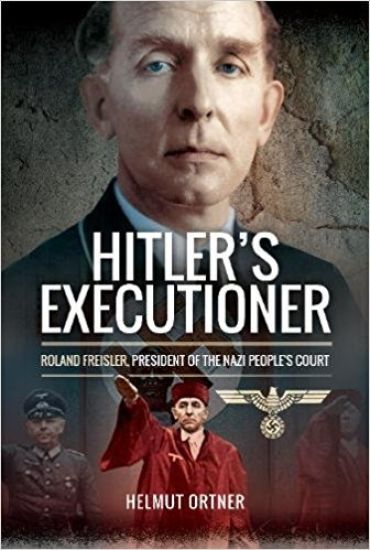
Hitler's Executioner

Hitler's Executioner

Helmut Ortner

Frontline Books
2018
sidottu
Though little known, the name of the judge Roland Freisler is inextricably linked to the judiciary in Nazi Germany. As well as serving as the State Secretary of the Reich Ministry of Justice, he was the notorious president of the People s Court , a man directly responsible for more than 2,200 death sentences; with almost no exceptions, cases in the People s Court had predetermined guilty verdicts. It was Freisler, for example, who tried three activists of the White Rose resistance movement in February 1943\. Along with Christoph Probst, Sophie and Hans Scholl were arrested for their part in an anonymous leaflet and graffiti campaign which called for active opposition against the Nazi regime. Found guilty of treason, Freisler sentenced the trio to death by beheading; a sentence carried out the same day by guillotine. In August 1944, Freisler played a central role in the show trials that followed the failed attempt to assassinate Adolf Hitler on 20 July that year a plot known more commonly as Operation Valkyrie. Many of the ringleaders were tried by Freisler in the People s Court . The proceedings were filmed, the intention being to use the images as propaganda in newsreels. Freisler could be seen alternating between clinical interrogations of the defendants through to his yelling of personalized and theatrically enraged abuse at them from the bench. Nearly all of those found guilty were sentenced to death by hanging, the sentences being carried out within two hours of the verdicts being passed. Roland Freisler s mastery of legal texts and dramatic court-room verbal dexterity made him the most feared judge in the Third Reich. In this in-depth examination, Helmut Ortner not only investigates the development and judgments of the Nazi tribunal, but the career of Freisler, a man who was killed in February 1945 during an Allied air raid.
New Concepts in Natural Language Generation

New Concepts in Natural Language Generation

Helmut Horacek

Bloomsbury Academic
2015
sidottu
This book aims to inform researchers with an interest in natural language generation about advances in the field. It is organised around four topics – system architectures, content planning, discourse planning and realisation in linguistic form - and it presents some of the most important works in this area of research.