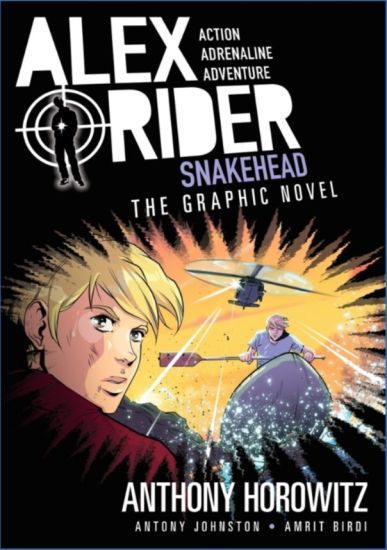
A bold and striking graphic novel adaptation of the seventh novel in Anthony Horowitz's acclaimed Alex Rider series.Teenage spy Alex is forced into the Australian secret service. His target is the criminal underworld of South East Asia, and a ruthless organization known as the Snakehead.
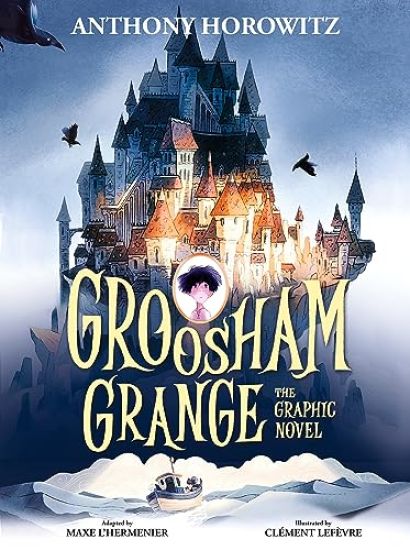
Anthony Horowitz’s classic gothic page-turner is brought to life in full colour in this hilarious graphic novel adaptation.When David Elliot is expelled from his boring school, his parents send him to Groosham Grange to knock him into shape. But when he arrives at the gothic castle on remote Skrull Island, he discovers Groosham Grange is an unusual sort of school: from signing the register in blood, to the creepy teachers – pallid Mr Kilgraw, Mrs Pedicure bandaged head to toe, hairy Mr Leloup who disappears every full moon... David teams up with fellow pupils Jeffrey and Jill to plan his escape. But can anyone ever escape Groosham Grange? With puns and visual jokes on every page, this is gothic humour at its best.Praise for Groosham Grange:"One of the funniest books of the year." Young Telegraph"Hilarious… Speeds along at full tilt from page to page." Books for Keeps
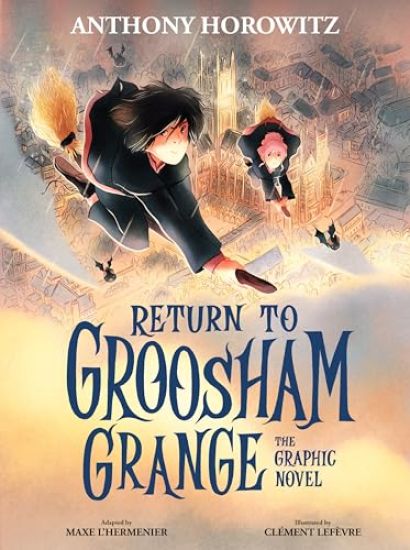
Anthony Horowitz’s classic gothic page-turner is brought to life in full colour in this hilarious graphic novel adaptation.The authorities are determined to destroy Groosham Grange, the creepy school of witchcraft and sorcery, but David Eliot and his friends have settled into life there, even if Jeffrey is now a ghost after a failed chemistry experiment. David is near the top of the leader board to win the school’s coveted top prize, the Unholy Grail, but David is losing valuable points and is convinced that a new boy, Vincent King, is plotting against him. The two boys undertake a series of trials that take them to London’s British Museum to retrieve a statue belonging to Miss Pedicure, the mummified English teacher. Can David win first prize and in doing so save the school from destruction?
The world’s bestselling teenage spy takes on a new and daring mission.When his best friend Tom is abducted, Alex Rider is given an ultimatum by Nightshade – a sinister cult of assassins with a score to settle. But what twisted evil are they planning, and how is it connected to a revolutionary new gaming system?With no idea who to trust, Alex finds himself dragged into a nightmare world – where nothing is real but the game could kill you.The clock is ticking and Nightshade is closing in…This much-awaited new book in the bestselling Alex Rider series continues Alex’s fight against the deadly assassins encountered in the last book, Nightshade. Alex still has unfinished business with this sinister group made up of brainwashed children, not least trying to reunite MI6 chief Mrs Jones with her long-lost son. The adventure takes us deep into the life-changing world of augmented reality, where even Alex will struggle to succeed against the technology. A thrilling new challenge for the world’s best-loved teen superspy.Praise for Nightshade:"Pacy and ingenious." The Sunday Times"Anthony Horowitz is on cracking form here: the plot is gripping, the characters — both familiar and new — are fully fleshed, and it sparkles with his characteristic wit. We could do with Alex Rider now..." Daily Mail
A special 25th anniversary edition of the first action-packed Alex Rider adventure, featuring a brand new short story.The iconic first book in the number one bestselling Alex Rider series by Anthony Horowitz. Fourteen-year-old Alex is forcibly recruited into MI6. Armed with secret gadgets, he is sent to investigate Herod Sayle, a man who is offering state-of-the-art Stormbreaker computers to every school in the country. But the teenage spy soon finds himself in mortal danger.
From global bestselling Anthony Horowitz, a brilliantly entertaining new mystery in the Hawthorne and Horowitz series.'Anthony Horowitz is easily the greatest of our crime writers' Sunday Times'Sheer genius ... A joy from start to finish' Independent___________Richmond Upon Thames is one of the most desirable areas to live in London. And Riverview Close - a quiet, gated community - seems to offer its inhabitants the perfect life.At least it does until Giles Kenworthy moves in with his wife and noisy children, his four gas-guzzling cars, his loud parties and his plans for a new swimming pool in his garden.His neighbours all have a reason to hate him and are soon up in arms.When Kenworthy is shot dead with a crossbow bolt through his neck, all of them come under suspicion and his murder opens the door to lies, deception and further death.The police are baffled. Reluctantly, they call in former Detective Daniel Hawthorne. But even he is faced with a seemingly impossible puzzle.How do you solve a murder when everyone has the same motive?
'A masterclass in mystery writing’ Ragnar Jónasson'Expect plenty of puzzles, red herrings and juicy murders' Express'Worthy of Agatha Christie' Publishers Weekly *Starred Review*'The computer isn’t born that can out-plot Horowitz . . . Glorious fun’ The Daily Telegraph______________Susan Ryeland has had enough of murder.She’s edited two novels about the famous detective, Atticus Pünd, and both times she’s come close to being killed. Now she’s back in England and she’s been persuaded to work on a third.The new ‘continuation’ novel is by Eliot Crace, grandson of Miriam Crace who was the biggest selling children’s author in the world until her death exactly twenty years ago.Eliot believes that Miriam was deliberately poisoned. And when he tells Susan that he has hidden the identity of Miriam’s killer inside his book, Susan knows she’s in trouble once again.As Susan works on Pünd’s Last Case, a story set in an exotic villa in the South of France, she uncovers more and more parallels between the past and the present, the fictional and the real world – until suddenly she finds that she has become a target herself.It seems that someone in Eliot’s family doesn’t want the book to be written. And they will do anything to prevent it.______________More love for Marble Hall Murders:'Diabolically clever . . .It’s a cliché to describe prolific authors as being at the top of their game (and often seems to suggest the opposite), but it’s true here. Marble Hall Murders is as cunning a mystery as you’ll read all year' New York Times'The dividing lines between reality and fiction (a Horowitz trademark) are deliciously intertwined' Financial Times‘A masterfully constructed whodunit’ The Business Standard'[A] page-turner of a puzzle' Washington PostReaders love Marble Hall Murders:‘A must-read!’ 5-star reader review‘One of the top crime books of 2025’ 5-star reader review‘Absolutely brilliant!’ 5-star reader review‘Smart, gorgeously written and compelling’ 5-star reader review‘An excellent whodunnit’ 5-star reader review‘Absolute perfection’ 5-star reader review
SHE PLANNED HER OWN FUNERAL. BUT DID SHE ARRANGE HER OWN MURDER?New York Times bestselling author of Magpie Murders and Moriarty, Anthony Horowitz has yet again brilliantly reinvented the classic crime novel, this time writing a fictional version of himself as the Watson to a modern-day Holmes.One bright spring morning in London, Diana Cowper - the wealthy mother of a famous actor - enters a funeral parlor. She is there to plan her own service.Six hours later she is found dead, strangled with a curtain cord in her own home.Enter disgraced police detective Daniel Hawthorne, a brilliant, eccentric investigator who's as quick with an insult as he is to crack a case. Hawthorne needs a ghost writer to document his life; a Watson to his Holmes. He chooses Anthony Horowitz.Drawn in against his will, Horowitz soon finds himself a the center of a story he cannot control. Hawthorne is brusque, temperamental and annoying but even so his latest case with its many twists and turns proves irresistible. The writer and the detective form an unusual partnership. At the same time, it soon becomes clear that Hawthorne is hiding some dark secrets of his own.A masterful and tricky mystery that springs many surprises, The Word is Murder is Anthony Horowitz at his very best.
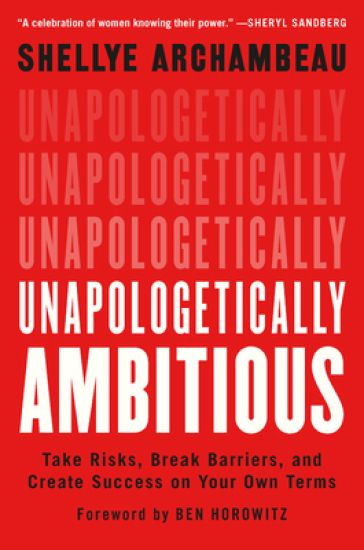
Full of empowering wisdom from one of high tech's first female African American CEOs, this inspiring leadership book for readers of Dare to Lead and Start with Why offers a blueprint for how to achieve your personal and professional goals, drawn from the author's own compelling story of how she weathered life's difficulties to build massive success.Shellye Archambeau recounts how she overcame the challenges she faced as a young black woman, wife, and mother, managing her personal and professional responsibilities while climbing the ranks at IBM and subsequently in her roles as CEO. Through the busts and booms of Silicon Valley in the early 2000s, this bold and inspiring book details the risks she took and the strategies she engaged to steer her family, her career, and her company MetricStream toward success.Through her journey, Shellye discovered that ambition alone is not enough to achieve success. Here, she shares the practical strategies, tools, and approaches readers can employ right now, including concrete steps to most effectively:* Dismantle impostor syndrome* Plan long-range* Take risks* Developing financial literacy* Build your network* Establish your reputation* Take charge of your career* Integrate work, marriage, parenthood, and self-careEach chapter lays out key takeaways and actions to increase the odds of achieving your personal and professional goals. With relatable personal stories that ground her advice in the real world and a foreword by leading venture capitalist and New York Times bestselling author Ben Horowitz, Unapologetically Ambitious invites readers to move beyond the solely supportive roles others expect them to fill, to learn how to carefully tread the thin line between assertive and aggressive, and to give themselves permission to strive for the top. Make no apologies for the height of your ambitions. Shellye Archambeau will show you how.
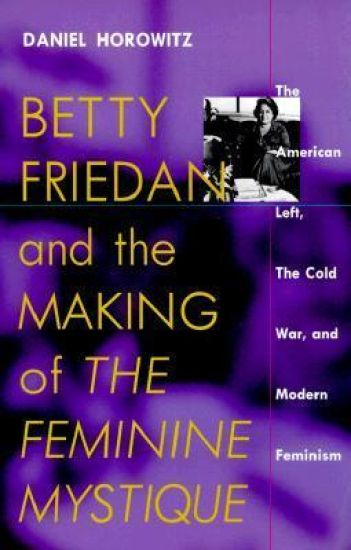
This biography of Betty Friedan traces the development of her feminist outlook from her childhood in Illinois to her marriage. Horowitz offers a reading of ""The Feminine Mystique"" and argues that the roots of Friedan's feminism run deeper than she has led us to believe. The links between the ""Popular Front"" of feminism of the ""Old Left"" and the ""New Left"" feminism of the 1960s is delineated, thereby casting doubt on the claims of novelty that many have made about social movements of the 1960s. He illuminates important details by mining everything from her papers while a student as Smith College, to her articles for the labour press. Horowitz advances the historiography with descriptions of women's experiences of left-wing politics and culture in the 1940s and 1950s and by limning Friedan's place within that context.
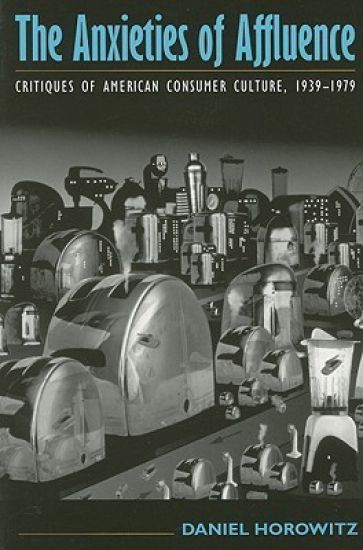
A wide-ranging exploration of conflicting American attitudes toward affluence This book charts the reactions of prominent American writers to the unprecedented prosperity of the decades following World War II. It begins with an examination of Lewis Mumford's war-time call for ""democratic"" consumption and concludes with an analysis of the origins of President Jimmy Carter's ""malaise"" speech of 1979. Between these bookends, Daniel Horowitz documents a broad range of competing views, each in its own way reflective of a deep-seated ambivalence toward consumer culture.
When initially published in 1972, Foundations of Political Sociology was acknowledged to be the first unified study of the field. It still provides a cross-fertilization of knowledge concerning the interrelation of social class and political power. Taking into account new specializations in social theory, the book covers all major social systems on a comparative international basis. The opening remarks prepared for this new printing provide an estimate of how the field has changed during the past quarter century, and what unexpected challenges have arisen in areas of public trust and personal privacy.This book examines fascism, communism, anarchism, conservatism, and liberalism as systems of rule as well as domains of theory. It is thus a unique effort at linking problems of history with problems of policy. The six sections of the book detail the historical and theoretical antecedents of this relatively new hybrid area in social research: policy coordinates of political sociology, types of social systems, forms of political ideologies, polarities of revolution and counter-revolution, civil-military relations, mass vs. elite contradictions, and threads of consensus and conflict running through these themes."Horowitz presents as his central thesis that in today's world no economic determinism can do justice to social reality. Foundations is the work of a politically sensitive and knowledgeable scholar."—Louis Schneider, Social Forces"Foundations of Political Sociology reflects extensive teaching and research in the area of political sociology. The book combines analytical insight with a provocative cutting edge and represents the best of Professor Horowitz."—Thomas R. McFaul, The Annals"Horowitz's political stance is interesting. Though he knows the radical literature, he distances himself from it. He sympathizes with everyone and strives to be provocative and yet elusive—a personal voice in a dogmatic discipline."—W.J.M. Mackenzie, Political Studies
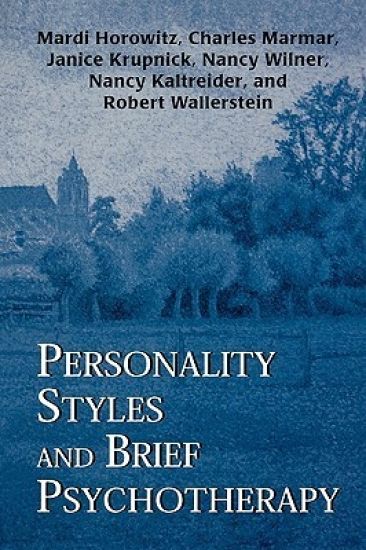
Written for therapists working with people in distress, this book describes the links between crisis and personality style, and offers a plan for approaching cases with these connections in mind. The authors discuss ways to help patients learn new coping strategies, modify enduring attitudes, and improve their relational patterns. The chapters outline the history of brief dynamic psychotherapy, describe an approach focused on current stressors, apply configurational analysis to case formulation and review, and detail five personality types.
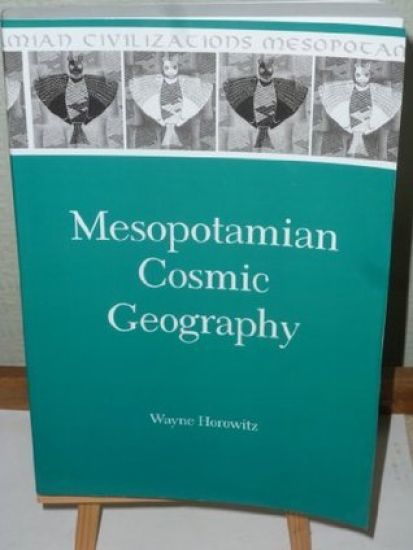
In this comprehensive study, Horowitz examines all of the extant Mesopotamian texts (both Sumerian and Akkadian) relating to the ideas of the physical universe and its constituent parts (Heaven, Earth, subterranean waters, underworld). The author shows that the Mesopotamian view of the universe was at once cohesive as well as discordant and deficient, while remaining fairly constant over more than 2,500 years.Horowitz first surveys the various sources for Mesopotamian cosmic geography, including various mythological and literary texts, as well as the famous “Babylonian Map of the World” and various astrological and astronomical texts. The universe was built by the gods in earliest times and was thought to be held together by cosmic bonds. Given this general notion, there is nevertheless significant variety in the inclusion or omission of various elements of the picture in texts of different genres and from different periods. In addition, the available evidence leaves a number of problems unsolved. What are the bounds of the universe? What is beyond the limits of the universe? In the second section of the book, Horowitz then discusses each of the various regions and their names in various locales and time periods, drawing on the disparate sources to show where there is coherence and where there is difference of perspective. In addition, he discusses all of the names for the different parts of the universe and examines the geographies of each region.Of importance for both Assyriologists and those interested in the history of ideas, particularly the cosmologies of the ancient Near East.
One of the earliest surviving manifestations of the cultural heritage of the Land of Israel in ancient times is the use of the cuneiform script from the Middle Bronze Age to the Iron Age. Cuneiform in Canaan: The Next Generation presents an updated version of the original Cuneiform in Canaan volume that was published by the Israel Exploration Society and the Hebrew University of Jerusalem in 2006. The updated volume presents all ninety-seven of the known texts, including new tablets and fragments from Hazor, Megiddo, and now, for the first time, Jerusalem. The volume provides critical editions, up-to-date bibliographies, and discussion of the sources, as well as a new, updated introduction highlighting the ongoing work of the Cuneiform in Canaan Research Project of the Hebrew University, under the directorship of Professor Wayne Horowitz of the Institute of Archaeology.
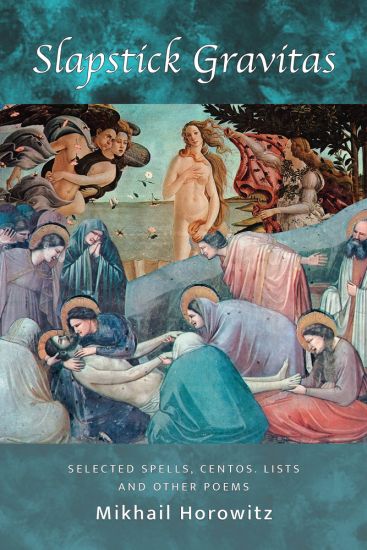
Over the course of his seventy years, Mikhail Horowitz reports being an English Romantic poet of the early 19th century, a Chinese hermit poet of the Tang Dynasty, a neo-Beat jazz poet of the Third Millennium, a proto-Surrealist and Oulipo poet of Paris between the wars, and a postmodern poet and spoken word performer in an increasingly medieval America. This volume offers a generous selection of his various avatars, featuring poems and prose pieces that are bracing, ludic, and often madly obsessive.
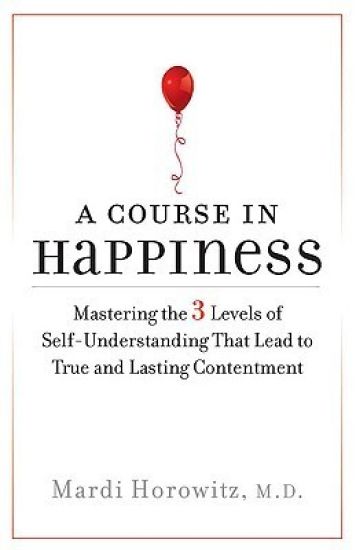
"Wise counsel from one of America's most respected psychiatrists." -Irvin Yalom, author of "Staring at the Sun" and "When Nietzsche Wept," Emeritus Professor of Psychiatry, Stanford University For many, getting in touch with that elusive thing called "happiness" is rarely simple--and achieving any kind of lasting happiness can feel like an insur-mountable challenge. Perhaps what we need is an education on the subject . . . "A Course in Happiness." In this book, Mardi Horowitz draws on more than forty years of experience as a practicing psychiatrist to provide readers with just this. According to Dr. Horowitz, happiness is essentially a by-product of self-knowledge; in order to be happy, we need to understand who we truly are. In "A Course in Happiness," he details a deeply rewarding course in mastering the three levels of self-understanding that underlie happiness: Integration the ability to assemble all the pieces of one's self into a whole, complete, understood, and respected "me." Intimacy the capacity to remain closely connected to the warmth of relationships with family, friends, colleagues, and others in a social community. Integrity the insight to know which of one's values are most dear and which are lower in priority--and then to be true to what is the most important, even in the midst of conflict. "A Course in Happiness" offers a road map for achieving genuine and lasting contentment.
From Ethnic Conflict to Stillborn Reform is the first systematic treatment of the major post-communist conflicts in both the former Yugoslavia - Bosnia-Herzegovina, Croatia, and Serbia - and the former Soviet Union - Armenia, Azerbaijan, Georgia, Moldova, and Tajikistan. It is also the first work that focuses not on causes but rather on consequences for democratization and market reform, the two most widely studied political outcomes in the developing world. Building on existing work emphasizing the effects of economic development and political culture, the book adds a new, comprehensive treatment of how war affects political and economic reform. Author Shale Horowitz employs both statistical evidence and historical case studies of the eight new nations to determine that ethnic conflict entangles, distracts, and destabilizes reformist democratic governments, while making it easier for authoritarian leaders to seize and consolidate power. As expected, economic backwardness worsens these rendencies, but Horowitz finds that powerful, reform-minded nationalist ideologies can function as antidotes. The comprehensiveness of the treatment, use of both qualitative and quantitative analysis, and focus on standard concepts from comparative politics make this book an excellent tool for classroom use, as well as a groundbreaking analysis for scholars.