Oil, diamonds, timber, food aid - just some of the suggestions put forward as explanations for African wars in the past decade. Another set of suggestions focuses on ethnic and clan considerations. These economic and ethnic or clan explanations contend that wars are specifically not fought by states for political interests with mainly conventional military means, as originally suggested by Carl von Clausewitz in the 19th century. This study shows how alternative social organizations to the state can be viewed as political actors using war as a political instrument.
Accessible introductions to ancient tragedies. Each volume discusses the main themes of a play and the central developments in modern criticism, while also addressing the play's historical context and the history of its performance and adaptation.One of our earliest surviving Greek tragedies, Aeschylus' Seven Against Thebes is an extraordinarily rich poetic text. It dramatises the civil war between the sons of Oedipus ?Polynices, the exile, and Eteocles, reigning king of Thebes. Polynices marches on Thebes to regain his throne along with six other champion warriors and their armies, but the expedition is doomed, and the meaning of Oedipus' enigmatic curse on his sons ultimately becomes clear through their simultaneous fratricide and the extinction of the Theban house.This book places the drama within the context of the connected trilogy of which it was a part. It investigates the play's tensions between city and family and the omnipresence of curse and ritual within the religious and political environment of fifth century Greece. The drama's focus on the world of male warriors, and its stark opposition of the sexes through the female Chorus, is analysed in terms of warrior ideology in epic and Greek understanding of appropriate behaviour. Finally, it explores the complex legacy of the play through its influence on Sophocles and Euripides, and shows how the drama's condemnation of civil war has been exploited as an analogue for events in modern history.
Fall in love with the romantic shores of Lake Como, Italy in this dazzling story about new beginnings'Fresh, intelligent, sparklingly escapist'Sunday MirrorLake Como, Italy, New Year's Eve. The perfect place to fall in love? Or the perfect place for everything to fall apart?Lucy may have suffered her fair share of bad men, but now she has Pete. Finally, a man worth sharing her favourite place with, Lake Como. That's if she can put mysterious phone calls and glamorous ex-girlfriends out of her mind.Taggie is rushed off her feet, but distraction is exactly what she needs to forget why she fled England and the sadness she left behind. She certainly doesn't have time for infuriating stranger Marco. A man is the last thing she needs right now.Lucy and Taggie might not know it, but their lives are about to collide.The New Year might begin with fireworks - but how will it end?----'A writing powerhouse' Carrie Hope Fletcher'Utterly romantic' Adele Parks'Heart-warming and wonderfully romantic' Rosanna Ley'The perfect getaway read'Red
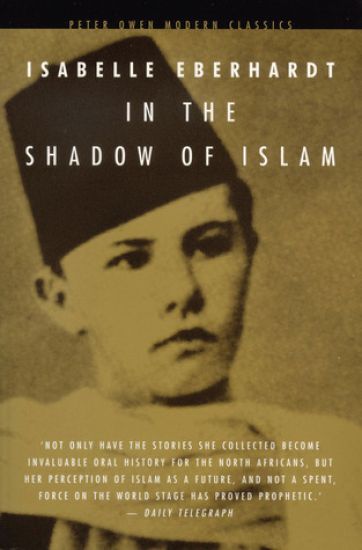
IN THE SHADOW OF ISLAM is an extraordinary evocation of the desert and its people by a woman who dressed as a man in order to travel alone and unimpeded throughout North Africa. In 1897 Isabelle Eberhardt, aged 20, left an unconventional life in Geneva for Kenadsa, at the Morroccan frontier. Gripped by spiritual restlessness and the desire to break free from the confinements of her society and its perceived patriarchy, she travelled into the desert, and into the heart of Islam. Her experiences inspired a profound self-examination and, as a record of Eberhardt's inner and outer journeys, IN THE SHADOW OF ISLAM is today regarded as one of the true classics of travel writing.
Le Théâtre de la Foire, né dans les foires parisiennes de Saint-Germain et de Saint-Laurent, a fait courir tout Paris depuis sa création jusqu’à sa disparition en 1762. Spectacle foisonnant puisque des dizaines d’auteurs en ont constitué le fonds littéraire qui comporte plusieurs centaines de pièces. Il existe d’excellentes études partielles, mais aucune étude d’ensemble n’avait été entreprise sur un sujet où la critique littéraire rencontre le renouvellement des arts du spectacle et l’évolution des mœurs et de la pensée. Il s’agissait donc de combler cette lacune par une synthèse sur le Théâtre de la Foire considéré comme une forme de sociabilité essentielle à la compréhension de l’histoire des idées à une époque donnée, dans le mouvement même des représentations de la vie quotidienne.Si le but apparent de ce théâtre est d’amuser un public par un spectacle original et inventif, ses ambitions sont beaucoup plus vastes. Issu du milieu mercantile des foires, il diffuse des idées de libre entreprise qu’il met lui-même en œuvre, en s’opposant aux privilèges de la Comédie-Française et de l’Opéra. Dans la société d’Ancien Régime où apparaissent des signes de décomposition, il tente de réformer les mœurs et de promouvoir dans la bonne humeur certaines nouvelles idées philosophiques dont une morale bourgeoise et séculière du juste milieu.Face aux salles officielles qu’immobilise leur statut et une scène populaire inconvenante, il élabore une nouvelle forme de théâtralité amalgamant les pratiques des spectacles de rue tels l’acrobatie, les danseurs de corde ou la pantomime avec les traditions du théâtre savant, de l’Opéra et des scènes française et italienne.Sa conception essentiellement baroque, brillante, faussement naïve et populaire semble anticiper les grandes mises en scène actuelles. Le Théâtre de la Foire demeure aujourd’hui le meilleur miroir de la société parisienne du XVIIIe siècle dont la référence essentielle est au-delà du théâtre lui-même la théâtralisation de son quotidien.
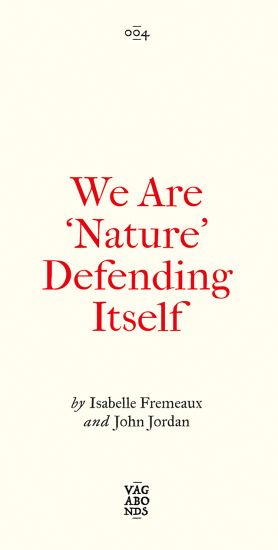
In 2008, as the storms of the financial crash blew, Isabelle Fremeaux and Jay Jordan deserted the metropolis and their academic jobs, traveling across Europe in search of post-capitalist utopias. They wanted their art activism to no longer be uprooted. They arrived at a place French politicians had declared lost to the republic, otherwise know as the zad (the zone to defend): a messy but extraordinary canvas of commoning, illegally occupying 4,000 acres of wetlands where an international airport was planned. In 2018, the 40-year-long struggle snatched an incredible victory, defeating the airport expansion project through a powerful cocktail that merged creation and resistance. Fremeaux and Jordan blend rich eyewitness accounts with theory, inspired by a diverse array of approaches, from neo-animism to revolutionary biology, insurrectionary writings and radical art history. Published in collaboration with the Journal of Aesthetics & Protest.
A vital rethinking of memory and the moving image for the digital age, Isabelle McNeill investigates the role of the moving image in cultural memory, considering the impact of digital technologies on visual culture. Drawing on an interdisciplinary range of theoretical resources and an unusual body of films and moving image works, the author examines the ways in which recent French filmmaking conceptualises both the past and the workings of memory. Ultimately the author argues that memory is an intersubjective process, in which filmic forms continue to play a crucial role even as new media come to dominate our contemporary experience. Memory and the Moving Image: *Introduces new ways of thinking about the relation between film and memory, arising from a compelling, interdisciplinary study of theories and films *Subtly explores the French context while drawing theoretical conclusions with wider implications and applicability *Provides detailed and illuminating close readings of varied moving image works to aid theoretical explorations *Moves away from auteurist approaches, examining work by canonical directors including Jean-Luc Godard, Chris Marker and Agnes Varda alongside that of less well-known filmmakers such as Claire Simon and Yamina Benguigui *Brings together thinkers such as Bergson, Deleuze, Bazin and Barthes with, for example, Rodowick and Mulvey, in an engaging interweaving of theories. Works considered include Jean-Luc Godard's Histoire(s) du Cinema (1989-98), Yamina Benguigui's Memoires d'Immigres (1997), Chris Marker's CD-ROM Immemory (1998), Claire Simon's Mimi (2003), Michael Haneke's Cache (2005) and Agnes Varda's multi-media exhibition, L'Ile et Elle (2006).
A vital rethinking of memory and the moving image for the digital age, Isabelle McNeill investigates the role of the moving image in cultural memory, considering the impact of digital technologies on visual culture. Drawing on an interdisciplinary range of theoretical resources and an unusual body of films and moving image works, the author examines the ways in which recent French filmmaking conceptualises both the past and the workings of memory. Ultimately the author argues that memory is an intersubjective process, in which filmic forms continue to play a crucial role even as new media come to dominate our contemporary experience.Memory and the Moving Image:*Introduces new ways of thinking about the relation between film and memory, arising from a compelling, interdisciplinary study of theories and films*Subtly explores the French context while drawing theoretical conclusions with wider implications and applicability*Provides detailed and illuminating close readings of varied moving image works to aid theoretical explorations*Moves away from auteurist approaches, examining work by canonical directors including Jean-Luc Godard, Chris Marker and Agnes Varda alongside that of less well-known filmmakers such as Claire Simon and Yamina Benguigui*Brings together thinkers such as Bergson, Deleuze, Bazin and Barthes with, for example, Rodowick and Mulvey, in an engaging interweaving of theories.Works considered include Jean-Luc Godard's Histoire(s) du Cinema (1989-98), Yamina Benguigui's Memoires d'Immigres (1997), Chris Marker's CD-ROM Immemory (1998), Claire Simon's Mimi (2003), Michael Haneke's Cache (2005) and Agnes Varda's multi-media exhibition, L'le et Elle (2006).
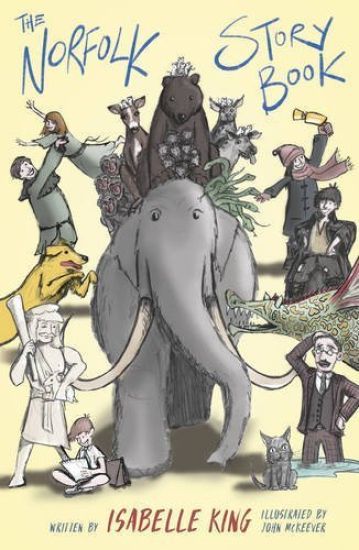
Have you ever wondered what a snap dragon, a mammoth and mustard all have in common? The answer is Norfolk! Inspired by seven unique objects at Norfolk Collections Centre, this book tells seven stories, all from different periods in time, which combine local history with imagination and fun. Discover the magic of the Norwich Snap Dragon, adventure through pre-historic Norfolk with a mammoth, find out why the region’s famous mustard doesn’t mix with smelly feet, and get swept back in time to experience Norwich as it was seen through the eyes of two mysterious statues.
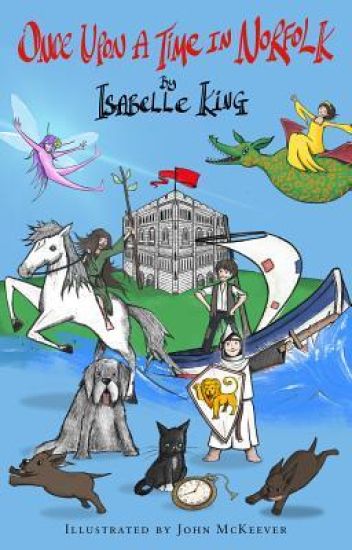
From the author of The Norfolk Story Book comes this book of delightful stories. Set sail for adventure on the stormy seas of Yarmouth, discover enchanting tales woven by strangers in Elizabethan Norwich, journey through the forests of ancient Norfolk with a courageous Iceni girl, travel through time with the curious kitten of Thetford, meet the King of a magnificent Norman Castle and find out what life was like in a Victorian Workhouse. Inspired by the museums throughout Norfolk Museums Service, this book consists of eight short stories, all original works of fiction which combine local history with imagination and fun.
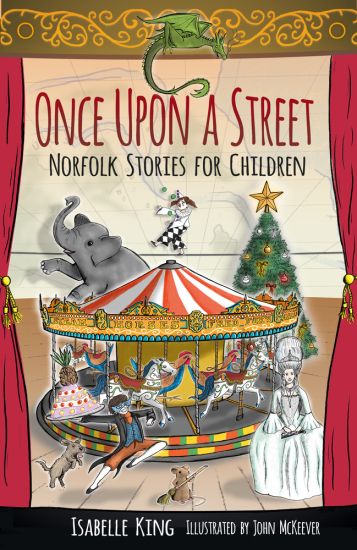
On every street there is a story. Roll up, roll up for a circus adventure in Edwardian Yarmouth, merry-go-race through King’s Lynn history with fabulous fairground animals, get swept back in time with the marvellous mice of Wymondham, meet the magical medieval dragon of Norwich and the musical Owl of Holt, discover the magnificent street procession of a Tudor Queen and get ready to be bedazzled by the delightful dancer of a Georgian theatre. Inspired by collections at Norfolk Heritage Centre and the history of Norfolk streets, this book consists of imaginative short stories where love and friendship take centre stage.
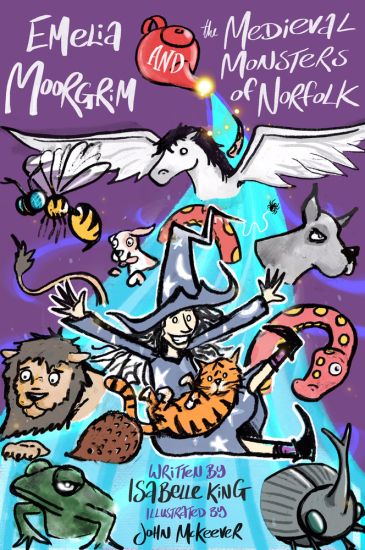
Join Emelia Moorgrim and her cat, Monty Marmalade, as they courageously use their time-travel watch to journey through history, untangle mysteries and find the monsters before they cause too much trouble.Inspired by items at Norfolk Heritage Centre and Norfolk landmarks, this book adventures through the ages with many monsters in the pages!
The principle of airline substantial ownership and effective control is one of the biggest impediments to the air transport industry growth. Legitimately included in the bilateral agreements since 1946 for national security reasons, States have maintained the principle over the years and used it as a protectionist tool, as well as a bargaining chip. Today, considering that liberalization and globalization concepts are already well-established in the biggest industrial sectors, and a large number of cross-border investments occurs in most of the service sectors through mergers and acquisitions, the time is ripe to remove national restrictions on foreign investments from the airline industry. This comprehensive book identifies those factors that still justify the imposition of national ownership restrictions on airlines and examines the prospects for change in the current policies and regulatory regimes that support them. The readership includes specialists in government departments of transportation, civil aviation authorities and agencies, international organizations, airline executives concerned with general management, economic, legal and public affairs, aviation lawyers, airline pilot associations, law schools concerned with international aviation law.
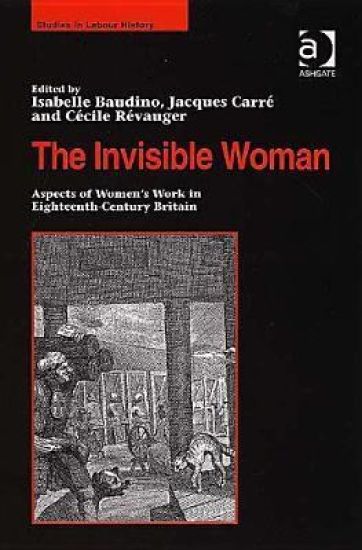
Most social historians writing about working women in pre-nineteenth century Britain have tended to concentrate on fairly large groups, such as factory workers or domestic servants, often in an attempt to reach some conclusions regarding their standards of living and social position. Another approach has lead feminist historians to search for underlying causes of women's exploitation through the locus of class and gender. Without ignoring these crucial issues, this volume written by cultural historians takes a slightly different approach, focusing on the status of small, sometimes tiny, groups of women holding marginal positions in the labour market, and often employed on an irregular basis. Women such as housekeepers, nurses, camp followers, governesses, actresses and musicians, to take some of the cases examined in this volume, generally did not have stable, permanent employment. Even female tradesmen often only worked for short periods of their lives. The temporary, unreliable character of such work can be partly related to the changing needs of women at different periods of their lives, but it also has much to do the status of women's work in eighteenth century British society. Providing case-studies of women's work in three different environments - middle and upper class households, male dominated communities and societies and the world of the arts - this collection asks fresh questions about women's aspirations and identity at various levels of society. In comparing and contrasting these varying spheres of female employment, this book throws in sharp relief the contrasting attitude to women's work inside and outside the home, and how the latter was often regarded as having a potentially destabilising and transgressive effect on British society.
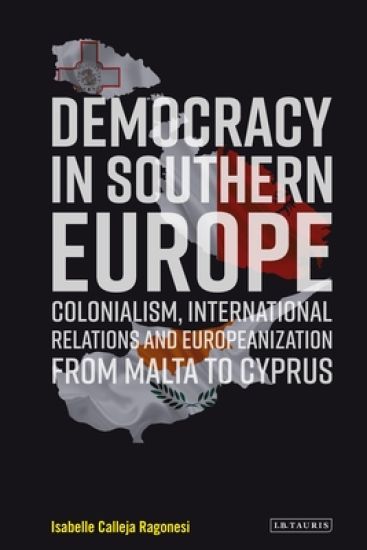
How have Malta and Cyprus - both EU members – transitioned from colonial island states to independent democracies? With the assistance of primary documentation this book traces the difficult path of these two states to becoming independent liberal democracies by using the pathway of democratization through decolonization. Using socio-economic and political data, analysed through the microscope of political science and international relations theories, Isabelle Calleja Ragonesi charts the progress of the two islands in the context of a number of four distinct phases. Firstly decolonization, independence and achieving the status of procedural democracies; secondly post-colonial independence consolidating democracy and regime breakdown; thirdly sovereign nation-state status and second attempts at consolidating democracy and finally attempting to reach substantive democracy status and EU membership. The study of these two states is contextualized within the context of democratization in Southern Europe and the cases of Malta and Cyprus provide new insights on the region for scholars of political science and international institutions.
Different international relations theorists have studied political change, but all fall short of sufficiently integrating human reactions, feelings, and responses to change in their theories. This book adds a social psychological component to the analysis of why nations, politically organized groups, or states enter into armed conflict. The Disequilibrium, Polarization, and Crisis Model is introduced, which draws from prospect theory, realism, liberalism, and constructivism. The theory considers how humans react and respond to change in their social, political, and economic environment. Three case studies, the U.S. Civil War, the Yugoslav Wars (1991-1995), and the First World War are applied to illustrate the model’s six process stages: status quo, change creating shifts that lead to disequilibrium, realization of loss, hanging on to the old status quo, emergence of a rigid system, and risky decisions leading to violence and war.