
Kirjahaku
Etsi kirjoja tekijän nimen, kirjan nimen tai ISBN:n perusteella.
1000 tulosta hakusanalla J R Sharp

A graduate textbook, based on a course taught by the author. Placing emphasis on engineering applications, it pays special attention to crack and contact problems, interfaces between dissimilar media, thermoelasticity, singular asymptotic stress fields and three-dimensional problems.

A graduate textbook, based on a one-semester course taught by the author. Placing emphasis on engineering applications, it pays special attention to crack and contact problems, interfaces between dissimilar media, thermoelasticity, singular asymptotic stress fields and three-dimensional problems.
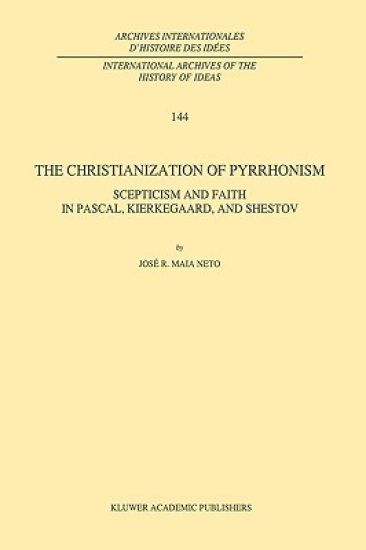
Augustine's christianization of Plato and Thomas Aquinas's of Aristotle provided the two main foundations of medieval Judeo- Christian philosophy. In The Christianization of Pyrrhonism, Jose R. Maia Neto shows that Greek scepticism played a similar role in the development of a major strand of modern religious thought. From the Jansenist reaction of Molinism in the early 17th century to Shestov's resistance to the arrival of Kantian enlightenment in Russia in the late 19th century, Greek scepticism was reconstructed in terms of Christian doctrines and used against major secular philosophers who posed threats to religion. At the same time, the ancient sceptics' practical stance was attacked in order that it does not constitute a viable alternative to the modern secular philosophies. The resulting Christianized Pyrrhonism would be the basis for a genuine Christian or Biblical thought, for the first time emancipated from the rationalist assumptions and methods of Greek philosophy. The Christianization of Pyrrhonism is extremely valuable for those interested in the modern developments of ancient scepticism, in the relations between religious and philosophical ideas in modernity, and for scholars and the general public interested in Pascal, Kierkegaard and Shestov.
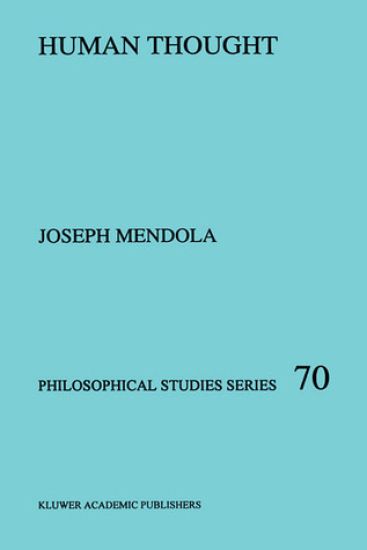
Conscious experience and thought content are customarily treated as distinct problems. This book argues that they are not. Part One develops a chastened empiricist theory of content, which cedes to experience a crucial role in rooting the contents of thoughts, but deploys an expanded conception of experience and of the ways in which contents may be rooted in experience. Part Two shows how, were the world as we experience it to be, our neurophysiology would be sufficient to constitute capacities for the range of intuitive thoughts recognized by Part One. Part Three argues that physics has shown that our experience is not veridical, and that this implies that no completely plausible account of how we have thoughts is comprehensible by humans. Yet this leaves thoughts not especially suspect, because such considerations also imply that all positive and contingent human conceptions of anything are false.
Conscious experience and thought content are customarily treated as distinct problems. This book argues that they are not. Part One develops a chastened empiricist theory of content, which cedes to experience a crucial role in rooting the contents of thoughts, but deploys an expanded conception of experience and of the ways in which contents may be rooted in experience. Part Two shows how, were the world as we experience it to be, our neurophysiology would be sufficient to constitute capacities for the range of intuitive thoughts recognized by Part One. Part Three argues that physics has shown that our experience is not veridical, and that this implies that no completely plausible account of how we have thoughts is comprehensible by humans. Yet this leaves thoughts not especially suspect, because such considerations also imply that all positive and contingent human conceptions of anything are false.
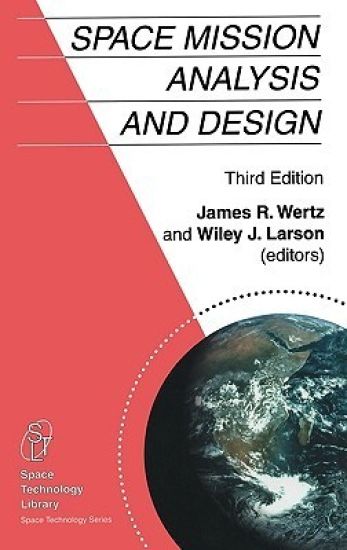
This famous and practical handbook for Space Mission Engineering draws on leading aerospace experts to carry readers through mission design, from orbit selection to ground ops. SMAD III updates the technology, provides greater emphasis on small spacecraft design and the cost-reduction process, and includes more detail on multi-satellite manufacturing, space computers, payload design and autonomous systems.
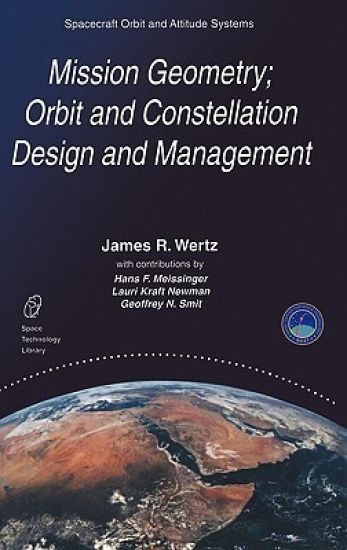
Mission Geometry: Orbit and Constellation Design and Management (OCDM) is the most complete treatment available for many elements of space mission design and astronautics. OCDM discusses both the similarities and differences between orbit and altitude systems in terms of hardware, algorithms, design, and processing requirements. With the demand for reduced cost and the introduction of extensive on-board computing, what were once entirely separate disciplines have begun to merge. This volume will speed that process. In all areas, OCDM is meant to be practical, with recommendations, insights, formulas, and numerical recipes based on 40 years of spaceflight experience from organizations worldwide. It is meant to be both a text and reference work that can be used by those entering the field and by senior engineers engaged in the design, analysis, construction, or on-orbit operations of orbit and attitude systems and components.
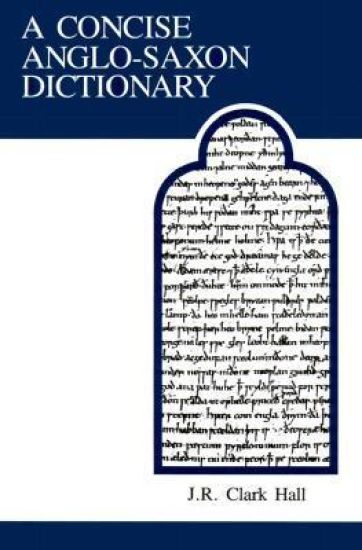
This classic dictionary deals carefully and exhaustively with all the words which occur in Anglo-Saxon poetry and prose. Variant dialectic forms are given, together with variant forms found in the same dialect. Purely poetic words and words not common in prose are indicated, and references are given to the passages in which they occur. First published in 1894, this is a reprint of the fourth edition (Cambridge University Press, 1960).
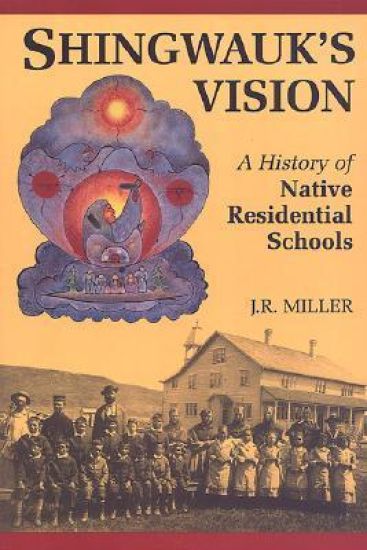
With the growing strength of minority voices in recent decades has come much impassioned discussion of residential schools, the institutions where attendance by Native children was compulsory as recently as the 1960s. Former students have come forward in increasing numbers to describe the psychological and physical abuse they suffered in these schools, and many view the system as an experiment in cultural genocide. In this first comprehensive history of these institutions, J.R. Miller explores the motives of all three agents in the story. He looks at the separate experiences and agendas of the government officials who authorized the schools, the missionaries who taught in them, and the students who attended them. Starting with the foundations of residential schooling in seventeenth-century New France, Miller traces the modern version of the institution that was created in the 1880s, and, finally, describes the phasing-out of the schools in the 1960s. He looks at instruction, work and recreation, care and abuse, and the growing resistance to the system on the part of students and their families. Based on extensive interviews as well as archival research, Miller's history is particularly rich in Native accounts of the school system. This book is an absolute first in its comprehensive treatment of this subject. J.R. Miller has written a new chapter in the history of relations between indigenous and immigrant peoples in Canada. Co-winner of the 1996 Saskatchewan Book Award for nonfiction. Winner of the 1996 John Wesley Dafoe Foundation competition for Distinguished Writing by Canadians Named an 'Outstanding Book on the subject of human rights in North America' by the Gustavus Myer Center for the Study of Human Rights in North America.
The twelve essays that make up Reflections on Native-Newcomer Relations illustrate the development in thought by one of Canada's leading scholars in the field of Native history - J.R. Miller. The collection, comprising pieces that were written over a period spanning nearly two decades, deals with the evolution of historical writing on First Nations and Métis, methodological issues in the writing of Native-newcomer history, policy matters including residential schools, and linkages between the study of Native-newcomer relations and academic governance and curricular matters. Half of the essays appear here in print for the first time, and all use archival, published, and oral history evidence to throw light on Native-Newcomer relations. Miller argues that the nature of the relationship between Native peoples and newcomers in Canada has varied over time, based on the reasons the two parties have had for interacting. The relationship deteriorates into attempts to control and coerce Natives during periods in which newcomers do not perceive them as directly useful, and it improves when the two parties have positive reasons for cooperation. Reflections on Native-Newcomer Relations opens up for discussion a series of issues in Native-newcomer history. It addresses all the trends in the discipline of the past two decades and never shies from showing their contradictions, as well as those in the author's own thinking as he matured as a scholar.
The twelve essays that make up Reflections on Native-Newcomer Relations illustrate the development in thought by one of Canada's leading scholars in the field of Native history - J.R. Miller. The collection, comprising pieces that were written over a period spanning nearly two decades, deals with the evolution of historical writing on First Nations and Métis, methodological issues in the writing of Native-newcomer history, policy matters including residential schools, and linkages between the study of Native-newcomer relations and academic governance and curricular matters. Half of the essays appear here in print for the first time, and all use archival, published, and oral history evidence to throw light on Native-Newcomer relations. Miller argues that the nature of the relationship between Native peoples and newcomers in Canada has varied over time, based on the reasons the two parties have had for interacting. The relationship deteriorates into attempts to control and coerce Natives during periods in which newcomers do not perceive them as directly useful, and it improves when the two parties have positive reasons for cooperation. Reflections on Native-Newcomer Relations opens up for discussion a series of issues in Native-newcomer history. It addresses all the trends in the discipline of the past two decades and never shies from showing their contradictions, as well as those in the author's own thinking as he matured as a scholar.
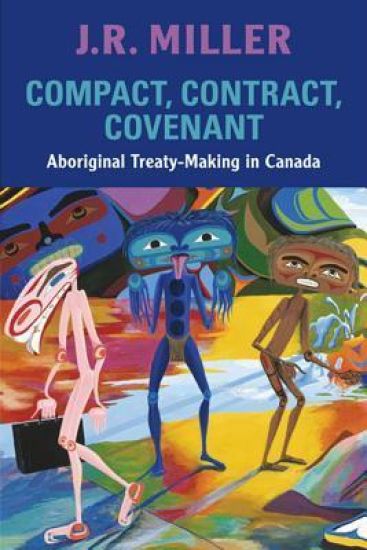
One of Canada's longest unresolved issues is the historical and present-day failure of the country's governments to recognize treaties made between Aboriginal peoples and the Crown. Compact, Contract, Covenant is renowned historian of Native-newcomer relations J.R. Miller's exploration and explanation of more than four centuries of treaty-making. The first historical account of treaty-making in Canada, Miller untangles the complicated threads of treaties, pacts, and arrangements with the Hudson's Bay Company and the Crown, as well as modern treaties to provide a remarkably clear and comprehensive overview of this little-understood and vitally important relationship. Covering everything from pre-contact Aboriginal treaties to contemporary agreements in Nunavut and recent treaties negotiated under the British Columbia Treaty Process, Miller emphasizes both Native and non-Native motivations in negotiating, the impact of treaties on the peoples involved, and the lessons that are relevant to Native-newcomer relations today. Accessible and informative, Compact, Contract, Covenant is a much-needed history of the evolution of treaty-making and will be required reading for decades to come.
Story of J. R. "Model-T" Tate's thru-hike of the Appalachian TrailRecollections of grueling climbs, knee-wrecking descents, mountaintop thunderstorms, snakes underfoot, and the myriad characters encountered on an AT thru-hikeConveys the beauty of the trail and the community that surrounds it

Three-time thru-hiker J. R. Tate explores the traditions and lore of the Appalachian Trail: The thru-hiker who began his hike by parachuting onto Springer MountainThe trail town that sentenced an elephant to deathYogi-ing strategiesTrail hermits Old Hog Greer and Uncle Nick GrindstaffMurders on the ATGhosts in the White Mountains of New Hampshir
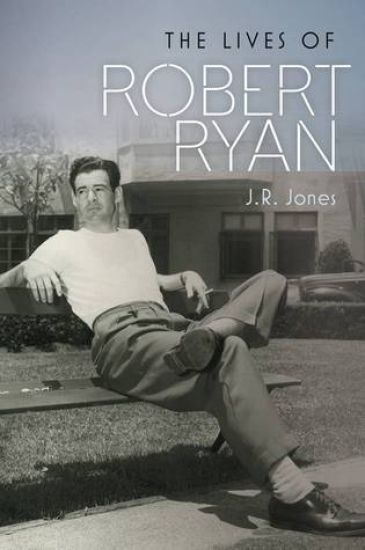
The Lives of Robert Ryan provides an inside look at the gifted, complex, intensely private man whom Martin Scorsese called "one of the greatest actors in the history of American film." The son of a Chicago construction executive with strong ties to the Democratic machine, Ryan became a star after World War II on the strength of his menacing performance as an anti-Semitic murderer in the film noir Crossfire. Over the next quarter century he created a gallery of brooding, neurotic, and violent characters in such movies as Bad Day at Black Rock, Billy Budd, The Dirty Dozen, and The Wild Bunch. His riveting performances expose the darkest impulses of the American psyche during the Cold War. At the same time, Ryan's marriage to a liberal Quaker and his own sense of conscience launched him into a tireless career of peace and civil rights activism that stood in direct contrast to his screen persona. Drawing on unpublished writings and revealing interviews, film critic J.R. Jones deftly explores the many contradictory facets of Robert Ryan's public and private lives, and how these lives intertwined in one of the most compelling actors of a generation.
Fail – Finding Hope and Grace in the Midst of Ministry Failure
J.R. Briggs; Eugene H. Peterson
Inter-Varsity Press,US
2014
nidottu
2014 Best Books About the Church from Byron Borger, Hearts and Minds Bookstore "I thought God had called me to plant this church. Why did we have to shut our doors after only three years?" "I was at my breaking point. Then I got the news that our nine-year-old daughter had leukemia. I would have quit ministry forever, but I had no other employable skills." "False accusations were made against me and my family, wrecking our reputation permanently and forcing us to leave not only the church, but move out of the area." "I've served my church for the past 27 years and I've grown that church from 150 to 24 people." What do we do when we've failed? Some ministries are shipwrecked by moral failures like affairs or embezzlement. But for most of us, the sense of failure is more ordinary: disillusionment, inadequacy, declining budgets, poor decisions, opposition, depression, burnout. Many pastors are deeply broken and wounded, and we come to doubt that God has any use for us. J.R. Briggs, founder of the Epic Fail Pastors Conference, knows what failure feels like. He has listened to pastors who were busted in a prostitution sting or found themselves homeless when ejected from ministry. With candid vulnerability, Briggs explores the landscape of failure, how it devastates us and how it transforms us. Without offering pat answers or quick fixes, he challenges our cultural expectations of success and gives us permission to grieve our losses. Somehow, in the midst of our pain, we are better positioned to receive the grace of healing and restoration.
Eldership and the Mission of God – Equipping Teams for Faithful Church Leadership
J.R. Briggs; Bob Hyatt; Alan Hirsch
Inter-Varsity Press,US
2015
nidottu
Every church needs leadership. But leadership should not reside in a single pastor. The biblical model for church leadership is found in teams of elders who together guide the community into God's mission. Church leaders J.R. Briggs and Bob Hyatt provide a comprehensive picture of elders as agents of mission for their communities. Healthy eldership structures a church for mission, as elder teams model the kind of community the local church is intended to be and steward the gospel in a local context. Looking at eldership through a missiological lens, Briggs and Hyatt unpack the role, character and posture of a mission-oriented elder. Elders oversee, shepherd, teach, equip and model for God?s people what life with Jesus looks like in a particular context. Including a study guide that elder teams can work through together, the authors provide practical guidance for how elders are selected, work together, make decisions, protect the congregation and invest in the lives of others. Discover here a clear vision for what it means to be a faithful elder. May it help you and your church thrive in pursuing God's mission in the world.
Ministry Mantras – Language for Cultivating Kingdom Culture
J.R. Briggs; Bob Hyatt; Leonard Sweet
Inter-Varsity Press,US
2016
nidottu
We become what we say. How do you grow your church in its health and mission? Sometimes our communities lack focus or vision. We lose sight of our ministry priorities, or our people don't have concrete reminders of why we do what we do. We need concise, memorable tools for cultivating culture, communicating ministry vision, and developing leaders. The language we use shapes our communities. Pastors J.R. Briggs and Bob Hyatt share seventy-five short and memorable mantras they use to cast vision, inspire ministry, and create a healthy church culture. These brief chapters provide a wealth of practical wisdom for leadership, discipleship, community, and witness, embodying best practices with vivid stories of on-the-ground ministry. These bite-sized ministry insights are ideal for church leaders to discuss with their teams and implement in their communities. They provide accessible handles for growing the health of your local church, for the sake of the kingdom.
Sussex has become synonymous with its first inhabitant, ‘Boxgrove Man’, but it was fashioned by the Romans, invaded by the Saxons, and became a strategic defence. It achieved its greatest importance with the Normans who made it the main highway from England to the Continent. “The volume rapidly achieved classic status ... first choice for students of Sussex history and the essential companion for all visitors ...” Chichester Observer