Kirjojen hintavertailu. Mukana 12 016 292 kirjaa ja 12 kauppaa.

Kirjahaku

Etsi kirjoja tekijän nimen, kirjan nimen tai ISBN:n perusteella.

1000 tulosta hakusanalla Jacques Derrida

Jacques Roubaud and the Invention of Memory

Jacques Roubaud and the Invention of Memory

The University of North Carolina Press
2006
nidottu
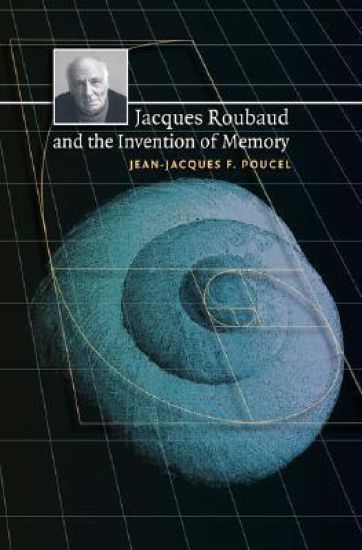
Jean-Jacques Poucel offers a comprehensive introduction to the poetry and novels of Jacques Roubaud, a prominent member of the French experimental group OuLiPo (Ouvroir de Litterature Potentielle, or Workshop of Potential Literature). Poucel argues that the Oulipian practice of writing under constraint provides a new vehicle for literary memory that strengthens the terms by which poetic traditions are transmitted. In addition to situating the importance of Roubaud's work within a broad contemporary context, this study focuses on the specific sites of interest in some of Roubaud's favorite source texts, including troubadour poetry, the tradition of the sonnet and the Canzoniere, Japanese short forms (waka), early surrealist writing, the mathematics of Bourbaki, and the work of Oulipian writers such as Raymond Queneau, Georges Perec, and Italo Calvino.
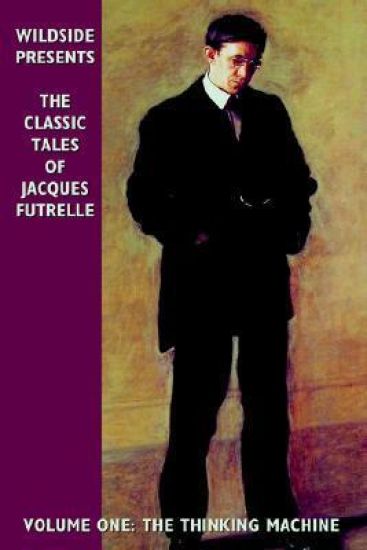
The Classic Tales of Jacques Futrelle

The Classic Tales of Jacques Futrelle

Jacques Futrelle

Wildside Press
2024
sidottu
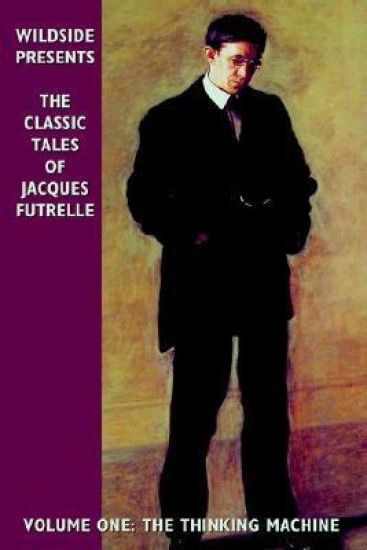
JACQUES FUTRELLE (1875-1912) is widely considered "the American Sherlock Holmes" for his series of stories about Professor Augustus S. F. X. Van Dusen, who is better known as The Thinking Machine. Van Dusen, a master of logic, believed he could think himself out of any situation-and solve any crime-through the use of his immense intellect. Through dozens of stories, The Thinking Machine solved locked-room puzzles, kidnappings, and more murders than can be easily counted, proving again and again that brain-power is the answer to any problem.
The Classic Tales of Jacques Futrelle

The Classic Tales of Jacques Futrelle

Jacques Futrelle

Wildside Press
2004
pokkari
JACQUES FUTRELLE (1875-1912) is widely considered "the American Sherlock Holmes" for his series of stories about Professor Augustus S. F. X. Van Dusen, who is better known as The Thinking Machine. Van Dusen, a master of logic, believed he could think himself out of any situation-and solve any crime-through the use of his immense intellect. Through dozens of stories, The Thinking Machine solved locked-room puzzles, kidnappings, and more murders than can be easily counted, proving again and again that brain-power is the answer to any problem.
Jacques Maritain

Jacques Maritain

Jude P. Dougherty

The Catholic University of America Press
2003
nidottu
Jacques Maritain, one of the most influential philosophers of the 20th century, was a preeminent interpreter of the thought of Thomas Aquinas and author of more than 50 books in metaphysics, the philosophy of science, aesthetics and social and political philosophy. A giant in his field, he combined his Catholic faith and wide-ranging intellect to address contemporary issues and the many facets of the human experience. In this book, Jude P. Dougherty shares his lifetime interest in and study of Maritain with readers. He offers a complete introduction to Maritain, highlighting Maritain's many contributions to philosophy. Throughout, the reader gains a clear sense of Maritain the man, his relationships with other notable figures of his time, and his engagement in many of the debates of the 20th century. Dougherty's essays offer an appreciation of the perennial value of Maritain's intellect. He follows Maritain's philosophical journey from his early critique on the metaphysics of Henri Bergson to the publication of ""L'Eglise du Christ"" in 1973. Accessible to readers new to Maritain's work and to the Thomistic tradition, this book should be welcomed by seasoned scholars too.
Jacques Lacan's Return to Freud

Jacques Lacan's Return to Freud

Philippe Julien

New York University Press
1994
sidottu
Among the numerous introductions to Lacan published to date in English, Philippe Julien's work is certainly outstanding. Beyond its conceptual clarity the book constitutes an excellent guide to Lacanian psychoanalytic practice. --Andr Patsalides, Psychoanalyst and President, Lacanian School of Psychoanalysis From 1953 to 1980, Jacques Lacan sought to accomplish a return to Freud beyond post- Freudianism. He defined this return as a new convenant with the meaning to the Freudian discovery. Each year through his teaching, he brought about this return. What was at stake in this renewal? Philippe Julien, who joined Lacan's Ecole Freudienne de Paris in 1968, attempts to answer this question. Situtated in the period after-Lacan, Julien shows that Lacan's return to Freud was neither a closing of the Freudian text by responding to questions left unanswered nor a reopening of the text by giving endless new interpretations. Neither dogmatic nor hermeneutic, Lacan's return to Frued was the return of an inevitable discordance between our experience of the unconscious and any attempt to give an account of it. For the unconscious, by its very nature, disappears at the same moment as it is discovered. It is in this sense that the author can claim that Lacan's return to Freud will have been Freudian. Constantly challenging the reader to submit to the rigors of Lacan's sinuous thinking, this penetrating work goes far beyond being a mere introduction. Rendered into elegant English by the American translator, who added numerous footnotes and scholarly references to the French original, this study brings Lacanian scholarship among English readers to a new level of sophistication. Neither dogmatic nor hermeneutic, Lacan's return to Freud was the return of an inevitable discordance between our experience of the unconscious and any attempt to give an account of it. For the unconscious, by its very nature, disappears at the same moment as it is discovered. It is in this sense that the author can claim that Lacan's return to Freud was Freudian.
Jacques Lacan's Return to Freud

Jacques Lacan's Return to Freud

Philippe Julien

New York University Press
1995
pokkari
Among the numerous introductions to Lacan published to date in English, Philippe Julien's work is certainly outstanding. Beyond its conceptual clarity the book constitutes an excellent guide to Lacanian psychoanalytic practice. --Andr Patsalides, Psychoanalyst and President, Lacanian School of Psychoanalysis From 1953 to 1980, Jacques Lacan sought to accomplish a return to Freud beyond post- Freudianism. He defined this return as a new convenant with the meaning to the Freudian discovery. Each year through his teaching, he brought about this return. What was at stake in this renewal? Philippe Julien, who joined Lacan's Ecole Freudienne de Paris in 1968, attempts to answer this question. Situtated in the period after-Lacan, Julien shows that Lacan's return to Freud was neither a closing of the Freudian text by responding to questions left unanswered nor a reopening of the text by giving endless new interpretations. Neither dogmatic nor hermeneutic, Lacan's return to Frued was the return of an inevitable discordance between our experience of the unconscious and any attempt to give an account of it. For the unconscious, by its very nature, disappears at the same moment as it is discovered. It is in this sense that the author can claim that Lacan's return to Freud will have been Freudian. Constantly challenging the reader to submit to the rigors of Lacan's sinuous thinking, this penetrating work goes far beyond being a mere introduction. Rendered into elegant English by the American translator, who added numerous footnotes and scholarly references to the French original, this study brings Lacanian scholarship among English readers to a new level of sophistication. Neither dogmatic nor hermeneutic, Lacan's return to Freud was the return of an inevitable discordance between our experience of the unconscious and any attempt to give an account of it. For the unconscious, by its very nature, disappears at the same moment as it is discovered. It is in this sense that the author can claim that Lacan's return to Freud was Freudian.
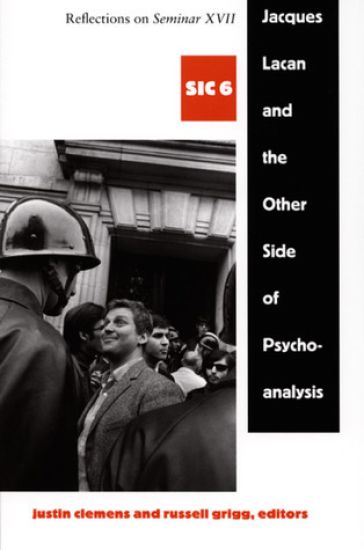
Jacques Lacan and the Other Side of Psychoanalysis
This collection is the first extended interrogation in any language of Jacques Lacan's Seminar XVII. Originally delivered just after the Paris uprisings of May 1968, Seminar XVII marked a turning point in Lacan’s thought; it was both a step forward in the psychoanalytic debates and an important contribution to social and political issues. Collecting important analyses by many of the major Lacanian theorists and practitioners, this anthology is at once an introduction, critique, and extension of Lacan’s influential ideas.The contributors examine Lacan’s theory of the four discourses, his critique of the Oedipus complex and the superego, the role of primal affects in political life, and his prophetic grasp of twenty-first-century developments. They take up these issues in detail, illuminating the Lacanian concepts with in-depth discussions of shame and guilt, literature and intimacy, femininity, perversion, authority and revolt, and the discourse of marketing and political rhetoric. Topics of more specific psychoanalytic interest include the role of objet a, philosophy and psychoanalysis, the status of knowledge, and the relation between psychoanalytic practices and the modern university.Contributors. Geoff Boucher, Marie-Hélène Brousse, Justin Clemens, Mladen Dolar, Oliver Feltham, Russell Grigg, Pierre-Gilles Guéguen, Dominique Hecq, Dominiek Hoens, Éric Laurent, Juliet Flower MacCannell, Jacques-Alain Miller, Ellie Ragland, Matthew Sharpe, Paul Verhaeghe, Slavoj Žižek, Alenka Zupancic
Jacques Lacan and the Other Side of Psychoanalysis
This collection is the first extended interrogation in any language of Jacques Lacan's Seminar XVII. Originally delivered just after the Paris uprisings of May 1968, Seminar XVII marked a turning point in Lacan’s thought; it was both a step forward in the psychoanalytic debates and an important contribution to social and political issues. Collecting important analyses by many of the major Lacanian theorists and practitioners, this anthology is at once an introduction, critique, and extension of Lacan’s influential ideas.The contributors examine Lacan’s theory of the four discourses, his critique of the Oedipus complex and the superego, the role of primal affects in political life, and his prophetic grasp of twenty-first-century developments. They take up these issues in detail, illuminating the Lacanian concepts with in-depth discussions of shame and guilt, literature and intimacy, femininity, perversion, authority and revolt, and the discourse of marketing and political rhetoric. Topics of more specific psychoanalytic interest include the role of objet a, philosophy and psychoanalysis, the status of knowledge, and the relation between psychoanalytic practices and the modern university.Contributors. Geoff Boucher, Marie-Hélène Brousse, Justin Clemens, Mladen Dolar, Oliver Feltham, Russell Grigg, Pierre-Gilles Guéguen, Dominique Hecq, Dominiek Hoens, Éric Laurent, Juliet Flower MacCannell, Jacques-Alain Miller, Ellie Ragland, Matthew Sharpe, Paul Verhaeghe, Slavoj Žižek, Alenka Zupancic
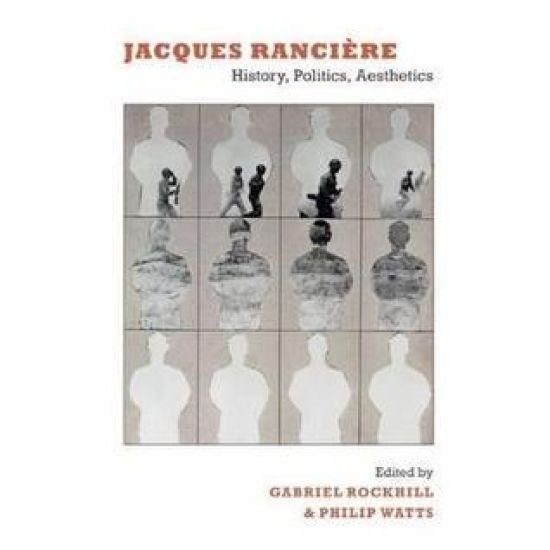
Jacques Rancière

Jacques Rancière

Duke University Press
2009
sidottu
The French philosopher Jacques Rancière has influenced disciplines from history and philosophy to political theory, literature, art history, and film studies. His research into nineteenth-century workers’ archives, reflections on political equality, critique of the traditional division between intellectual and manual labor, and analysis of the place of literature, film, and art in modern society have all constituted major contributions to contemporary thought. In this collection, leading scholars in the fields of philosophy, literary theory, and cultural criticism engage Rancière’s work, illuminating its originality, breadth, and rigor, as well as its place in current debates. They also explore the relationships between Rancière and the various authors and artists he has analyzed, ranging from Plato and Aristotle to Flaubert, Rossellini, Auerbach, Bourdieu, and Deleuze. The contributors to this collection do not simply elucidate Rancière’s project; they also critically respond to it from their own perspectives. They consider the theorist’s engagement with the writing of history, with institutional and narrative constructions of time, and with the ways that individuals and communities can disturb or reconfigure what he has called the “distribution of the sensible.” They examine his unique conception of politics as the disruption of the established distribution of bodies and roles in the social order, and they elucidate his novel account of the relationship between aesthetics and politics by exploring his astute analyses of literature and the visual arts. In the collection’s final essay, Rancière addresses some of the questions raised by the other contributors and returns to his early work to provide a retrospective account of the fundamental stakes of his project.Contributors. Alain Badiou, Étienne Balibar, Bruno Bosteels, Yves Citton, Tom Conley, Solange Guénoun, Peter Hallward, Todd May, Eric Méchoulan, Giuseppina Mecchia, Jean-Luc Nancy, Andrew Parker, Jacques Rancière, Gabriel Rockhill, Kristin Ross, James Swenson, Rajeshwari Vallury, Philip Watts
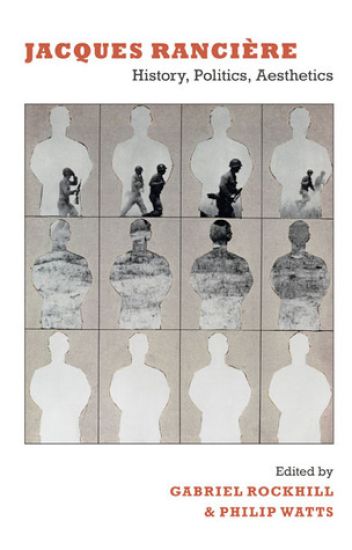
Jacques Rancière

Jacques Rancière

Duke University Press
2009
pokkari
The French philosopher Jacques Rancière has influenced disciplines from history and philosophy to political theory, literature, art history, and film studies. His research into nineteenth-century workers’ archives, reflections on political equality, critique of the traditional division between intellectual and manual labor, and analysis of the place of literature, film, and art in modern society have all constituted major contributions to contemporary thought. In this collection, leading scholars in the fields of philosophy, literary theory, and cultural criticism engage Rancière’s work, illuminating its originality, breadth, and rigor, as well as its place in current debates. They also explore the relationships between Rancière and the various authors and artists he has analyzed, ranging from Plato and Aristotle to Flaubert, Rossellini, Auerbach, Bourdieu, and Deleuze. The contributors to this collection do not simply elucidate Rancière’s project; they also critically respond to it from their own perspectives. They consider the theorist’s engagement with the writing of history, with institutional and narrative constructions of time, and with the ways that individuals and communities can disturb or reconfigure what he has called the “distribution of the sensible.” They examine his unique conception of politics as the disruption of the established distribution of bodies and roles in the social order, and they elucidate his novel account of the relationship between aesthetics and politics by exploring his astute analyses of literature and the visual arts. In the collection’s final essay, Rancière addresses some of the questions raised by the other contributors and returns to his early work to provide a retrospective account of the fundamental stakes of his project.Contributors. Alain Badiou, Étienne Balibar, Bruno Bosteels, Yves Citton, Tom Conley, Solange Guénoun, Peter Hallward, Todd May, Eric Méchoulan, Giuseppina Mecchia, Jean-Luc Nancy, Andrew Parker, Jacques Rancière, Gabriel Rockhill, Kristin Ross, James Swenson, Rajeshwari Vallury, Philip Watts
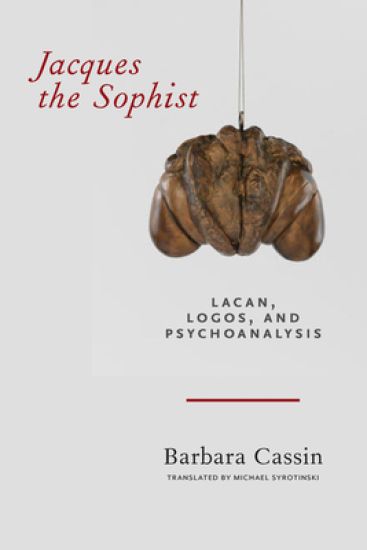
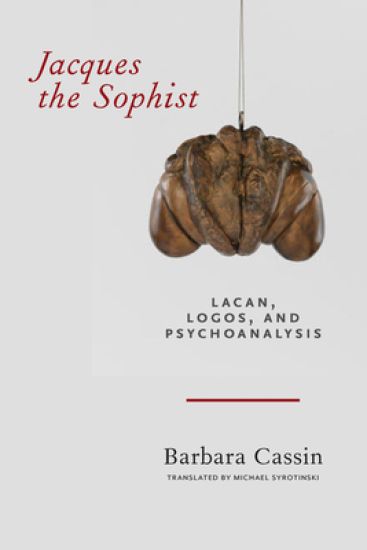
Jacques the Sophist

Jacques the Sophist

Barbara Cassin

Fordham University Press
2019
pokkari
Sophistry, since Plato and Aristotle, has been philosophy's negative alter ego, its bad other. Yet sophistry's emphasis on words and performativity over the fetishization of truth makes it an essential part of our world's cultural, political, and philosophical repertoire. In this dazzling book, Barbara Cassin, who has done more than anyone to reclaim a mode of thought that traditional philosophy disavows, shows how the sophistical tradition has survived in the work of psychoanalysis. In a highly original rereading of the writings and seminars of Jacques Lacan, together with works of Freud and others, Cassin shows how psychoanalysis, like the sophists, challenges the very foundations of scientific rationality. In taking seriously equivocations, jokes, and unfinishable projects of interpretation, the analyst, like the sophist, allows performance, signifier, and inconsistency to reshape truth. This witty, brilliant tour de force celebrates how psychoanalysts have become our culture's key dissidents and register, in Lacan's words, "the presence of the sophist in our time."
Jacques the Sophist

Jacques the Sophist

Barbara Cassin

FORDHAM UNIVERSITY PRESS
2019
sidottu
Sophistry, since Plato and Aristotle, has been philosophy's negative alter ego, its bad other. Yet sophistry's emphasis on words and performativity over the fetishization of truth makes it an essential part of our world's cultural, political, and philosophical repertoire. In this dazzling book, Barbara Cassin, who has done more than anyone to reclaim a mode of thought that traditional philosophy disavows, shows how the sophistical tradition has survived in the work of psychoanalysis. In a highly original rereading of the writings and seminars of Jacques Lacan, together with works of Freud and others, Cassin shows how psychoanalysis, like the sophists, challenges the very foundations of scientific rationality. In taking seriously equivocations, jokes, and unfinishable projects of interpretation, the analyst, like the sophist, allows performance, signifier, and inconsistency to reshape truth. This witty, brilliant tour de force celebrates how psychoanalysts have become our culture's key dissidents and register, in Lacan's words, "the presence of the sophist in our time."
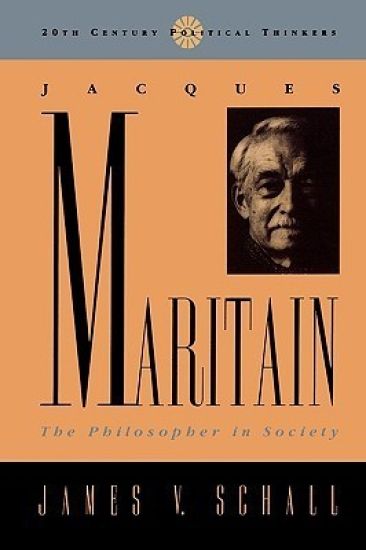
Jacques Maritain

Jacques Maritain

James V. Schall

Rowman Littlefield
1998
nidottu
The engaging and inquiring mind of French philosopher Jacques Maritain reflected on subjects as varied as art and ethics, theology and psychology, and history and metaphysics. Maritain's work on the theoretical groundings of politics arose from his diverse studies. In this book, distinguished theologian and political scientist James V. Schall explores Maritain's political philosophy, demonstrating that Maritain understood society, state, and government in the tradition of Aristotle and Aquinas, of natural law and human rights and duties. Schall pays particular attention to the ways in which evil appears in political forms, and how this evil can be morally dealt with. Schall's study will be of great importance to students and scholars of political science, philosophy, and theology.
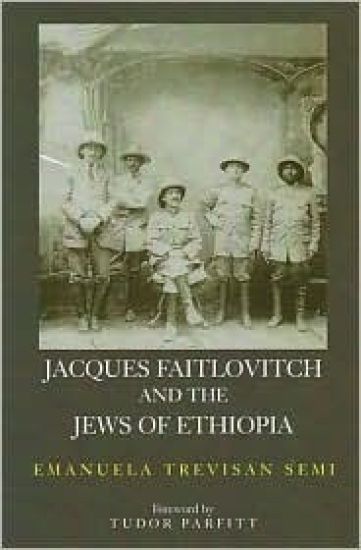
Jacques Faitlovitch and the Jews of Ethiopia

Jacques Faitlovitch and the Jews of Ethiopia

Emanuela Trevisan-Semi

Vallentine Mitchell Co Ltd
2007
sidottu
The architect of the ingathering of the most problematic group of the Jewish diaspora was Jacques Faitlovitch. He was an adventurer, scholar and Zionist, a Polish-born Jew who lived in Paris and Palestine. His life was marked by his devotion to the cause of the Beta Israel, the black Jews of Ethiopia. Faitlovitch was an Ashkenazi Jew of the neo-Orthodox school and took up the task, already initiated by Joseph Halvi, of assisting the Beta Israel, particularly in their struggle against the Protestant missionaries. He had close links with the chief Jewish institutions and with leading scholars and Ethiopian leaders, notably Emperor Haile Selasse.
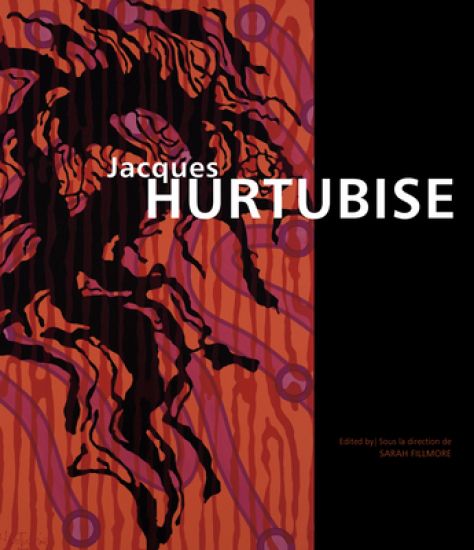
Jacques Hurtubise

Jacques Hurtubise

Goose Lane Editions
2012
sidottu
Showcasing the major career highlights and some of the most recent work of abstract painter Jacques Hurtubise, this lavishly illustrated bilingual volume captures the key works of Hurtubise’s formidable fifty-plus year career, many of which have never been brought together in a major exhibition or publication.This exceptional collection offers new insight into the development of Hurtubise’s paintings — from the early graphic abstract paintings in the 1960s and 1970s to the mask to the brushy and stencil work of his blackout paintings. His latest map-based work, which brings together the passion of his "sun" series and the exotic and hypnotic lines of his "masks" and "splash" paintings, brings his mastery of the medium to the fore.An abstract painter who followed a generation of plasticiens, Hurtubise’s bright, geometric patterning have often prompted comparisons to peers Claude Tousignant, Guido Moinari, and Yves Gaucher.This book includes five major, groundbreaking essays on his work by Québec curator Bernard Lamarche,; artist, writer, and critic Jeffrey Spalding; art critic René Viau; Sarah Fillmore, the editor of the book and curator of the exhibition that accompanies this major publication; and art historian Nathalie Miglioni.Cette monographie abondamment illustrée présente les principaux jalons de plus de cinquante ans de carrière de l’artiste Jacques Hurtubise. On y recense sa production actuelle ainsi que ses œuvres phares, dont un grand nombre n’avaient jamais éunies auparavant.La compilation exceptionnelle permet de mieux comprendre l’évolution d’Hurtubise, depuis ses premiers travaux graphiques des années 1960 et 1970 jusqu’à ses masques, ses tableaux aux traits ardents et le recours au stencil dans sa série Blackout. Ses œuvres plus récentes réalisées à partir de cartes routières — qui allient la passion qui habite ses « soleils » et les lignes exotiques et hypnotiques de ses « masques » et de ses « éclaboussures » — témoignent de sa pleine maîtrise des techniques les plus variées.Les formes géométriques abstraites aux couleurs vives de cet artiste qui a succédé à la génération des plasticiens ont souvent suscité des comparaisons avec Claude Tousignant, Guido Molinari et Yves Gaucher.L’ouvrage Jacques Hurtubise propose des textes des conservateurs d’exposition Sarah Fillmore et Bernard Lamarche, des auteurs et critiques Jeffrey Spalding et René Viau, et de l’historienne de l’art Nathalie Miglioni. Sarah Fillmore est conservatrice en chef du Musée des beaux-arts de la Nouvelle-Écosse.
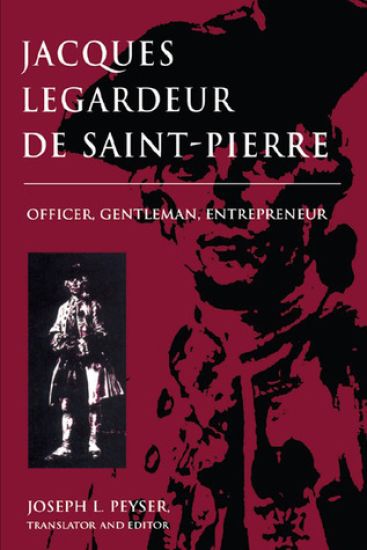
Jacques Legardeur de Saint-Pierre

Jacques Legardeur de Saint-Pierre

Michigan State University Press
1985
sidottu
The documentary biography of Jacques Legardeur de Saint-Pierre, an officer in the Troupes de la Marine, who served throughout New France, sheds new light on the business activity of French colonial officers stationed in the West. Many of the eighty previously untranslated documents in Jacques Legardeur de Saint-Pierre demonstrate the extent and profitability of Saint-Pierre's pursuit of business activities while performing official duties in eighteenth-century French North America. The quest for profit permeated Saint- Pierre's career, particularly his command of the Western Sea Post after he succeeded the fabled Pierre Gaultier de Varennes et de la Vérendrye. Saint-Pierre and his secret partner General Jacques-Pierre de Taffanel de La Jonquière, Intendant François Bigot, and Meret, secretary to La Jonquière, used their positions to engage in extensive trade, especially brandy, with the Cree and Assiniboine northwest of Lake Superior. Saint-Pierre's activities provide fresh insights into the North American fur trade.
Jacques Lipchitz and Philadelphia

Jacques Lipchitz and Philadelphia

Michael R. Taylor

Philadelphia Museum of Art,U.S
2006
nidottu
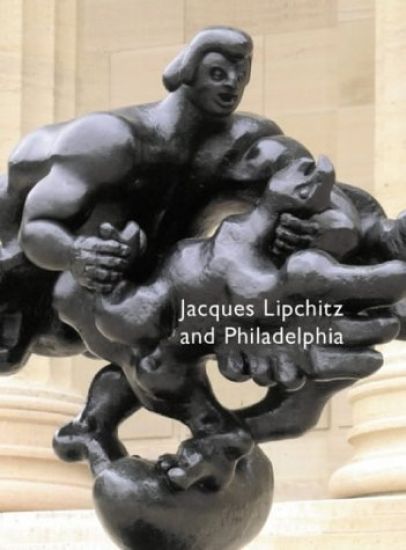
Produced in conjunction with the exhibition Jacques Lipchitz and Philadelphia at the Philadelphia Museum of Art from June 27 to August 22, 2004, this publication examines the special relationship between Jacques Lipchitz (1891-1973) and the city of Philadelphia. The artist's involvement with the city spanned more than fifty years, beginning in 1922, when Dr. Albert C. Barnes commissioned him to execute bas-reliefs for the Barnes Foundation building in nearby Merion, and culminating in 1976, when Lipchitz's monumental sculpture Government of the People was posthumously unveiled near City Hall. During the last three decades of his life, following his move to the United States in 1941, Lipchitz was a frequent visitor to Philadelphia, where he received major commissions for public sculpture, was twice honoured by the Pennsylvania Academy of the Fine Arts, and had an important retrospective exhibition at the Philadelphia Museum of Art in 1964. The text by Michael R. Taylor, Associate Curator of Modern and Contemporary Art, is extensively illustrated with the outstanding works by Lipchitz found throughout the area, including at the Philadelphia Museum of Art, whose already impressive holdings of his art - the largest collection outside of Israel - were further enriched by the recent gift of five sculptures from the Jacques and Yulla Lipchitz Foundation in honour of the institution's 125th Anniversary. A checklist of the works in the exhibition completes the publication.