Kirjojen hintavertailu. Mukana 12 100 735 kirjaa ja 12 kauppaa.

Kirjahaku

Etsi kirjoja tekijän nimen, kirjan nimen tai ISBN:n perusteella.

1000 tulosta hakusanalla John L Cook

Will to Endure: Surviving Terminal Illness by Extraordinary Means...a Memoir
For over twenty-three years I've been living with terminal illness...A.L.S., better known as Lou Gehrig's Disease. At the time I was diagnosed in late 1996 the doctors told me I had at most two years left to live. The reasons I've survived against all odds and continue healing form the basis for this book.My story chronicles the search for an answer to my incurable plight outside mainstream medicine's end-of-the-road diagnosis. It highlights my journey to Brazil to seek out a powerful healer renowned for treating diverse illnesses for which there are no known cures. It follows me as my entire worldview is sent spinning out of control as I'm introduced to an extraordinary new reality where anything...even the miraculous...is possible.Drawing on extensive private journal entries interspersed throughout my fantastic tale I create twin storylines: one raw and deeply personal, the other as a more objective observer. I'm led to insights into why disease occurred and slowly discover what it was there to teach me. Acting as a kind of spiritual anthropologist...a numenographer...I partake in any experience that will put me in touch with answers not found in the established paradigm: shamanic journeywork, taking ayahuasca in a Santo Daime ritual, being tutored by a Russian psychic and energy healer in how to access information contained in the Akashic records, accessing past lives, participating in the soul retrieval process and discovering that I am a medium. These transformative vehicles deliver me to levels of personal growth, healing and awakening far surpassing even my original manic quest to find a cure for the remediless.By delving into the psycho-emotional root causes that ultimately manifest as bodily disease, I begin connecting with revelations that lead me to the resolution of my true dilemma. My story traces an unprecedented path to locating a cure that eventually becomes the pursuit of a wholeness long absent from my life.
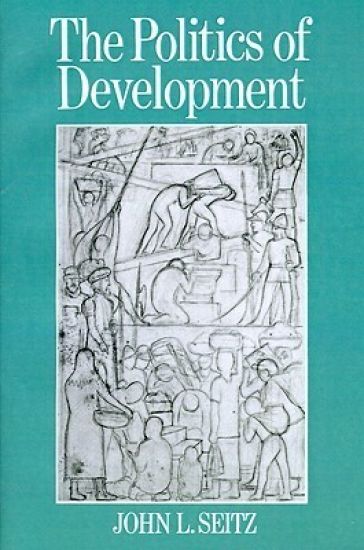
The Politics of Development

The Politics of Development

John L. Seitz

Blackwell Publishers
1988
nidottu
The book focuses on the role political processes play in solving certain key problems which have accompanied economic development in both the developed and less developed nations of the world. By breaking down the factors which define development into clear cut categories, namely population, food, energy, the environment, and technology, the author offers a useful approach to understanding the problems the world is facing today and will continue to face for the foreseeable future. The text provides a useful guide and resource for those who wish to grasp the implications of the rapid growth of the world's population, world hunger, the threat of nuclear war, uncertain energy supplies, acid rain and deforestation.
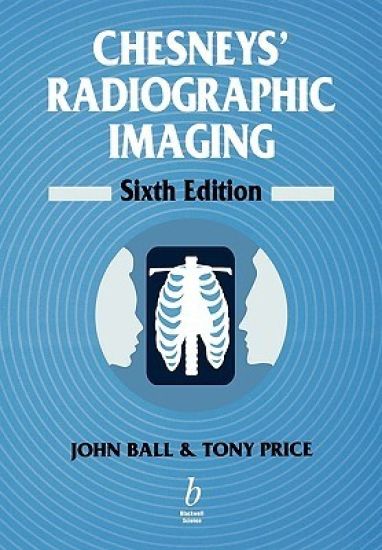
Chesneys' Radiographic Imaging

Chesneys' Radiographic Imaging

John L. Ball; Adrian D. Moore

JOHN WILEY AND SONS LTD
1995
nidottu
Following the sucess of the previous editions of this established text, the sixth edition of Chesneys' Radiographic Imaging reflects the advances in radiography education and practice, and the changing role of the radiographer. With the needs of the student in mind, the authors have identified the growing need to reference source material wherever possible. Coverage of radiographic imaging processed has been revised and updated throughout. Digital technology has been expanded and new sections on digital picture archiving and communication systems and computed radiography have been introduced. Descriptions of dry silver imaging and receiver operating characteristics have been included. The importance of health and safety in processing areas is also covered. Chesneys' Radiographic Imaging provides a sound knowledge base for students. It will also be of interest to radiographers working in an increasingly demanding workplace with new technology of ever increasing complexity.
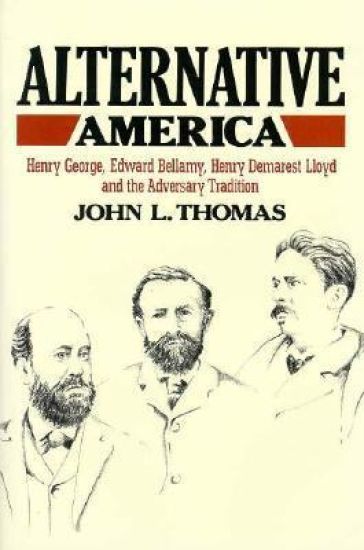
Alternative America

Alternative America

John L. Thomas

Harvard University Press
1983
sidottu
Through vivid and searching portraits of these three redoubtable journalists, prize-winning historian John L. Thomas traces for the first time the evolving ideologies of the most significant reformers of their age.Henry George’s Progress and Poverty, Edward Bellamy’s Looking Backward, and Henry Lloyd’s Wealth against Commonwealth each in its turn became an international bestseller, championing a course of national policy and social reform that owed allegiance neither to the large-scale capitalist model then emerging, nor to the bureaucratic socialism espoused on the left. Also common to the vast writings of all three were a deep distrust of partisan machine politics and a mounting sense of social crisis which neither spoilsmanship nor materialism seemed able to address.Seeking instead diversity and cooperation within society, small economic units, and simplicity in government, the authors of these works were moved to defend strikes during the heyday of industrial capitalism. They spoke out for international peace when imperialism was rampant. They called for the preservation of community values in the face of urban sprawl. And they urged the goals of brotherhood and interdependence in an age when survival of the fittest was seen as holy writ.They failed magnificently as apostles of a radical culture based on the ideal of a community, yet their intellectual legacy was not lost: their heirs include the broad movement that took the name Progressive, the New Deal, and the hopeful crusades of the 1960s. This magnificent book is their memorial and their history.
Thin Description

Thin Description

John L. Jackson

Harvard University Press
2013
sidottu
The African Hebrew Israelites of Jerusalem are often dismissed as a fringe cult for their beliefs that African Americans are descendants of the ancient Israelites and that veganism leads to immortality. But John L. Jackson questions what “fringe” means in a world where cultural practices of every stripe circulate freely on the Internet. In this poignant and sophisticated examination of the limits of ethnography, the reader is invited into the visionary, sometimes vexing world of the AHIJ. Jackson challenges what Clifford Geertz called the “thick description” of anthropological research through a multidisciplinary investigation of how the AHIJ use media and technology to define their public image in the twenty-first century.Moving far beyond the “modest witness” of nineteenth-century scientific discourse or the “thick descriptions” of twentieth-century anthropology, Jackson insists that Geertzian thickness is an impossibility, especially in a world where the anthropologist’s subject is a self-aware subject—one who crafts his own autoethnography while critically consuming the ethnographer’s offerings. Thin Description takes as its topic a group situated along the fault lines of several diasporas—African, American, Jewish—and provides an anthropological account of how race, religion, and ethnographic representation must be understood anew in the twenty-first century lest we reenact old mistakes in the study of black humanity.
March of the Microbes

March of the Microbes

John L. Ingraham; Roberto Kolter

The Belknap Press
2012
nidottu
Though nothing in the natural world would be quite the same without them, microbes go mostly unnoticed. They are the tiny, mighty force behind the pop in Champagne and the holes in Swiss cheese, the granite walls of Yosemite and the white cliffs of Dover, the workings of snowmaking machines, Botox, and gunpowder; and yet we tend to regard them as peripheral, disease-causing, food-spoiling troublemakers. In this book renowned microbiologist John Ingraham rescues these supremely important and ubiquitous microorganisms from their unwonted obscurity by showing us how we can, in fact, see them—and appreciate their vast and varied role in nature and our lives.Though we might not be able to see microbes firsthand, the consequences of their activities are readily apparent to our unaided senses. March of the Microbes shows us how to examine, study, and appreciate microbes in the manner of a birdwatcher, by making sightings of microbial activities and thereby identifying particular microbes as well as understanding what they do and how they do it. The sightings are as different as a smelly rock cod, a bottle of Chateau d’Yquem, a moment in the Salem witch trials, and white clouds over the ocean. Together they summarize the impact of microbes on our planet, its atmosphere, geology, weather, and other organisms including ourselves, to whom they dole out fatal illnesses and vital nutrients alike.In the end, Ingraham leaves us marveling at the power and persistence of microbes on our planet and gives credence to Louis Pasteur’s famous assertion that “microbes will have the last word.”
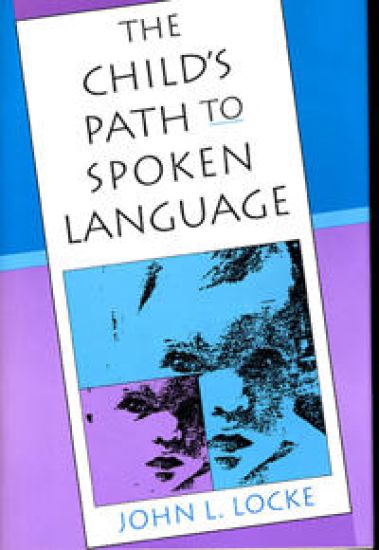
The Child’s Path to Spoken Language

The Child’s Path to Spoken Language

John L. Locke

Harvard University Press
1995
nidottu
Progressing gradually from babbling to meaningful sentences is something most babies do naturally. But why do they? John L. Locke’s answer constitutes a fascinating journey along the path of language development, a tour that takes in all the stops—neurological and perceptual, social and linguistic—that mark the way to intelligible speech. A major synthesis of the latest research on early language acquisition, this volume revises the way we understand ourselves and our approach to speech.
Space Commerce

Space Commerce

John L McLucas

Harvard University Press
1991
sidottu
"Space Commerce" relates the story of private enterprise's unsteady rise to prominence as a major influence on world space policy and research. The first space race proved the technological and military prowess of the two superpowers; but since the 1970s that contest has been supplanted by a multinational struggle to command the commercial opportunities of space. The commercial space age was born in 1965 when Early Bird, the first commercial communications satellite, went into orbit. With characteristic ingenuity, American industrialists began to dream of garnering billions of dollars per year from space-based products and services. In the microgravity of space, they hoped, hitherto unavailable drugs could be produced that would revolutionize medicine; in the high vacuum of space, crystals of extreme purity could be grown in orbital laboratories, both for biological research and for application in the manufacture of advanced microcircuits. In this book John McLucas covers the broad sweep of space commerce, both the vision and the reality: the construction of communications satellites and their ground control stations; the sale and leasing of communications services; remote sensing and measurement of earth's processes; navigation by satellites, serving ships, airplanes, and automobiles; the design and deployment of space laboratories for scientific research and product development; and life science experiments to determine the effects of space habitation on humans. Drawing on his considerable expertise, McLucas brings a sober perspective to his assessment of the technological accomplishments as well as the challenges still faced by industry in space. He incorporates into his discussion an illuminating analysis of the economic and political impact of space commerce and its rapidly changing international character.
Kin

Kin

John L. Ingraham

Harvard University Press
2017
sidottu
Since Darwin, people have speculated about the evolutionary relationships among dissimilar species, including our connections to the diverse life forms known as microbes. In the 1970s biologists discovered a way to establish these kinships. This new era of exploration began with Linus Pauling’s finding that every protein in every cell contains a huge reservoir of evolutionary history. His discovery opened a research path that has changed the way biologists and others think about the living world. In Kin John L. Ingraham tells the story of these remarkable breakthroughs. His original, accessible history explains how we came to understand our microbe inheritance and the relatedness of all organisms on Earth.Among the most revolutionary scientific achievements was Carl Woese’s discovery that a large group of organisms previously lumped together with bacteria were in fact a totally distinct form of life, now called the archaea. But the crowning accomplishment has been to construct the Tree of Life—an evolutionary project Darwin dreamed about over a century ago. Today, we know that the Tree’s three main stems are dominated by microbes. The nonmicrobes—plants and animals, including humans—constitute only a small upper branch in one stem.Knowing the Tree’s structure has given biologists the ability to characterize the complex array of microbial populations that live in us and on us, and investigate how they contribute to health and disease. This knowledge also moves us closer to answering the tantalizing question of how the Tree of Life began, over 3.5 billion years ago.