Kirjahaku
Etsi kirjoja tekijän nimen, kirjan nimen tai ISBN:n perusteella.
1000 tulosta hakusanalla L Daniel Hawk
The story of Karen Parker, widow, mother, warrior. After losing her husband to cancer, Karen moves to Cleveland, hoping to restart her once promising career as a journalist. Her sons, not fully appreciating the difference between their Kansas farm and the bad side of Cleveland venture out into the night where they are accosted by a ruthless drug dealer. Cornered with no hope of escape, a stranger steps in to save the boys. Tommy and Paul. Later Tommy and the stranger mysteriously disappear. Karen must find him before the drug dealer or the government kills him.
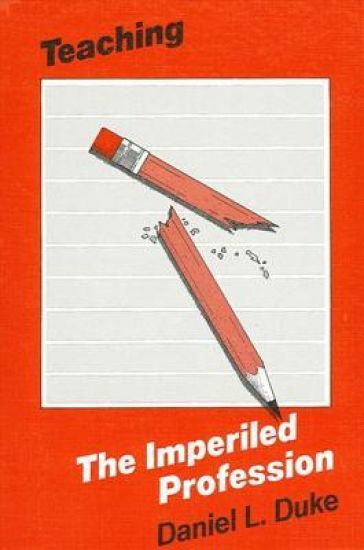
What is it really like to be a teacher today? Teaching-The Imperiled Profession goes beyond conventional analyses, to probe the profession and various threats to its viability. Daniel L. Duke has drawn on his own and current educational research-including surveys of teacher opinion, interviews with teachers, and press coverage of educational issues-to uncover and examine a complex array of factors that contribute to the troubled state of the profession and the unprecedented discouragement of its practitioners. The book also analyzes traditional sources of support. Teaching-The Imperiled Profession provides prospective teachers with a realistic picture of the profession today. It identifies a set of concerns on which citizens might reasonably focus attention, in order to forestall any future deterioration. It provides the educator, administrator, and policy-maker with a comprehensive set of recommendations for revitalizing the profession. The book also serves as a concise history of the teaching profession as it has developed in the United States during the twentieth century.
Building Trust: The Indexed UL Selling System
Clu Chfc Crpc Daniel L. Martin
Createspace Independent Publishing Platform
2014
nidottu
Indexed universal life insurance is an important product. When utilized properly it can help many families and business people create a tax-advantaged way to protect families and business interest, while growing tax-favored cash reserves for education funding and supplemental retirement savings. Building Trust: The Indexed UL Selling System draws upon Dan Martin's successful experiences to teach you effective sales techniques rather than simply hammering home product features until prospects give in. In part one, he recommends a four-part system comprised of the engagement, education, presentation, and transitional placement phases, all of which emphasize trust. In Part II of the book, Dan offers advice on the most tedious but vital of all tasks, prospecting. Using his client acquisition and referral system (CARS), you'll learn how to leverage your reputation with new and existing clients to secure solid new leads. When utilized properly, Building Trust: The Indexed UL Selling System will help you improve and perfect your sales skills and enable you the opportunity to develop a constant flow of leads by utilizing your most valuable asset, YOU Many financial sales pros are using Dan's exciting methods and sales techniques to realize that success starts with them and not subscribing to third party influences for their success.
Exalting Jesus in Ecclesiastes
Dr. Daniel L. Akin; Jonathan Akin; Tony Merida
Broadman Holman Publishers
2016
nidottu
Edited by David Platt, Daniel L. Akin, and Tony Merida, this new commentary series, projected to be 48 volumes, takes a Christ- centered approach to expositing each book of the Bible. Rather than a verse-by-verse approach, the authors have crafted chapters that explain and apply key passages in their assigned Bible books. Readers will learn to see Christ in all aspects of Scripture, and they will be encouraged by the devotional nature of each exposition. Projected contributors to the series include notable authors such as Russell D. Moore, Al Mohler, Matt Chandler, Francis Chan, Mark Dever, and others.
Exalting Jesus in 1 Corinthians is part of the Christ-Centered Exposition Commentary series. Edited by David Platt, Daniel L. Akin, and Tony Merida, this commentary series takes a Christ-centered approach to expositing each book of the Bible. Each chapter explains and applies key passages, providing helpful outlines for study and teaching. This practical and easy-to-read commentary is designed to help the reader see Christ in 1 Corinthians. More devotional than academic, the expositions are presented as sermons and divided into chapters that conclude with a "Reflect & Discuss" section, making this series ideal for small group study, personal devotion, and even sermon preparation. The CCE series will include 47 volumes when complete; this volume is written by Daniel L. Akin and James Merritt.
"Ten Who Changed the World" is seminary president Daniel Akin's powerful tribute to the transformational work done by some truly inspiring Christian missionaries. With each profile, he journeys into the heart of that gospel servant's mission-minded story and makes a compelling connection to a similar account from the Bible. David Brainerd (1718-1747; missionary to Native Americans) reminds Akin of Paul's missionary life in 2 Timothy. The faithful ministry of George Leile (1750-1820; missionary to Jamaica) is aligned with Galatians 6. William Carey (1761-1834; missionary to India) lives out the Great Commission of Matthew 28. There are parallels between Adoniran Judson (1788-1850; missionary to Burma) and Romans 8. Lottie Moon (1840-1912; missionary to China) displays the power of a consecrated life described in Romans 12. The work of James Fraser (1886-1938; missionary to China) illustrates Revelation 5. Eric Liddell (1902-1945; missionary to China), his life documented in the film "Chariots of Fire," illuminates Hebrews 12. Together, John (1907-1934) and Betty Stam (1906-1934; missionaries to China) embodied Psalm 67. William Wallace (1908-1951; missionary to China) was a shining example of Philippians 1. Jim Elliot (1927-1956; missionary to Ecuador) is a bold reminder of Psalm 96.
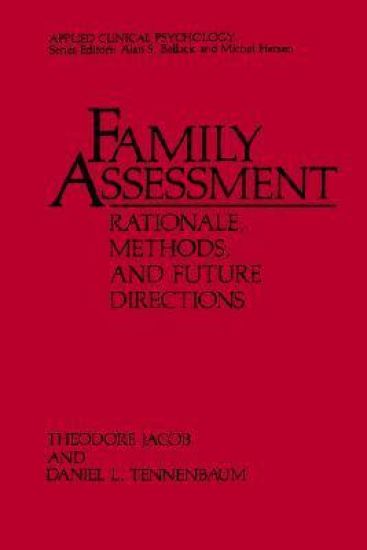
Family Assessment: Rationale, Methods and Future Directions
Theodore Jacob; Daniel L. Tennenbaum
Kluwer Academic/Plenum Publishers
1988
nidottu
The purpose of this book is to review existing and developing family assessment methods relevant to the study of psycho pathology. It is our intention not only to inform clinical re searchers of the many valuable family assessment methods that are available, but also to encourage the incorporation of such procedures into future research efforts. In so doing, we believe that our understanding of the etiology, course, treatment, and prevention of adult and childhood disorders will be greatly enriched. The book begins with an overview of the larger social and intellectual forces which have led to the current interest in study ing family influences on psychopathology in children and adoles cence. For each "stream of influence," we attempt to highlight theoretical and methodological contributions relevant to the fami ly's role in the etiology, exacerbation, and treatment of childhood disorders. Next, a framework for classifying family measurement procedures is introduced in which three major dimensions are emphasized: unit of analysis, source of data, and construct as sessed. The third and most important chapter provides detailed reviews of a selected number of methods within each of the major groupings that have been delimited, references and brief descrip tions of other measures that cannot be reviewed in detail, and a discussion of the promising and developing techniques that are known to the authors.
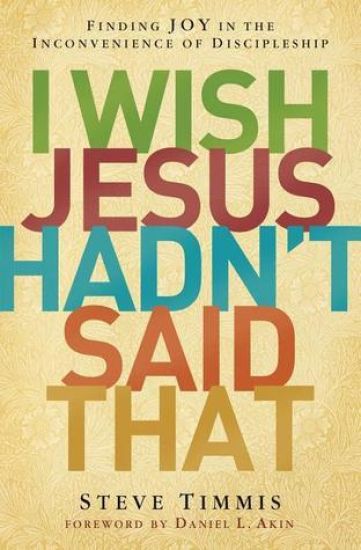
Jesus never said that following him would be easy. We've read the words countless times: "Love your enemies," "You cannot serve both God and money," "Take up your cross and follow me." Theoretically we believe them. But do we engage what Jesus says in a way that prompts action? The truth we avoid talking about is that being a follower of Jesus is terribly inconvenient--a pain in the neck at times--because it cuts across so many of our natural desires. But there is an even greater danger in avoiding what Jesus says. If we harden our hearts to the teachings of Jesus, we will never find true happiness. In this powerful new book, author Steve Timmis calls all believers to consider ten sayings of Jesus that reveal where our affections lie. He reminds us that Christians are called to abandon, not cherish, the ways of the world and reject, not pursue, the things that afford us status, prestige, and pleasure. As followers of Jesus we must grapple with what it means to follow him, and accept his verdict on what constitutes the good life--no matter how counter-cultural it may seem. Doing so will powerfully reorient our hearts.
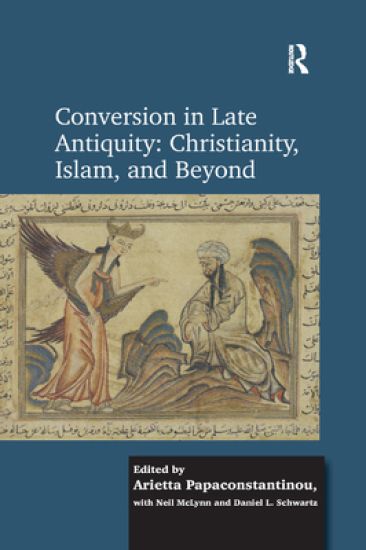
Conversion in Late Antiquity: Christianity, Islam, and Beyond
Arietta Papaconstantinou; Daniel L. Schwartz
Routledge
2019
nidottu
The papers in this volume were presented at a Mellon-Sawyer Seminar held at the University of Oxford in 2009-2010, which sought to investigate side by side the two important movements of conversion that frame late antiquity: to Christianity at its start, and to Islam at the other end. Challenging the opposition between the two stereotypes of Islamic conversion as an intrinsically violent process, and Christian conversion as a fundamentally spiritual one, the papers seek to isolate the behaviours and circumstances that made conversion both such a common and such a contested phenomenon. The spread of Buddhism in Asia in broadly the same period serves as an external comparator that was not caught in the net of the Abrahamic religions. The volume is organised around several themes, reflecting the concerns of the initial project with the articulation between norm and practice, the role of authorities and institutions, and the social and individual fluidity on the ground. Debates, discussions, and the expression of norms and principles about conversion conversion are not rare in societies experiencing religious change, and the first section of the book examines some of the main issues brought up by surviving sources. This is followed by three sections examining different aspects of how those principles were - or were not - put into practice: how conversion was handled by the state, how it was continuously redefined by individual ambivalence and cultural fluidity, and how it was enshrined through different forms of institutionalization. Finally, a topographical coda examines the effects of religious change on the iconic holy city of Jerusalem.
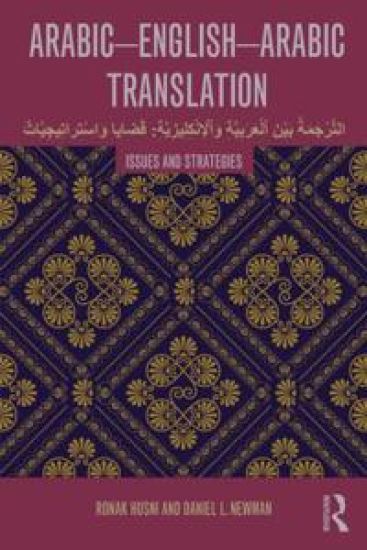
Arabic-English-ArabicTranslation: Issues and Strategies is an accessible coursebook for students and practitioners of Arabic-English-Arabic translation. Focusing on the key issues and topics affecting the field, it offers informed guidance on the most effective methods to deal with such problems, enabling users to develop deeper insights and enhance their translation skills. Key features include: A focus on Arabic-English translation in both directions, preparing students for the real-life experiences of practitioners in the field In-depth discussion of the core issues of phraseology, language variation and translation, legal translation and translation technology in Arabic and English translation Authentic sample texts in each chapter, taken from a variety of sources from across the Arabic-speaking world to provide snapshots of real-life language use Source texts followed by examples of possible translation strategies, with extensive commentaries, to showcase the best translation practices and methodologies A range of supporting exercises to enable students to practise their newly acquired knowledge and skills Inclusion of a wide range of themes covering both linguistic and genre issues, offering multidimensional perspectives and depth and breadth in learning List of recommended readings and resources for each of the topics under discussion Comprehensive glossary and bibliography at the back of the book. Lucid and practical in its approach, Arabic-English-Arabic Translation: Issues and Strategies will be an indispensable resource for intermediate to advanced students of Arabic. It will also be of great interest to professional translators working in Arabic-English-Arabic translation.
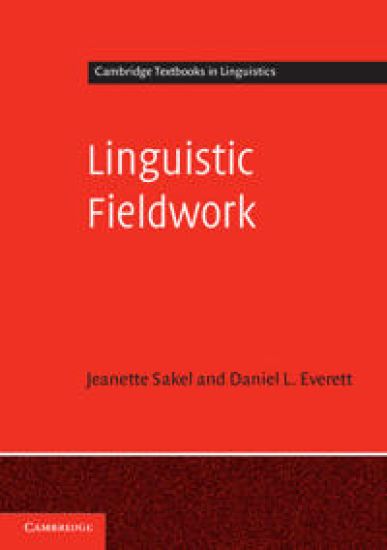
A handy beginner's guide, this textbook introduces the various stages of linguistic fieldwork, from the preparation of the work to the presentation of the results. Drawing on over forty years of fieldwork experience between them, in over two dozen languages, the authors pack the book with examples and anecdotes from their experiences and include practical exercises for students to test what they have learned. Independent of any particular perspective, the methods can be applied to a wide range of fieldwork settings, for projects with very different theoretical backgrounds and without the need to travel too far. The book covers 'traditional fieldwork' such as language description and documentation, as well as less typical methods, including language contact and quantitative studies with experiments or questionnaires.