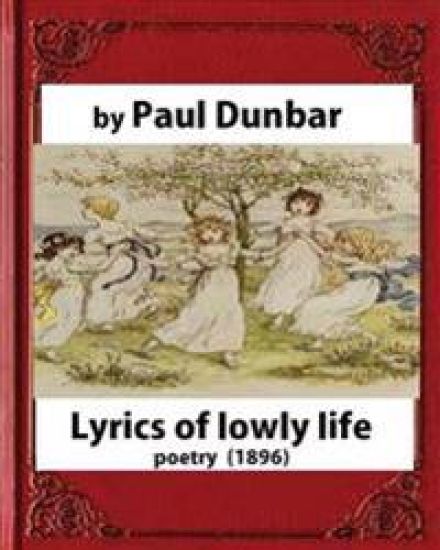
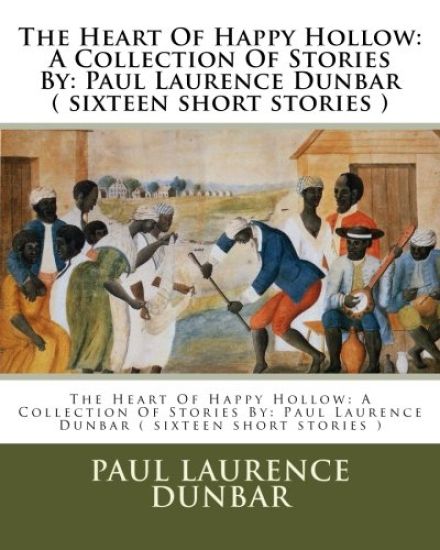
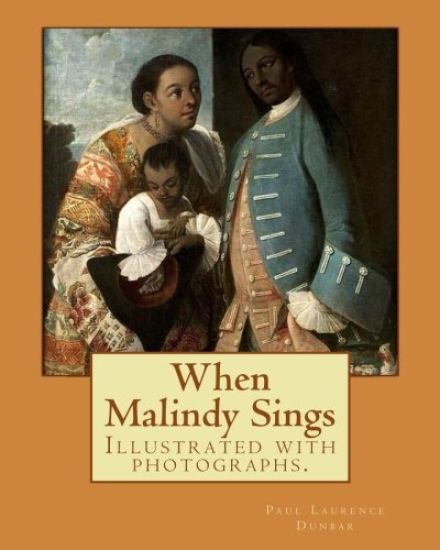
One of the best-known volumes by a fascinating and complex writer, the first important black poet in the American canon. Popular in the early twentieth century Dunbar is today the subject of revived interest. Paul Laurence Dunbar (June 27, 1872 - February 9, 1906) was an American poet, novelist, and playwright of the late 19th and early 20th centuries. Born in Dayton, Ohio, to parents who had been enslaved in Kentucky before the American Civil War, Dunbar began to write stories and verse when still a child and was president of his high school's literary society. He published his first poems at the age of 16 in a Dayton newspaper. William Dean Howells ( March 1, 1837 - May 11, 1920) was an American realist novelist, literary critic, and playwright. Nicknamed "The Dean of American Letters",
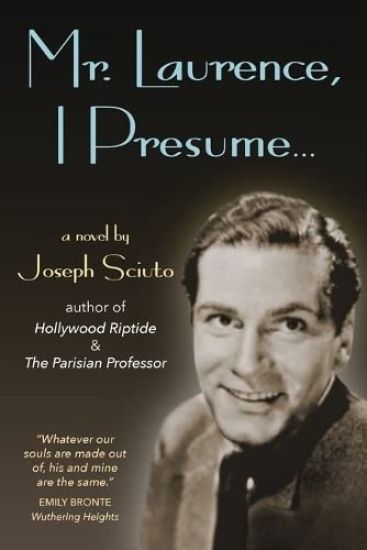
Inspired by Emily Bront 's classic novel, Wuthering Heights, and the subsequent movie starring Sir Laurence Oliver, Mr. Laurence tells a story of perpetual romance, torture, acceptance, and the power of forgiveness. Eighteen-year-old Joe has taken a serious bump to the head, and his beloved but unsteady girlfriend, Angie, has landed on the wrong side of the law. How's a young couple supposed to start a life together when one of them is behind bars and the other is seemingly too immature to cope? Enter Mr. Laurence, a WWII veteran and a charming philanthropist who brings magic and healing wherever he goes. Beloved in the Long Island enclave where he continues his in-laws' mission to support young victims of sexual abuse, Mr. Laurence, with guidance from his scintillating wife, Isabelle, takes Joe under his wing and helps the young man chart a new direction. The ripple effects of Mr. Laurence's generosity extend to everyone in Joe's circle, and offers Angie a path forward to freedom and away from the self-loathing that was instilled in her by a brutal upbringing.
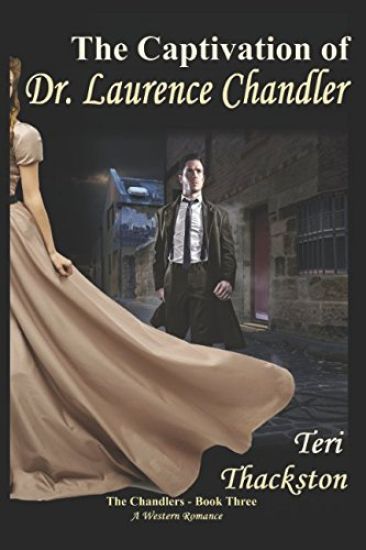
Dr. Laurence Chandler is captivated by Miss Jane Wesley from the moment he discovers her hiding in the hold of the SS Stenson. He's been looking for a pretty young woman to build a life with and Jane appears to be a likely candidate. Jane, however, is not so enchanted at being discovered by the handsome doctor. She has stowed away on the New Orleans-bound steamship with her twin sister. Penniless and desperate, Jane and Joni-who is heavily pregnant-are on the run from Joni's abusive father-in-law, and discovery might be deadly. Jane gives Laurence the slip. But when the ship wrecks during a hurricane, she is forced to accept his assistance so that her sister will survive. Having witnessed the abuse of Joni, their mother and other women, Jane resents having to depend on any man-especially one as old-fashioned and marriage-minded as Laurence. But she just can't seem to shake him. Further catastrophes-including the arrival of Joni's father-in-law-force her and Joni to remain under his protection in New Orleans. But who will protect her from her own growing attraction to him?
Margaret Neilson Armstrong (1867-1944) was a 20th-century American designer, illustrator, and author. She is best known for her book covers in the Art Nouveau style but also wrote and illustrated the first comprehensive guide to wildflowers of the American west. She also wrote mystery novels and biographies..... Paul Laurence Dunbar (June 27, 1872 - February 9, 1906) was an American poet, novelist, and playwright of the late 19th and early 20th centuries. Born in Dayton, Ohio, to parents who had been enslaved in Kentucky before the American Civil War, Dunbar began to write stories and verse when still a child; he was president of his high school's literary society. He published his first poems at the age of 16 in a Dayton newspaper. Much of Dunbar's more popular work in his lifetime was written in the Negro dialect associated with the antebellum South, though he also used the Midwestern regional dialect of James Whitcomb Riley. Dunbar's work was praised by William Dean Howells, a leading editor associated with the Harper's Weekly, and Dunbar was one of the first African-American writers to establish an international reputation. He wrote the lyrics for the musical comedy In Dahomey (1903), the first all-African-American musical produced on Broadway in New York. The musical later toured in the United States and the United Kingdom. Dunbar also wrote in conventional English in other poetry and novels. Since the late 20th century, scholars have become more interested in these other works. Suffering from tuberculosis, which then had no cure, Dunbar died in Dayton at the age of 33. Early life: Paul Laurence Dunbar was born at 311 Howard Street in Dayton, Ohio, on June 27, 1872, to parents who had been enslaved in Kentucky before the American Civil War. After being emancipated, his mother Matilda had moved to Dayton with other family members, including her two sons Robert and William from her first marriage. Dunbar's father Joshua had escaped from slavery in Kentucky before the war ended. He traveled to Massachusetts and volunteered for the 55th Massachusetts Infantry Regiment, one of the first two black units to serve in the war. The senior Dunbar also served in the 5th Massachusetts Cavalry Regiment. Paul Dunbar was born six months after Joshua and Matilda married on Christmas Eve, 1871. The marriage of Dunbar's parents was troubled and Dunbar's mother left Joshua soon after having their second child, a daughter.Joshua died on August 16, 1885; Paul was then 12 years old. Dunbar wrote his first poem at the age of six and gave his first public recital at the age of nine. His mother assisted him in his schooling, having learned to read expressly for that purpose. She often read the Bible with him, and thought he might become a minister in the African Methodist Episcopal Church. It was the first independent black denomination in America, founded in Philadelphia in the early 19th century. Dunbar was the only African-American student during his years at Central High School in Dayton; Orville Wright was a classmate and friend. Well-accepted, he was elected as president of the school's literary society, and became the editor of the school newspaper and a member of the debate club.
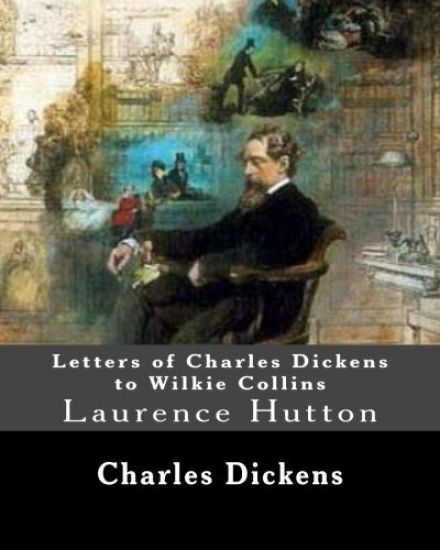
Charles John Huffam Dickens ( 7 February 1812 - 9 June 1870) was an English writer and social critic. He created some of the world's best-known fictional characters and is regarded by many as the greatest novelist of the Victorian era. His works enjoyed unprecedented popularity during his lifetime, and by the 20th century critics and scholars had recognised him as a literary genius. His novels and short stories enjoy lasting popularity. Born in Portsmouth, Dickens left school to work in a factory when his father was incarcerated in a debtors' prison. Despite his lack of formal education, he edited a weekly journal for 20 years, wrote 15 novels, five novellas, hundreds of short stories and non-fiction articles, lectured and performed extensively, was an indefatigable letter writer, and campaigned vigorously for children's rights, education, and other social reforms. Dickens's literary success began with the 1836 serial publication of The Pickwick Papers. Within a few years he had become an international literary celebrity, famous for his humour, satire, and keen observation of character and society. His novels, most published in monthly or weekly installments, pioneered the serial publication of narrative fiction, which became the dominant Victorian mode for novel publication. The instalment format allowed Dickens to evaluate his audience's reaction, and he often modified his plot and character development based on such feedback. For example, when his wife's chiropodist expressed distress at the way Miss Mowcher in David Copperfield seemed to reflect her disabilities, Dickens improved the character with positive features. His plots were carefully constructed, and he often wove elements from topical events into his narratives. Masses of the illiterate poor chipped in ha'pennies to have each new monthly episode read to them, opening up and inspiring a new class of readers.Dickens was regarded as the literary colossus of his age. His 1843 novella, A Christmas Carol, remains popular and continues to inspire adaptations in every artistic genre. Oliver Twist and Great Expectations are also frequently adapted, and, like many of his novels, evoke images of early Victorian London. His 1859 novel, A Tale of Two Cities, set in London and Paris, is his best-known work of historical fiction. Dickens has been praised by fellow writers-from Leo Tolstoy to George Orwell and G. K. Chesterton-for his realism, comedy, prose style, unique characterisations, and social criticism. On the other hand, Oscar Wilde, Henry James, and Virginia Woolf complained of a lack of psychological depth, loose writing, and a vein of saccharine sentimentalism. The term Dickensian is used to describe something that is reminiscent of Dickens and his writings, such as poor social conditions or comically repulsive characters..... William Wilkie Collins (8 January 1824 - 23 September 1889) was an English novelist, playwright, and short story writer. His best-known works are The Woman in White (1859), No Name (1862), Armadale (1866) and The Moonstone (1868). The last is considered the first modern English detective novel. Born into the family of painter William Collins in London, he lived with his family in Italy and France as a child and learned French and Italian. He worked as a clerk for a tea merchant. After his first novel, Antonina, was published in 1850, he met Charles Dickens, who became a close friend, mentor and collaborator. Some of Collins's works were first published in Dickens' journals All the Year Round and Household Words and the two collaborated on drama and fiction.... Laurence Hutton (1843 - June 10, 1904) was an American essayist and critic...
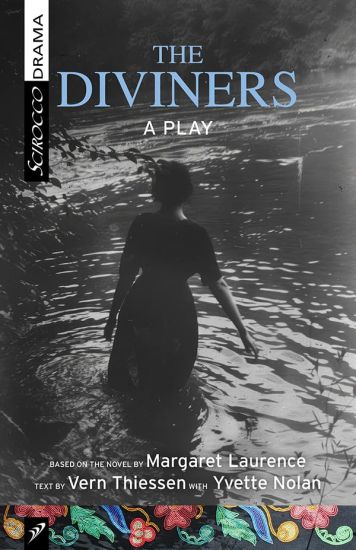
Considered a masterpiece of Canadian literature, Margaret Laurence's The Diviners is the compelling story of Morag Gunn, a woman who perseveres through challenge after challenge as she attempts to carve out an authentic life as a writer. The play moves backward and forward through time, taking us to Morag's impoverished childhood in rural Manitoba, her early struggles to establish herself as a female artist, and her present, as she works to finish a novel while navigating a thorny relationship with her teenage daughter, Pique. Inextricably bound with Morag's Scottish settler story is the Metis story of Jules Tonnerre, her friend, lover, and Pique's father. Adapted for the stage by Vern Thiessen with Yvette Nolan, The Diviners illuminates issues of identity, class, and reconciliation.
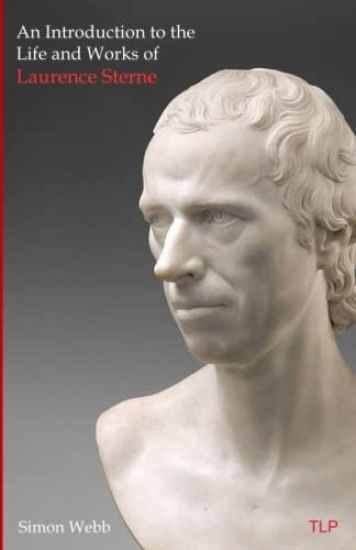
Aimed at readers with little or no prior knowledge of Laurence Sterne or his writings, Simon Webb's book offers a brief but comprehensive biography of the author of Tristram Shandy and A Sentimental Journey, and includes up-to-date analyses of all his major works. This new study attempts to put Sterne, his writings and his characters in the context of the eighteenth century in Europe: a time of enlightenment, but also of ignorance, corruption and slavery.
A l'heure ou l'on predit la fin imminente de la psychanalyse - prediction qui accompagna la decouverte freudienne des son origine -, que signifie de s'interroger sur ses motifs ? Est-il exact que ses outils de pensee soient si obsoletes qu'il faille remanier ses theories et sa pratique pour mieux l'adapter ? Dans un temps ou les ralliements hatifs vont a la supposee modernisation, gage d'ouverture, qu'advient-il du temps long et de la complexite requis pour s'acquitter aussi bien de la tache therapeutique que de la reflexion sur les creations culturelles et sur leurs butees actuelles ? C'est a partir des travaux de Laurence Kahn, membre de l'Association psychanalytique de France, que ces questions ont ete abordees au cours d'un colloque organise au Centre culturel international de Cerisy. Des travaux qui, depuis sa formation initiale d'helleniste dans le laboratoire de Jean-Pierre Vernant jusqu'a sa pratique d'analyste aupres des adultes et des enfants, l'ont regulierement conduite a associer a sa reflexion sur le legs freudien les oeuvres de la philosophie, de la sociologie politique, de la litterature et de l'histoire. Des anthropologues, des philosophes, des psychanalystes ont ainsi accepte d'explorer avec elle le moteur pulsionnel et conflictuel qui anime la vie psychique individuelle, fait le terreau de la vie collective, agite et bouleverse les equilibres et les dedommagements qui se trament entre nos solitudes et nos devenirs d'etres sociables. De l'usage de la parole a l'ecoute de l'analyste, de l'efficacite du mythe a l'engendrement paradoxal de la barbarie par la civilisation meme, de la psychanalyse des enfants aux problemes souleves par les demandes de changement de sexe ou par le rituel de l'echographie et sa violence, il y va chaque fois des chocs entre l'action muette de la repetition et les formes sensibles de ses metamorphoses. Comment traduire ces heurts si ce n'est en faisant usage de la metapsychologie, c'est-a-dire en interrogeant l'asymetrie constitutive entre les qualites du etre affecte et l'economie des quantites energetiques ? Ce volume rassemble les communications prononcees et les resumes des debats nourris qui ont eu lieu a leur suite.