Kirjojen hintavertailu. Mukana 12 083 983 kirjaa ja 12 kauppaa.

Kirjahaku

Etsi kirjoja tekijän nimen, kirjan nimen tai ISBN:n perusteella.

1000 tulosta hakusanalla Levin Boris

The Channeled Image

The Channeled Image

Erica Levin

THE UNIVERSITY OF CHICAGO PRESS
2022
sidottu
A fascinating look at artistic experiments with televisual forms. Following the integration of television into the fabric of American life in the 1950s, experimental artists of the 1960s began to appropriate this novel medium toward new aesthetic and political ends. As Erica Levin details in The Channeled Image, groundbreaking artists like Carolee Schneemann, Bruce Conner, Stan VanDerBeek, and Aldo Tambellini developed a new formal language that foregrounded television’s mediation of a social order defined by the interests of the state, capital, and cultural elites. The resulting works introduced immersive projection environments, live screening events, videographic distortion, and televised happenings, among other forms. For Levin, “the channeled image” names a constellation of practices that mimic, simulate, or disrupt the appearance of televised images. This formal experimentation influenced new modes of installation, which took shape as multi-channel displays and mobile or split-screen projections, or in some cases, experimental work produced for broadcast. Above all, this book asks how artistic experimentation with televisual forms was shaped by events that challenged television broadcasters’ claims to authority, events that set the stage for struggles over how access to the airwaves would be negotiated in the future.
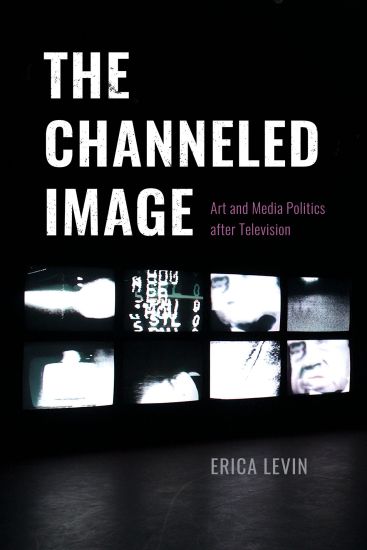
The Channeled Image

The Channeled Image

Erica Levin

THE UNIVERSITY OF CHICAGO PRESS
2022
nidottu
A fascinating look at artistic experiments with televisual forms. Following the integration of television into the fabric of American life in the 1950s, experimental artists of the 1960s began to appropriate this novel medium toward new aesthetic and political ends. As Erica Levin details in The Channeled Image, groundbreaking artists like Carolee Schneemann, Bruce Conner, Stan VanDerBeek, and Aldo Tambellini developed a new formal language that foregrounded television’s mediation of a social order defined by the interests of the state, capital, and cultural elites. The resulting works introduced immersive projection environments, live screening events, videographic distortion, and televised happenings, among other forms. For Levin, “the channeled image” names a constellation of practices that mimic, simulate, or disrupt the appearance of televised images. This formal experimentation influenced new modes of installation, which took shape as multi-channel displays and mobile or split-screen projections, or in some cases, experimental work produced for broadcast. Above all, this book asks how artistic experimentation with televisual forms was shaped by events that challenged television broadcasters’ claims to authority, events that set the stage for struggles over how access to the airwaves would be negotiated in the future.
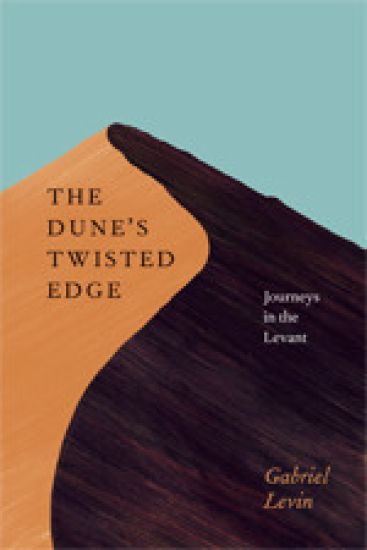
The Dune's Twisted Edge

The Dune's Twisted Edge

Gabriel Levin

University of Chicago Press
2012
sidottu
Journeys in the Levant. "How to speak of the imaginative reach of a land habitually seen as a seedbed of faiths and heresies, confluences and ruptures...trouble spot and findspot, ruin and renewal, fault line and ragged clime, with a medley of people and languages once known with mingled affection and wariness as Levantine?" So begins poet Gabriel Levin in his journeys in the Levant, the exotic land that stands at the crossroads of western Asia, the eastern Mediterranean, and northeast Africa. Part travelogue, part field guide, and part literary appreciation, "The Dune's Twisted Edge" assembles six interlinked essays that explore the seaboard of the Levant and its deserts, bringing to life this enigmatic part of the world. Striking out from his home in Jerusalem in search of a poetics of the Fertile Crescent, Levin probes the real and imaginative terrain of the Levant, a place that beckoned to him as a source of wonder and self-renewal. His footloose travels take him to the Jordan Valley; to Wadi Rumm south of Petra; to the semiarid Negev of modern-day Israel and its Bedouin villages; and, in his recounting of the origins of Arabic poetry, to the Empty Quarter of Arabia where the pre-Islamic poets once roamed. His meanderings lead to encounters with a host of literary presences: the wandering poet-prince Imru al-Qays, Byzantine empress Eudocia, British naturalist Henry Baker Tristram, Herman Melville making his way to the Dead Sea, and even New York avantgarde poet Frank O'Hara. When he is not confronting ghosts, Levin finds himself stumbling upon the traces of vanished civilizations. He discovers a ruined Umayyad palace on the outskirts of Jericho, the Greco-Roman hot springs near the Sea of Galilee, and Nabatean stick figures carved on stones in the sands of Jordan. Vividly evoking the landscape, cultures, and poetry of this ancient region, "The Dune's Twisted Edge" celebrates the contested ground of the Middle East as a place of compound myths and identities.
Political Thought in the Age of Revolution 1776-1848
The years between the American Revolution of 1776, the French Revolution of 1789 and the European Revolutions of 1848 saw fundamental shifts from autocracy to emerging democracy. It is a vital period in what may be termed 'modernity': that is of the western societies that are increasingly industrial, capitalist and liberal democratic. Unsurprisingly, these years of stress and transition produced some significant reflections on politics and society.This indispensable introductory text considers how a cluster of key thinkers viewed the global political upheavals and social changes of their time, covering the work of:• Edmund Burke * Georg Hegel • Thomas Paine * Alexis de Tocqueville• Jeremy Bentham * Karl Marx and Friedrich EngelsLively and approachable, it is essential reading for anyone with an interest in modern history, political history or political thought.
Political Thought in the Age of Revolution 1776-1848
The years between the American Revolution of 1776, the French Revolution of 1789 and the European Revolutions of 1848 saw fundamental shifts from autocracy to emerging democracy. It is a vital period in what may be termed 'modernity': that is of the western societies that are increasingly industrial, capitalist and liberal democratic. Unsurprisingly, these years of stress and transition produced some significant reflections on politics and society.This indispensable introductory text considers how a cluster of key thinkers viewed the global political upheavals and social changes of their time, covering the work of:• Edmund Burke * Georg Hegel • Thomas Paine * Alexis de Tocqueville• Jeremy Bentham * Karl Marx and Friedrich EngelsLively and approachable, it is essential reading for anyone with an interest in modern history, political history or political thought.
Where Rivers and Mountains Sing

Where Rivers and Mountains Sing

Theodore Levin

Indiana University Press
2010
pokkari
Theodore Levin takes readers on a journey through the rich sonic world of inner Asia, where the elemental energies of wind, water, and echo; the ubiquitous presence of birds and animals; and the legendary feats of heroes have inspired a remarkable art and technology of sound-making among nomadic pastoralists. As performers from Tuva and other parts of inner Asia have responded to the growing worldwide popularity of their music, Levin follows them to the West, detailing their efforts to nourish global connections while preserving the power and poignancy of their music traditions.
Musical Argonauts of Central Asia

Musical Argonauts of Central Asia

Theodore Levin

INDIANA UNIVERSITY PRESS
2025
sidottu
Musical Argonauts of Central Asia tells the story of the Aga Khan Music Programme (AKMP) and its sustained efforts to revitalize Central Asian musical heritage in the wake of seven decades of Soviet rule. Theodore Levin has worked with the program since its inception and offers an insider's account of how the AKMP's development tactics and strategies were formulated and their outcomes assessed. In doing so, Levin addresses fundamental questions about the power of music and what NGOs can do to help shape music's social impact: In what sense are music, musicians, and musical life amenable to interventions by a development organization? What do such interventions contribute to the quality of life of their beneficiaries? And what does an ethical development intervention in music look like? In chronicling the work of the AKMP, Levin establishes the bona fides of a type of institutional cultural activism that isn't captured by rubrics such as applied ethnomusicology, public folklore, and safeguarding intangible cultural heritage. Featuring case studies of country-specific interventions in Kyrgyzstan and Tajikistan, Musical Argonauts of Central Asia provides a practical roadmap for aspiring activist ethnomusicologists and folklorists that models best practices, analyzes failures, and advocates for the role that ethnographers can and should play in international development organizations.
Musical Argonauts of Central Asia

Musical Argonauts of Central Asia

Theodore Levin

INDIANA UNIVERSITY PRESS
2025
pokkari
Musical Argonauts of Central Asia tells the story of the Aga Khan Music Programme (AKMP) and its sustained efforts to revitalize Central Asian musical heritage in the wake of seven decades of Soviet rule. Theodore Levin has worked with the program since its inception and offers an insider's account of how the AKMP's development tactics and strategies were formulated and their outcomes assessed. In doing so, Levin addresses fundamental questions about the power of music and what NGOs can do to help shape music's social impact: In what sense are music, musicians, and musical life amenable to interventions by a development organization? What do such interventions contribute to the quality of life of their beneficiaries? And what does an ethical development intervention in music look like? In chronicling the work of the AKMP, Levin establishes the bona fides of a type of institutional cultural activism that isn't captured by rubrics such as applied ethnomusicology, public folklore, and safeguarding intangible cultural heritage. Featuring case studies of country-specific interventions in Kyrgyzstan and Tajikistan, Musical Argonauts of Central Asia provides a practical roadmap for aspiring activist ethnomusicologists and folklorists that models best practices, analyzes failures, and advocates for the role that ethnographers can and should play in international development organizations.
Code as Creative Medium

Code as Creative Medium

Golan Levin; Tega Brain

MIT Press
2021
nidottu
An essential guide for teaching and learning computational art and design: exercises, assignments, interviews, and more than 170 illustrations of creative work.This book is an essential resource for art educators and practitioners who want to explore code as a creative medium, and serves as a guide for computer scientists transitioning from STEM to STEAM in their syllabi or practice. It provides a collection of classic creative coding prompts and assignments, accompanied by annotated examples of both classic and contemporary projects, and more than 170 illustrations of creative work, and features a set of interviews with leading educators. Picking up where standard programming guides leave off, the authors highlight alternative programming pedagogies suitable for the art- and design-oriented classroom, including teaching approaches, resources, and community support structures.
Unaccusativity

Unaccusativity

Beth Levin; Malka Rappaport Hovav

MIT Press
1994
pokkari
Besides providing extensive support for David Perlmutter's hypothesis that unaccusativity is syntactically represented but semantically determined, this monograph contributes significantly to the development of a theory of lexical semantic representation and to the elucidation of the mapping from lexical semantics to syntax.Unaccusativity is an extended investigation into a set of linguistic phenomena that have received much attention over the last fifteen years. Besides providing extensive support for David Perlmutter's hypothesis that unaccusativity is syntactically represented but semantically determined, this monograph contributes significantly to the development of a theory of lexical semantic representation and to the elucidation of the mapping from lexical semantics to syntax. Perlmutter's Unaccusative Hypothesis proposes that there are two classes of intransitive verbs - unergatives and unaccusatives - each associated with a distinct syntactic configuration. Unaccusativity begins by isolating the semantic factors that determine whether a verb will be unaccusative or unergative through a careful examination of the behavior of intransitive verbs from a range of semantic classes in diverse syntactic constructions. Notable are the extensive discussions of verbs of motion, verbs of emission, and various types of verbs of change of state. The authors then introduce rules that determine the syntactic expression of the arguments of the verbs investigated and examine the interactions among them. The proper treatment of verbs that systematically show multiple meanings - and hence variable classification as unaccusative or unergative - is also considered. In the final chapter, the authors argue that the distribution of locative inversion, a purported unaccusative diagnostic, is determined instead by discourse considerations. Linguistic Inquiry Monograph No. 26
His Majesty's Enemies

His Majesty's Enemies

Itamar Levin

Praeger Publishers Inc
2001
sidottu
Levin, the journalist who uncovered the affair, describes British policy toward the Jewish people during the Holocaust era, particularly the construction of obstacles that prevented thousands from being saved. Levin then examines Britain's intentional and unabashed use of Holocaust victims and survivors' property after World War II. This is the first book to describe this affair, which is relatively unknown to the general public, but which has already been described by public figures as one of the most serious incidents of the looting of Holocaust victims' property. Levin documents, from British Public Office files, the cynical manner in which His Majesty's government expropriated victims' assets in order to compensate British citizens who had claims against former enemy countries. He also describes the suffering of survivors until some of them managed after years of struggle to retrieve small portions of their property. He also deals with the struggle for a change in British policy which began with the publication of Levin's investigative report in June, 1997 and which continues to the present. An important book for anyone concerned with the Holocaust and British contemporary history.
Locked Doors

Locked Doors

Itamar Levin

Praeger Publishers Inc
2001
sidottu
On the eve of the establishment of the state of Israel, the governments of Iraq, Egypt, Syria, and Lebanon, among others, began persecuting the Jews who had lived in these countries for generations. In most cases the persecution focused on economic measures, aimed at destroying the basis for the very existence of these Jewish communities. The measures became increasingly brutal during the Israeli-Arab conflicts and were also influenced by the claims of displaced Palestinians and internal political strife. Now, for the first time, Itamar Levin tells the full story of this ignored aspect of the Middle Eastern tragedy.As Itamar Levin shows in this ground-breaking survey, in the Jews of Iraq were first forced to give up their citizenship in order to obtain permission to leave and then their property was seized. The Jews of Egypt were deported after the Sinai Crisis, leaving their property behind. The Jews of Syria were stripped of their property gradually through the years. Levin estimates that the total value of the Jewish property lost in Arab countries is some $6 to $10 billion. No compensation was ever paid to the tens of thousands of Jews who lost their homes, jobs, savings, and property--often overnight--just because they were Jews. Must reading for anyone interested in the modern Middle East and negotiations for a final settlement between the Arabs and Israelis.
Walls Around

Walls Around

Itamar Levin; Rachel Neiman

Praeger Publishers Inc
2004
sidottu
Robbery can kill. Long before Auschwitz and Treblinka, tens of thousands of Jews died of hunger and disease in Warsaw after the Nazis seized their property and banned them from making a living. In Warsaw and throughout Nazi-occupied Europe, Holocaust plunder was not only a product of murder, Levin argues, but also a tool of murder. On the eve of the Holocaust, Warsaw was the home of the biggest Jewish community in Europe, some 350,000 Jews. They were a third of the city's total population and owned up to 40% of its land. The Nazis systematically seized their property even before the Ghetto was established and rendered the Jews penniless and unable to work. Thus tens of thousands starved to death or died of infectious diseases. As Levin makes clear, the plunder of Jewish property became not only a product of murder, but also a tool of murder. Because Hitler decided only in the Spring of 1941 on the mass murder of the Jews, the Warsaw case demonstrates—at least in retrospect—how the seizure of property killed even before the first gas chambers were built. After the Holocaust, the Communist regime in Poland took advantage of the fact that 90% of the country's Jews had been murdered to nationalize their private and communal property without paying any compensation. The vast majority of this property has never been returned to their lawful owners despite increasing international efforts to bring this about.
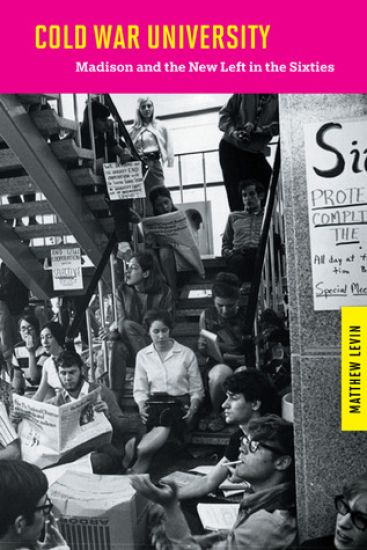
Cold War University

Cold War University

Matthew Levin

University of Wisconsin Press
2013
nidottu
As the Cold War between the United States and the Soviet Union escalated in the 1950s and 1960s, the federal government directed billions of dollars to American universities to promote higher enrollments, studies of foreign languages and cultures, and, especially, scientific research. In Cold War University, Matthew Levin traces the paradox that developed: higher education became increasingly enmeshed in the Cold War struggle even as university campuses became centres of opposition to Cold War policies. The partnerships between the federal government and major research universities sparked a campus backlash that provided the foundation, Levin argues, for much of the student dissent that followed. At the University of Wisconsin in Madison, one of the hubs of student political activism in the 1950s and 1960s, the protests reached their flashpoint with the 1967 demonstrations against campus recruiters from Dow Chemical, the manufacturers of napalm.Levin documents the development of student political organisations in Madison in the 1950s and the emergence of a mass movement in the decade that followed, adding texture to the history of national youth protests of the time. He shows how the University of Wisconsin tolerated political dissent even at the height of McCarthyism, an era named for Wisconsin's own virulently anti-Communist senator, and charts the emergence of an intellectual community of students and professors that encouraged new directions in radical politics. Some of the events in Madison - especially the 1966 draft protests, the 1967 sit-in against Dow Chemical, and the 1970 Sterling Hall bombing - have become part of the fabric of ""The Sixties,"" touchstones in an era that continues to resonate in contemporary culture and politics.
Our Palestine Question

Our Palestine Question

Geoffrey Levin

YALE UNIVERSITY PRESS
2024
sidottu
A new history of the American Jewish relationship with Israel focused on its most urgent and sensitive issue: the question of Palestinian rights “Provide[s] an essential backstory to one of the keenest debates today within Jewish communities.”—Kenan Malik, The Guardian American Jews began debating Palestinian rights issues even before Israel’s founding in 1948. Geoffrey Levin recovers the voices of American Jews who, in the early decades of Israel’s existence, called for an honest reckoning with the moral and political plight of Palestinians. These now-forgotten voices, which include an aid-worker-turned-academic with Palestinian Sephardic roots, a former Yiddish journalist, anti-Zionist Reform rabbis, and young left-wing Zionist activists, felt drawn to support Palestinian rights by their understanding of Jewish history, identity, and ethics. They sometimes worked with mainstream American Jewish leaders who feared that ignoring Palestinian rights could foster antisemitism, leading them to press Israeli officials for reform. But Israeli diplomats viewed any American Jewish interest in Palestinian affairs with deep suspicion, provoking a series of quiet confrontations that ultimately kept Palestinian rights off the American Jewish agenda up to the present era. In reconstructing this hidden history, Levin lays the groundwork for more forthright debates over Palestinian rights issues, American Jewish identity, and the U.S.-Israel relationship more broadly.
Our Palestine Question

Our Palestine Question

Geoffrey Levin

YALE UNIVERSITY PRESS
2025
pokkari
A new history of the American Jewish relationship with Israel focused on its most urgent and sensitive issue: the question of Palestinian rights “Provide[s] an essential backstory to one of the keenest debates today within Jewish communities.”—Kenan Malik, The Guardian American Jews began debating Palestinian rights issues even before Israel’s founding in 1948. Geoffrey Levin recovers the voices of American Jews who, in the early decades of Israel’s existence, called for an honest reckoning with the moral and political plight of Palestinians. These now-forgotten voices, which include an aid-worker-turned-academic with Palestinian Sephardic roots, a former Yiddish journalist, anti-Zionist Reform rabbis, and young left-wing Zionist activists, felt drawn to support Palestinian rights by their understanding of Jewish history, identity, and ethics. They sometimes worked with mainstream American Jewish leaders who feared that ignoring Palestinian rights could foster antisemitism, leading them to press Israeli officials for reform. But Israeli diplomats viewed any American Jewish interest in Palestinian affairs with deep suspicion, provoking a series of quiet confrontations that ultimately kept Palestinian rights off the American Jewish agenda up to the present era. In reconstructing this hidden history, Levin lays the groundwork for more forthright debates over Palestinian rights issues, American Jewish identity, and the U.S.-Israel relationship more broadly.
Hate Crimes

Hate Crimes

Jack Levin; Jack MacDevitt

Springer Science+Business Media
1993
nidottu
Howard Beach! The Central Park Jogger! The Assassination of Alan Berg! Vincent Chin's Murder! The Portland Skinhead Slaying! Headlines scream of the latest in a wave of hate crime attacks. Hate crime-violence aimed at individuals because they are members of a particular group - were once considered the rare illegal actions of a small but vocal assortment of extremists who thrived on hating minorities. No more. Hate crimes have been sweeping the nation - as well as the world. They are happening in even the most unlikely of places. Whereas college campuses at one time epitomized the lofty principles of tolerance, diversity, and idealism, they have now become the repositories of hatred and division. Hate is hip on campus, as evidenced not only by the popularity of racist and misogynistic music, but by the recent rash of attacks against blacks, women, Asians, Latinos, Jews, and gays. These perceptive authors step back to reveal how the campus of hate has become a microcosm for the world at large. This expose by Jack Levin, one of America's leading sociologists and co-author of Mass Murder: America's Growing Menace, and Jack McDevitt, America's foremost authority on hate crimes, explores the spreading venom of prejudice and bigotry in our society and the world. They proclaim that political correctness - as in tolerance of diversity - is no longer deemed fashionable but, rather, obsolete. Organized hate groups have been taking our alienated youth by storm. But beyond bemoaning our present crisis, Levin and McDevitt set forth practical guidelines on how to stem the rising tide of hate. These experts persuasively argue that as the economic pie shrinks, a new type of terrorism is leaving a trail of bloodshed and destruction in its wake. For anyone who is different, the message of this new brand of terrorism is unmistakable: Either flee or be killed. These courageous and provocative a nalysts force us to face a spiraling problem around us as well as the prejudices within
Black Hole Blues and Other Songs from Outer Space
The authoritative story of Rainer Weiss, Barry Barish, and Kip Thorne's Nobel Prize-winning discovery of gravitational waves--by an eminent theoretical astrophysicist and award-winning writer. With A New PrefaceIn 1916, Einstein predicted the presence of gravitational waves. One century later, we are recording the first sounds from space, evidence of the waves' existence caused by the collision of two black holes. An authoritative account of the headline-making discovery by theoretical astrophysicist and award-winning writer Janna Levin, Black Hole Blues and Other Songs from Outer Space recounts the fascinating story of the obsessions, aspirations, and trials of the scientists who embarked on an arduous fifty-year endeavor to capture these elusive waves Five decades after the experiment was dreamed up, the team races to intercept a wisp of sound with two colossal machines, hoping to succeed in time for the centenary of Einstein's most radical idea. With unprecendented access to the surprises, disappointments, achievements, and risks in this remarkable story, Janna Levin's absorbing account offers a portrait of modern science that is unlike anything we've seen before.
The Next Great Clash

The Next Great Clash

Michael Levin

Praeger Publishers Inc
2007
sidottu
These are uncertain times. The balance of power is continually shifting worldwide. In The Next Great Clash, Michael Levin presents evidence of a global political order on the verge of a historic power shift from West to East. A reemerging China is the only nation with the latent capacity to challenge American hegemony, and Levin demonstrates that such challenges to the status quo usually lead to war. Russia, even in its diminished capacity since the end of the Cold War, has deftly positioned itself as the swing player in a future conflict between the United States and China. Levin contends that, since the turn of the century, the global War on Terror has distracted the United States from these developments, as China and Russia draw closer together in an alliance that may well displace American primacy. The Next Great Clash, augmented by personal experience in China, Russia, and the United States, combines years of scholarly research and political analysis—along with a riveting and up-to-date history of Chinese-Russian relations. This bold and iconoclastic tour de horizon is a must-read for anyone interested in international affairs.