Kirjojen hintavertailu. Mukana 11 699 587 kirjaa ja 12 kauppaa.

Kirjahaku

Etsi kirjoja tekijän nimen, kirjan nimen tai ISBN:n perusteella.

1000 tulosta hakusanalla Like Test Prep

Like a Bride and Like a Mother

Like a Bride and Like a Mother

Rosa Nissán

University of New Mexico Press
2013
nidottu
These two autobiographical novels lay bare the life journey of a Mexican Jewish woman reconciling herself with a Sephardic background, her parent's dictates, and her husband's and family's expectations. The only constant in her life is a need to find her own way, and the story of how she does so is intensely personal and yet universal in its humanness. This quest begins in Oshinica's childhood: at about age ten she's taken from the public school in Mexico City and placed in a Jewish one. There she begins to understand what it means to be Jewish. Though somewhat indifferent to Hebrew lessons, she warms to the teacher who shares experiences of the Holocaust and learns that being Jewish means being different. Oshinica's family thwarts her desire to enter the university and instead she's pushed into marriage at age seventeen. Children follow quickly, four in all, and into the 1960s Oshinica tries to be a dutiful wife and mother while continuing to be an obedient daughter. But the insular Jewish neighbourhood that sheltered and defined her life is impinged upon as modernity transforms Mexico City. Seeing films like the Fellini movie 8 1/2 and experiencing a culturally changing capital city sets her on a quest for her own voice and space. Eventually she separates and divorces, supports herself as a commercial photographer, and enrolls in a creative writing course taught by Elena Poniatowska, one of Mexicoás most prominent women authors. The short pieces begun in that course evolved into these two novels. The remarkable story they tell is how Oshinicaás many, and often painful, journeys of discovery led to a personal peace.
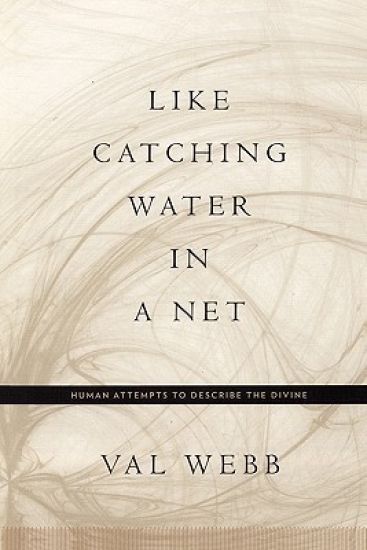
Like Catching Water in a Net

Like Catching Water in a Net

Webb Val

Continuum International Publishing Group Ltd.
2007
sidottu
The recent spate of God bashers - Richard Dawkins, Daniel Dennett, and Sam Harris - have received their own thumping in the secular press, most notably Dawkins in "Harper's", the "London Review of Books", and the "New York Review of Books". Yet there are very few books on the God phenomenon that one would confidently entrust into the hands of readers who would be hard pressed to describe themselves as either true believers or "cultured despisers of religion". But Val Webb's "Like Catching Water in a Net" is such a book. Like Karen Armstrong in "The History of God" or Jack Miles in "God: A Biography", Webb is not out to prove the existence of a God or the Divine, but to set out intuitions or intimations of the Divine nature and attributes from the stories and poems of the world's religions.Casting her net more widely than Armstrong or Miles, Webb delves deeply into the poetry and sayings of Sufi, Buddhist and Hindu mystics. A microbiologist by early training, she is attuned to the nature religion of the ancient Mesopotamians, their kin the Israelites, and the Aboriginal people of her own beloved Australia. Raised in the Christian fundamentalist tradition, she poses a critical challenge to the ways in which Christianity has straitjacketed our Western notions of the Divine, here aligning herself with modern "mystics" like William James, Leo Tolstoy and Florence Nightingale. In the final chapter, she shows how the process theology of Alfred North Whitehead and Charles Hartshore, and their contemporary followers, is highly compatible with so many of the traditional notions about God surveyed in the book.
Like Catching Water in a Net

Like Catching Water in a Net

Val Webb

Continuum International Publishing Group Ltd.
2009
nidottu
National Best Books 2007 Award-Winner in Religion. Insightful, imaginative, and provocative! Val Webb's new book has freed the Divine from the religious. A striking achievement. John Shelby Spong, author of Jesus for the Non-Religious. In Like Catching Water in a Net, Val Webb is not out to prove the existence of a God or the Divine, but to set out intuitions or intimations of the Divine nature and attributes from the stories and literature of the world's religions. Casting her net more widely than Karen Armstrong in The History of God or Jack Miles in God: A Biography, Webb delves deeply into the poetry and sayings of Sufi, Buddhist, and Hindu mystics, the nature religion of the ancient Mesopotamians, their kin the Israelites, and the Aboriginal people of her own beloved Australia.
Like a Bird in a Cage

Like a Bird in a Cage

Continuum International Publishing Group - Sheffie
2003
sidottu
What makes one crime more serious than another, and why? This book investigates the problem of seriousness of offence in English law from the comparative perspective of biblical law. Burnside takes a semiotic approach to show how biblical conceptions of seriousness are synthesised and communicated through various descriptive and performative registers. Seven case studies show that biblical law discriminates between the seriousness of different offences and between the relative seriousness of the same offence when committed by different people or when performed in different ways. Recurring elements include location and the offender's social statue. The closing chapter considers some of the implications for the current debate about crime and punishment.
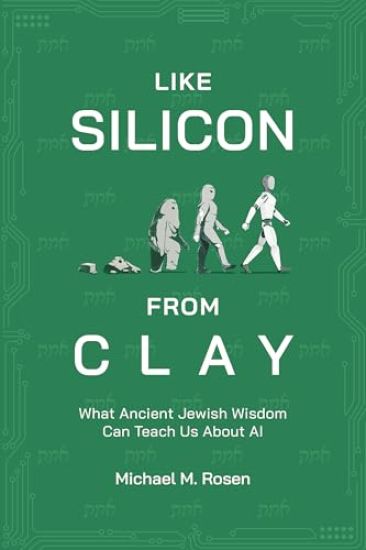
Like Silicon from Clay: What Ancient Jewish Wisdom Can Teach Us about AI
How can we reconcile competing claims about artificial intelligence in today's policy debate? Will AI herald a technological utopia filled with scientific breakthroughs that extend and enhance life, or will the machines we create turn on us and usher in the apocalypse? Will chatbots stifle creativity and crush the human spirit, or are they just reflections of ourselves, for better or worse? As we grapple with these questions, technologists, philosophers, entrepreneurs, writers, artists, and elected officials have espoused approaches to AI advances that appear fundamentally at odds with each other. In this penetrating analysis of contemporary thought on AI, American Enterprise Institute Senior Fellow Michael M. Rosen identifies and elucidates the arguments around allowing AI an increasing presence in our lives. More importantly, he posits that centuries of Jewish mythology hold important lessons about our relationship with technology: from the "golems" communal Jewish leaders purported to fashion from clay and imbue with the power to serve the greater good-at least, until those golems ran amok and wrought destruction-to the evil spirits called "dybbuks" that Jewish communities believe possess people and require exorcism, to their friendly cousin spirits called "maggids" that inspire the heights of human creative expression.Rosen explains how these legends enabled humans of old to understand themselves-and their creations. And he applies the legends' lessons to the contemporary AI policy debate, presenting both general and specific recommendations for how to harness the power of our machines while curbing their darker possibilities. Ultimately, he argues that, while the technological present is evolving at breakneck speed, we must take a moment to reflect on how our past can inform our future.
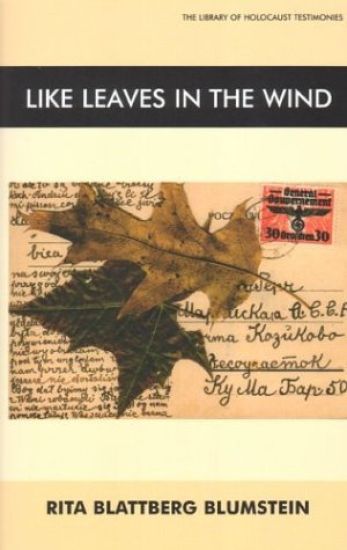
Like Leaves in the Wind

Like Leaves in the Wind

Rita Blattberg Blumstein

Vallentine Mitchell Co Ltd
2003
nidottu
This is the story of Rita Blattberg, a Jewish child from Krakow, from when the Germans invade Poland in 1939, to her deportation to the Soviet Union. It documents her time there and the colourful cast of characters that she met before returning to a hometown inhabited by ghosts, and leaving Poland to start a new life in the West. This account includes postcards, which were sent by Rita's grandmothers in 1940 and 1941, from occupied Poland.
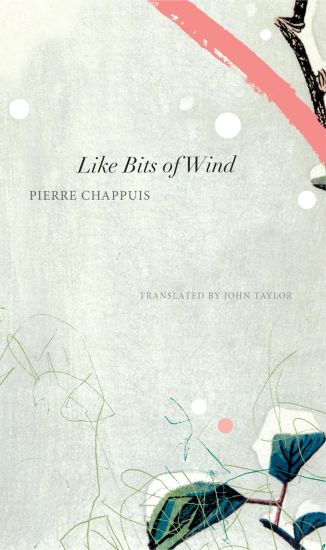
Like Bits of Wind

Like Bits of Wind

Pierre Chappuis

Seagull Books London Ltd
2016
sidottu
One of the central figures from a remarkable generation of French-language poets, Pierre Chappuis has thus far only been represented in English translation in fragments: a few poems here and there in magazines, online reviews, and anthologies. Like Bits of Wind rights that wrong, offering a generous selection of Chappuis’s poetry and prose from the past forty years, drawn from several of his books. In these pages, Chappuis delves into long-standing questions of the essence of life, our relationship to landscape, the role of the perceiving self, and much more. His skeletal, haiku-like verse starkly contrasts with his more overtly poetic prose, which revels in sinuous lines and interpolated parentheticals. Together, the different forms are invigorating and exciting, the perfect introduction for English-language readers.
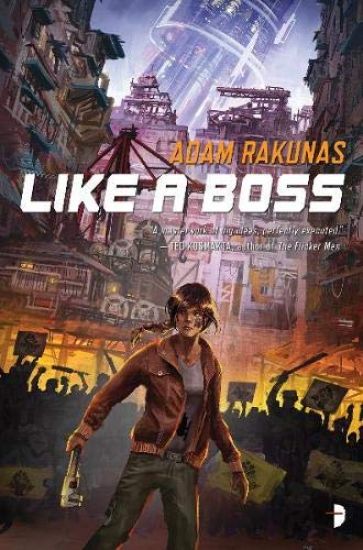
Like A Boss

Like A Boss

Adam Rakunas

Angry Robot
2016
nidottu
In this breathless and hilarious follow-up to Windswept, former labor organizer Padma’s worst nightmare comes true: she gets yanked out of early retirement. After buying her favourite rum distillery and settling down, she thought she’d heard the last of her arch nemesis, Evanrute Saarien. But Saarien, fresh out of prison for his misdeeds in Windswept, has just fabricated a new religion, positioning himself as its holy leader. He’s telling his congregation to go on strike, to fight the system. And unfortunately, they’re listening to him. Now Padma’s summoned by the Union president to help stop this strike from happening. The problem is, she’s out of practice. And, the more she digs, the more she realizes this whole strike business is more complicated than the Union president let on… File Under: Science Fiction [ Fraud Almighty | City on Fire | Let’s Be Reasonable Please | All Outta Bubble Gum ]
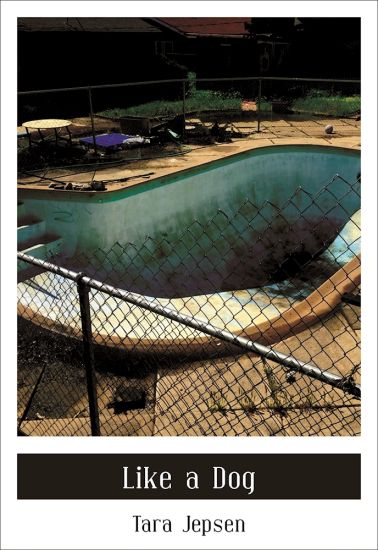
Like a Dog

Like a Dog

Tara Jepsen

City Lights Books
2017
pokkari
Debut novel from someone firmly entrenched in the LA arts scene. Jepsen has acted in the Emmy-Award winning show Transparent and a web series with Beth Lisick on (Transparent creator) Jill Soloway's site, wifey.tv. She's also appeared in music videos for Peaches and the band Two Gallants.Jepsen's novel is from the point of view of a female skater, the culture of female skaters in particular was recently covered in the New York Times.Jepsen's friendships & connections with Maggie Nelson, Michelle Tea, Isaac Fitzgerald (books editor at BuzzFeed) and Karolina Waclawiak (essays editor at The Believer) will be utilized for interviews, events, and profiles. Tara Jepsen's prose is fresh, intimate, and accessible, and will win over readers from the first page.
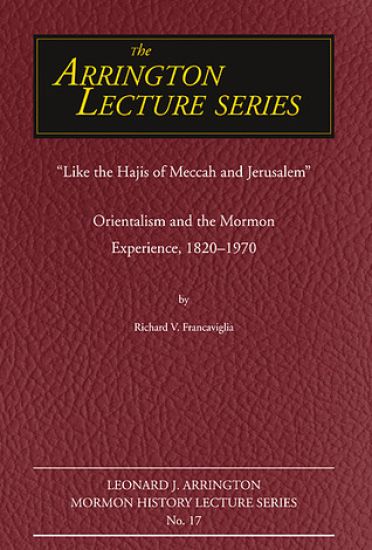
Like the Hajis of Meccah and Jerusalem

Like the Hajis of Meccah and Jerusalem

Richard Francaviglia

Utah State Special Collection
2012
nidottu
The series, established by one of the twentieth-century West's most distinguished historians, Leonard Arrington, has become a leading forum for prominent historians to address topics related to Mormon history. The first lecturer was Arrington himself. He was followed by Richard Lyman Bushman, Richard E. Bennett, Howard R. Lamar, Claudia L. Bushman, Kenneth W. Godfrey, Jan Shipps, Donald Worster, Laurel Thatcher Ulrich, and F. Ross Peterson. Utah State University hosts the Leonard J. Arrington Mormon History Lecture Series. The University Libraries' Special Collections and Archives houses the Arrington collection. The state's land grant university began collecting records very early, and in the 1960s became a major depository for Utah and Mormon records. Leonard and his wife Grace joined the USU faculty and family in 1946, and the Arringtons and their colleagues worked to collect original diaries, journals, letters, and photographs. Although trained as an economist at the University of North Carolina, Arrington became a Mormon historian of international repute. Working with numerous colleagues, the Twin Falls, Idaho, native produced the classic "Great Basin Kingdom: An Economic History of the Latter-day Saints" in 1958. Utilizing available collections at USU, Arrington embarked on a prolific publishing and editing career. He and his close ally, Dr. S. George Ellsworth helped organize the Western History Association, and they created the "Western Historical Quarterly" as the scholarly voice of the WHA. While serving with Ellsworth as editor of the new journal, Arr ington also helped both the Mormon History Association and the independent journal Dialogue get established. "
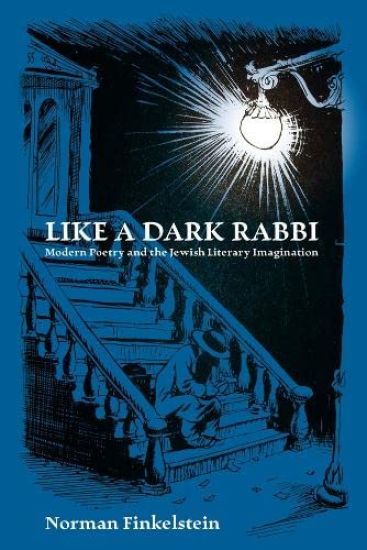
Like a Dark Rabbi

Like a Dark Rabbi

Norman Finkelstein

Hebrew Union College Press,U.S.
2019
nidottu
Wallace Stevens' "dark rabbi", from his poem "Le Monocle de Mon Oncle", provides a title for this collection of essays on the "lordly study" of modern Jewish poetry in English. Including chapters on such poets as Charles Reznikoff, Allen Grossman, Chana Bloch, and Michael Heller, this volume explores the tensions between religious and secular worldviews in recent Jewish poetry, the often conflicted linguistic and cultural matrix from which this poetry arises, and the complicated ways in which Jewish tradition shapes the sensibilities of not only Jewish, but also non-Jewish, poets. Finkelstein, described as "one of American poetry's indispensable makers" (Lawrence Joseph), whose previous critical work has been called "the exemplary study of the religious aspect of the works of contemporary American poets" (Peter O'Leary), considers large literary and cultural trends while never losing sight of the particular formal powers of individual poems. In Like a Dark Rabbi he offers a passionate argument for the importance of Jewish-American poetry to modern Jewish culture—and to American poetry—as it engages with the contradictions of contemporary life.
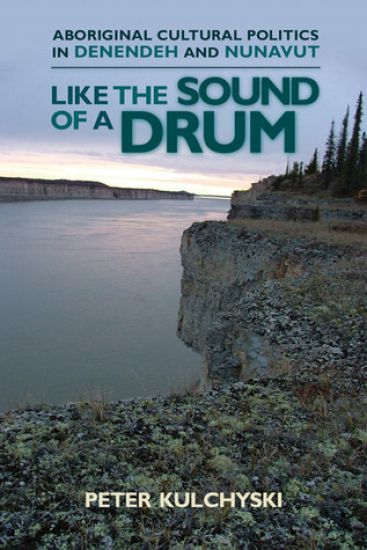
Like the Sound of a Drum

Like the Sound of a Drum

Peter Kulchyski

University of Manitoba Press
2005
nidottu
Part ethnography, part narrative, Like the Sound of a Drum is evocative, confrontational, and poetic. For many years, Peter Kulchyski has travelled to the north, where he has sat in on community meetings, interviewed elders and Aboriginal politicians, and participated in daily life.In Like the Sound of a Drum he looks as three northern communities - Fort Simpson and Fort Good Hope in Denendeh and Pangnirtung in Nunavut - and their strategies for maintaining their political and cultural independence. In the face of overwhelming odds, communities such as these have shown remarkable resources for creative resistance. In the process, they are changing the concept of democracy as it is practised in Canada.
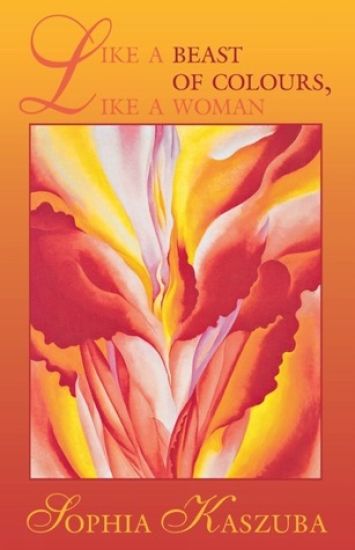
Like a Beast of Colours, Like a Woman

Like a Beast of Colours, Like a Woman

Sophia Kaszuba

Press Porcepic,Ontario
1998
pokkari
Like a Beast of Colours, Like a Woman is an explosion of verse from one of the country's hottest new poetic talents. Kaszuba's work is a deftly subtle presentation of the visceral and the natural, combining a photographer's eye for light and detail with the ponderings of a musing heart. Deeply embedded in the landscape of northern Ontario and the vast lakes, tough granite and majestic birch of that rich territory, she plumbs the depths of the land and of her soul, searching for the nutrients to sustain both. These poems beautifully address consciousness and spirituality as they are mirrored in the natural world; poems which in the storms and sunrises of life come to rest on the moments in childhood, friendships, and marriages which are the residue of memory. With spare language and a deft use of original imagery, Kaszuba captures a world both unique and universal, a sacred place with its own inherent ceremonies of reverence and forgiveness. Amid the tall grasses and gently lilting waves is a silence that speaks calmly in answer to our ceaseless barrage of questions and startles us with the realization that it has been there all along. Her verse surprises and with a burst of colours wakes you up as if from an enchanting dream, the taste of newly-kissed wisdom on your tongue.
Like a Child of the Earth

Like a Child of the Earth

Jovette Marchessault

Talonbooks
1988
pokkari
Like a Child of the Earth, the first volume of Jovette Marchessault's autobiographical trilogy, won the Prix France-Quebec in 1976. In it, the largely self-taught artist and author, who left school at the age of fourteen to work in a factory, reflects upon her "years of wandering before encountering painting and writing." Though a first novel, this is by no means a conventional account of growing up poor in the Plateau Mont-Royal. Rather it is a unique, lyrical, frequently surreal interior journey which carries the reader in the belly of a great Greyhound from Mexico across all America, past cornfields haunted by Jack Kerouac's ghost, to Montreal, back through time to Columbus, and forward to futures as yet unrealized. The final section of the book celebrates Jovette's grandmother, painter of hens and pianist extraordinaire, who becomes the centre of the next volume, Mother of the Grass. Though distinctively quebecoise, Marchessault's voice is profoundly North American as well, and her vision encompasses the tragic and glorious history of the entire continent.