Kirjojen hintavertailu. Mukana 12 083 983 kirjaa ja 12 kauppaa.

Kirjahaku

Etsi kirjoja tekijän nimen, kirjan nimen tai ISBN:n perusteella.

1000 tulosta hakusanalla M D Peter Strassberg

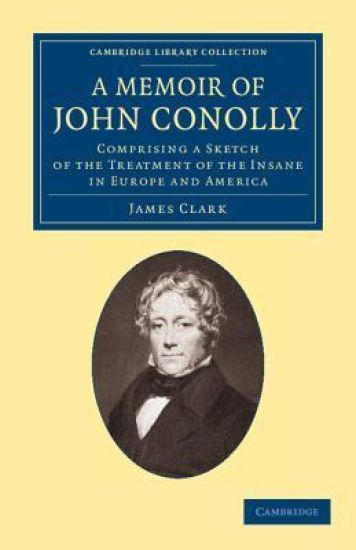
A Memoir of John Conolly, M.D., D.C.L

A Memoir of John Conolly, M.D., D.C.L

James Clark

Cambridge University Press
2013
pokkari
John Conolly (1794–1866) was a physician and alienist (psychiatrist) who worked with the mentally ill at the Hanwell County Asylum in Middlesex, where he introduced the principle of non-restraint. This action was at first controversial and met with strong opposition, but it served to further the cause of humane treatment, securing Conolly's reputation. Published in 1869, this biography was the last major work of Sir James Clark (1788–1870), a supporter of Conolly's enlightened methods. Clark himself had enjoyed a distinguished medical career, becoming a trusted physician and friend to Queen Victoria. Also reissued in this series are his Medical Notes on Climate, Diseases, Hospitals, and Medical Schools in France, Italy, and Switzerland (1820), The Influence of Climate in the Prevention and Cure of Chronic Diseases (1829) and A Treatise on Pulmonary Consumption (1835).
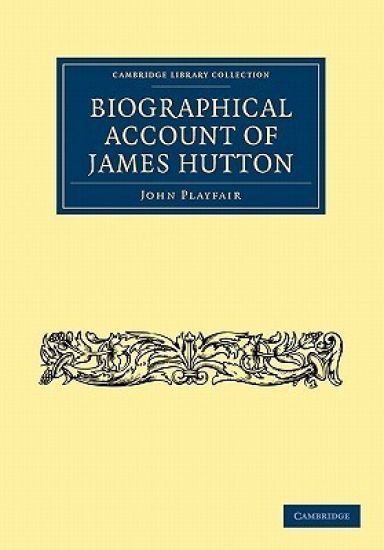
Biographical Account of James Hutton, M.D. F.R.S. Ed.

Biographical Account of James Hutton, M.D. F.R.S. Ed.

John Playfair

Cambridge University Press
2011
pokkari
James Hutton (1726–1797) was an eminent Scottish scientist known chiefly for his work in geology. Educated at Edinburgh University, Hutton then travelled to Europe to study medicine before going into industry. He spent over a decade farming his family property in Scotland before returning to academic and commercial life. Hutton became an established geologist who also published on chemistry, meteorology and philosophy as an active member of the Edinburgh Royal Society. This volume, first published in 1805, is a detailed and affectionate chronicle of Hutton's life by his close friend, geologist and mathematician John Playfair. The author recounts Hutton's academic career, speculates on the motivation behind his foray into farming and includes a detailed discussion of his main geological theories. With little of Hutton's correspondence and papers surviving, this account by an intimate contemporary is the key resource for studying the life of an intriguing figure in scientific history.
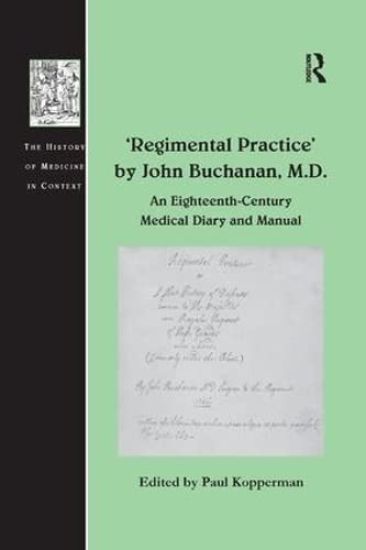
'Regimental Practice' by John Buchanan, M.D.
In 1746, Dr John Buchanan, recently retired as a medical officer in the British Army, produced a manuscript entitled, 'Regimental Practice, or a Short History of Diseases common to His Majesties own Royal Regiment of Horse Guards when abroad (Commonly called the Blews).' Revised in several stages almost until the time of Buchanan's death in 1767, this work was for the most part based on the author's observations while surgeon to a cavalry regiment serving in Flanders 1742-45, during the War of the Austrian Succession. It is a work of immense value to the understanding of eighteenth-century interpretation and treatment of diseases, but as yet has never been published. Presented here is an annotated modern edition of the text, with an introductory section setting the work in the context of Buchanan's life and career, and within the broader framework of eighteenth-century medical practice. Buchanan's practice of medicine generally represented the mainstream of professional practice as regarded both his understanding of disease and his treatment of it. Across the decades of the eighteenth century there were discoveries and fashions that impacted both the theory and the practice of medicine. Various writers of that age, as well as a number of historians since, have conveyed the sense that practice was chaotic. On the contrary, what this book argues is that methods used to treat diseases were fairly standard. Therefore, by reading Buchanan's manuscript one sees not only how he treated more than three dozen diseases, as well as various wounds and injuries, but also how these conditions were often treated in this period.