
Kirjahaku
Etsi kirjoja tekijän nimen, kirjan nimen tai ISBN:n perusteella.
1000 tulosta hakusanalla MATTES ARI


The seventeenth-century scientific revolution and the eighteenth-century chemical revolution are rarely considered together, either in general histories of science or in more specific surveys of early modern science or chemistry. This tendency arises from the long-held view that the rise of modern physics and the emergence of modern chemistry comprise two distinct and unconnected episodes in the history of science. Although chemistry was deeply transformed during and between both revolutions, the scientific revolution is traditionally associated with the physical and mathematical sciences whereas modern chemistry is seen as the exclusive product of the chemical revolution. This historiographical tension, between similarity in ’form’ and disparity in historical ’content’ of the two events, has tainted the way we understand the rise of modern chemistry as an integral part of the advent of modern science. Against this background, Matter and Method in the Long Chemical Revolution examines the role of and effects on chemistry of both revolutions in parallel, using chemistry during the chemical revolution to illuminate chemistry during the scientific revolution, and vice versa. Focusing on the crises and conflicts of early modern chemistry (and their retrospectively labeled ’losing’ parties), the author traces patterns of continuity in matter theory and experimental method from Boyle to Lavoisier, and reevaluates the disciplinary relationships between chemists, mechanists, and Newtonians in France, England, and Scotland. Adopting a unique approach to the study of the scientific and chemical revolutions, and to early modern chemical thought and practice in particular, the author challenges the standard revolution-centered history of early modern science, and reinterprets the rise of chemistry as an independent discipline in the long eighteenth century.
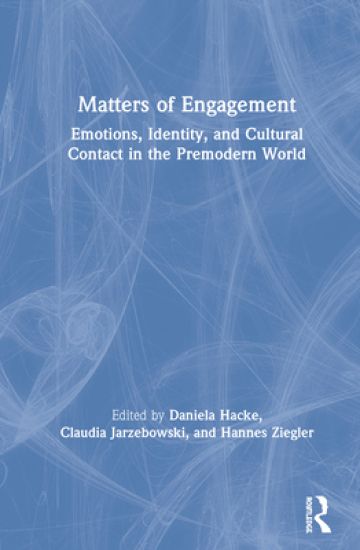
Matters of Engagement
Routledge
2020
sidottu
By drawing on a broad range of disciplinary and cross-disciplinary expertise, this study addresses the history of emotions in relation to cross-cultural movement, exchange, contact, and changing connections in the later medieval and early modern periods.All essays in this volume focus on the performance and negotiation of identity in situations of cultural contact, with particular emphasis on emotional practices. They cover a wide range of thematic and disciplinary areas and are organized around the primary sources on which they are based. The edited volume brings together two major areas in contemporary humanities: the study of how emotions were understood, expressed, and performed in shaping premodern transcultural relations, and the study of premodern cultural movements, contacts, exchanges, and understandings as emotionally charged encounters. In discussing these hitherto separated historiographies together, this study sheds new light on the role of emotions within Europe and amongst non-Europeans and Europeans between 1100 and 1800. The discussion of emotions in a wide range of sources including letters, images, material culture, travel writing, and literary accounts makes Matters of Engagement an invaluable source for both scholars and students concerned with the history of premodern emotions.
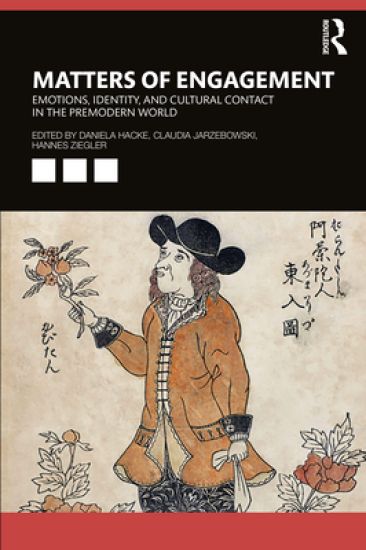
Matters of Engagement
Routledge
2020
nidottu
By drawing on a broad range of disciplinary and cross-disciplinary expertise, this study addresses the history of emotions in relation to cross-cultural movement, exchange, contact, and changing connections in the later medieval and early modern periods.All essays in this volume focus on the performance and negotiation of identity in situations of cultural contact, with particular emphasis on emotional practices. They cover a wide range of thematic and disciplinary areas and are organized around the primary sources on which they are based. The edited volume brings together two major areas in contemporary humanities: the study of how emotions were understood, expressed, and performed in shaping premodern transcultural relations, and the study of premodern cultural movements, contacts, exchanges, and understandings as emotionally charged encounters. In discussing these hitherto separated historiographies together, this study sheds new light on the role of emotions within Europe and amongst non-Europeans and Europeans between 1100 and 1800. The discussion of emotions in a wide range of sources including letters, images, material culture, travel writing, and literary accounts makes Matters of Engagement an invaluable source for both scholars and students concerned with the history of premodern emotions.
Facts may seem to be independent, but in this study Stanley Raffle looks at them as expressions of commitment. Medical records, he believes, furnish a principal example of the actively oriented character of the factual commitment, and he draws on his experience of research among the records of a large modern hospital to demonstrate this. He describes how records are produced and reorganized as records, and discusses the grounds which provide for all the features of the records. He looks at the act of ‘observation’ in many apparently and concretely different places, and analyses the activity of noticing, viewing, recording a spectacle, where what is observed supposedly remains untouched by the observing. Dr Raffel goes on to show that observation, events, records and criteria of assessment such as reliability and completeness lose their status as unexplicated verities and become, instead, decisive and consequential courses of action. He points out, too, that the Socratic dialogues exemplify an orientation to commitment that even medical records, paradoxically, require if they are to be the matters of fact that they are.

This volume is concerned with the philosophical foundations of Psychical Research. Traditional metaphysical theories have led to apparently insoluble problems concerning the nature of mind, of matter and the relation between the two. The author holds that these theories arise from misconception about the way in which words acquire meaning. His aim is to show that once the relation between words and the experienceable entities which they mean is clearly understood, these seemingly insoluble problems disappear, and the metaphysical theories which give rise to them are seen to be literally nonsensical. The philosophy which results is a radically empirical one, a form of Neutral Monism.The book intended to ‘clear the decks’ for Psychical Research by removing certain traditional pseudo-problems, but it will be of interest to all who followed the revival of Empiricist Philosophy, whether they are students of Psychical Research or not. It is written in a pithy and sparkling style, with a minimum of technical terms, and serves as an introduction to Empiricist Philosophy. Originally published 1949.

This volume is concerned with the philosophical foundations of Psychical Research. Traditional metaphysical theories have led to apparently insoluble problems concerning the nature of mind, of matter and the relation between the two. The author holds that these theories arise from misconception about the way in which words acquire meaning. His aim is to show that once the relation between words and the experienceable entities which they mean is clearly understood, these seemingly insoluble problems disappear, and the metaphysical theories which give rise to them are seen to be literally nonsensical. The philosophy which results is a radically empirical one, a form of Neutral Monism.The book intended to ‘clear the decks’ for Psychical Research by removing certain traditional pseudo-problems, but it will be of interest to all who followed the revival of Empiricist Philosophy, whether they are students of Psychical Research or not. It is written in a pithy and sparkling style, with a minimum of technical terms, and serves as an introduction to Empiricist Philosophy. Originally published 1949.

Facts may seem to be independent, but in this study Stanley Raffle looks at them as expressions of commitment. Medical records, he believes, furnish a principal example of the actively oriented character of the factual commitment, and he draws on his experience of research among the records of a large modern hospital to demonstrate this. He describes how records are produced and reorganized as records, and discusses the grounds which provide for all the features of the records. He looks at the act of ‘observation’ in many apparently and concretely different places, and analyses the activity of noticing, viewing, recording a spectacle, where what is observed supposedly remains untouched by the observing. Dr Raffel goes on to show that observation, events, records and criteria of assessment such as reliability and completeness lose their status as unexplicated verities and become, instead, decisive and consequential courses of action. He points out, too, that the Socratic dialogues exemplify an orientation to commitment that even medical records, paradoxically, require if they are to be the matters of fact that they are.
Matteo Bandello O Vita Italiana In Un Novelliere Del Cinquecento (1900)
Ernesto Masi
KESSINGER PUBLISHING, LLC
2010
pokkari
Mattei, C: Elektro-Homoopathische Arzneiwissenschaft
Cesare Mattei
KESSINGER PUBLISHING, LLC
2010
nidottu
Mattei, C: Elektro-Homoopathische Heil-Methode (1878)
Cesare Mattei
KESSINGER PUBLISHING, LLC
2010
nidottu

Annali Di Matteo Spinello Da Giovenazzo (1872)
Matteo Spinello
KESSINGER PUBLISHING, LLC
2010
pokkari
Matthes, K: Edessenische Abgarsage Auf Ihre Fortbildung Unte
K. C. A. Matthes
KESSINGER PUBLISHING, LLC
2010
nidottu
Matter and Spirit
Kessinger Publishing
2010
pokkari

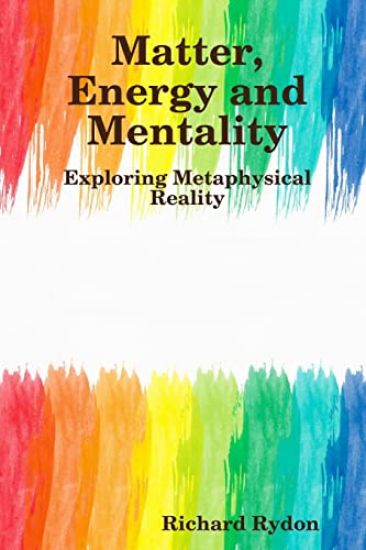
This book is brief and daring. Matter, Energy and Mentality: Exploring Metaphysical Reality by Richard Rydon is a book of speculative non-fiction. It is something to sink your metaphysical teeth into. It covers the relationships between Matter, Energy and Mentality, using Energy Redistribution (Unnecessary Action) as a common feature in the Universe. The book should appeal, especially, to those of a mathematical bent, where a number of descriptive equations are presented in an attempt to describe certain elusive aspects of Reality. The book also includes some more-detailed sections, which consider the relationships between Information and Entropy in various Systems.
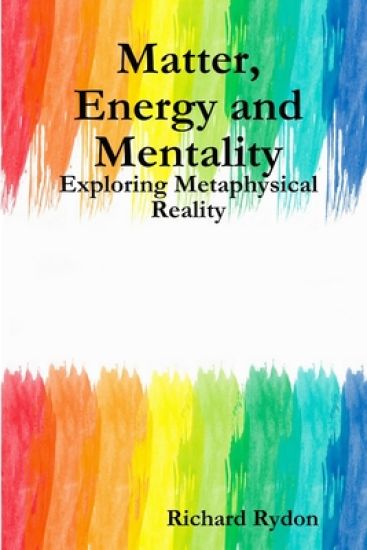
This book is brief and daring. Matter, Energy and Mentality: Exploring Metaphysical Reality by Richard Rydon is a book of speculative non-fiction. It is something to sink your metaphysical teeth into. It covers the relationships between Matter, Energy and Mentality, using Energy Redistribution (Unnecessary Action) as a common feature in the Universe. The book should appeal, especially, to those of a mathematical bent, where a number of descriptive equations are presented in an attempt to describe certain elusive aspects of Reality. The book also includes some more-detailed sections, which consider the relationships between Information and Entropy in various Systems.