Kirjojen hintavertailu. Mukana 11 627 220 kirjaa ja 12 kauppaa.

Kirjahaku

Etsi kirjoja tekijän nimen, kirjan nimen tai ISBN:n perusteella.

1000 tulosta hakusanalla Maral Atmaca

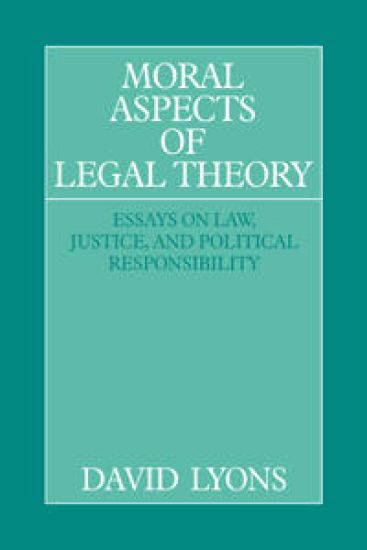
Moral Aspects of Legal Theory

Moral Aspects of Legal Theory

David Lyons

Cambridge University Press
1993
sidottu
David Lyons is one of the preeminent philosophers of law active in the United States. This volume comprises essays written over a period of twenty years in which Professor Lyons outlines his fundamental views about the nature of law and its relation to morality and justice. The underlying theme of the book is that a system of law has only a tenuous connection with morality and justice. Contrary to those legal theorists who maintain that no matter how bad the law of a community might be, strict conformity to existing law automatically dispenses ‘formal’ justice, Professor Lyons contends that the law must earn the respect that it demands. Moreover, we cannot, as some would suggest, interpret law in a value-neutral manner. Rather courts should interpret statutes, judicial precedents, and constitutional provisions in terms of values that would justify those laws. In this way officials can promote the justifiability of what they do to people in the name of law, and can help the law live up to its moral pretensions.
Moral Perception and Particularity

Moral Perception and Particularity

Blum Lawrence A.

Cambridge University Press
1994
pokkari
Most contemporary moral philosophy is concerned with issues of rationality, universality, impartiality, and principle. By contrast Laurence Blum is concerned with the psychology of moral agency. The essays in this collection examine the moral import of emotion, motivation, judgment, perception, and group identifications, and explore how all these psychic capacities contribute to a morally good life. Blum takes up the challenge of Iris Murdoch to articulate a vision of moral excellence that provides a worthy aspiration for human beings. Drawing on accounts of non-Jewish rescuers of Jews during the Holocaust Blum argues that impartial principle can mislead us about the variety of forms of moral excellence.
Moral Aspects of Legal Theory

Moral Aspects of Legal Theory

David Lyons

Cambridge University Press
1993
pokkari
David Lyons is one of the preeminent philosophers of law active in the United States. This volume comprises essays written over a period of twenty years in which Professor Lyons outlines his fundamental views about the nature of law and its relation to morality and justice. The underlying theme of the book is that a system of law has only a tenuous connection with morality and justice. Contrary to those legal theorists who maintain that no matter how bad the law of a community might be, strict conformity to existing law automatically dispenses ‘formal’ justice, Professor Lyons contends that the law must earn the respect that it demands. Moreover, we cannot, as some would suggest, interpret law in a value-neutral manner. Rather courts should interpret statutes, judicial precedents, and constitutional provisions in terms of values that would justify those laws. In this way officials can promote the justifiability of what they do to people in the name of law, and can help the law live up to its moral pretensions.
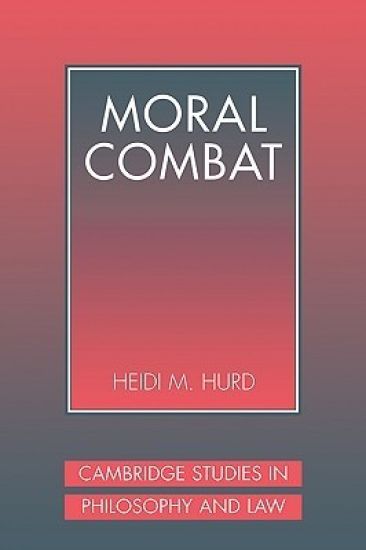
Moral Combat

Moral Combat

Heidi Hurd

Cambridge University Press
1999
sidottu
This book explores the thesis that legal roles force people to engage in moral combat, an idea which is implicit in the assumption that citizens may be morally required to disobey unjust laws, while judges may be morally required to punish citizens for civil disobedience. Heidi Hurd advances the surprising argument that the law cannot require us to do what morality forbids. The ‘role-relative’ understanding of morality is shown to be incompatible with both consequentialist and deontological moral philosophies. In the end, Hurd shows that our best moral theory is one which never makes one actor’s moral success turn on another’s moral failure. Moral Combat is a sophisticated, well-conceived and carefully argued book on a very important and controversial topic at the junction between legal and political philosophy. It will be of interest to moral, legal, and political philosophers, as well as teachers and students of professional ethics in law.
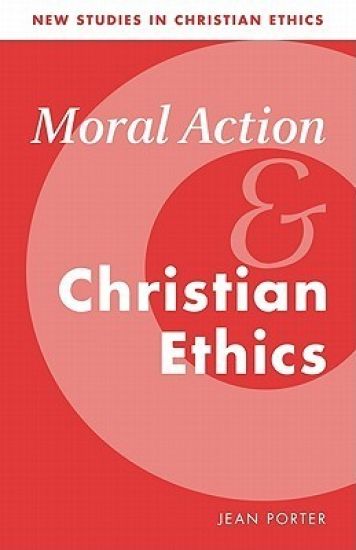
Moral Action and Christian Ethics

Moral Action and Christian Ethics

Porter Jean

Cambridge University Press
1999
pokkari
How do we determine whether an action is right or wrong? Until recently, philosophers assumed that this question could be answered by means of a theory of morality, which set forth clearly established rules for moral behaviour. More recently, however, a number of philosophers have challenged a theory of morality in this sense. Porter is sympathetic to their criticisms but questions whether they go far enough in offering a positive alternative to a modern view of the moral act. She argues that the work of Aquinas offers an alternative account of moral rationality, in terms of which moral reasoning is understood as dialectical rather than deductive, and questions are resolved in a wider context of ethical thought. Aquinas’s account of the moral virtues and prudence is seen to offer unexpected insights into the relationship between moral rules and the practice of the virtues, thus contributing to our own moral reflection.
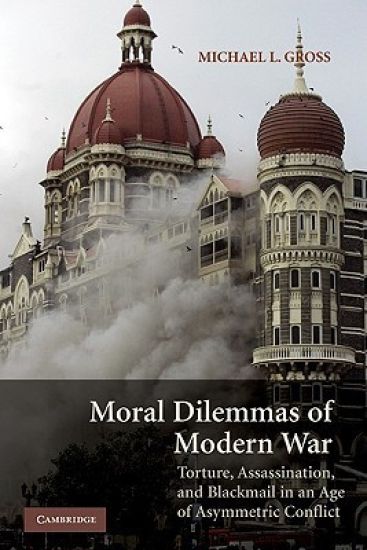
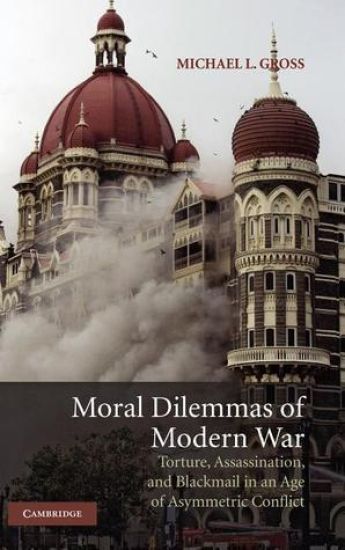
Moral Dilemmas of Modern War

Moral Dilemmas of Modern War

Gross Michael L.

Cambridge University Press
2009
pokkari
Asymmetric conflict is changing the way that we practise and think about war. Torture, rendition, assassination, blackmail, extortion, direct attacks on civilians, and chemical weapons are all finding their way to the battlefield despite longstanding international prohibitions. This book offers a practical guide for policy makers, military officers, students, and others who ask such questions as: do guerillas deserve respect or long jail sentences? Are there grounds to torture guerillas for information or assassinate them on the battlefield? Is there room for nonlethal weapons to subdue militants and safeguard the lives of noncombatants? Who are noncombatants in asymmetric war? What is the status of civilians who shelter and aid guerillas? And, do guerillas have any right to attack civilians, particularly those who aid and shelter members of the stronger army? If one side can expand the scope of civilian vulnerability, then why can't the other?
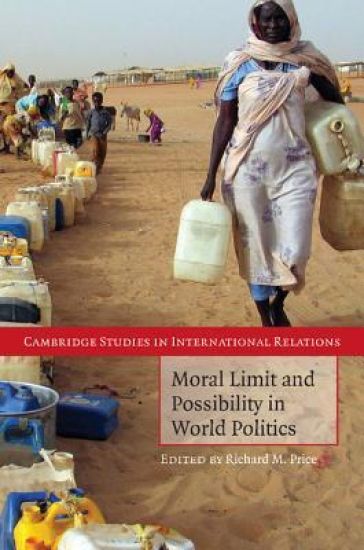
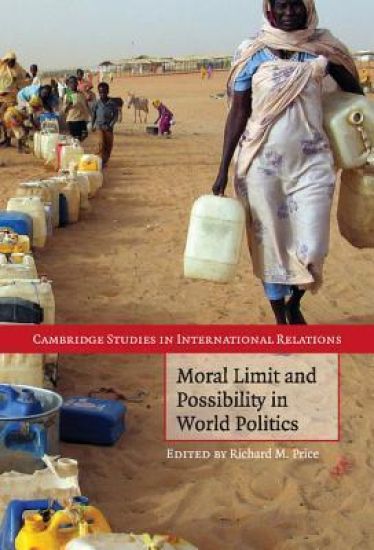
Moral Limit and Possibility in World Politics
At what point can we concede that the realities of world politics require that moral principles be compromised, and how do we know when a real ethical limit has been reached? This volume gathers leading constructivist scholars to explore the issue of moral limit and possibility in global political dilemmas. The contributors examine pressing ethical challenges such as sanctions, humanitarian intervention, torture, the self-determination of indigenous peoples, immigration, and the debate about international criminal tribunals and amnesties in cases of atrocity. Their analyses entail theoretical and empirical claims about the conditions of possibility and limits of moral change in world politics, therefore providing insightful leverage on the ethical question of 'what ought we to do?' This is a valuable contribution to the growing field of normative theory in International Relations and will appeal to scholars and advanced students of international ethics and political theory.
Moral Status and Human Life

Moral Status and Human Life

James G. Dwyer

Cambridge University Press
2010
sidottu
Are children of equal, lesser, or perhaps even greater moral importance than adults? This work of applied moral philosophy develops a comprehensive account of how adults as moral agents ascribe moral status to beings - ourselves and others - and on the basis of that account identifies multiple criteria for having moral status. It argues that proper application of those criteria should lead us to treat children as of greater moral importance than adults. This conclusion presents a basis for critiquing existing social practices, many of which implicitly presuppose that children occupy an inferior status, and for suggesting how government policy, law, and social life might be different if it reflected an assumption that children are actually of superior status.
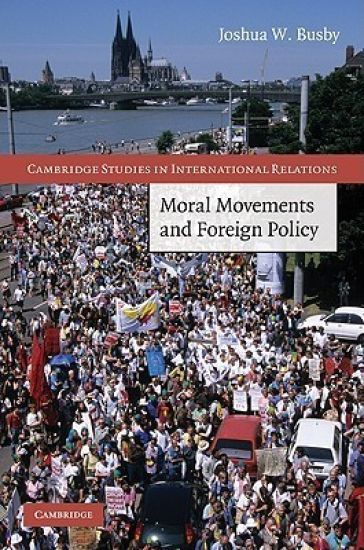
Moral Movements and Foreign Policy

Moral Movements and Foreign Policy

Joshua W. Busby

Cambridge University Press
2010
sidottu
Why do advocacy campaigns succeed in some cases but fail in others? What conditions motivate states to accept commitments championed by principled advocacy movements? Joshua W. Busby sheds light on these core questions through an investigation of four cases - developing-country debt relief, climate change, AIDS, and the International Criminal Court - in the G-7 advanced industrialized countries (Canada, France, Germany, Italy, Japan, the United Kingdom, and the United States). Drawing on hundreds of interviews with policy practitioners, he employs qualitative, comparative case study methods, including process-tracing and typologies, and develops a framing/gatekeepers argument, emphasizing the ways in which advocacy campaigns use rhetoric to tap into the main cultural currents in the countries where they operate. Busby argues that when values and costs potentially pull in opposing directions, values will win if domestic gatekeepers who are able to block policy change believe that the values at stake are sufficiently important.
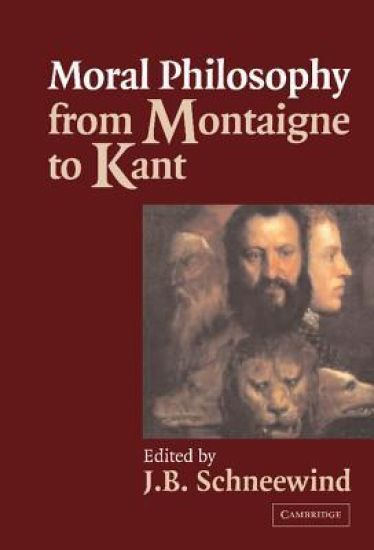
Moral Philosophy from Montaigne to Kant
This anthology contains excerpts from some thirty-two important seventeenth- and eighteenth-century moral philosophers. Including a substantial introduction and extensive bibliographies, the anthology facilitates the study and teaching of early modern moral philosophy in its crucial formative period. As well as well-known thinkers such as Hobbes, Hume, and Kant, there are excerpts from a wide range of philosophers never previously assembled in one text, such as Grotius, Pufendorf, Nicole, Clarke, Leibniz, Malebranche, Holbach and Paley. Originally issued as a two-volume edition in 1990, the anthology is now re-issued with a new foreword by Professor Schneewind, as a one-volume anthology to serve as a companion to his highly successful history of modern ethics, The Invention of Autonomy. The anthology provides many of the sources discussed in The Invention of Autonomy and taken together the two volumes will be an invaluable resource for the teaching of the history of modern moral philosophy.
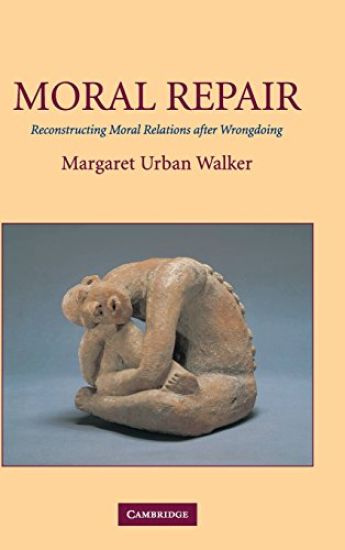
Moral Repair

Moral Repair

Margaret Urban Walker

Cambridge University Press
2006
sidottu
Moral Repair examines the ethics and moral psychology of responses to wrongdoing. Explaining the emotional bonds and normative expectations that keep human beings responsive to moral standards and responsible to each other, Margaret Urban Walker uses realistic examples of both personal betrayal and political violence to analyze how moral bonds are damaged by serious wrongs and what must be done to repair the damage. Focusing on victims of wrong, their right to validation, and their sense of justice, Walker presents a unified and detailed philosophical account of hope, trust, resentment, forgiveness, and making amends - the emotions and practices that sustain moral relations. Moral Repair joins a multidisciplinary literature concerned with transitional and restorative justice, reparations, and restoring individual dignity and mutual trust in the wake of serious wrongs.
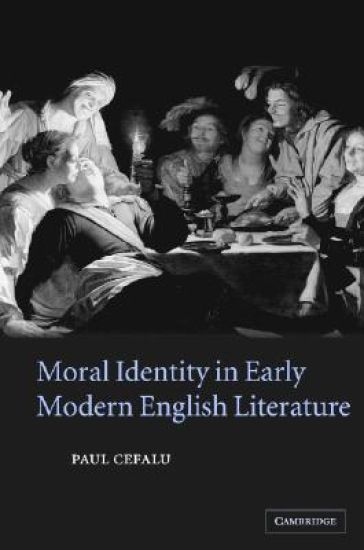
Moral Identity in Early Modern English Literature

Moral Identity in Early Modern English Literature

Paul Cefalu

Cambridge University Press
2004
sidottu
Paul Cefalu's study explores the relationship between moral character and religious conversion in the poetry and prose of Sidney, Spenser, Donne, Herbert, and Milton, as well as in early modern English Conformist and Puritan sermons, theological tracts, and philosophical treatises. Cefalu argues that early modern Protestant theologians were often unable to incorporate a coherent theory of practical morality into the order of salvation. Cefalu draws on fresh historicist theories of ideology and subversion, but takes issue with historicist tendency to conflate generic and categorical distinctions among texts. He argues that imaginative literature, by virtue of its tendency to place characters in approximately real ethical quandaries, uniquely points out the inability of early modern English Protestant theology to merge religious theory and ethical practice. This study should appeal not only to literary critics and historians, but also to scholars interested in the history of moral theory.
Moral Disagreement

Moral Disagreement

Folke Tersman

Cambridge University Press
2006
sidottu
Folke Tersman explores what we can learn about the nature of moral thinking by examining moral disagreement. He explains how diversity of opinion on moral issues undermines the idea that moral convictions can be objectively valued. Arguments on moral thinking are often criticized for not being able to explain why there is a contrast between ethics and other areas in which there is disagreement, but where one does not give up the idea of an objective truth, as in the natural sciences. Tersman shows that the contrast has to do with facts about when, and on what basis, moral convictions can be correctly attributed to an agent or speaker.
Moral Dilemmas of Modern War

Moral Dilemmas of Modern War

Michael L. Gross

Cambridge University Press
2009
sidottu
Asymmetric conflict is changing the way that we practise and think about war. Torture, rendition, assassination, blackmail, extortion, direct attacks on civilians, and chemical weapons are all finding their way to the battlefield despite longstanding international prohibitions. This book offers a practical guide for policy makers, military officers, students, and others who ask such questions as: Do guerillas deserve respect or long jail sentences? Are there grounds to torture guerillas for information or assassinate them on the battlefield? Is there room for nonlethal weapons to subdue militants and safeguard the lives of noncombatants? Who are noncombatants in asymmetric war? What is the status of civilians who shelter and aid guerillas? And, do guerillas have any right to attack civilians, particularly those who aid and shelter members of the stronger army? If one side can expand the scope of civilian vulnerability, then why can't the other?
Moral Limit and Possibility in World Politics
At what point can we concede that the realities of world politics require that moral principles be compromised, and how do we know when a real ethical limit has been reached? This volume gathers leading constructivist scholars to explore the issue of moral limit and possibility in global political dilemmas. The contributors examine pressing ethical challenges such as sanctions, humanitarian intervention, torture, the self-determination of indigenous peoples, immigration, and the debate about international criminal tribunals and amnesties in cases of atrocity. Their analyses entail theoretical and empirical claims about the conditions of possibility and limits of moral change in world politics, therefore providing insightful leverage on the ethical question of 'what ought we to do?' This is a valuable contribution to the growing field of normative theory in International Relations and will appeal to scholars and advanced students of international ethics and political theory.