The Magnolia Jungle: The Life, Times And Education Of A Southern Editor is a memoir written by P. D. East, chronicling his life and career as a journalist and editor in the American South. The book follows East's journey from his childhood in Mississippi to his years working for newspapers in Louisiana, Alabama, and Georgia. Along the way, he shares his experiences covering major events such as the Civil Rights Movement, Hurricane Katrina, and the aftermath of 9/11.In addition to his journalistic career, East also delves into his personal life, including his relationships with family, friends, and colleagues. He discusses the challenges of being a gay man in the South during a time when homosexuality was not widely accepted, and how his experiences shaped his worldview.Throughout the book, East reflects on the importance of education and the role it played in his life. He shares stories of his own academic journey, including his time at the University of Mississippi and his experiences teaching at various universities in the South.The Magnolia Jungle offers a unique perspective on Southern culture and history, as well as a personal account of one man's journey to find his place in the world.This scarce antiquarian book is a facsimile reprint of the old original and may contain some imperfections such as library marks and notations. Because we believe this work is culturally important, we have made it available as part of our commitment for protecting, preserving, and promoting the world's literature in affordable, high quality, modern editions, that are true to their original work.
A masterly synthesis of the history of the contemporary world, The World Since 1945 offers the ideal introduction to the events of the period between the end of the Second World War and the present day. P. M. H. Bell and Mark Gilbert balance a clear narrative with in-depth analysis to guide the reader through the aftermath of the Second World War, the Cold War, decolonization, Détente and the Arab-Israeli Conflict, up to the on-going ethnic strife and political instability of the 21st century.The new edition has been thoroughly revised to fully reflect developments in the history and historiography of the post-war world, and features five new chapters on the post-Cold War world, covering topics including: - The rise and fall of American hegemony- The decline of Europe- The rise of Asia- Political Islam as a global force - The role of human rightsThe World Since 1945 challenges us to better understand what happened and why in the post-war period and shows the ways in which the past continues to exercise a profound influence on the present. It is essential reading for any student of contemporary history.
A masterly synthesis of the history of the contemporary world, The World Since 1945 offers the ideal introduction to the events of the period between the end of the Second World War and the present day. P. M. H. Bell and Mark Gilbert balance a clear narrative with in-depth analysis to guide the reader through the aftermath of the Second World War, the Cold War, decolonization, Détente and the Arab-Israeli Conflict, up to the on-going ethnic strife and political instability of the 21st century.The new edition has been thoroughly revised to fully reflect developments in the history and historiography of the post-war world, and features five new chapters on the post-Cold War world, covering topics including: - The rise and fall of American hegemony- The decline of Europe- The rise of Asia- Political Islam as a global force - The role of human rightsThe World Since 1945 challenges us to better understand what happened and why in the post-war period and shows the ways in which the past continues to exercise a profound influence on the present. It is essential reading for any student of contemporary history.
This significant new book by foremost experts in the field will be the first that truly covers the topic of engineering geomorphology as a distinct discipline and, as such, will be of paramount importance to both practitioners and students. Engineering geomorphology is concerned with the evaluation of landform changes, especially the effects of construction on the environment, notably on the operation of surface processes and the risks from surface processes, whether current processes or the legacies of past processes. Engineering geomorphology provides practical support for engineering decision-making (project planning, investigation, design and construction) and engineering geomorphologists form an integrate part of the engineering or environmental team. Engineering geomorphology has developed in the last few decades to support a number of distinct areas of engineering, including river engineering, coastal engineering, and geotechnical engineering, where engineering geomorphology has complemented engineering geology and has proven to be valuable, especially for rapid site reconnaissance and slope stability studies.Geomorphology provides a spatial context for developing site models and explaining the distribution and characteristics of particular ground-related problems (e. g. landslides, permafrost or the presence of aggressive soils) and resources (e.g. sand and gravel). Engineering geomorphology can also be applied to agricultural engineering, primarily in the investigation and management of soil erosion problems. This book includes basic concepts that underpin efforts to explain the causes, mechanisms and consequences of landform change. It then considers how the land surface works in the context of wetland, flatland, hills, mountains, rivers and coasts; and the techniques that are available to the engineering geomorphologist in the field, in the laboratory, in the office and in the various forms of remote sensing. Each succinct chapter is packed with vital information, well-illustrated with diagrams and tables and fully referenced so that the detail of subject matter can be followed up.
Hur ser högskoleutbildningens bildningspraktiker ut? Vad utgör det bildande momentet i en akademisk undervisningsprocess? Vilken typ av bildningsbegrepp kan användas för att diskutera bildande undervisning? I denna antologi, som vuxit fram som en motkraft mot ett insnävat instrumentellt synsätt på kunskap och utbildning, tar författare från sex ämnesområden ett nytt grepp på detta omdiskuterade tema genom att utgå från såväl vetenskaplig metod som egen undervisningserfarenhet. Med hemvist i olika vetenskapsområden (filosofi, språkvetenskap, biologi, pedagogik, arkeologi och teaterlärarutbildning), och med lång praktisk erfarenhet inom den högre utbildningen, har bokens författare samlats kring den gemensamma viljan att främja bildande undervisning i akademin.
Jennifer D P Moroney; Stephanie Pezard; David E Thaler; Gene Germanovich; Beth Grill; Bruce McClintock; Karen Schwindt; Mary Kate Adgie; Anika Binnendijk; Kevin J Connolly; Katie Feistel; Jeffrey W Hornung; Alison K Hottes; Moon Kim; Isabelle Nazha; Gabrielle Tarini; Mark Toukan; Jalen Zeman
In this report, the authors use 11 case studies to create a typology of the barriers that impede U.S. security cooperation with highly capable allies and partners; identify some of the more specific barriers in the air, space, and cyber domains; suggest mitigation strategies for each of these barriers; and propose a preliminary approach for implementing some of these mitigation strategies.
The neurologic subspecialty of Movement Disorders is complicated with many different entities, making the differential diagnosis difficult. One of the most important aspects of these different entities is their visual appearance. Still photographs do not give sufficient information, but videos like the ones included in this volume can provide dimension, context, and critical information. The variety of visual appearances is wide and seeing many videos is necessary to develop skill in making a diagnosis. Involuntary movements are even more complicated and the adage "seeing is believing" has never been more true. Despite this, few books include videos portraying involuntary movements. Involuntary Movements: Classification and Video Atlas pairs descriptions of the clinical features of various involuntary movements with video depictions of the involuntary movements in action. In a unique approach, this book considers two aspects of the diagnosis of involuntary movements: the phenomenology - as depicted in approximately 200 video supplements - and the etiology. The book also discusses the current consensus on the classification, pathophysiology, and treatment of each involuntary movement.
Prized by plumbers, pipefitters, and construction tradespersons for decades, this handy guidebook is now completely updated Overhauled for the first time in thirteen years, this popular guide is loaded with information and techniques useful to students as well as plumbing professionals on the job. This update includes tips and shortcuts for different commercial water cooler systems, the 1.6-gallon flush toilet, and other conservation-conscious and environmentally friendly equipment now in common usage since the last revision.
Fully updated version of the only trade guide dedicated exclusively to air conditioning for both home and commercial application For decades this guidebook has been a favorite of air conditioning specialists, who know theres a vast difference between home and commercial units. Fully updated for the first time since 1991, it covers new, compact home units as well as changes and improvements in commercial systems, giving AC technicians, maintenance personnel, and handy homeowners just what they need to know in one convenient volume.
Additional co-authors of The Agile Almanac - Book 2 include Steven M. McGee and Rick A. Morris. It has been reviewed by Jeff Sutherland, Scott Ambler, Bas Vodde, and Dean Leffingwell's co-founder Drew Jemilo and Inbar Oren. They were generous beyond all expectations, helping us get the chapter on their approaches accurate and concise so you can quickly discern which one is the best fit for your needs. (We couldn't be more thankful and indebted.) ... This book is a Rosetta stone for serious Agile practitioners covering ALL of the Scaled Agile "Big 8" approaches in one place with unique, side-by-side, coverage of Scrum of Scrums (SoS), Scaled Agile Framework (SAFe(R)), Disciplined Agile (DA), Large Scale Scrum (LeSS), Kanban, DevOps, the Agile content in the Project Management Institute, A Guide to the Project Management Body of Knowledge, (PMBOK(R) Guide) - Sixth Edition, Project Management Institute, Inc. 2017, and the Agile Integration Framework (AIF). ... Book 2 shows YOU how to speak convincingly to key stakeholders and unlock important customer loyalty with carefully explained content refined by months of collaboration between the 12 co-authors. ... Book 2 serves the global community delivering Programs and uber-large projects in an immense number of industries and institutions. ... Our experience has convinced us that Agile can, and must, be scaled as an extension of Lean Principles using integrative thinking. ... This book dramatically increases YOUR scaled Agile expertise and moves you from playing checkers to playing chess ... The Agile Almanac book series allows Practitioners and Organizations to select precisely the content they need and zero in on the best way to apply it in the context of their environments. ... It is committed to your success
The authors of Four Green Fields have gone above and beyond on their promise to bring us "wild Irish banter and craic." They have literally thrown open the doors of their collective closets and introduced us to the family skeletons, put flesh back on their bones and made them dance Not only do we get a glimpse into the wacky world of their Irish upbringing, but we are introduced to fathers, grandfathers and uncles - utterly devoid of any sense of political correctness - who at times went about their daily lives oblivious to the havoc they wreaked around them, but at other times knew full well the embarrassment they were causing their families.
Birds have colonized almost every terrestrial habitat on the planet - from the poles to the tropics, and from deserts to high mountain tops. Ecological and Environmental Physiology of Birds focuses on our current understanding of the unique physiological characteristics of birds that are of particular interest to ornithologists, but also have a wider biological relevance. An introductory chapter covers the basic avian body plan and their still-enigmatic evolutionary history. The focus then shifts to a consideration of the essential components of that most fundamental of avian attributes: the ability to fly. The emphasis here is on feather evolution and development, flight energetics and aerodynamics, migration, and as a counterpoint, the curious secondary evolution of flightlessness that has occurred in several lineages. This sets the stage for subsequent chapters, which present specific physiological topics within a strongly ecological and environmental framework. These include gas exchange, thermal and osmotic balance, 'classical' life history parameters (male and female reproductive costs, parental care and investment in offspring, and fecundity versus longevity tradeoffs), feeding and digestive physiology, adaptations to challenging environments (high altitude, deserts, marine habitats, cold), and neural specializations (notably those important in foraging, long-distance navigation, and song production). Throughout the book classical studies are integrated with the latest research findings. Numerous important and intriguing questions await further work, and the book concludes with a discussion of methods (emphasizing cutting-edge technology), approaches, and future research directions.
Birds have colonized almost every terrestrial habitat on the planet - from the poles to the tropics, and from deserts to high mountain tops. Ecological and Environmental Physiology of Birds focuses on our current understanding of the unique physiological characteristics of birds that are of particular interest to ornithologists, but also have a wider biological relevance. An introductory chapter covers the basic avian body plan and their still-enigmatic evolutionary history. The focus then shifts to a consideration of the essential components of that most fundamental of avian attributes: the ability to fly. The emphasis here is on feather evolution and development, flight energetics and aerodynamics, migration, and as a counterpoint, the curious secondary evolution of flightlessness that has occurred in several lineages. This sets the stage for subsequent chapters, which present specific physiological topics within a strongly ecological and environmental framework. These include gas exchange, thermal and osmotic balance, 'classical' life history parameters (male and female reproductive costs, parental care and investment in offspring, and fecundity versus longevity tradeoffs), feeding and digestive physiology, adaptations to challenging environments (high altitude, deserts, marine habitats, cold), and neural specializations (notably those important in foraging, long-distance navigation, and song production). Throughout the book classical studies are integrated with the latest research findings. Numerous important and intriguing questions await further work, and the book concludes with a discussion of methods (emphasizing cutting-edge technology), approaches, and future research directions.
One of the key scientific challenges is the puzzle of human cooperation. Why do people cooperate? Why do people help strangers, even sometimes at a major cost to themselves? Why do people want to punish people who violate norms and undermine collective interests? This book is inspired by the fact that social dilemmas, defined in terms of conflicts between (often short-term) self-interest and (often longer-term) collective interest, are omnipresent. The book centers on two major themes. The first theme centers on the theoretical understanding of human cooperation: are people indeed other-regarding? The second theme is more practical, and perhaps normative: how can cooperation be promoted? This question is at the heart of the functioning of relationships, organizations, as well as the society as a whole. In capturing the breadth and relevance of social dilemmas and psychology of human cooperation, this book is structured in three parts. The first part focuses on the definition of social dilemmas, along with the historical development of scientific theorizing of human cooperation and the development of social dilemma as a game in which to study cooperation. The second part presents three chapters, each of which adopts a relatively unique perspective on human cooperation: an evolutionary perspective, a psychological perspective, and a cultural perspective. The third part focuses on applications of social dilemmas in domains as broad and important as management and organizations, environmental issues, politics, national security, and health. Social Dilemmas is strongly inspired by the notion that science is never finished. Each chapter therefore concludes with a discussion of two (or more) basic issues that are often inherently intriguing, and often need more research and theory. The concluding chapter outlines avenues for future directions.
The first comprehensive guide to designing highly usable, fully integrated computer-based information systems. Traditional human-computer interaction (HCI) and system design models have proven too narrow to adequately assess user needs and to design usable and efficient computer-based information support systems. Taking modeling concepts from engineering, psychology, cognitive science, information science, and computer science, cognitive systems engineering (CSE) provides a much broader, more dynamic framework. This book is the first comprehensive guide to the emerging new field of cognitive systems engineering. Throughout, the emphasis is on powerful analytical techniques that enhance the systems designer's ability to see the "big picture," and to design for all crucial aspects of human-work interaction. Applicable to highly structured technical systems such as process plants, as well as less structured user-driven systems like libraries, these analytical techniques form the basis for the design and design evaluation guidelines that make up the bulk of this book. The authors also provide a chapter-length case history in which they chronicle the success of their approach when applied to a full-scale software design project.
"Halloween Classics" presents five scary tales for the holiday, each with an EC-style introduction by famed horror author Mort Castle. Featured are Nathaniel Hawthorne's "The Legend of Sleepy Hollow", Arthur Conan Doyle's mummy tale "Lot No. 249", Mark Twain's "A Curious Dream", and H.P. Lovecraft's "Cool Air". Plus, a comics adaptation of the great silent film "The Cabinet of Dr. Calligari", illustrated by Matt Howarth, with a terrifying cover by Simon Gane.
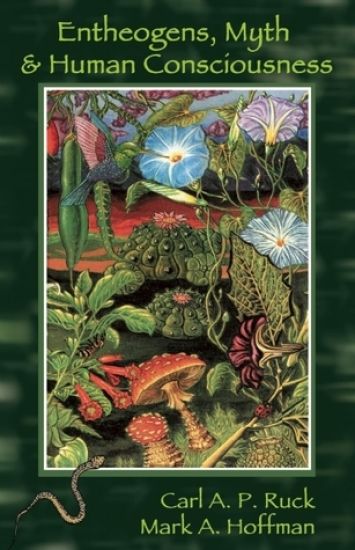
ENTHEOGENS, MYTH AND HUMAN CONSCIOUSNESS is a much needed accessible exploration into the role of psychoactive sacraments - entheogens - in religion, mythology, and history, and also includes most treatments of the subject focus on modern scientific research, psychotherapy, are auto-bibliographic accounts, or are agenda-driven or otherwise naive and myopic. A great mystery of altered states of consciousness and species development is expanding with new archeological and anthropological discoveries. Religious story telling (myth) is a timeless journey. Surprisingly it's not about truth. It's about finding one's self in the midst of the discovery of the "Other." It is the story of what is separate and unknown that creates self-consciousness. Our entire life consists ultimately in the discovery of the "Other," which gives meaning to the discovery of the self. The arts and language are the fossil remnants scattered on our path. ENTHEOGENS, MYTH AND HUMAN CONSCIOUSNESS discusses the influence of psychoactive substances on consciousness, human evolution and mystical experiences. It explores how religion, mythology, art and culture stem from entheogenic consciousness and why it's important to us today. "Entheogens, or psychoactive sacraments, have a long, storied history that has played an essential role in the evolution of consciousness, mythology, culture, religion, art - and even history and politics. ENTHEOGENS, MYTH AND HUMAN CONSCIOUSNESS outlines this suppressed - yet seminal - undercurrent of history, giving examples of the role of entheogens from the primal shamanic religions through, the historical religions, esoteric mystical traditions including the Mystery Religions, alchemy and Freemasonry, and into contemporary expressions. Authors Ruck and Hoffman draw upon decades of research and personal experience in discussing the best documented examples of historically important entheogenic evidences, various ongoing threads of research and speculation to muse upon the 'meaning' of it all..." Our hominid ancestors experienced a spiritual wakening at the very dawn of consciousness that set them apart from the other creatures of our planet. It was a journey to another realm induced by a special food that belonged to the gods. This was a plant that was animate with the spirit of deity. It was an entheogen. It was the visionary vehicle for the trip of the first shaman. The story was told over and over again until it achieved the perfect form of a myth. The realm was imagined as a topographical place, the outer limit of the cosmos, the fiery empyrean, or its geocentric opposite, our own planet Gaia. Myths multiplied over time, but they always preserved this primordial truth. These myths provide a road map, a scenario, if you can read them, for whoever today wants to follow. However, it is not an easy journey, and it is also fraught with many dangers, of getting lost, of finding no return. Access to the entheogens is now largely prohibited or strictly licensed. The restrictions constitute an infringement of cognitive freedom, limiting the further evolution of human potential into productive creative imagination and experiences that lie beyond the normal, the traditional province of shamans, who can understand the speech of plants and animals, change shape at will, and journey, both physically and in the spirit, to distant exotic realms. In addition, religions have staked out territorial claims to this realm of spiritual consciousness. They have colonized it, identified it with their god, often reserving the access for their own elite. Similarly, trade in drugs, both medicinal and illegal, has colonized the etheogens, making them only chemicals, rationally depriving them of their spirit. ENTHEOGENS, MYTH AND HUMAN CONSCIOUSNESS is a guide for the curious that provides a historical overview of the role that entheogens have played in the development of our unique supremacy as a species and offers also pathways and advice for reconnecting with the primordial sources of nature's power. ENTHEOGENS, MYTH AND HUMAN CONSCIOUSNESS investigates the role entheogens have played in the evolution of humankind's attempt to define reality in a context of metaphysical or theological dimensions. Although other botanical intoxicants will be considered (cannabis, daphne, opium, Syrian rue, datura, mandrake), none, with the possible exception of mandrake, seem to have lent themselves so readily to metaphoric personifications, which make this the subject for a course on mythology. The source of humankind's fascination and repulsion for fungi, indeed, leads to a fundamental consideration of the psychological nature of mankind's fascination or awareness of what in the categorization of religions is termed animism and rituals of ecstatic shamanism. In addition, the linking of bread and wine as sacramental foods is due to parallel concepts of controlled fungal growth as a simulacrum of the cosmos itself. The goal is not so much to acquire factual knowledge of this vast subject, but to open up pathways for reflection upon the basic nature of human existence and consciousness. The narrative is the awesome history of discovery and the findings of ancient rituals that meld into twentieth-century controversy and criticism of psychedelics. The future of humanity and the direction of twenty-first century brain science is challenged as well as our sense of social convention. Entheogens have been deemed be prohibited controlled substances and as such is an infringement of cognitive freedom. Whatever the danger of potential abuse, the substance is not the fault, but the user. The hammer is not guilty, but the carpenter who misuses it because of deficient training. In order to exonerate the executioner in Classical antiquity, the axe was brought to trial and found guilty. The prohibition has drastically retarded the investigation into the therapeutic potential of proscribed drugs, including their efficacy in curing addiction. Some of these substances also offer the potential for accessing levels of cognition and consciousness beyond the ordinary, the traditional provenance of mystics and shamans, like bilocation, clairvoyance, and zoomorphism.