
Kirjahaku
Etsi kirjoja tekijän nimen, kirjan nimen tai ISBN:n perusteella.
1000 tulosta hakusanalla Morrison Meade Davis
A Study Guide for Toni Morrison's The Bluest Eye
Cengage Learning Gale
Gale, Study Guides
2017
pokkari
A Study Guide for Toni Morrison's Song of Solomon
Cengage Learning Gale
Gale, Study Guides
2017
pokkari
Some Are Born To Endless Night: Jim Morrison, Visions of Apocalypse and Transcendence
Gerry Kirstein
Createspace Independent Publishing Platform
2012
nidottu

The Nerd and the Marine: The Morrison Family Series - Book 1
D. R. Grady
Createspace Independent Publishing Platform
2011
nidottu
The Corpsman and the Nerd: The Morrison Family Series - Book 2
D. R. Grady
Createspace Independent Publishing Platform
2011
nidottu

The Nerd and the SEAL: The Morrison Family - Book 3
D. R. Grady
Createspace Independent Publishing Platform
2012
nidottu

Through Dark Spaces: A Hannah Morrison Mystery
Karen E. Hall
Createspace Independent Publishing Platform
2012
nidottu

The Nerd's Pocket Pets: The Morrison Family Series - Book 4
D. R. Grady
Createspace Independent Publishing Platform
2012
nidottu
New Critical Essays on Toni Morrison's God Help the Child
University Press of Mississippi
2020
sidottu
Contributions by Alice Knox Eaton, Mar Gallego, Maxine Lavon Montgomery, Evelyn Jaffe Schreiber, Shirley A. Stave, Justine Tally, Susana Vega-González, and Anissa WardiIn her eleventh novel, God Help the Child, Toni Morrison returned to several of the signature themes explored in her previous work: pernicious beauty standards for women, particularly African American women; mother-child relationships; racism and colorism; and child sexual abuse. God Help the Child, published in 2015, is set in the contemporary period, unlike all of her previous novels. The contemporary setting is ultimately incidental to the project of the novel, however; as with Morrison's other work, the story takes on mythic qualities, and the larger-than-life themes lend themselves to allegorical and symbolic readings that resonate in light of both contemporary and historical issues. New Critical Essays on Toni Morrison's "God Help the Child": Race, Culture, and History, a collection of eight essays by both seasoned Morrison scholars as well as new and rising scholars, takes on the novel in a nuanced and insightful analysis, interpreting the novel in relation to Morrison's earlier work as well as locating it within ongoing debates in literary and other academic disciplines engaged with African American literature. The volume is divided into three sections. The first focuses on trauma - both the pain and suffering caused by neglect and abuse, as well as healing and understanding. The second section considers narrative choices, concentrating on experimentation and reader engagement. The third section turns a comparative eye to Morrison's fictional canon, from her debut work of fiction, The Bluest Eye, until the present. These essays build on previous studies of Morrison's novels and deepen readers'understanding of both her last novel and her larger literary output.
New Critical Essays on Toni Morrison's God Help the Child
University Press of Mississippi
2020
pokkari
Contributions by Alice Knox Eaton, Mar Gallego, Maxine Lavon Montgomery, Evelyn Jaffe Schreiber, Shirley A. Stave, Justine Tally, Susana Vega-González, and Anissa WardiIn her eleventh novel, God Help the Child, Toni Morrison returned to several of the signature themes explored in her previous work: pernicious beauty standards for women, particularly African American women; mother-child relationships; racism and colorism; and child sexual abuse. God Help the Child, published in 2015, is set in the contemporary period, unlike all of her previous novels. The contemporary setting is ultimately incidental to the project of the novel, however; as with Morrison's other work, the story takes on mythic qualities, and the larger-than-life themes lend themselves to allegorical and symbolic readings that resonate in light of both contemporary and historical issues. New Critical Essays on Toni Morrison's "God Help the Child": Race, Culture, and History, a collection of eight essays by both seasoned Morrison scholars as well as new and rising scholars, takes on the novel in a nuanced and insightful analysis, interpreting the novel in relation to Morrison's earlier work as well as locating it within ongoing debates in literary and other academic disciplines engaged with African American literature. The volume is divided into three sections. The first focuses on trauma - both the pain and suffering caused by neglect and abuse, as well as healing and understanding. The second section considers narrative choices, concentrating on experimentation and reader engagement. The third section turns a comparative eye to Morrison's fictional canon, from her debut work of fiction, The Bluest Eye, until the present. These essays build on previous studies of Morrison's novels and deepen readers'understanding of both her last novel and her larger literary output.
American Legends: The Life of Jim Morrison
Charles River
Createspace Independent Publishing Platform
2014
nidottu
*Includes pictures. *Includes Morrison's quotes about his life and career. *Includes footnotes and a bibliography for further reading. "I see myself as an intelligent, sensitive human, with the soul of a clown which forces me to blow it at the most important moments." - Jim Morrison In the mid-1960s, an era on the cusp of change from the musical and social norms of the previous decade, the emergence of Jim Morrison, the charismatic poet/musician of The Doors, helped to transform the subgenre of rock n' roll as a stylistic flavor to the full-fledged institution of Rock Music. Morrison accomplished this transformation by avoiding membership in any of the known categories of modern rock music during the age of protest, but at the same time, he became the general symbol of anti-authoritarianism for his generation and the next, especially as rock music began to base itself on the urge of youth to revolt. In conjunction with that, The Doors became one of the most famous bands on the planet in the late '60s. Of course, Morrison accomplished all of this by being extreme, in every sense of the word. His poetry was assaultive, blatant and graphic, a sign of the times, and his voice was mystical and haunting, lacking any sense of what was previously or typically considered vocal beauty. Whether intentional or not, Morrison also led the charge of excessive defiance toward anything hierarchical or rule-laden, and the acting out of his subconscious urges on public stages around the world surpassed any of the frightening new artists that were unraveling the fabric of '50s behavior, including The Beatles and Elvis Presley. He took these qualities past the point that American audiences had previously experienced, and listeners were simultaneously tested, taunted and incited by the unorthodox stage performer. Such a dynamic would come to serve as the perfect outlet to one with a "lust for anything forbidden by the authority of conservative Middle America," and for one who was endlessly "fascinated by crowd dynamics". Morrison was aware of that trend himself, as he once put it, "Each generation wants new symbols, new people, new names. They want to divorce themselves from their predecessors." All the while, Morrison's writing and performances, as well as his most bizarre antics, were all fueled by drugs. Much like everything else, he took a metaphysical approach to using them, saying, "I believe in a long, prolonged, derangement of the senses in order to obtain the unknown." At the same time, he could be more down-to-earth about addictions, as he pointed out about alcohol, "It's like gambling somehow. You go out for a night of drinking and you don't know where you're going to end up the next day. It could work out good or it could be disastrous. It's like the throw of the dice." Fittingly, Morrison was just as controversial in death as he was in life. When he died in Paris, presumably of a heroin overdose, theories cropped up over how he actually died or whether he even faked his death. In the process, he also helped immortalize the "27 Club" with Janis Joplin and Jimi Hendrix, who had both died at the age of 27 within weeks of each other less than a year before Morrison. American Legends: The Life of Jim Morrison examines the life and career of one of America's most famous rock stars. Along with pictures of important people, places, and events, you will learn about Jim Morrison like never before, in no time at all.

Die homöopathischen Fälle des Inspector Samuel Morrison
Franziska Feist
Createspace Independent Publishing Platform
2015
nidottu
Hom opathie und Kriminalistik haben viel gemeinsam. Ein Ermittler beachtet jede noch so kleine Spur, um den T ter dingfest zu machen. Ein Hom opath muss die Symptome und Befindlichkeiten seines Patienten ebenso erkennen und nutzen, um der Krankheit auf die Spur zu kommen und das richtige Mittel zu w hlen. Inspector Samuel Morrison verbindet beide K nste in seiner Arbeit. Begleiten Sie ihn bei der Aufkl rung spannender Kriminalf lle und sehen Sie die Welt der Hom opathie mit anderen Augen.

Die neuen Fälle des Inspector Morrison
Franziska Feist
Createspace Independent Publishing Platform
2016
nidottu
Kriminalistische Kurzgeschichten vor dem Hintergrund der Hom opathie. Lehrreich und unterhaltsam
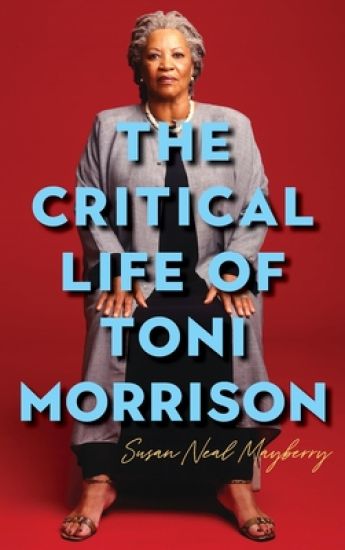
The first book to trace the critical reception of the great African American woman writer, attending not only to her fiction but to her nonfiction and critical writings. Winner of the Toni Morrison Society Book Prize for Best Single-Authored Book, 2019-2022 Toni Morrison (1931-2019) is the most important American novelist since Faulkner, the most significant American woman writer since Dickinson, and the most widely read African American public intellectual of the last half century. Her influence as a writer, critic, editor, teacher, and scholar is profound: she changed the face of literature and literary criticism in the US, if not worldwide. Yet despite the ever-expanding field of Morrison scholarship, no book tracing her critical reception has existed, until now. The book is as much a cultural history of America as a reception history of an American writer. Morrison worked brilliantly in many genres - fiction, of course (novels and short stories); drama/staged performance; poetry; non-fiction on historical, social, and political issues; and critical writings on the work of others and on her own work. She generated a literary-critical methodology that recognizes and embraces rather than ignores the African American presence in US literature, and thus transformed American academics' attitude toward American letters. The story of Morrison's achievement in making a home for herself - and for other women and people of color - in the stony bedrock of "white male" American literature is the subject of this book.
Spectrality in the Novels of Toni Morrison
Melanie R. Anderson
University of Tennessee Press
2013
sidottu
At first glance, Beloved would appear to be the only “ghost story” among Toni Morrison’s nine novels, but as this provocative new study shows, spectral presences and places abound in the celebrated author’s fiction. Melanie R. Anderson explores how Morrison uses spectres to bring the traumas of African American life to the forefront, highlighting histories and experiences, both cultural and personal, that society at large too frequently ignores.Working against the background of magical realism, while simultaneously expanding notions of the supernatural within American and African American writing, Morrison peoples her novels with what Anderson identifies as two distinctive types of ghosts: spectral figures and social ghosts. Deconstructing Western binaries, Morrison uses the spectral to indicate power through its transcendence of corporality, temporality and explication, and she employs the ghostly as a metaphor of erasure for living characters who are marginalised and haunt the edges of their communities. The interaction of these social ghosts with the spectral presences functions as a transformative healing process that draws the marginalised figure out of the shadows and creates links across ruptures between generations and between past and present, life and death. This book examines how these relationships become increasingly more prominent in the novelist’s canon—from their beginnings in The Bluest Eye and SulaBeloved, Jazz, and Paradise, and onward into A Mercy.An important contribution to the understanding of one of America’s premier fiction writers, Spectrality in the Novels of Toni Morrison demonstrates how the Nobel laureate’s powerful and challenging works give presence to the invisible, voice to the previously silenced, and agency to the oppressed outsiders who are refused a space in which to narrate their stories.