Kirjojen hintavertailu. Mukana 11 342 296 kirjaa ja 12 kauppaa.

Kirjahaku

Etsi kirjoja tekijän nimen, kirjan nimen tai ISBN:n perusteella.

1000 tulosta hakusanalla Moses Garba

Moses - Shocked in the Desert: A Study Guide

Moses - Shocked in the Desert: A Study Guide

Alane Haynes

Createspace Independent Publishing Platform
2017
nidottu
This study guide is designed to help you apply the teachings from Moses - Shocked in the Desert to your life so that you can have a greater awareness of God's ways, seeing more accurately and hearing more clearly what he is trying to show you or speak to you. This guide is a hands-on tool to help you break out of old patterns of thinking and strongholds that have kept you from moving forward in your spiritual journey.
Moses among the Idols

Moses among the Idols

Amy L. Balogh

Lexington Books/Fortress Academic
2018
sidottu
In Moses among the Idols: Mediators of the Divine in the Ancient Near East, Balogh simultaneously redefines one of the greatest figures in the history of religion and challenges the historically popular understanding of ancient Mesopotamian idols as the idle objects of antiquated faiths. Drawing on interdisciplinary research and methods of comparison, Balogh not only offers new insight into the lives of idols as active mediators between humanity and divinity, she also makes the case that when it comes to understanding the figure of Moses, Mesopotamian idols are the best analogy that the ancient Near East provides. This new understanding of Moses, idols, and the interplay between the two on the stage of history and within the biblical text has been made possible only with the recent publication of pertinent texts from ancient Mesopotamia. Drawing from the fields of Assyriology, biblical studies, comparative religion, and archaeology, Balogh identifies a problem with Moses’s status, and offers an unexpected solution to that problem. Moses among the Idols centers on the question: What is it that transforms Moses from an inadequate representative of Yahweh who is “uncircumcised of lips” to “god to Pharaoh” (Exodus 6:28-7:1)? In this moment, Moses undergoes a status change best understood through comparison with the induction ritual for ancient Mesopotamian idols as described in the texts of the Mis P?, “Washing” or “Purification of the Mouth.” This solution to the problem of Moses’s status explains not only his status change, but also why Moses radiates light after speaking with YHWH (Exod 34:29-35), and his peculiar relationship with YHWH and people of Israel. The comparative, interdisciplinary perspective provided by Balogh allows one to read these and other millennia-old interpretive issues anew, and to do so in a way that underscores the contribution of in-depth comparison to our understanding of ancient civilizations, texts, and intellectual frameworks.
Moses' Story Part One: Cross Comparison and Dissection

Moses' Story Part One: Cross Comparison and Dissection

Steve Preston

Createspace Independent Publishing Platform
2018
nidottu
In order to understand our ancient history described by Moses in the Bible we need to, not only look at various interpreted Hebrew words for texts but also look at similar histories from other ancient descriptions and look for a comparison of content. That is exactly what this book does. Certainly, the Biblical history provides reasonable adaptation, but Hebrew is a difficult language to understand as they had very few words and verbs we arbitrary. We can rely on many interpretations, but Moses also tried to make his history of thousands of years condensed which made interpretations even more difficult. Instead of looking at sentences that seem widely unacceptable to modern history, science, and physical artifacts and deciding to either look at science and ignore the Moses writings or the opposite, there is a third option. This book compares over 200 different texts and traditions from around the world and those statements of Moses. With them an interpretation "free from dogmatic tampering" and we find there is no true separation between the scientific and Biblical histories. Let me open up your vision and help you understand the Bible at the same time.Don't get me wrong, many of the religions blended around the many different texts had twisted reason out or their histories completely, but sometimes, you can find a little sanity even from a nut and that is what this book accomplishes.
Moses's Story Part 2: More Cross Comparison and Dissection

Moses's Story Part 2: More Cross Comparison and Dissection

Steve Preston

Createspace Independent Publishing Platform
2018
nidottu
In order to understand our ancient history described by Moses in the Bible we need to, not only look at various interpreted Hebrew words for texts but also look at similar histories from other ancient descriptions and look for a comparison of content. That is exactly what this book does. Certainly, the Biblical history provides reasonable adaptation, but Hebrew is a difficult language to understand as they had very few words and verbs we arbitrary. We can rely on many interpretations, but Moses also tried to make his history of thousands of years condensed which made interpretations even more difficult. Instead of looking at sentences that seem widely unacceptable to modern history, science, and physical artifacts and deciding to either look at science and ignore the Moses writings or the opposite, there is a third option. This book compares over 200 different texts and traditions from around the world and those statements of Moses. With them an interpretation "free from dogmatic tampering" and we find there is no true separation between the scientific and Biblical histories. Let me open up your vision and help you understand the Bible at the same time.
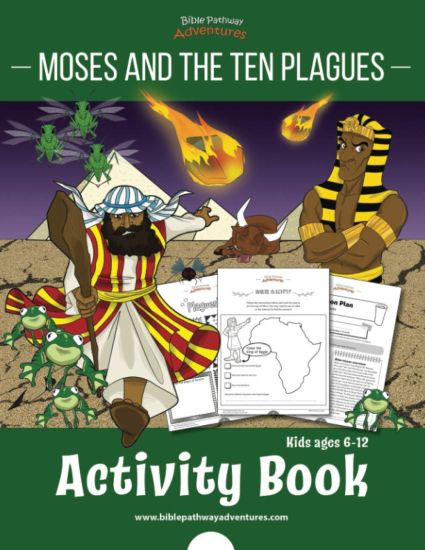
Moses and the Ten Plagues Activity Book

Moses and the Ten Plagues Activity Book

Pip Reid

Bible Pathway Adventures
2020
pokkari
Kids will LOVE learning about the Ten Plagues of Egypt with our Moses and the Ten Plagues of Egypt Activity Book. Packed with detailed lesson plans, worksheets, quizzes, coloring pages, crafts, puzzles, and more PLUS, scripture references for easy Bible verse look-up and an answer key for teachers and parents. The perfect discipleship resource for Sabbath and Sunday School lessons, and homeschooling.Moses and the Ten Plagues Activity Book includes: FIVE teacher lesson plans, including Moses and the Princess, The Burning Bush, The Plagues, The Passover, and Red Sea Crossing110+ activity pages in print format (8.5" x 11")Table of Contents for easy referenceOriginal Bible Pathway Adventures' illustrationsDetailed answer key for teachers and parentsExtra 10 x Ten Plagues Bible verse copywork sheets
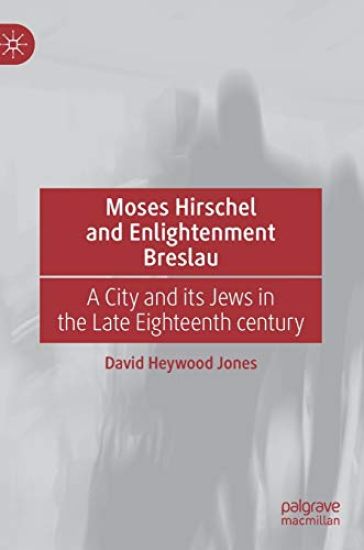
Moses Hirschel and Enlightenment Breslau

Moses Hirschel and Enlightenment Breslau

David Heywood Jones

Springer Nature Switzerland AG
2020
sidottu
Breslau has been almost entirely forgotten in the Anglophone sphere as a place of Enlightenment. Moreover, in the context of the Jewish Enlightenment, Breslau has never been discussed as a place of intercultural exchange between German-speaking Jewish, Protestant and Catholic intellectuals. An intellectual biography of Moses Hirschel offers an excellent case-study to investigate the complex reciprocal relationship between Jewish and non-Jewish enlighteners in a prosperous and influential Central European city at the turn of the 18th century.
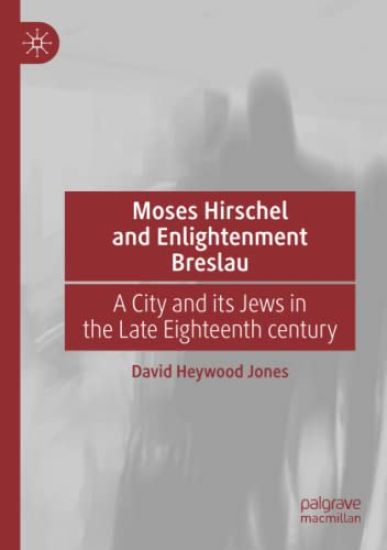
Moses Hirschel and Enlightenment Breslau

Moses Hirschel and Enlightenment Breslau

David Heywood Jones

Springer Nature Switzerland AG
2021
nidottu
Breslau has been almost entirely forgotten in the Anglophone sphere as a place of Enlightenment. Moreover, in the context of the Jewish Enlightenment, Breslau has never been discussed as a place of intercultural exchange between German-speaking Jewish, Protestant and Catholic intellectuals. An intellectual biography of Moses Hirschel offers an excellent case-study to investigate the complex reciprocal relationship between Jewish and non-Jewish enlighteners in a prosperous and influential Central European city at the turn of the 18th century.
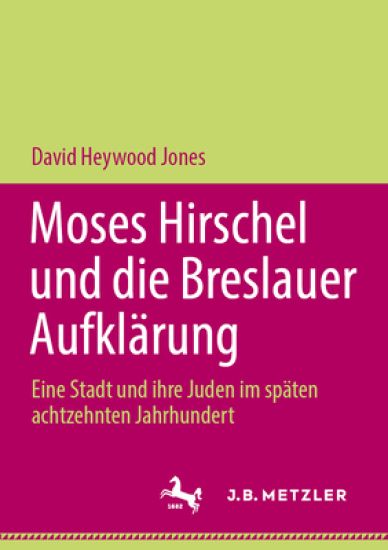
Moses Hirschel und die Breslauer Aufklärung

Moses Hirschel und die Breslauer Aufklärung

David Heywood Jones

Springer Nature Switzerland AG
2023
nidottu
Breslau ist im englischsprachigen Raum als Ort der Aufklärung fast völlig in Vergessenheit geraten. Darüber hinaus ist Breslau im Kontext der jüdischen Aufklärung nie als Ort des interkulturellen Austauschs zwischen deutschsprachigen jüdischen, protestantischen und katholischen Intellektuellen diskutiert worden. Eine intellektuelle Biographie von Moses Hirschel bietet ein hervorragendes Fallbeispiel, um die komplexen wechselseitigen Beziehungen zwischen jüdischen und nichtjüdischen Aufklärern in einer wohlhabenden und einflussreichen mitteleuropäischen Stadt an der Wende zum 18. Jahrhundert zu untersuchen.Die Übersetzung aus dem Englischen wurde mit Hilfe von künstlicher Intelligenz (anhand einer maschinellen Übersetzung durch einen Service von DeepL.com) angefertigt. Der Autor hat den Text durchgesehen, um die inhaltliche Richtigkeit des Werkes zu prüfen und gegebenenfalls Anpassungen vorzunehmen.
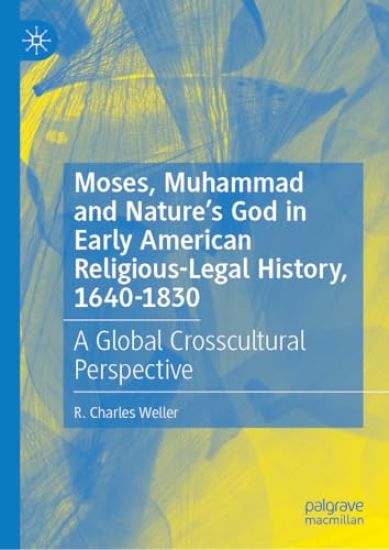
Moses, Muhammad and Nature’s God in Early American Religious-Legal History, 1640-1830
This is the first comparative study of Mosaic and Islamic law in American history to be published. Constructing a complex picture in trans-Atlantic, trans-European and world historical perspectives, this book elucidates the intersections that lie beneath and behind the rise of the debates in the 1990s and 2000s over the promotion of the Ten Commandments and Mosaic Law as alleged sources of American Constitutional law and symbols of American national identity. These debates have taken shape in close connection with resurgent anti-Semitism, anti-Sharia protests and anti-Sharia legislation throughout the United States and other Western societies.
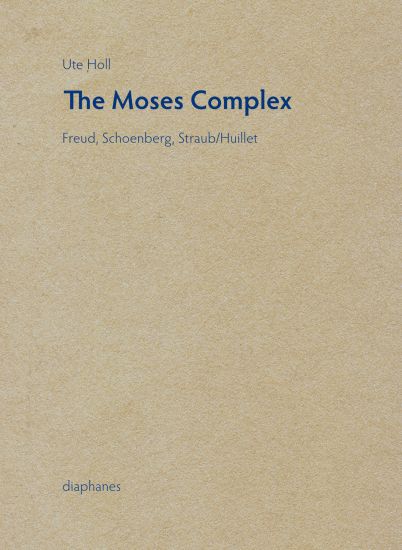
Moses Complex – Freud, Schoenberg, Straub/Huillet
Moses has long been a source of modern fascination. For Sigmund Freud and psychoanalysis, Moses was a particularly fruitful subject for the study of memory and historiography. He also held great interest for the visual and performing arts. In the 1920s and '30s, the composer Arnold Schoenberg wrote the three-act opera Moses and Aron. First performed just a few years before his exile to the United States, it required that its audiences distinguish voices from forceful background noise, just as Moses had to confront the burning bush before he could hear the voice of God. In 1974, filmmakers Jean-Marie Straub and Daniele Huillet created an avant-garde cinematic adaptation of Schoenberg's opera that continued the composer's examination of the established hierarchies of seeing and hearing. In The Moses Complex, Ute Holl analyzes these major works in detail and deep historical context, synthesizing the complex models of resistance to explore the relationships among media, migration, and politics. Since Moses descended from Sinai with the tablets inscribed with the Ten Commandments, new media and new laws have often emerged simultaneously. Liberation, in particular, has been negotiated through many different cultural media, with psychoanalysis, music, and cinema all describing exodus and exile as a process of force. Offering a dynamic and comprehensive political and cultural theory of migration and violence, The Moses Complex speaks equally well to psychoanalytic, musical, and cinematic thinking as it does to our tendency toward violence in the treatment of migrants today.
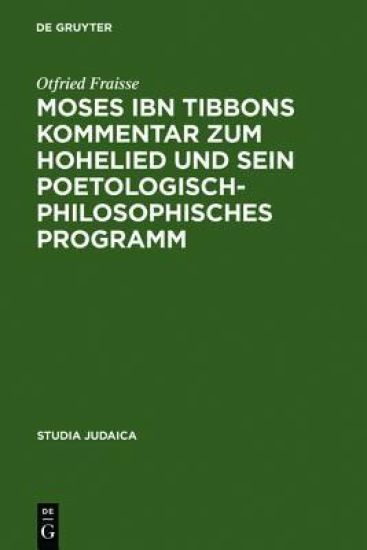
Moses ibn Tibbons Kommentar zum Hohelied und sein poetologisch-philosophisches Programm
The commentary that Moses ibn Tibbon (approx. 1195-1275) wrote on the Song of Solomon serves in this book as an example of the interlacing between Judaic-Arabic philosophy and Judaism's traditional interpretation of hymns of praise. The authentic text is first established through philological manuscript analysis, a step that allows the true contour of Moses ibn Tibbon's philosophy to emerge. He sought to render an exoteric materialist reinterpretation of the esoteric-metaphysical philosophy of Maimonides. This attempt not only aimed at a democratization of knowledge in medieval Jewish society but also led Moses ibn Tibbon to a philosophy of language that based the cognitive act on the aesthetic experience of the reader.
Moses in Biblical and Extra-Biblical Traditions
The papers in this volume revolve around the history of the influence exerted by the person of Moses and the traditions associated with him. They deal not only with the function of the figure of Moses in the Pentateuch, the salvation in the Red Sea and the final day of Moses’ life, but also with the way Moses was received in the Deuteronomic history, the Psalms, the Book of Jeremiah, the Septuagint, in Qumran, early Jewish extra-biblical literature, the New Testament and the Early Church.
Moses Mendelssohns Sprachpolitik

Moses Mendelssohns Sprachpolitik

Grit Schorch

de Gruyter
2012
sidottu
Grit Schorch hat die erste umfassende Untersuchung zur Sprachauffassung des jüdischen Philosophen Moses Mendelssohn (1729–1786) vorgelegt und damit ein Desiderat der Forschung erfüllt.Die Analyse von Mendelssohns Sprachphilosophie führt den Leser quer durch die deutschen und hebräischen Teile seines Oeuvres. Die derart neu gewonnene Perspektive auf Übersetzungstheorie, Ästhetik, Metaphysik, Logik, Offenbarungsauffassung und Politik lässt einen erkenntnis- und wissenschaftstheoretischen Fallibilismus hervortreten, der von Mendelssohn in der Philosophie des jüdischen Mittelalters verankert und in der Auseinandersetzung mit den skeptischen Strömungen der Aufklärung geschärft wird.Mendelssohns Werk markiert den Anfang zweier Spracherneuerungsbewegungen, im Zuge derer Deutsch als jüdische Sprache und Hebräisch als Nationalsprache etabliert wurden. Sein philosophisch begründeter Multilingualismus wird als Alternative zu monolingualen Nationalsprachen-Konzepten beschrieben. Der Fluchtpunkt der Sprachphilosophie Mendelssohns ist damit keine Metaphysik, sondern die politische Idee einer gerechten, sozialen Ordnung. Die Dialektik von menschlicher und heiliger Sprache, von „irdischer und himmlischer Politik“ bestimmt diese Idee.
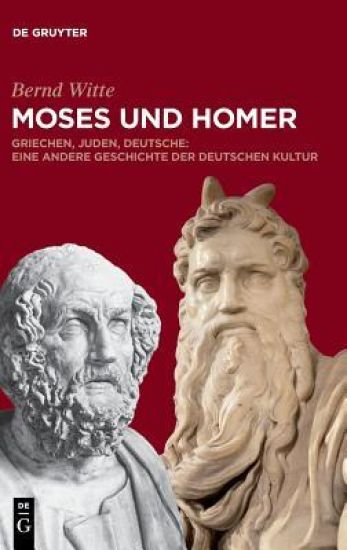
Moses und Homer

Moses und Homer

Bernd Witte

De Gruyter
2018
sidottu
Das Buch befragt die deutsche Literatur- und Geistesgeschichte nach der Verdrängung der jüdischen Tradition und markiert die Lücken, die durch die Vertreibung der geistigen Repräsentanten des Judentums aus dem deutschen Sprachraum gerissen worden sind. Als in Deutschland gegen Ende des 18. Jahrhunderts uneingeschränkte Bewunderung für das antike Griechentum aufkam, wurde gleichzeitig das sich gerade der europäischen Aufklärung öffnende Judentum auf dem Schauplatz der Religionskritik vehement bekämpft. In diesem Kontext ist der aggressive Antijudaismus zu verstehen, mit dem sich Goethe und Schiller gegen die Sinai-Offenbarung und deren legendären Mittler Moses wandten. Beginnend mit Winckelmann hat die deutsche Klassik einen neuen Legitimationsdiskurs geschaffen, der unter Rückgriff auf den antiken Polytheismus das ‚produktive Individuum‘ und die ‚wachsende Natur‘ zu seinen zentralen Kategorien machte und damit den geltenden Monotheismus zu verdrängen suchte. Im Gegensatz dazu suchten Mendelssohn und Heine die Position einer deutsch-jüdischen Moderne zu etablieren. Das Buch verfolgt, wie der ‚Weltanschauungskampf‘ gegen den Monotheismus zum ‚völkischen‘ Antisemitismus des 19. und 20. Jahrhunderts führte und in der Shoa mündete, was die Verdrängung der jüdischen Tradition aus dem kulturellen Gedächtnis der Deutschen zur Folge hatte.