

Kirjahaku
Etsi kirjoja tekijän nimen, kirjan nimen tai ISBN:n perusteella.
1000 tulosta hakusanalla Nadine Labib

Hot Water is an intimate and daring look into the life of a young African woman from the Cape Flats with a chronic illness. The book investigates how endometriosis affects the way young woman function and navigate the world, and how this becomes especially complicated for those who are underprivileged and reliant on the public sector’s healthcare system. In Hot Water Nadine Dirks reveals the unique issues of racism, sexism, classism, fatphobia and slut-shaming that African women experience within the context of healthcare facilities, and how especially jarring it is when the stigma comes from medical staff who one expects to have the patient’s care as their primary concern. All of this has enraged Dirks and catapulted her into becoming a sexual reproductive health and rights advocate. Hot Water tells the story of how people with chronic illness are treated daily, at school, university and socially for being differently abled; how people are regarded as lazy, aggressive, disappointing, lacking, among multiple other things for being unwell in comparison to their healthy counterparts. One cannot look at seeking adequate healthcare as a young, black, underprivileged woman on the Cape Flats without experiencing racism in the most blatant of ways. Even with guidelines in place, the book shows that it is next to impossible to invoke those rights even if you are aware of them for fear of being victimised and excluded from the system.




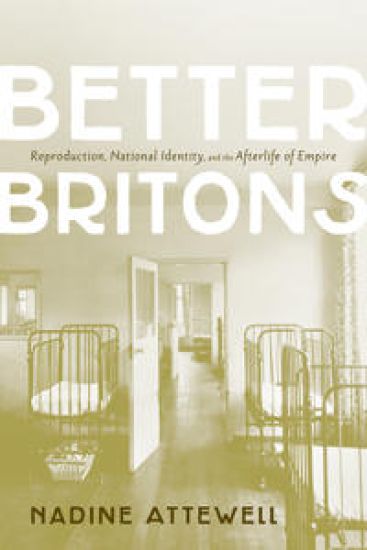
In 1932, Aldous Huxley published Brave New World, his famous novel about a future in which humans are produced to spec in laboratories. Around the same time, Australian legislators announced an ambitious experiment to “breed the colour” out of Australia by procuring white husbands for women of white and indigenous descent. In this study, Nadine Attewell reflects on an assumption central to these and other policy initiatives and cultural texts from twentieth-century Britain, Australia, and New Zealand: that the fortunes of the nation depend on controlling the reproductive choices of citizen-subjects. Better Britons charts an innovative approach to the politics of reproduction by reading an array of works and discourses – from canonical modernist novels and speculative fictions to government memoranda and public debates – that reflect on the significance of reproductive behaviours for civic, national, and racial identities. Bringing insights from feminist and queer theory into dialogue with work in indigenous studies, Attewell sheds new light on changing conceptions of British and settler identity during the era of decolonization.








The Seasons of Giving
Nadine M. Frush; Minna Marsh
Createspace Independent Publishing Platform
2010
nidottu