
Kirjahaku
Etsi kirjoja tekijän nimen, kirjan nimen tai ISBN:n perusteella.
1000 tulosta hakusanalla Nigel Rapport
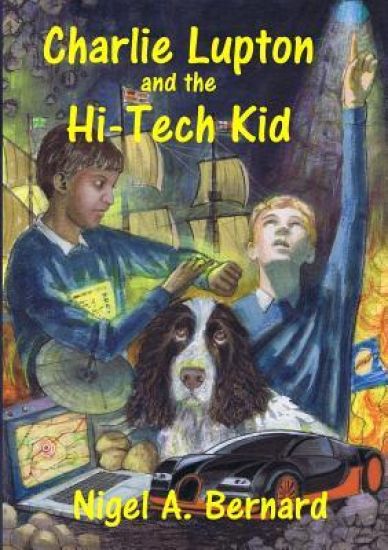
Mickey is given a role in the approaching school play with hilarious consequences. Meanwhile, Omar, the new boy, impresses Geraldine with his incredible inventions. Will her friendship with Charlie, Mickey and Emma survive? Then Charlie has a terrible loss which overshadows everything. With an earthquake, a gripping climb and an array of amazing gadgets - it's another pulsating adventure for Charlie Lupton.

All the thrills and romance of racing Bentleys at Le Mans in the 1920's, together with a tale of love and recovery. A feel-good film in the tradition of Chariots of Fire...
"Any aspiring advocate should read and learn from this excellent practical guide." Sir John Royce, Former Presiding Judge on the Western Circuit
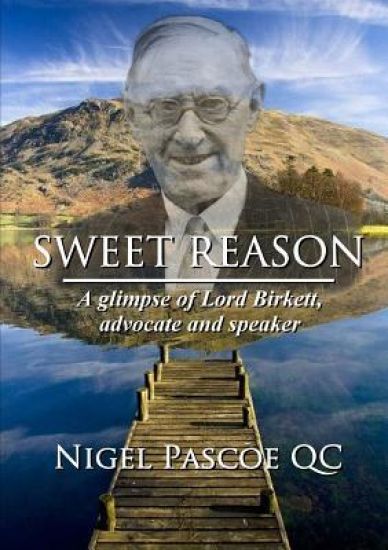
Lord Birkett was one of the greatest advocates at the English Bar, with an exceptional talent for public speaking. This is a theatrical glimpse of his life and speeches, created by Nigel Pascoe QC.
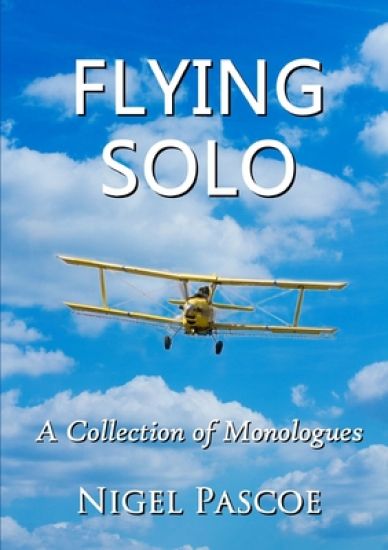
Nigel Pascoe has been writing plays and performing one man shows for many years. This collection of monologues comes from the plays, and also has short pieces written specifically as audition material.
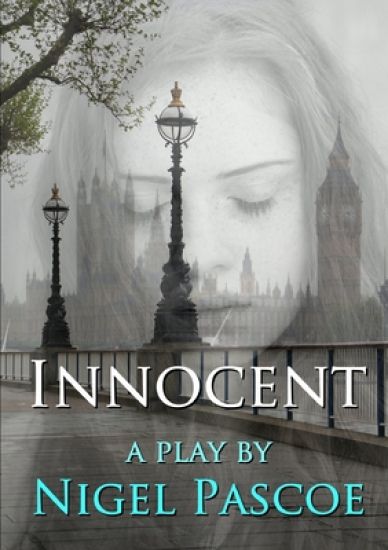
Soon to be Leader of his party, a very old allegation comes to haunt himE

Continuo Playing on the Lute, Archlute and Theorbo
Nigel North
Indiana University Press
1987
sidottu
" . . . a valuable book. It is an important link between the unknown of the Renaissance and the present." —The Triangle of Mu Phi Epsilon "Straightforward practicality is the most outstanding characteristic of this book." —Continuo " . . . a fine and very welcome book that is likely to remain the high standard of lute continuo instruction for some time to come." —Sixteenth Century Journal In this extraordinarily broad survey, Nigel North discusses the history of the lute, the archlute, and the theorbo and gives practical advice on technique, the choice of instrument for particular music, and the preparation of scores.
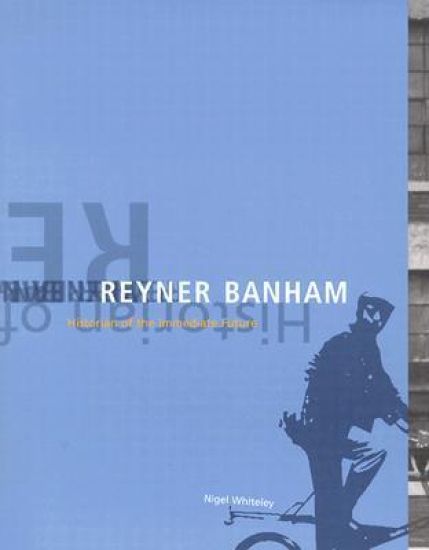
An intellectual biography of the cultural critic Reyner Banham.Reyner Banham (1922-88) was one of the most influential writers on architecture, design, and popular culture from the mid-1950s to the late 1980s. Trained in mechanical engineering and art history, he was convinced that technology was making society not only more exciting but more democratic. His combination of academic rigor and pop culture sensibility put him in opposition to both traditionalists and orthodox Modernists, but placed him in a unique position to understand the cultural, social, and political implications of the visual arts in the postwar period. His first book, Theory and Design in the First Machine Age (still in print with The MIT Press after forty years), was central to the overhaul of Modernism, and it gave Futurism and Expressionism credibility amid the dynamism and change of the 1960s.This intellectual biography is the first comprehensive critical examination of Banham's theories and ideas, not only on architecture but also on the wide variety of subjects that interested him. It covers the full range of his oeuvre and discusses the values, enthusiasms, and influences that formed his thinking.

In Elephant House, photographer Dick Blau and historian Nigel Rothfels offer a thought-provoking study of the Oregon Zoo’s Asian Elephant Building and the daily routines of its residents—human and pachyderm alike. Without an agenda beyond a desire to build a deeper understanding of this enigmatic environment, Elephant House is the result of the authors’ unique creative collaboration and explores the relationships between captive elephants and their human caregivers.Blau’s evocative photographs are complex and challenging, while Rothfels’s text offers a scholarly and personal response to the questions that surround elephants and captivity. Elephant House does not take sides in the debate over zoos but focuses instead on the bonds of attentiveness between the animals and their keepers. Accompanied by a foreword from retired elephant keeper Mike Keele, Elephant House is a frank, fascinating look at the evolving world of elephant husbandry.
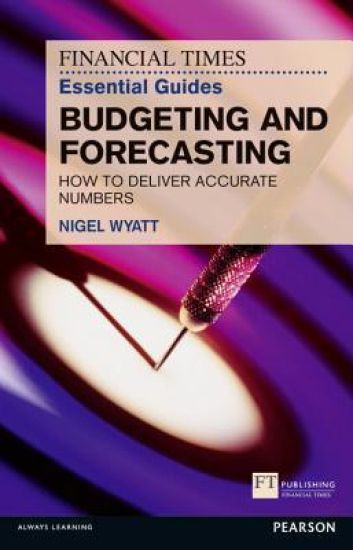
Financial Times Essential Guide to Budgeting and Forecasting, The
Nigel Wyatt
FT Publishing International
2012
nidottu
Gain the knowledge and confidence you need to build and manage budgets and forecast financial information. This book demystifies budgets and forecasts, providing simple explanations and clear examples. It includes integrated checklists, goals and milestones, to ensure you are on target to achieve the best results. Part of The Financial Times Essential Guides series: Task-focused and results-orientated, the essential guides are for every manager who wants to move their skills beyond the ordinary to the best.
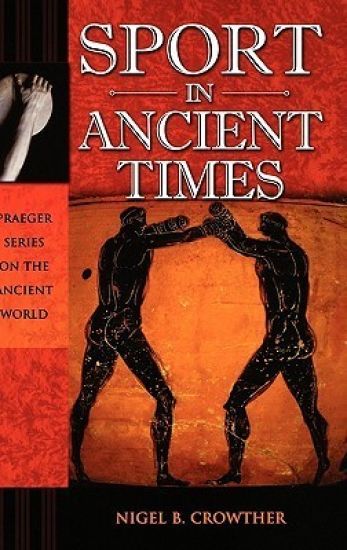
Crowther offers a fascinating look at the role of sport as practiced in several important civilizations in the ancient world. He not only probes the games themselves, but explores the ways in which athletics figured into cultural arenas that extended beyond physical prowess to military associations, rituals, status, and politics. Sport in Ancient Times has four distinct parts: the Prehistoric Age, historic Greece, ancient Italy, and the Byzantine Empire. Beginning with the earliest civilizations, Crowther examines the military and recreational aspects of sports in prehistoric Egypt, with brief references to other river-valley cultures in Sumeria, Mesopotamia, and Persia. He looks at the rituals of Cretan bull-leaping and boxing in the Bronze Age, the high status of sports in Mycenaean Greece, and the funeral games in the Trojan War as described by the epic poet Homer. In what he terms the historic period, Crowther examines the significance of the ancient Olympic Games, the events of Greek athletics, and the attitude of other civilizations (notably Rome) towards them. He attempts to discover to what extent the Romans believed in the famous ideal of Juvenal, a sound mind in a sound body, and discusses the significance of the famous Baths not only for sport, but also for culture and society. He likewise explores the Roman emphasis on spectator sports and the use of gladiatorial contests and chariot racing for political purposes (the concept of bread and games). The section on the Byzantine Empire focuses, notably, on chariot racing and the riots at sporting contests—riots reminiscent of crowd violence in modern sports such as soccer. Crowther closes with perspectives that bring to life some of the issues revealed in previous chapters. These include a comparison of the social status and significance of a famous Olympic athlete (Milo), a Roman gladiator (Hermes), and a Byzantine chariot racer (Porphyrius). He also addresses the changing role of women in sports in antiquity. Women were prominent in sport in Egypt, for example, but almost entirely absent from the ancient Olympic Games. The final chapter discusses team sports and ball games. Although these were comparatively rare in the ancient world, one may see in those that did exist the forerunners of modern football and hockey.
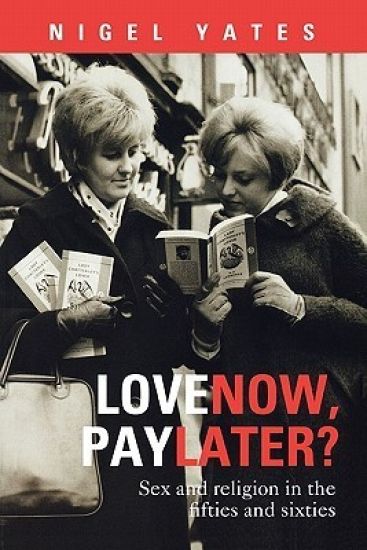
Nigel Yates brings together the religious and social dimensions of the 1950s and 60s and examines the enormous changes in moral attitudes that took place in these two decades. Much of the popular literature on post-war Britain tends to present the 1950s as a period of continuing repression and respectability in the area of private and public morality, and the 1960s as one in which there was rapid social change. Using a wide range of contemporary sources - books (including novels), magazines, newspapers, advertising, fashion catalogues, films and television, as well as a number of significant archive collections - Nigel Yates argues that changes in attitudes to religion and morality in the 1960s were only made possible by developments in the 1950s.
What does it mean to be an English Christian? How can the Gospel speak to the English? This book will help readers to understand how to spread the Gospel to a people who are by nature reserved and private.
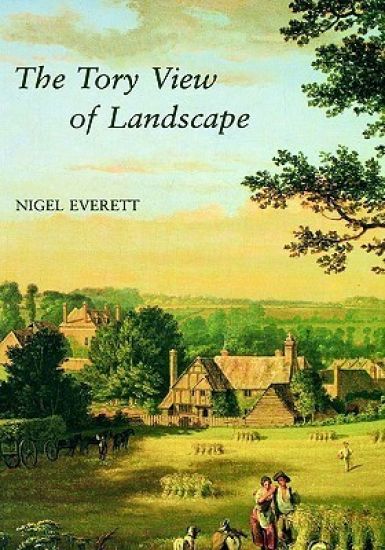
In the eighteenth and early nineteenth centuries, England seemed to be transformed by various kinds of "improvements" in gardening and the ornamentation of the landscape. Many people saw these changes as reflections of highly controversial moral, social, and economic issues. To clear a wood or plant one, to build a folly or a cottage, to design in the formal style or the picturesque, to choose to employ one improver or another—these were all interpreted as decisions that expressed a political orientation. Poets, essayists, political theorists, theologians, and economists debated the merits of a traditional, natural, Christian, organic—or tory—view of the landscape against the aggressive, privatizing, impersonal—whig—tendencies of contemporary improvement.This illuminating and stimulating book argues that the history of English landscape from about 1760 to 1820 was a struggle between these two points of view. Examining literature, painted and engraved images, and the physical environment of the period, Nigel Everett depicts a lively, intelligent debate about the development of English society and the relation of people to the land, a debate as active among cultivated clergymen and landowners as among the theoreticians. Furthermore, analyzing the language of tory political thought, he brings these issues to bear on current politics in Britain. He identifies in the detached, artificial, and utilitarian attitudes of the whig "improvers" the philosophical and historical origins of a dominant set of values of the late twentieth century—most recently expressed in the Conservative Party—in which the interests of private enterprise and commercial utility preponderate over any other conception of the public good.Published for the Paul Mellon Center for Studies in British Art
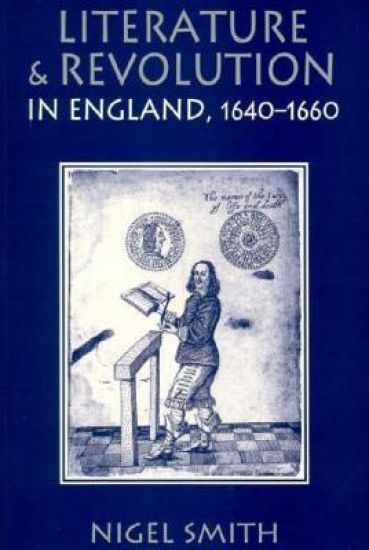
The years of the British Civil War and Interregnum constituted a turning point not only in the political, social, and religious history of seventeenth-century England but also in the use and meaning of English language and literature. At a time of crisis and constitutional turmoil, literature itself acquired new functions and played a dynamic part in the fragmentation of religious and political authority.Nigel Smith argues that the upheaval in divine and secular authority provided both motive and opportunity for transformations in the nature and meaning of literary expression. The increase in pamphleteering and journalism brought a new awareness of print; with it, existing ideas of authorship and authority collapsed. Through literature, people revised their understanding of themselves and attempted to transform their predicaments.Smith examines literary output ranging from the masterworks of the age—Milton's Paradise Lost, Hobbes's Leviathan, Marvell's poetry—to a host of less well-known writings. He examines the contents of manuscripts and newspapers sold on the streets, published drama, epics and romances, love poetry, praise poetry, psalms and hymns, satire in prose and verse, fishing manuals, and histories. He also analyzes religious polemic and the language of political controversy, demonstrating how, as literary genres changed, they often acquired new vitality.Ranging wider than any other work on this period, this highly original book explores the effect of politics on the practice of writing and the impact of literature on patterns of historical change.
The Crown Jewels: The British Secrets at the Heart of the KGB Archives
Nigel West; Oleg Tsarev
YALE UNIVERSITY PRESS
1999
sidottu
This lively account of Soviet foreign intelligence activity in Great Britain during the Cold War is based on documents newly released from the KGB archives, their "crown jewels," as the KGB unofficially called its most valuable assets. Written by Nigel West, called by the Sunday Times "the unofficial historian of the secret services" and Oleg Tsarev, a former KGB lieutenant colonel, The Crown Jewels provides much new information on the activities of all the well-known British pro-Soviet spies, including Kim Philby, Guy Burgess, Donald Maclean, and Anthony Blunt, as well as many lesser-known spymasters and recruiters, reproducing many of their reports for the first time. The book adds unsuspected dimensions to the famous Cambridge ring (including details of Burgess's offer to murder his fellow conspirator Goronwy Rees). It also reveals a completely unknown Soviet network based in London and headed by a named Daily Herald journalist; describes the huge scale of Soviet penetration of the British Foreign Office from 1927 to 1951; explores a previously unknown spy ring in Oxford; and tells about the key role played by Blunt in supervising post-war Soviet espionage activities in London.

Richard II is one of the most enigmatic of English kings. Shakespeare depicted him as a tragic figure, an irresponsible, cruel monarch who nevertheless rose in stature as the substance of power slipped from him. By later writers he has been variously portrayed as a half-crazed autocrat or a conventional ruler whose principal errors were the mismanagement of his nobility and disregard for the political conventions of his age. This book—the first full-length biography of Richard in more than fifty years—offers a radical reinterpretation of the king.Nigel Saul paints a picture of Richard as a highly assertive and determined ruler, one whose key aim was to exalt and dignify the crown. In Richard's view, the crown was threatened by the factiousness of the nobility and the assertiveness of the common people. The king met these challenges by exacting obedience, encouraging lofty new forms of address, and constructing an elaborate system of rule by bonds and oaths. Saul traces the sources of Richard's political ideas and finds that he was influenced by a deeply felt orthodox piety and by the ideas of the civil lawyers. He shows that, although Richard's kingship resembled that of other rulers of the period, unlike theirs, his reign ended in failure because of tactical errors and contradictions in his policies. For all that he promoted the image of a distant, all-powerful monarch, Richard II's rule was in practice characterized by faction and feud. The king was obsessed by the search for personal security: in his subjects, however, he bred only insecurity and fear.A revealing portrait of a complex and fascinating figure, the book is essential reading for anyone with an interest in the politics and culture of the English middle ages.
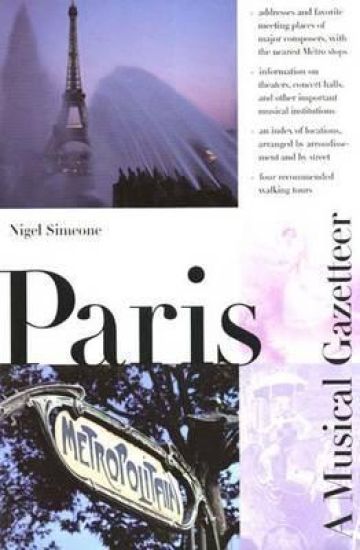
This essential guidebook is designed for all travelers interested in exploring the historic musical sites of Paris—in person or from an armchair. Paris is a uniquely rich music capital, its streets echoing with centuries of great music that has been created and performed there. Virtually every neighborhood boasts a concert hall, church, museum, or home that has played a significant role in the extraordinary musical tradition of the city. This gazetteer will guide you to the important musical landmarks in Paris and explain why each is noteworthy. Nearly all the celebrated French composers of the last four centuries have called Paris home, and dozens of other eminent composers—Chopin, Liszt, Mozart, Prokofiev, Stravinsky, Verdi, and Wagner among them—have spent extended periods there as well. They, along with performers, teachers, instrument makers, and publishers, have bequeathed to the city a wealth of historic landmarks, ranging from the opulent grandeur of the Opéra to Erik Satie’s tiny room in Montmartre.Featured in the gazetteer:• biographical portraits of major composers, all their known Paris addresses and favorite meeting places, with the nearest Métro stops• locations of monuments and graves of composers• information on churches, theaters, concert venues, and important musical institutions• listings of libraries, museums, and galleries holding materials related to music• an index of locations, arranged by arrondissement and by street• four recommended walking tours• more than 120 contemporary and historical photographs
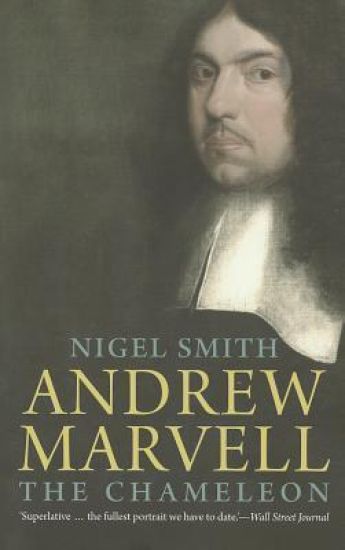
The seventeenth-century poet Andrew Marvell (1621–1678) is one of the most intriguing figures in English literature. A noted civil servant under Cromwell’s Protectorate, he has been variously identified as a patriot, spy, conspirator, concealed homosexual, father to the liberal tradition, and incendiary satirical pamphleteer and freethinker. But while Marvell’s poetry and prose has attracted a wide modern following, his prose is known only to specialists, and much of his personal life remains shrouded in mystery. Nigel Smith’s pivotal biography provides an unparalleled look into Marvell’s life, from his early employment as a tutor and gentleman’s companion to his suspicious death, reputedly a politically fueled poisoning. Drawing on exhaustive archival research, the voluminous corpus of Marvell’s previously little known writing, and recent scholarship across several disciplines, Smith’s portrait becomes the definitive account of this elusive life.