Kirjojen hintavertailu. Mukana 12 016 292 kirjaa ja 12 kauppaa.

Kirjahaku

Etsi kirjoja tekijän nimen, kirjan nimen tai ISBN:n perusteella.

1000 tulosta hakusanalla Nigel Robson

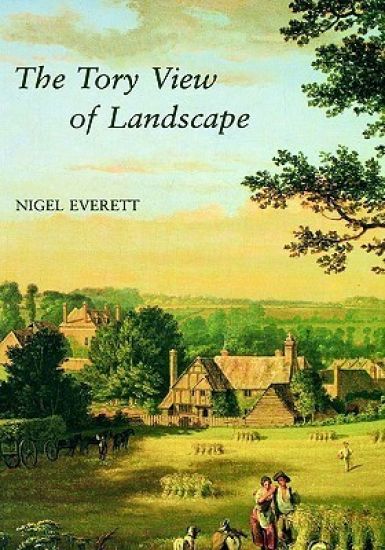
The Tory View of Landscape

The Tory View of Landscape

Nigel Everett

Yale University Press
1994
sidottu
In the eighteenth and early nineteenth centuries, England seemed to be transformed by various kinds of "improvements" in gardening and the ornamentation of the landscape. Many people saw these changes as reflections of highly controversial moral, social, and economic issues. To clear a wood or plant one, to build a folly or a cottage, to design in the formal style or the picturesque, to choose to employ one improver or another—these were all interpreted as decisions that expressed a political orientation. Poets, essayists, political theorists, theologians, and economists debated the merits of a traditional, natural, Christian, organic—or tory—view of the landscape against the aggressive, privatizing, impersonal—whig—tendencies of contemporary improvement.This illuminating and stimulating book argues that the history of English landscape from about 1760 to 1820 was a struggle between these two points of view. Examining literature, painted and engraved images, and the physical environment of the period, Nigel Everett depicts a lively, intelligent debate about the development of English society and the relation of people to the land, a debate as active among cultivated clergymen and landowners as among the theoreticians. Furthermore, analyzing the language of tory political thought, he brings these issues to bear on current politics in Britain. He identifies in the detached, artificial, and utilitarian attitudes of the whig "improvers" the philosophical and historical origins of a dominant set of values of the late twentieth century—most recently expressed in the Conservative Party—in which the interests of private enterprise and commercial utility preponderate over any other conception of the public good.Published for the Paul Mellon Center for Studies in British Art
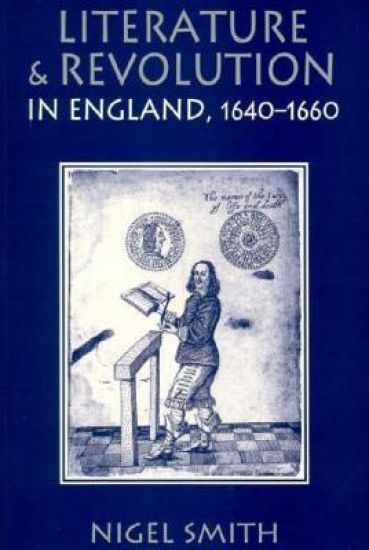
Literature and Revolution in England, 1640-1660

Literature and Revolution in England, 1640-1660

Nigel Smith

Yale University Press
1997
pokkari
The years of the British Civil War and Interregnum constituted a turning point not only in the political, social, and religious history of seventeenth-century England but also in the use and meaning of English language and literature. At a time of crisis and constitutional turmoil, literature itself acquired new functions and played a dynamic part in the fragmentation of religious and political authority.Nigel Smith argues that the upheaval in divine and secular authority provided both motive and opportunity for transformations in the nature and meaning of literary expression. The increase in pamphleteering and journalism brought a new awareness of print; with it, existing ideas of authorship and authority collapsed. Through literature, people revised their understanding of themselves and attempted to transform their predicaments.Smith examines literary output ranging from the masterworks of the age—Milton's Paradise Lost, Hobbes's Leviathan, Marvell's poetry—to a host of less well-known writings. He examines the contents of manuscripts and newspapers sold on the streets, published drama, epics and romances, love poetry, praise poetry, psalms and hymns, satire in prose and verse, fishing manuals, and histories. He also analyzes religious polemic and the language of political controversy, demonstrating how, as literary genres changed, they often acquired new vitality.Ranging wider than any other work on this period, this highly original book explores the effect of politics on the practice of writing and the impact of literature on patterns of historical change.
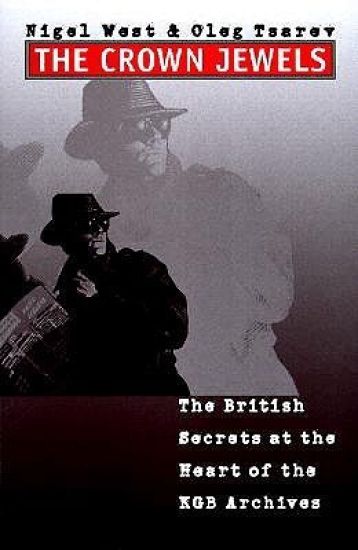
The Crown Jewels: The British Secrets at the Heart of the KGB Archives
This lively account of Soviet foreign intelligence activity in Great Britain during the Cold War is based on documents newly released from the KGB archives, their "crown jewels," as the KGB unofficially called its most valuable assets. Written by Nigel West, called by the Sunday Times "the unofficial historian of the secret services" and Oleg Tsarev, a former KGB lieutenant colonel, The Crown Jewels provides much new information on the activities of all the well-known British pro-Soviet spies, including Kim Philby, Guy Burgess, Donald Maclean, and Anthony Blunt, as well as many lesser-known spymasters and recruiters, reproducing many of their reports for the first time. The book adds unsuspected dimensions to the famous Cambridge ring (including details of Burgess's offer to murder his fellow conspirator Goronwy Rees). It also reveals a completely unknown Soviet network based in London and headed by a named Daily Herald journalist; describes the huge scale of Soviet penetration of the British Foreign Office from 1927 to 1951; explores a previously unknown spy ring in Oxford; and tells about the key role played by Blunt in supervising post-war Soviet espionage activities in London.
Richard II

Richard II

Nigel Saul

Yale University Press
1999
pokkari
Richard II is one of the most enigmatic of English kings. Shakespeare depicted him as a tragic figure, an irresponsible, cruel monarch who nevertheless rose in stature as the substance of power slipped from him. By later writers he has been variously portrayed as a half-crazed autocrat or a conventional ruler whose principal errors were the mismanagement of his nobility and disregard for the political conventions of his age. This book—the first full-length biography of Richard in more than fifty years—offers a radical reinterpretation of the king.Nigel Saul paints a picture of Richard as a highly assertive and determined ruler, one whose key aim was to exalt and dignify the crown. In Richard's view, the crown was threatened by the factiousness of the nobility and the assertiveness of the common people. The king met these challenges by exacting obedience, encouraging lofty new forms of address, and constructing an elaborate system of rule by bonds and oaths. Saul traces the sources of Richard's political ideas and finds that he was influenced by a deeply felt orthodox piety and by the ideas of the civil lawyers. He shows that, although Richard's kingship resembled that of other rulers of the period, unlike theirs, his reign ended in failure because of tactical errors and contradictions in his policies. For all that he promoted the image of a distant, all-powerful monarch, Richard II's rule was in practice characterized by faction and feud. The king was obsessed by the search for personal security: in his subjects, however, he bred only insecurity and fear.A revealing portrait of a complex and fascinating figure, the book is essential reading for anyone with an interest in the politics and culture of the English middle ages.
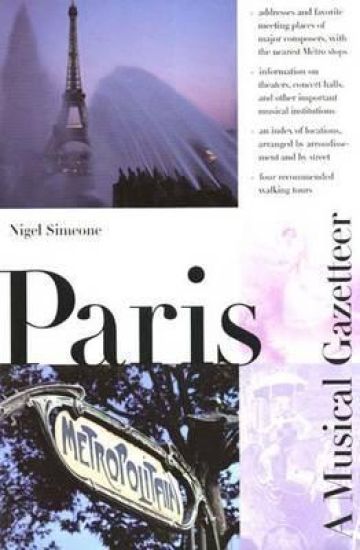
Paris--A Musical Gazetteer

Paris--A Musical Gazetteer

Nigel Simeone

Yale University Press
2000
pokkari
This essential guidebook is designed for all travelers interested in exploring the historic musical sites of Paris—in person or from an armchair. Paris is a uniquely rich music capital, its streets echoing with centuries of great music that has been created and performed there. Virtually every neighborhood boasts a concert hall, church, museum, or home that has played a significant role in the extraordinary musical tradition of the city. This gazetteer will guide you to the important musical landmarks in Paris and explain why each is noteworthy. Nearly all the celebrated French composers of the last four centuries have called Paris home, and dozens of other eminent composers—Chopin, Liszt, Mozart, Prokofiev, Stravinsky, Verdi, and Wagner among them—have spent extended periods there as well. They, along with performers, teachers, instrument makers, and publishers, have bequeathed to the city a wealth of historic landmarks, ranging from the opulent grandeur of the Opéra to Erik Satie’s tiny room in Montmartre.Featured in the gazetteer:• biographical portraits of major composers, all their known Paris addresses and favorite meeting places, with the nearest Métro stops• locations of monuments and graves of composers• information on churches, theaters, concert venues, and important musical institutions• listings of libraries, museums, and galleries holding materials related to music• an index of locations, arranged by arrondissement and by street• four recommended walking tours• more than 120 contemporary and historical photographs
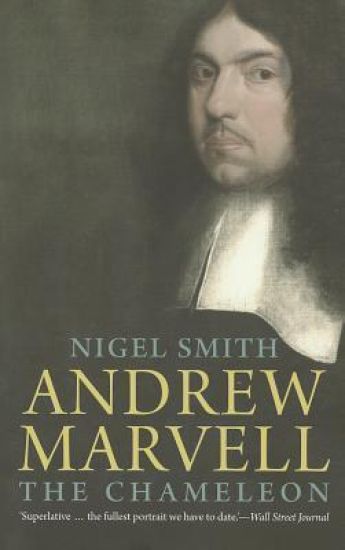
Andrew Marvell

Andrew Marvell

Nigel Smith

Yale University Press
2012
pokkari
The seventeenth-century poet Andrew Marvell (1621–1678) is one of the most intriguing figures in English literature. A noted civil servant under Cromwell’s Protectorate, he has been variously identified as a patriot, spy, conspirator, concealed homosexual, father to the liberal tradition, and incendiary satirical pamphleteer and freethinker. But while Marvell’s poetry and prose has attracted a wide modern following, his prose is known only to specialists, and much of his personal life remains shrouded in mystery. Nigel Smith’s pivotal biography provides an unparalleled look into Marvell’s life, from his early employment as a tutor and gentleman’s companion to his suspicious death, reputedly a politically fueled poisoning. Drawing on exhaustive archival research, the voluminous corpus of Marvell’s previously little known writing, and recent scholarship across several disciplines, Smith’s portrait becomes the definitive account of this elusive life.
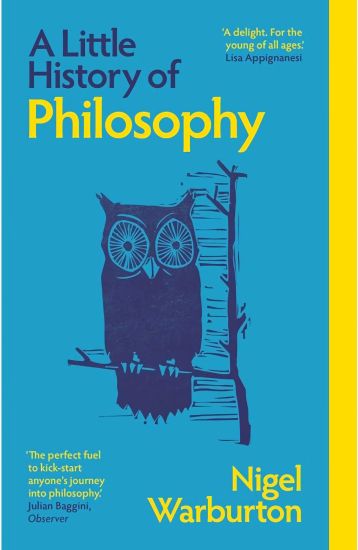
A Little History of Philosophy

A Little History of Philosophy

Nigel Warburton

Yale University Press
2012
pokkari
For readers of E. H. Gombrich’s A Little History of the World, an equally irresistible volume that brings history’s greatest philosophers to life “A primer in human existence: philosophy has rarely seemed so lucid, so important, so worth doing and so easy to enter into. . . . A wonderful introduction for anyone who’s ever felt curious about almost anything.”—Sarah Bakewell, author of How To Live: A Life of Montaigne in One Question and Twenty Attempts at an Answer Philosophy begins with questions about the nature of reality and how we should live. These were the concerns of Socrates, who spent his days in the ancient Athenian marketplace asking awkward questions, disconcerting the people he met by showing them how little they genuinely understood. This engaging book introduces the great thinkers in Western philosophy and explores their most compelling ideas about the world and how best to live in it. In forty brief chapters, Nigel Warburton guides us on a chronological tour of the major ideas in the history of philosophy. He provides interesting and often quirky stories of the lives and deaths of thought-provoking philosophers from Socrates, who chose to die by hemlock poisoning rather than live on without the freedom to think for himself, to Peter Singer, who asks the disquieting philosophical and ethical questions that haunt our own times. Warburton not only makes philosophy accessible, he offers inspiration to think, argue, reason, and ask in the tradition of Socrates. A Little History of Philosophy presents the grand sweep of humanity’s search for philosophical understanding and invites all to join in the discussion.
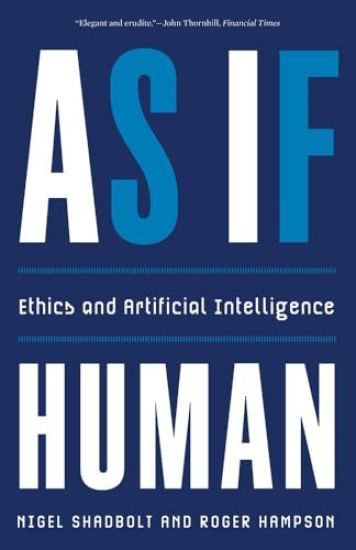
As If Human

As If Human

Nigel Shadbolt; Roger Hampson

YALE UNIVERSITY PRESS
2024
sidottu
A new approach to the challenges surrounding artificial intelligence that argues for assessing AI actions as if they came from a human being “Elegant and erudite.”—John Thornhill, Financial Times Intelligent machines present us every day with urgent ethical challenges. Is the facial recognition software used by an agency fair? When algorithms determine questions of justice, finance, health, and defense, are the decisions proportionate, equitable, transparent, and accountable? How do we harness this extraordinary technology to empower rather than oppress? Despite increasingly sophisticated programming, artificial intelligences share none of our essential human characteristics—sentience, physical sensation, emotional responsiveness, versatile general intelligence. However, Nigel Shadbolt and Roger Hampson argue, if we assess AI decisions, products, and calls for action as if they came from a human being, we can avert a disastrous and amoral future. The authors go beyond the headlines about rampant robots to apply established moral principles in shaping our AI future. Their new framework constitutes a how-to for building a more ethical machine intelligence.
A Little History of Philosophy

A Little History of Philosophy

Nigel Warburton

YALE UNIVERSITY PRESS
2025
pokkari
A lucid guide to humankind's greatest thinkers, from Aristotle to Peter Singer Philosophy begins with the nature of reality and how we should live. These were the concerns of Socrates, who spent his days in the ancient Athenian marketplace asking awkward questions, disconcerting the people he met by showing them just how little they genuinely understood. This engaging Little History introduces the great thinkers in Western philosophy and explores their most compelling ideas about the universe and our place in it. Nigel Warburton guides us on a tour of the lives and work of thought-provoking philosophers – from the certainty of Descartes (‘I think, therefore I am’) to Hannah Arendt who examined crimes against humanity and taught us ‘the banality of evil’. Little Histories – Inspiring Guides for Curious Minds
As If Human

As If Human

Nigel Shadbolt; Roger Hampson

YALE UNIVERSITY PRESS
2025
pokkari
A new approach to the challenges surrounding artificial intelligence that argues for assessing AI actions as if they came from a human being “Elegant and erudite.”—John Thornhill, Financial Times Intelligent machines present us every day with urgent ethical challenges. Is the facial recognition software used by an agency fair? When algorithms determine questions of justice, finance, health, and defense, are the decisions proportionate, equitable, transparent, and accountable? How do we harness this extraordinary technology to empower rather than oppress? Despite increasingly sophisticated programming, artificial intelligences share none of our essential human characteristics—sentience, physical sensation, emotional responsiveness, versatile general intelligence. However, Nigel Shadbolt and Roger Hampson argue, if we assess AI decisions, products, and calls for action as if they came from a human being, we can avert a disastrous and amoral future. The authors go beyond the headlines about rampant robots to apply established moral principles in shaping our AI future. Their new framework constitutes a how-to for building a more ethical machine intelligence.
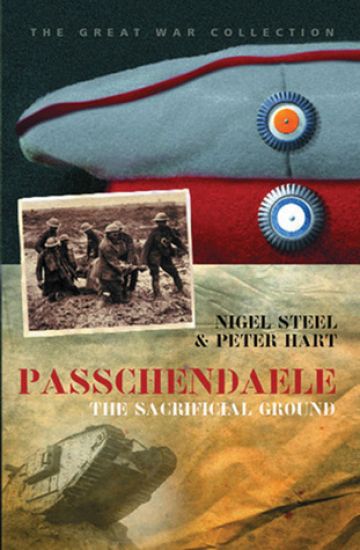
Passchendaele

Passchendaele

Nigel Steel; Peter Hart

Orion Publishing Co
2001
pokkari
A compelling account of the battle for Passchendaele from grand strategy at the highest levels right down to the experience of the ordinary infantrymen
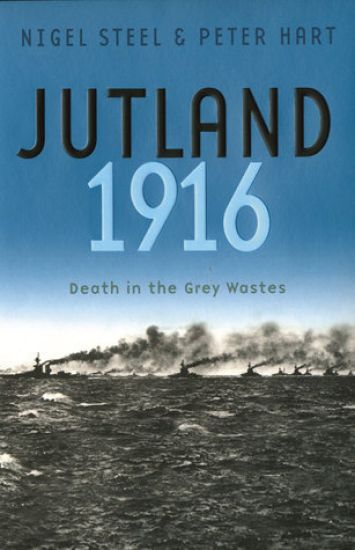
Jutland, 1916

Jutland, 1916

Nigel Steel; Peter Hart

Cassell Military
2008
pokkari
Dramatic, illustrated account of the biggest naval battle of the First World War.On 31 May, 1916, the great battle fleets of Britain and Germany met off Jutland in the North Sea. It was a climactic encounter, the culmination of a fantastically expensive naval race between the two countries, and expectations on both sides were high. For the Royal Navy's Grand Fleet, there was the chance to win another Trafalgar. For the German High Seas Fleet, there was the opportunity to break the British blockade and so change the course of the war. But Jutland was a confused and controversial encounter. Tactically, it was a draw; strategically, it was a British victory.Naval historians have pored over the minutiae of Jutland ever since. Yet they have largely ignored what the battle was actually like for its thousands of participants. Full of drama and pathos, of chaos and courage, JUTLAND, 1916 describes the sea battle in the dreadnought era from the point of view of those who were there.
Cities of Gods

Cities of Gods

Nigel Biggar; William Schweiker; Jamie S. Scott

Praeger Publishers Inc
1986
sidottu
In this fertile collection of essays, prominent theologians, philosophers, historians, and social scientists explore the mutual entanglements of religious identity with political activity in religiously plural societies. Four essays are devoted to each of the three great religions of The Book, evidencing the variety of conceptions of such a relation within the same religious tradition and demonstrating how they came to be so conceived. In addition, the three sections together display intriguing similarities between the conceptions that are pertinent to the different traditions. These range from definant theocracy to religious sanction of the liberal, secular state.
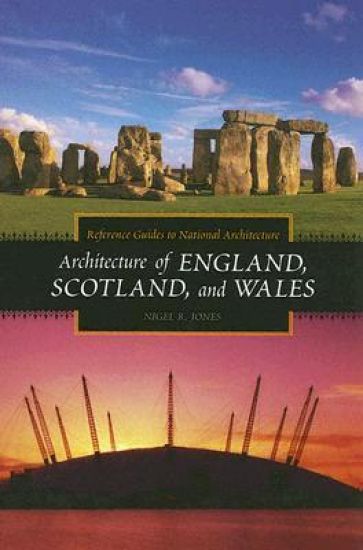
Architecture of England, Scotland, and Wales

Architecture of England, Scotland, and Wales

Nigel R. Jones

Greenwood Press
2005
sidottu
The British terrain is a gold mine for the student of architecture. Ranging in era from ancient times to the present day—from Stonehenge to the Millennium Dome—this volume's 76 entries include palaces, castles, bridges, churches, country houses, and various public buildings and monuments, as well as such well-known features of British architecture and design as terraced houses, suburban semi-detached houses, and public telephone kiosks. Detailed yet accessible to nonspecialist readers, the alphabetical entries also provide cross-references and lists of additional information sources in both print and electronic formats. Appendixes list the entries by location, architectural style, and architect/designer; explain the defining characteristics of major British architectural styles; and discuss the importance of the Crown, peerage, and Parliament in British architectural history. Besides a detailed subject index, the volume includes a timeline, a general bibliography, a glossary of architectural terms, and an introduction that traces the development of British architecture from prehistoric and Roman times to the 21st century. Written by an associate professor of architecture at Oklahoma State University, Architecture of England, Scotland, and Wales, part of Greenwood's Reference Guides to National Architecture series, presents architectural biographies of these countries' most famous and significant structures.
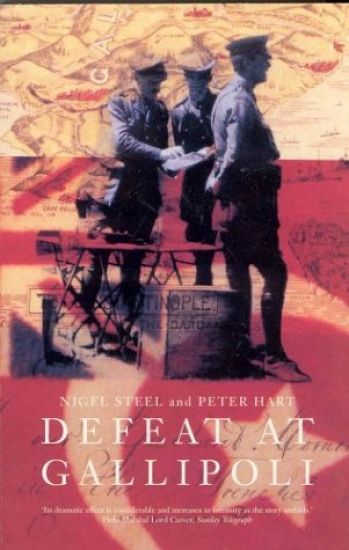
Defeat at Gallipoli

Defeat at Gallipoli

Nigel Steel; Peter Hart

Pan Books
2002
pokkari
The battle for Gallipoli was officially described as 'one of the world's classic tragedies' and in Defeat at Gallipoli the participants tell the full story of this failed offensive. The bitter campaign against the Turks from April 1915 to January 1916 was ill-conceived, inadequately equipped and never likely to succeed. The bravery and resilience of the troops in the face of disease and violent death is shown in their letters, diaries and recorded memories, recalling the sordid reality of the campaign. Linking together these experiences, Nigel Steel and Peter Hart provide a new insight into the lives of the soldiers involved and a powerful, moving account of a doomed campaign. 'One of the most controversial and disastrous British campaigns of the 20th century . . . these two historians make a strong case for history proper. Their tale never dulls in the telling' Guardian 'The dramatic effect is considerable and increases in intensity as the story unfolds.' Field Marshal Lord Carver, 'The bill for the incompetence . . . down through the chain of command was paid by suffering in the appalling conditions so vividly described in this splendid book.' Major General Julian Thompson, Globe and Laurel
Politics Of Child Abuse

Politics Of Child Abuse

Nigel Parton

Red Globe Press
1985
nidottu
'...the most comprehensive account to date of the discovery and identification of child abuse and its consolidation in Britain as a social problem ...informative and compelling ...an important study not only of child abuse but also of the sociology of a social problem.' The Times Higher Education Supplement
How to Study an E. M. Forster Novel

How to Study an E. M. Forster Novel

Nigel Messenger

Red Globe Press
1991
nidottu
Forster's novels have always given great pleasure to the general reader but they do present particular problems for those who wish to study them in a more systematic way. The elusiveness of Forster's irony, the complexity of his symbolism and the formal ambiguities in structure that are such a marked feature in all his novels, make any analysis surprisingly challenging. In this book, Nigel Messenger shows you how to set about this task.
Governing the Family

Governing the Family

Nigel Parton

Red Globe Press
1991
nidottu
Drawing on original research this book provides a challenging and instructive analysis of the nature of the heated and often contradicting arguments of recent years about how to reform the child care system, and the emergence of a central concern with child protection.It provides a unique insight into the political influences on the 1989 Children Act and the issues it attempted to address, the bargains that were struck in the process of it becoming law and the new balances it introduced between the role of the state, the responsibilities of parents and the rights of children.