Introduction to Physical Therapy for Physical Therapist Assistants provides a basic overview of the physical therapy profession and of PTs and PTAs as members of the rehabilitation team. It includes physical therapy ethical and legal concepts, cultural competence and cultural diversity, domestic violence issues, laws affecting physical therapy practice, communication, documentation and medical records, teaching, learning, and medical terminology, elements of patient care, and major physical therapy clinical practices. This text is an ideal resource for anyone contemplating a career in physical therapy or already working in the field.
Patient Education in Rehabilitation is included in the 2 5 edition of the essential collection of Doody's Core Titles.Patient Education in Rehabilitation applies patient education skills to the clinical rehabilitation process in a reader-friendly manner. It explores various teaching and learning theories and models of instruction as well as the ethical, legal, communicative, and cultural variables involved in patient education. This text will help readers understand that delivering information, education, and training in rehabilitation will promote and optimize clinical interventions, enhancing compliance, continuity of care, and patient satisfaction. Divided into five sections—basic concepts adherence and behavioral modifications teaching and learning theories legal and cultural variables and examples in rehabilitation—this is the ideal text for all rehabilitation professionals.
Written specifically for Physical Therapist Assistant (PTA) students, this text is an excellent introduction for physical therapist assistant’s education. This new edition includes updated information regarding the relationship between the Physical Therapist (PT) and PTA and key concepts of the Guide to Physical Therapist Practice for better understanding of clinical guidelines. It also includes new information regarding clinical trends in physical therapy. Utilizing this text specifically for PTAs, instructors can introduce students to information regarding professionalism, professional roles, interpersonal communication, physical therapist’s behavior and conduct, teaching and learning, and evidence based practice. This comprehensive text will provide a valuable resource throughout the physical therapist assistant’s education and training throughout the entire duration of the PTA program. New to Second Edition: Distinctive description of physical therapy developments from its Formative Years (1914-1920) to the APTA’s “Vision and Application of Scientific Pursuit” of today PTA’s usage of the APTA's “Guide to Physical Therapist Practice” Differences between physical therapy and medical diagnosis Contemporary clinical trends regarding wellness, health promotion and disease prevention Instructor Resources: Transition Guide, PowerPoint slides and TestBank
Only seven European monarchies remain intact today; all are constitutional monarchies. Four empires and 16 kingdoms have disappeared in Europe during the last two centuries. The Bourbon kingdom in France vanished first, in 1830; the Greek kingdom most recently, in 1973. Former sovereigns still consider themselves to be kings. Princes, dukes and counts remain, possessed of far-reaching connections to currently reigning monarchs. For some of them the path to headship of the royal houses has been complicated, taking many twists and turns. Two world wars caused the greatest attrition in monarchies. Exile has been bitter for some, happier for others, but in and out of exile the heads of royal families live well. Many are successful in business and as financiers. Many are enthusiastic followers of sports. Some manage large estates; others are still trying to regain royal properties. The chapters are arranged in the chronological order in which the kingdoms disappeared. This book profiles twenty-one heads of formerly regnant houses of Europe, set in historical perspective, and recounting varied life styles, occupations, and interests. At the end of each chapter is a chart or set of charts depicting the line of succession of the headship of the house.
This book presents the lives and accomplishments of 39 women rulers--not "in-name-only," but wielders of real power. Celebrated queens like England's Elizabeth I share equal space here with lesser-known monarchs like Giovanna I of Naples and Maria da Gloria of Portugal. The ?amboyant, such as Christina of Sweden, contrast with the moralistic, like Maria Theresa of Austria. Each is the heroine of an often dramatic story involving dynastic interplay and court politics. The complex forces that have impeded or sparked the royal performances are detailed.
The Post-Uruguay Round era has seen a proliferation of regional preferential trade agreements (PTAs) as well as progressive multilateral trade liberalization initiatives. This has stimulated theoretical discussion on whether the policy of pursuing PTAs will have a malign or a benign impact on multilateralism. In the former case, proliferation of PT As may increase protection in global trade due to trade diversion effects, thereby creating impediments to multilateral freeing of global trade. In the latter case, the expansion of PTA membership could ultimately lead to non-discriminatory global free trade. At the core of this discussion is the question of how to explain the preference for PTA membership. While some economists view the expansion of PTA membership as exogenously determined, participants of the Fourth Annual Workshop of the Network EU-LDC Trade and Capital Relations also considered endogenous factors explaining increased PTA membership. This book offers a closer look at the motives of policy makers in both developed and developing countries to still adhere to PTAs, notwithstanding the theoretical superiority of multilateralism, and addresses the question of how to bring order into the world trading system. These issues are dealt with in 9 chapters by scholars from both the EU and LDCs. Each paper is discussed in terms of its policy relevance by a policy maker as well as by an academic specialized in the field.
A browsable, appealing introduction to an important weather phenomenon. If your hair has ever blown back on a breezy day, you've noticed the wind at work. But what causes the wind? Are there different types of wind? How do we measure and name them? How does the wind shape our ecosystems, plants, and animals? What about people: how have human beings used the wind in the past and the present? Can you really sail into the wind, and would a tailwind help or hurt your plane's takeoff? Up, up beyond the clouds, does the wind affect other planets, too? Created with help from a meteorologist, this beautiful book is a fascinating exploration of the wind's role in world history and earth science. Playful prose and colorful illustrations invite children to bring their questions along as they learn more about this powerful--but sometimes overlooked--natural element.
A curiosity-sparking book about water in rainstorms, the Great Lakes, the drip from our taps, and other places in our world. Water is everywhere, and we rely on it every single day. But do you ever wonder about water? How much water is on our planet? What happens when there is too much water or too little water? Why does it rain? What are lakes, rivers, seas, and oceans? Why are the seas and oceans blue and salty? What lives underwater? What about water in human history--how did people get water in ancient times? How do we get water today? What do humans build to travel on the water, and how have we harnessed waterpower? How do we protect this amazing resource for the future? Gorgeous and informative, Water invites children to tour through science and history with two characters they may recognize from Wind: Discovering Air in Motion. Colorful acrylic art and energetic text help readers learn about the natural resource we have depended on since the beginning of life itself.
A playful tour through the flight patterns of pelicans, peregrine falcons, and other incredible birds. "What if I never learn to fly?" a baby chickadee asks. "You will when the time comes " an adult answers. "Let me tell you about how our friends fly." Will the chick fly like a hummingbird--moving its wings at top speed and sipping nectar from flowers? Will it fly like an Andean condor--using air streams to soar through the mountains? Will it fly like a penguin--flapping its wings like fins underwater? Maybe this tiny chickadee can find its own way to fly. With vibrant illustrations and incredible facts about each feathered friend, Fly Like a Bird is a thrilling introduction to life on the wing. This warm, conversational book is perfect for nature lovers, aspiring birdwatchers, and anyone who's ever wondered how to soar into the future.
"Brimming with cogent insights, delightful visuals, and infectious wonder." - Kirkus Reviews (STARRED REVIEW)Sound -- in both science and history -- is explored in this dynamic, illustrated nonfiction picture book from award-winning author-illustrator Olga Fadeeva. Do you ever wonder about sound--what is it, anyway?How do we produce and hear sound? How do birds, dolphins, and humans use sounds to communicate? What does life look like without sound? How has the sound of music developed over the centuries? How are sounds sent across thousands of miles? How has technology--phonographs, cassettes, radio, computers--changed how we share sound? Can sounds even affect our health? Author Olga Fadeeva (Wind: Discovering Air in Motion, Water: Discovering the Precious Resource All Around Us) explores sound's vital role on our planet in this playful, wide-ranging tour through physics, technology, musicology, language, and more. Throughout the book, "Try It " sections encourage children to create their own sound experiments. Translated from Russian by Lena Traer, and part of Eerdmans' Spectacular STEAM for Curious Readers series.
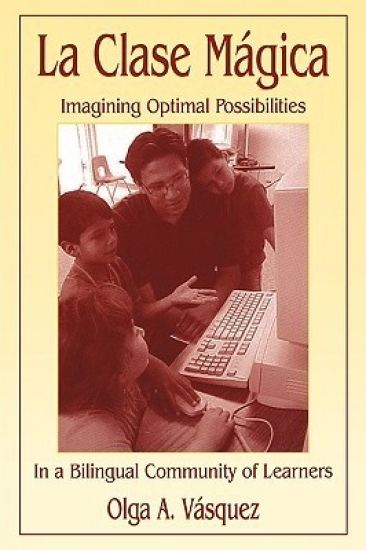
La Clase Mágica: Imagining Optimal Possibilities in a Bilingual Community of Learners vividly captures the social and intellectual developments and the promises of an ongoing after-school project called La Clase Mágica. It is a blow-by-blow description of the early transformations of a project that began as an educational activity and slowly but deliberately turned into a social action project whose aim was to serve those with low economic and political means and little access to educational resources. This multivocal account details research in action for effectively serving Spanish-English bilingual speakers from a Mexican origin community, as well as--on a broader level--the diverse populations that increasingly characterize American society today. The focus is on the early foundational work of the project between 1989-1996, though attention is also given to the national and international recognition the project has subsequently received, the college-going patterns of its long-term participants, and the transplantation of the project to other cultural communities. The book speaks out from the "zones of contact" between the university and a language minority community about new ways to extend and intersect theory and practice in many areas of the educational enterprise. Contact is defined not only in the physical sense of face-to-face interaction but also as symbolic interaction between languages, cultures, histories, and epistemologies. Thus, Vásquez speaks of optimal possibilities situated in the middle grounds, or more technically speaking, in the borders between Spanish and English, Mexican and mainstream culture, minority and majority designations, and between school and community contexts where contact is made and new arrangements are imagined. This account uses the reflections of participants at times to take readers from the scientific to the everyday, to make real and concrete the theoretical conceptualizations that box in human behavior. In this way, it defines the theories, methods, and philosophies for linking multiple disciplines, institutions, and participant groups into a concerted effort with potential to reframe the educational opportunities of under-served populations. A close look is provided into the intricacies and the fundamental principles for building and sustaining effective learning environments and institutional relations necessary for enhancing the potential of learners of all ages. In the process, the book also suggests ways in which community members and institutional agents can play an active and integral role in creating learning opportunities that serve both constituencies. Educators and policymakers will find the systems approach for pursuing parent and community involvement in the educational enterprise useful. In sum, the book offers researchers, practitioners, and policymakers much needed guidance, insight, and perhaps inspiration for rethinking educational goals and objectives.
La Clase Mágica: Imagining Optimal Possibilities in a Bilingual Community of Learners vividly captures the social and intellectual developments and the promises of an ongoing after-school project called La Clase Mágica. It is a blow-by-blow description of the early transformations of a project that began as an educational activity and slowly but deliberately turned into a social action project whose aim was to serve those with low economic and political means and little access to educational resources. This multivocal account details research in action for effectively serving Spanish-English bilingual speakers from a Mexican origin community, as well as--on a broader level--the diverse populations that increasingly characterize American society today. The focus is on the early foundational work of the project between 1989-1996, though attention is also given to the national and international recognition the project has subsequently received, the college-going patterns of its long-term participants, and the transplantation of the project to other cultural communities. The book speaks out from the "zones of contact" between the university and a language minority community about new ways to extend and intersect theory and practice in many areas of the educational enterprise. Contact is defined not only in the physical sense of face-to-face interaction but also as symbolic interaction between languages, cultures, histories, and epistemologies. Thus, Vásquez speaks of optimal possibilities situated in the middle grounds, or more technically speaking, in the borders between Spanish and English, Mexican and mainstream culture, minority and majority designations, and between school and community contexts where contact is made and new arrangements are imagined. This account uses the reflections of participants at times to take readers from the scientific to the everyday, to make real and concrete the theoretical conceptualizations that box in human behavior. In this way, it defines the theories, methods, and philosophies for linking multiple disciplines, institutions, and participant groups into a concerted effort with potential to reframe the educational opportunities of under-served populations. A close look is provided into the intricacies and the fundamental principles for building and sustaining effective learning environments and institutional relations necessary for enhancing the potential of learners of all ages. In the process, the book also suggests ways in which community members and institutional agents can play an active and integral role in creating learning opportunities that serve both constituencies. Educators and policymakers will find the systems approach for pursuing parent and community involvement in the educational enterprise useful. In sum, the book offers researchers, practitioners, and policymakers much needed guidance, insight, and perhaps inspiration for rethinking educational goals and objectives.
Hailed by reviewers upon its publication more than thirty years ago, The Novels of William Faulkner remains the preeminent interpretation of Faulkner in the formalist critical tradition while it inspires Faulknerians of all methodologies. Part One contains detailed analyses of every novel from Soldiers' Pay to The Reivers, with particular emphasis on elucidation of character, theme, and structural technique. Part Two discusses interrelated patterns and preoccupations in Faulkner's writing generally. Insightful and well-reasoned, Olga W. Vickery's work continues to be of enormous benefit to readers and scholars.
Nowa Ruda is a small town in Silesia, an area that has been a part of Poland, Germany and the former Czechoslovakia in the past. When the narrator of this novel moves into the area, she discovers everyone - and everything - has its own story.
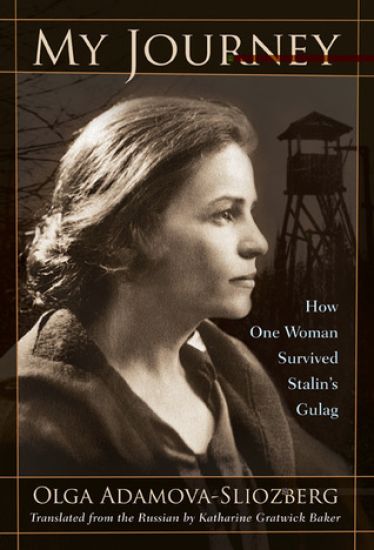
This is the first English translation of Olga Adamova-Sliozberg's mesmerizing My Journey , which was not officially published in Russia until 2002. It is among the best known of Gulag memoirs and was one of the first to become widely available in underground samizdat circulation. Alexander Solzhenitsyn relied heavily upon it when writing Gulag Archipelago, and it remains the best account of the daily life of women in the Soviet prison camps. Arrested along with her husband (who, she would much later learn, was shot the next day) in the great purges of the thirties, Adamova-Sliozberg decided to record her Gulag experiences a year after her arrest, and she "wrote them down in her head" (paper and pencils were not available to prisoners) every night for years. When she returned to Moscow after the war in 1946, she composed the memoir on paper for the first time and then buried it in the garden of the family dacha. After her re-arrest and seven more years of banishment to Kazakhstan, she returned to the dacha to dig up the buried memoir, but could not find it. She sat down and wrote it all over again. In her later years she also added a collection of stories about her family. Concluding on a hopeful note--Adamova-Sliozberg's record is cleared, she re-marries a fellow former-prisoner, and she is reunited with her children--this story is a stunning account of perseverance in the face of injustice and unimaginable hardship. This vital primary source continues to fascinate anyone interesting in the tumultuous history of Russia and the Soviet Union in the twentieth century.
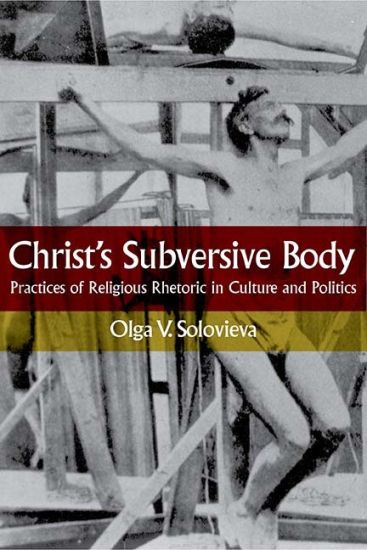
Christ's Subversive Body offers a fascinating exploration of six historical examples of politically or culturally subversive usages of the body of Christ. Shining a light on the enabling potential of religious rhetoric, Solovieva examines how in moments of crisis or transition throughout Western history the body of Christ has been deployed in a variety of discourses, including recent neo- and theoconservative movements in the United States.Solovieva’s survey includes the iconoclastic polemics of Epiphanius at the moment of struggles for supremacy between the Roman state and the Christian church, the mystical theologico-political alchemy of an anonymous treatise circulated at the Council of Constance, Lavater’s counter-Enlightenment visions of the afterlife expressd through physiognomy, Dostoevsky’s refashioning of ethical communities, Pier Paolo Pasolini’s attempts to provoke the “scandal” of Jesus’s mission once more in the modern world, and the elaboration of a political theology subordinating democratic dissent to the higher unity of a corporately conceived “unitary executive” in early twenty-first-century America.Solovieva presents her findings not as an entry into theological or Christological debates but rather as a study in comparative discourse analysis. She demonstrates how these uses of Christ’s body are triggered by moments of epistemological, political, and representational crisis in the history of Western civilization.
How Women Must Write studies how women who write poems were invented in late nineteenth and early twentieth-century Russia by women poets themselves, readers who derived poets of their own design from women’s poems, and male poets who fabricated women and wrote poems on their behalf. These distinct vantage points on how the Russian woman poet is constituted foreground the complex interactions between writing women and their readers within ever-shifting social, political, and cultural power structures. Hasty’s exploration takes us from an emphatically male Romantic age to a modernist period preoccupied with women’s creativity but also its containment. Each chapter studies an episode from Russian cultural history. The first part explores the successes and vulnerabilities of Karolina Pavlova and Evdokiia Rostopchina, who lay the groundwork for women writing after them. The second part examines two women invented by men: Cherubina de Gabriak and Briusov’s Nelli, who reflect the establishment’s efforts to retain command over women’s writing in the Silver Age. Last, Hasty examines Marina Tsvetaeva’s and Anna Akhmatova’s challenges to male authority. Illuminating these writers and characters not as passive victims of gender-driven limitations and disincentives but rather as purposeful actors realizing themselves creatively and advancing the woman poet’s cause, How Women Must Write will appeal to the general reader as well as to specialists in Russian literature, women’s studies, and cultural history.
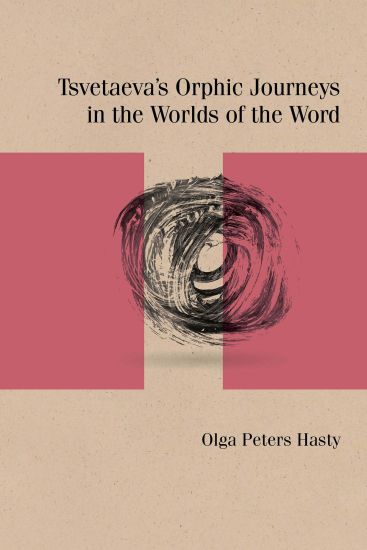
Tsvetaeva's Orphic Journeys in the Worlds of the World explores the rich theme of the myth of Orpheus as master narrative for poetic inspiration and creative survival in the life and work of Marina Tsvetaeva. Olga Peters Hasty establishes the basic themes of the Orphic Complex - the poet's longing to mediate between the embodied physical world and an 'elsewhere,' her/his inability to do so, the primacy of the voice over the visual world, the insistence on concrete imagery, the costs of the poet's gift-and orders her arguments in the tragic shape of the Orpheus myth as it worked itself out organically in Tsvetaeva's own life. Hasty's delineates the connections between the Orpheus myth and other key mythological and literary figures in the poets life - including Alexander Blok, Anna Akhmatova, Alexander Pushkin, Rainer Maria Rilke - to make an important and original critical contribution.
Funny and doom-drenched, The Employees chronicles the fate of the Six-Thousand Ship. The human and humanoid crew members complain about their daily tasks in a series of staff reports and memos. When the ship takes on a number of strange objects from the planet New Discovery, the crew becomes strangely and deeply attached to them, even as tensions boil toward mutiny, especially among the humanoids. Olga Ravn's prose is chilling, crackling, exhilarating, and foreboding. The Employees probes into what makes us human, while delivering a hilariously stinging critique of life governed by the logic of productivity. It was shortlisted for the the Ursula K. Le Guin Prize.