Kirjojen hintavertailu. Mukana 12 390 323 kirjaa ja 12 kauppaa.

Kirjahaku

Etsi kirjoja tekijän nimen, kirjan nimen tai ISBN:n perusteella.

1000 tulosta hakusanalla Pamela Gradon

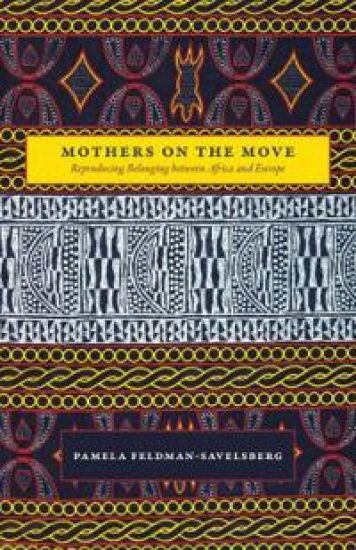
Mothers on the Move

Mothers on the Move

Pamela Feldman-Savelsberg

University of Chicago Press
2016
nidottu
The massive scale and complexity of international migration today tends to obscure the nuanced ways migrant families seek a sense of belonging. In this book, Pamela Feldman-Savelsberg takes readers back and forth between Cameroon and Germany to explore how migrant mothers through the careful and at times difficult management of relationships juggle belonging in multiple places at once: their new country, their old country, and the diasporic community that bridges them. Feldman-Savelsberg introduces readers to several Cameroonian mothers, each with her own unique history, concerns, and voice. Through scenes of their lives at a hometown association's year-end party, a celebration for a new baby, a visit to the Foreigners' Office, and many others as well as the stories they tell one another, Feldman-Savelsberg enlivens our thinking about migrants' lives and the networks and repertoires that they draw on to find stability and, ultimately, belonging. Placing women's individual voices within international social contexts, this book unveils new, intimate links between the geographical and the generational as they intersect in the dreams, frustrations, uncertainties, and resolve of strong women holding families together across continents.
The Story of Radio Mind

The Story of Radio Mind

Pamela E. Klassen

University of Chicago Press
2018
sidottu
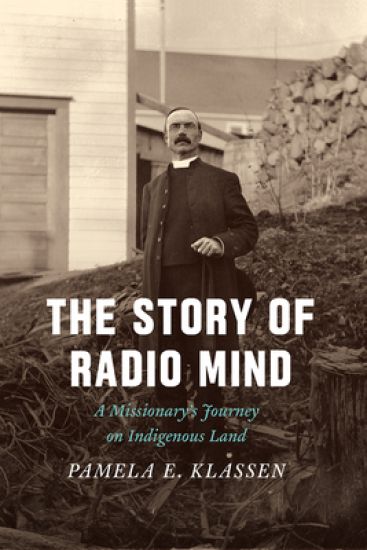
At the dawn of the radio age in the 1920s, a settler-mystic living on northwest coast of British Columbia invented radio mind: Frederick Du Vernet—Anglican archbishop and self-declared scientist—announced a psychic channel by which minds could telepathically communicate across distance. Retelling Du Vernet’s imaginative experiment, Pamela Klassen shows us how agents of colonialism built metaphysical traditions on land they claimed to have conquered. Following Du Vernet’s journey westward from Toronto to Ojibwe territory and across the young nation of Canada, Pamela Klassen examines how contests over the mediation of stories—via photography, maps, printing presses, and radio—lucidly reveal the spiritual work of colonial settlement. A city builder who bargained away Indigenous land to make way for the railroad, Du Vernet knew that he lived on the territory of Ts’msyen, Nisga’a, and Haida nations who had never ceded their land to the onrush of Canadian settlers. He condemned the devastating effects on Indigenous families of the residential schools run by his church while still serving that church. Testifying to the power of radio mind with evidence from the apostle Paul and the philosopher Henri Bergson, Du Vernet found a way to explain the world that he, his church and his country made. Expanding approaches to religion and media studies to ask how sovereignty is made through stories, Klassen shows how the spiritual invention of colonial nations takes place at the same time that Indigenous peoples—including Indigenous Christians—resist colonial dispossession through stories and spirits of their own.
The Story of Radio Mind

The Story of Radio Mind

Pamela E. Klassen

University of Chicago Press
2018
nidottu
At the dawn of the radio age in the 1920s, a settler-mystic living on northwest coast of British Columbia invented radio mind: Frederick Du Vernet—Anglican archbishop and self-declared scientist—announced a psychic channel by which minds could telepathically communicate across distance. Retelling Du Vernet’s imaginative experiment, Pamela Klassen shows us how agents of colonialism built metaphysical traditions on land they claimed to have conquered. Following Du Vernet’s journey westward from Toronto to Ojibwe territory and across the young nation of Canada, Pamela Klassen examines how contests over the mediation of stories—via photography, maps, printing presses, and radio—lucidly reveal the spiritual work of colonial settlement. A city builder who bargained away Indigenous land to make way for the railroad, Du Vernet knew that he lived on the territory of Ts’msyen, Nisga’a, and Haida nations who had never ceded their land to the onrush of Canadian settlers. He condemned the devastating effects on Indigenous families of the residential schools run by his church while still serving that church. Testifying to the power of radio mind with evidence from the apostle Paul and the philosopher Henri Bergson, Du Vernet found a way to explain the world that he, his church and his country made. Expanding approaches to religion and media studies to ask how sovereignty is made through stories, Klassen shows how the spiritual invention of colonial nations takes place at the same time that Indigenous peoples—including Indigenous Christians—resist colonial dispossession through stories and spirits of their own.
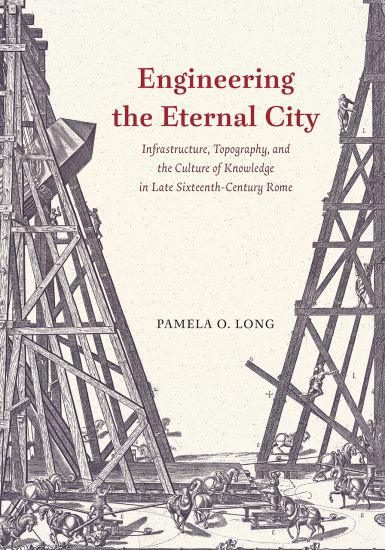
Engineering the Eternal City

Engineering the Eternal City

Pamela O Long

University of Chicago Press
2018
pokkari
Between the catastrophic flood of the Tiber River in 1557 and the death of the "engineering pope" Sixtus V in 1590, the city of Rome was transformed by intense activity involving building construction and engineering projects of all kinds. Using hundreds of archival documents and primary sources, Engineering the Eternal City explores the processes and people involved in these infrastructure projects--sewers, bridge repair, flood prevention, aqueduct construction, the building of new, straight streets, and even the relocation of immensely heavy ancient Egyptian obelisks that Roman emperors had carried to the city centuries before. This portrait of an early modern Rome examines the many conflicts, failures, and successes that shaped the city, as decision-makers tried to control not only Rome's structures and infrastructures but also the people who lived there. Taking up visual images of the city created during the same period--most importantly in maps and urban representations, this book shows how in a time before the development of modern professionalism and modern bureaucracies, there was far more wide-ranging conversation among people of various backgrounds on issues of engineering and infrastructure than there is in our own times. Physicians, civic leaders, jurists, cardinals, popes, and clerics engaged with painters, sculptors, architects, printers, and other practitioners as they discussed, argued, and completed the projects that remade Rome.
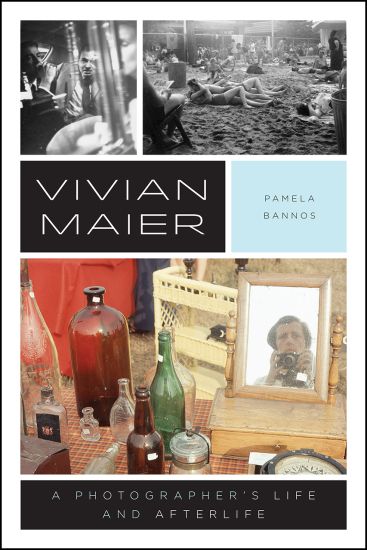
Vivian Maier

Vivian Maier

Pamela Bannos

University of Chicago Press
2018
pokkari
Who was Vivian Maier? Many people know her as the reclusive Chicago nanny who wandered the city for decades, constantly snapping photographs, which were unseen until they were discovered in a seemingly abandoned storage locker. They revealed her to be an inadvertent master of twentieth-century American street photography. Not long after, the news broke that Maier had recently died and had no surviving relatives. Soon the whole world knew about her preternatural work, shooting her to stardom almost overnight. But, as Pamela Bannos reveals in this meticulous and passionate biography, this story of the nanny savant has blinded us to Maier’s true achievements, as well as her intentions. Most important, Bannos argues, Maier was not a nanny who moonlighted as a photographer; she was a photographer who supported herself as a nanny. In Vivian Maier: A Photographer’s Life and Afterlife, Bannos contrasts Maier’s life with the mythology that strangers—mostly the men who have profited from her work—have created around her absence. Bannos shows that Maier was extremely conscientious about how her work was developed, printed, and cropped, even though she also made a clear choice never to display it. She places Maier’s fierce passion for privacy alongside the recent spread of her work around the world, and she explains Maier’s careful adjustments of photographic technique, while explaining how the photographs have been misconstrued or misidentified. As well, Bannos uncovers new information about Maier’s immediate family, including her difficult brother, Karl—relatives that once had been thought not to exist. This authoritative and engrossing biography shows that the real story of Vivian Maier, a true visionary artist, is even more compelling than the myth.
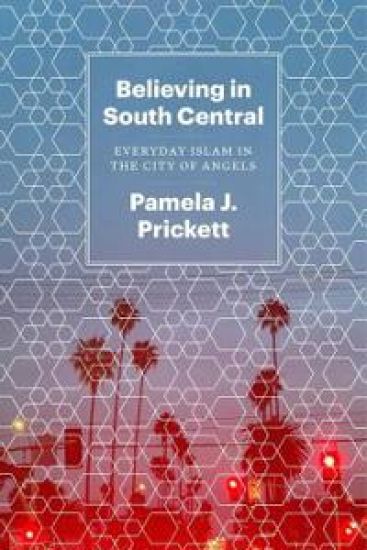
Believing in South Central

Believing in South Central

Pamela J Prickett

University of Chicago Press
2021
sidottu
The area of Los Angeles known as South Central is often overshadowed by dismal stereotypes, problematic racial stigmas, and its status as the home to some of the city's poorest and most violent neighborhoods. Amid South Central's shifting demographics and its struggles with poverty, sociologist Pamela J. Prickett takes a closer look, focusing on the members of an African American Muslim community and exploring how they help each other combat poverty, job scarcity, violence, and racial injustice. Prickett's engaging ethnography relates how believers in this longstanding religious community see Islam as a way of life, a comprehensive blueprint for individual and collective action, guiding how to interact with others, conduct business, strive for progress, and cultivate faith. Prickett offers deep insights into the day-to-day lived religion of the Muslims who call this community home, showing how the mosque provides a system of social support and how believers deepen their spiritual practice not in spite of, but through, conditions of poverty. Prickett breaks past the stigmas of urban poverty, revealing a complex and vibrant community by telling the stories of longstanding residents of South Central--like Sister Ava, who offers food to the local unhoused people and finds the sacred in her extensive DVD collection. In addition to her portraits of everyday life among Muslims in South Central, Prickett also provides vivid and accessible descriptions of Ramadan and histories of the mosque, situates this community within the larger story of the Nation of Islam, explores gender issues, and unpacks the interaction between African American Muslims and South Asian and Arab American Muslims, revealing both the global and local significance of this religious tradition.
Believing in South Central

Believing in South Central

Pamela J Prickett

University of Chicago Press
2021
pokkari
The area of Los Angeles known as South Central is often overshadowed by dismal stereotypes, problematic racial stigmas, and its status as the home to some of the city's poorest and most violent neighborhoods. Amid South Central's shifting demographics and its struggles with poverty, sociologist Pamela J. Prickett takes a closer look, focusing on the members of an African American Muslim community and exploring how they help each other combat poverty, job scarcity, violence, and racial injustice. Prickett's engaging ethnography relates how believers in this longstanding religious community see Islam as a way of life, a comprehensive blueprint for individual and collective action, guiding how to interact with others, conduct business, strive for progress, and cultivate faith. Prickett offers deep insights into the day-to-day lived religion of the Muslims who call this community home, showing how the mosque provides a system of social support and how believers deepen their spiritual practice not in spite of, but through, conditions of poverty. Prickett breaks past the stigmas of urban poverty, revealing a complex and vibrant community by telling the stories of longstanding residents of South Central--like Sister Ava, who offers food to the local unhoused people and finds the sacred in her extensive DVD collection. In addition to her portraits of everyday life among Muslims in South Central, Prickett also provides vivid and accessible descriptions of Ramadan and histories of the mosque, situates this community within the larger story of the Nation of Islam, explores gender issues, and unpacks the interaction between African American Muslims and South Asian and Arab American Muslims, revealing both the global and local significance of this religious tradition.
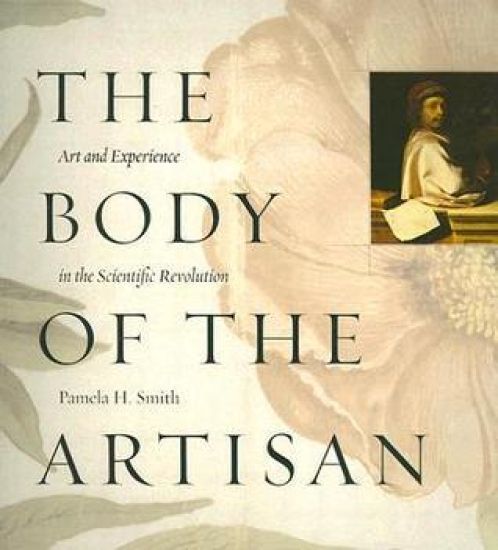
The Body of the Artisan

The Body of the Artisan

Pamela H. Smith

University of Chicago Press
2006
nidottu
In "The Body of the Artisan", Pamela H. Smith demonstrates how much early modern science owed to an unlikely source: artists and artisans. Goldsmiths, locksmiths, carpenters, and painters were all sought after by early scientists for their intimate, hands-on knowledge of natural materials, as well as their ability to manipulate them. Drawing on a fascinating array of new evidence from northern Europe, and including nearly 200 images of artisans' objects alongside their writings, "The Body of the Artisan" convincingly demonstrates that artisans viewed knowledge as throughly rooted in matter and nature. "The Body of the Artisan" provides astonishingly vivid examples of this Renaissance synergy among art, craft, and science, recovering a forgotten episode of the Scientific Revolution - an episode that forever altered the way we see the natural world, and science too.
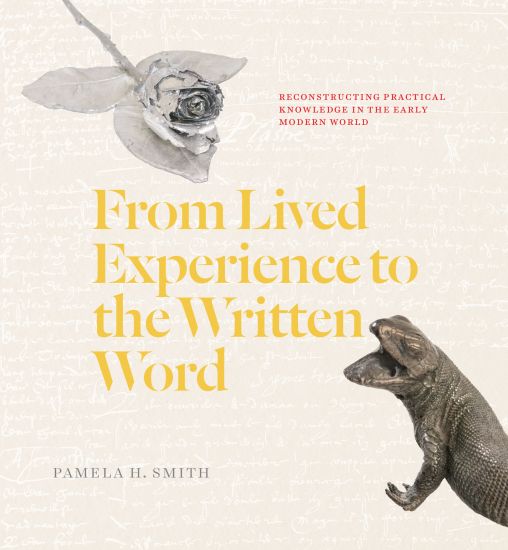
From Lived Experience to the Written Word

From Lived Experience to the Written Word

Pamela H. Smith

THE UNIVERSITY OF CHICAGO PRESS
2022
nidottu
How and why early modern European artisans began to record their knowledge. In From Lived Experience to the Written Word, Pamela H. Smith considers how and why, beginning in 1400 CE, European craftspeople began to write down their making practices. Rather than simply passing along knowledge in the workshop, these literate artisans chose to publish handbooks, guides, treatises, tip sheets, graphs, and recipe books, sparking early technical writing and laying the groundwork for how we think about scientific knowledge today. Focusing on metalworking from 1400-1800 CE, Smith looks at the nature of craft knowledge and skill, studying present-day and historical practices, objects, recipes, and artisanal manuals. From these sources, she considers how we can reconstruct centuries of largely lost knowledge. In doing so, she aims not only to unearth the techniques, material processes, and embodied experience of the past but also to gain insight into the lifeworld of artisans and their understandings of matter.
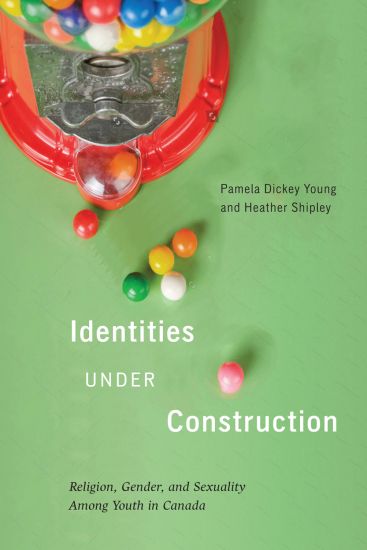
Identities Under Construction

Identities Under Construction

Pamela Dickey Young; Heather Shipley

McGill-Queen's University Press
2020
sidottu
Growing numbers of young adults are either nonreligious or "spiritual but not religious," but this does not signal a lack of interest in religion and meaning-making. Though the lexicon describing sexuality and gender is quickly evolving, young people do not yet have satisfactory language to describe their fluid religious and spiritual identities.In Identities Under Construction Pamela Dickey Young and Heather Shipley undertake a focused study of youth sexual, religious, and gender identity construction. Drawing from survey responses and interviews with nearly five hundred participants, they reveal that youth today consider their identities fluid and open to change. Young people do not limit themselves to singular identity categories, experiencing the choice of one religion, of maleness or femaleness, or of a fixed sexuality as confining. Although they recognize various forces at work in identity construction - parents, peers, the internet - they regard themselves as the authors of their own identities. For most of the young adults in the study, even those who are most traditionally religious, religious opinions and values should adapt to changing social mores to ensure that people are not judged for their sexual choices or identities. Further, they are not judgmental of others' choices, even if they would not make these choices for themselves.Engaging religion and sexuality studies in new ways, Identities Under Construction calls for a new grammar of religion that better captures lived realities at a time when religious choice has broadened beyond choosing a single organized religious tradition.
Identities Under Construction

Identities Under Construction

Pamela Dickey Young; Heather Shipley

McGill-Queen's University Press
2020
nidottu
Growing numbers of young adults are either nonreligious or "spiritual but not religious," but this does not signal a lack of interest in religion and meaning-making. Though the lexicon describing sexuality and gender is quickly evolving, young people do not yet have satisfactory language to describe their fluid religious and spiritual identities.In Identities Under Construction Pamela Dickey Young and Heather Shipley undertake a focused study of youth sexual, religious, and gender identity construction. Drawing from survey responses and interviews with nearly five hundred participants, they reveal that youth today consider their identities fluid and open to change. Young people do not limit themselves to singular identity categories, experiencing the choice of one religion, of maleness or femaleness, or of a fixed sexuality as confining. Although they recognize various forces at work in identity construction - parents, peers, the internet - they regard themselves as the authors of their own identities. For most of the young adults in the study, even those who are most traditionally religious, religious opinions and values should adapt to changing social mores to ensure that people are not judged for their sexual choices or identities. Further, they are not judgmental of others' choices, even if they would not make these choices for themselves.Engaging religion and sexuality studies in new ways, Identities Under Construction calls for a new grammar of religion that better captures lived realities at a time when religious choice has broadened beyond choosing a single organized religious tradition.
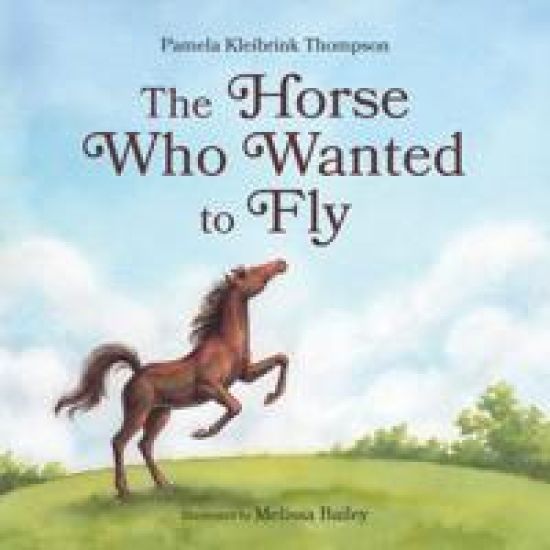
The Horse Who Wanted to Fly

The Horse Who Wanted to Fly

Pamela Kleibrink Thompson

FIREFLY BOOKS LTD
2024
sidottu
Charlie had an ordinary name and lived on an ordinary ranch. But Charlie was no ordinary horse. Charlie knew he could fly. But no one believed him. The naysayers said, “Ordinary horses do ordinary work. They drag wagons, pull plows, and haul hay. Horses can’t fly. So don’t even try.” So begins the story of Charlie, an ambitious, determined and speedy horse who, with the help of some friends, proves once and for all that horses can fly. After years of toiling away as a work horse, Charlie, finally recognized for his incredible speed, ends up as a prize racehorse of Leland Stanford, the founder of Stanford University. Stanford has commissioned a photographer named Eadweard Muybridge to take high-speed photos of Charlie as he runs. During the trials, Muybridge snaps a photo of Charlie with all four hooves off the ground, thus proving all the naysayers wrong — Charlie can fly! Conveyed through Charlie’s story is an important message of resilience and self-confidence, telling young readers, “Believe in yourself, give it a try! How else will you prove that you can fly?”
Ryken's Journey

Ryken's Journey

Pamela Larocque

Tellwell Talent
2019
pokkari
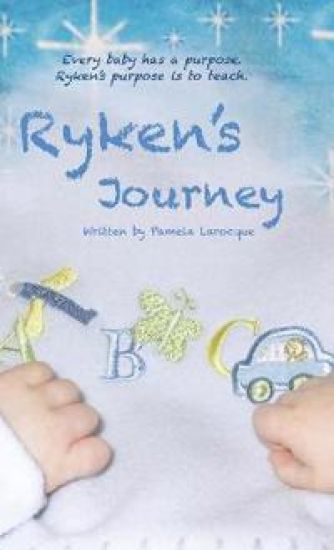
"Experiencing love and parenting opens us to unimagined joy as well as crushing heartbreak. Because of one mother's honesty and forthright talent, we can experience both the happiness and sorrow of Ryken's Journey - and we can also relate the lessons learned to our own hearts and lives." Sally Ann Elliot, Registered Nurse Certified Childbirth Educator. "Eleven years ago I met Ryken and his parents, Brett and Pam. It was through such an unexpected series of events that I became part of his medical team. Fate.Over the subsequent eleven days, I learned much about Ryken, about his parents, and witnessed the unreserved love of a child from his parents.Ryken's Journey is his story. It is the story of his family, the story of his birth, and the story of his death.It is the story of how an individual, no matter how young or how brief a life, can teach us so much about love and living."Dr. Aaron Chiu, Neonatologist
Ryken's Journey

Ryken's Journey

Pamela Larocque

Tellwell Talent
2019
sidottu
"Experiencing love and parenting opens us to unimagined joy as well as crushing heartbreak. Because of one mother's honesty and forthright talent, we can experience both the happiness and sorrow of Ryken's Journey - and we can also relate the lessons learned to our own hearts and lives." Sally Ann Elliot, Registered Nurse Certified Childbirth Educator. "Eleven years ago I met Ryken and his parents, Brett and Pam. It was through such an unexpected series of events that I became part of his medical team. Fate.Over the subsequent eleven days, I learned much about Ryken, about his parents, and witnessed the unreserved love of a child from his parents.Ryken's Journey is his story. It is the story of his family, the story of his birth, and the story of his death.It is the story of how an individual, no matter how young or how brief a life, can teach us so much about love and living."Dr. Aaron Chiu, Neonatologist
My Mummy Milkies

My Mummy Milkies

Pamela M Nievas

Tellwell Talent
2020
pokkari
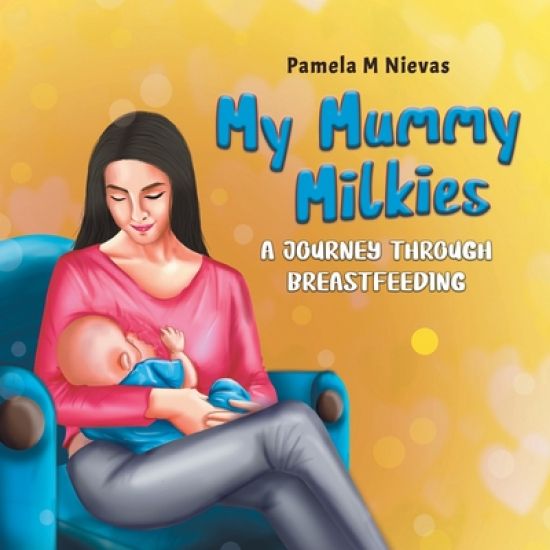
My Mummy Milkies is a bedtime story depicting the breastfeeding journey of a child through different scenarios. As the child explores the world, Pamela Nievas captures the heartwarming bond a mother has with their child through breastfeeding wherever they go, whether it be a caf , public place or mode of transport. The use of different ethnicities is embraced throughout the book to normalize breastfeeding in all aspects.
My Mummy Milkies

My Mummy Milkies

Pamela M Nievas

Tellwell Talent
2020
sidottu
My Mummy Milkies is a bedtime story depicting the breastfeeding journey of a child through different scenarios. As the child explores the world, Pamela Nievas captures the heartwarming bond a mother has with their child through breastfeeding wherever they go, whether it be a caf , public place or mode of transport. The use of different ethnicities is embraced throughout the book to normalize breastfeeding in all aspects.
Survivors of Trauma

Survivors of Trauma

Pamela Rose Rasmussen

Tellwell Talent
2021
pokkari
This book is about survivors of trauma and their stories. It talks about what they went through, how they coped, what changed, what helped and advice they would give to someone else who is going through the same or similar things.