Kirjahaku
Etsi kirjoja tekijän nimen, kirjan nimen tai ISBN:n perusteella.
1000 tulosta hakusanalla Patricia Springborg
This accessibly written book presents a picture of generosity that is unique in its breadth. American Generosity is distinguished by its comprehensive approach to answering the what, how much, who, where, and why of giving. The authors consider multiple forms of generosity. They focus on three especially important forms of giving: donating money, volunteering time, and taking political action. But they also look at activities like giving blood and bodily organs, material possessions, relational attention, and participation in environmental activism. Their striking and sometimes counterintuitive findings are based on data from the Science of Generosity initiative, which combines a nationally representative survey of adult Americans with in-depth interviews and ethnographies. From the interviews, case studies are selected to illustrate core themes. The analyses examine multiple dimensions of resources, social status, regional cultural norms, different approaches to giving, social-psychological orientation, and the relational contexts of generosity. The authors conclude that giving is supported by "circles of generosity," which ripple outward in their reach to giving targets. The practical implications include tips for readers who want to increase their own giving, and for parents modeling giving to their children, spouses desiring alignment in their giving, and friends and community members seeking to support other people's giving. Also on offer are explicit fundraising ideas for nonprofits, foundations, and religious leaders. In American Generosity we find a broad yet nuanced explanation of giving that transcends the usual categories of sociological study to address the simple but confounding question about charity-who gives and why?
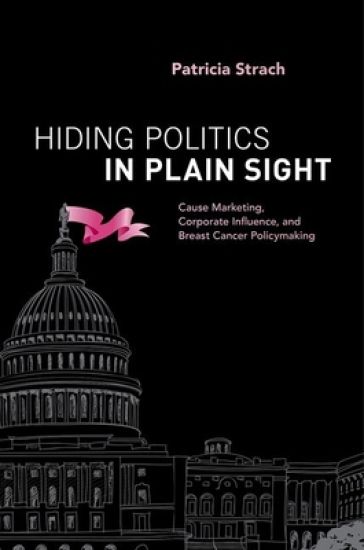
As late as the 1980s, breast cancer was a stigmatized disease, so much so that local reporters avoided using the word "breast" in their stories and early breast cancer organizations steered clear of it in their names. But activists with business backgrounds began to partner with corporations for sponsored runs and cause-marketing products, from which a portion of the proceeds would benefit breast cancer research. Branding breast cancer as "pink"--hopeful, positive, uncontroversial--on the products Americans see every day, these activists and corporations generated a pervasive understanding of breast cancer that is widely shared by the public and embraced by policymakers. Clearly, they have been successful: today, more Americans know that the pink ribbon is the symbol of breast cancer than know the name of the vice president. Hiding Politics in Plain Sight examines the costs of employing market mechanisms--especially cause marketing--as a strategy for change. Patricia Strach suggests that market mechanisms do more than raise awareness of issues or money to support charities: they also affect politics. She shows that market mechanisms, like corporate-sponsored walks or cause-marketing, shift issue definition away from the contentious processes in the political sphere to the market, where advertising campaigns portray complex issues along a single dimension with a simple solution: breast cancer research will find a cure and Americans can participate easily by purchasing specially-marked products. This market competition privileges even more specialized actors with connections to business. As well, cooperative market activism fundamentally alters the public sphere by importing processes, values, and biases of market-based action into politics. Market activism does not just bring social concerns into market transactions, it also brings market biases into public policymaking, which is inherently undemocratic. As a result, industry and key activists work cooperatively rather than contentiously, and they define issues as consensual rather than controversial, essentially hiding politics in plain sight.
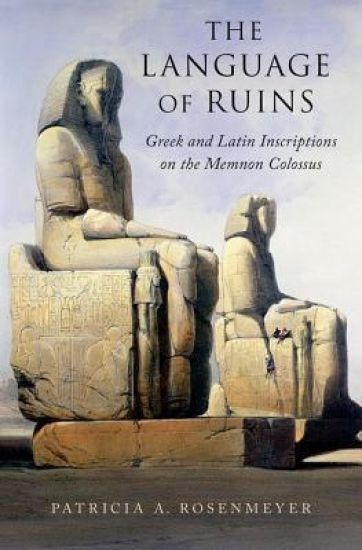
A colossal statue, originally built to honor an ancient pharaoh, still stands today in Egyptian Thebes, with more than a hundred Greek and Latin inscriptions covering its lower surfaces. Partially damaged by an earthquake, and later re-identified as the Homeric hero Memnon, it was believed to "speak" regularly at daybreak. By the middle of the first century CE, tourists flocked to the colossus of Memnon to hear the miraculous sound, and left behind their marks of devotion (proskynemata): brief acknowledgments of having heard Memnon's cry; longer lists by Roman administrators; and more elaborate elegiac verses by both amateur and professional poets. The inscribed names left behind reveal the presence of emperors and soldiers, provincial governors and businessmen, elite women and military wives, and families with children. While recent studies of imperial literature acknowledge the colossus, few address the inscriptions themselves. This book is the first critical assessment of all the inscriptions considered in their social, cultural, and historical context. The Memnon colossus functioned as a powerful site of engagement with the Greek past, and appealed to a broad segment of society. The inscriptions shed light on contemporary attitudes toward sacred tourism, the role of Egypt in the Greco-Roman imagination, and the cultural legacy of Homeric epic. Memnon is a ghost from the Homeric past anchored in the Egyptian present, and visitors yearned for a "close encounter" that would connect them with that distant past. The inscriptions thus idealize Greece by echoing archaic literature in their verses at the same time as they reflect their own historical horizon. These and other subjects are expertly explored in the book, including a fascinating chapter on the colossus's post-classical life when the statue finds new worshippers among Romantic artists and poets in nineteenth-century Europe.
The Oxford Handbook of Qualitative Research, Second Edition presents a comprehensive, interdisciplinary overview of the field of qualitative research. Divided into eight parts, the forty chapters address key topics in the field such as approaches to qualitative research (philosophical perspectives), narrative inquiry, field research, and interview methods, text, arts-based, and internet methods, analysis and interpretation of findings, and representation and evaluation. The handbook is intended for students of all levels, faculty, and researchers across the disciplines, and the contributors represent some of the most influential and innovative researchers as well as emerging scholars. This handbook provides a broad introduction to the field of qualitative research to those with little to no background in the subject, while providing substantive contributions to the field that will be of interest to even the most experienced researchers. It serves as a user-friendly teaching tool suitable for a range of undergraduate or graduate courses, as well as individuals working on their thesis or other research projects. With a focus on methodological instruction, the incorporation of real-world examples and practical applications, and ample coverage of writing and representation, this volume offers everything readers need to undertake their own qualitative studies.
Dirty dollars, tainted donors and "poverty porn" have caused a social backlash against philanthropy. As more wealth is concentrated in the hands of a rising number of billionaires, it is clear that the same system that created their wealth also perpetuates deep inequality, social injustice, and human suffering. Philanthropists often give with strings attached. They want to make the world a better place, but insist on their own vision of what constitutes a better world. Some donors also pay with tainted money, give to hate groups, or use their money to launder their reputations. Nonprofits that ignore the warning signs are often complicit in the fallout that comes with "dark dollars". Using case studies, Patricia Illingworth shows how to address this problem. She argues that approaching philanthropy through a human rights lens can improve the quality of giving, resolve urgent quandaries, and mitigate the social injustice that philanthropy can perpetuate. A philosopher and lawyer, Illingworth makes the case that people and organizations have human rights responsibilities that should guide philanthropy and the nonprofit sector. When philanthropy begins to acknowledge, respect, and protect human rights it will regain its social license and help to make the world a better place.
The Science of College
Patricia S. Herzog; Casey T. Harris; Shauna A. Morimoto; Shane W. Barker; Jill G. Wheeler; A. Justin Barnum; Terrance L. Boyd
Oxford University Press Inc
2020
nidottu
The transition to adulthood is a complex process, and college is pivotal to this experience. The Science of College aids entering college students--and the people who support them--in navigating college successfully, with up-to-date recommendations based upon real student situations, sound social science research, and the collective experiences of faculty, lecturers, advisors, and student support staff. The stories captured in this book highlight how the challenges that college students encounter vary in important ways based on demographics and social backgrounds. Despite these varied backgrounds, all students are more likely to have successful college experiences if they invest in their communities. Universities have many resources available, but as this book will show, students need to learn when to access which resources and how best to engage with people serving students. This includes having a better awareness of the different roles held by university faculty and staff, and navigating who to go to for what, based upon understanding their distinct sets of expertise and approaches to support. There is no single template for student success. Yet, this book highlights common issues that many students face and provides science-based advice for how to navigate college. Each topic covered is geared towards the life stage that most college students are in: emerging adulthood. In addition to the student-focused chapters, the book includes appendixes with activities for students, tips for parents, and methods information for faculty. Supplemental website materials suggest classroom activities for instructors who adopt this book within first-year seminars and general education courses. This is an open access title available under the terms of a CC BY-NC-ND 4.0 International licence. It is free to read at Oxford Scholarship Online and offered as a free PDF download from OUP and selected open access locations.
Arts in Healthy Aging
Patricia Dewey Lambert; Doug Blandy; Margaret Wyszomirski
Oxford University Press
2024
nidottu
Arts in Healthy Aging examines public policies and professional practices that effectively use the arts to support health and well-being outcomes in older adults. It offers a comprehensive study of why and how purposefully-designed programs that engage the visual, performing, and literary arts can support the health and well-being of older adults. The authors argue that it is the right time for the American arts and aging movement to restructure itself as a national network and advocacy coalition across four domains: the arts, health, aging, and lifelong learning. Building on decades of published research, government documents, and program models, this scholarly volume provides historical perspectives, new theoretical approaches, analytical models, resources for researchers and practitioners, and pathways forward for advancing the interdisciplinary arts in healthy aging field of scholarship and practice. Although focused on the United States, the discussion of policies and practices is relevant and applicable to other countries as appropriate to their specific contexts.
Once Upon a Time in Facilities Management
Patricia McCarroll; John Hassard
Oxford University Press
2024
sidottu
What would the world of work look like if interpreted through the lens of the fairytale? To answer this question Once Upon a Time in Facilities Management explores storied spaces and metaphorical archetypes in the study of business, management, and organization. At its core, the authors offer a diagnostic approach for the study of work organization that links management theory, storytelling, and the business imaginary. An important empirical focus is also included that explores a business service rarely studied in the management literature: Facilities Management (FM), a 'secondary service' of non-core and increasingly outsourced organizational functions. An in-depth appreciation of FM is provided that assesses the people, practices, and processes of the service in a study that also highlights the characteristic liminality of the sector's professional activities. Emphasis is placed on illuminating the storytelling nature of the service, using primarily the genre of fairytales to identify representational archetypes (including queen, shadow, sage, trickster, adventurer, and eternal child) within FM's storied space. In the process, three central characters (essentially modes of FM delivery) are identified - the professional consultant, the external service provider, and the in-house function - with these forming the structural basis of fairytales explaining the culture and symbolism of FM as a business service. The authors conclude by extrapolating findings from the study to inform a discussion of the contributions of folkloric analysis to organization theory explicitly and our understanding of business and management practice more widely.
Very Short Introductions: Brilliant, Sharp, Inspiring Human geography offers answers to some of the most important challenges of our time. To understand contemporary struggles over global economic inequality, forced migration, racial injustice, gender justice, and the climate crisis, we must grasp the ways in which these are fought over and through space. Human Geography, A Very Short Introduction by Patricia Daley and Ian Klinke explains how the subject can aid a better knowledge of the modern world. It examines the formation of power systems and the ways in which they have been constructed, subverted, and resisted over time. This Very Short Introduction explores the topic through seven spaces that define the present: the colony, the pipeline, the border, the high rise, the workplace, the conservation area, and outer space. In addition, the authors take a critical view of the discipline and its history, but argue for its continuing vitality. ABOUT THE SERIES: The Very Short Introductions series from Oxford University Press contains hundreds of titles in almost every subject area. These pocket-sized books are the perfect way to get ahead in a new subject quickly. Our expert authors combine facts, analysis, perspective, new ideas, and enthusiasm to make interesting and challenging topics highly readable.
A true story of vendetta and intrigue, triumph and tragedy, exile and repatriation, this book recounts the interwoven microhistories of Count Girolamo Della Torre, a feudal lord with a castle and other properties in the Friuli, and Giulia Bembo, grand-niece of Cardinal Pietro Bembo and daughter of Gian Matteo Bembo, a powerful Venetian senator with a distinguished career in service to the Venetian Republic. Their marriage in the mid-sixteenth century might be regarded as emblematic of the Venetian experience, with the metropole at the center of a fragmented empire: a Terraferma nobleman and the daughter of a Venetian senator, who raised their family in far off Crete in the stato da mar, in Venice itself, and in the Friuli and the Veneto in the stato da terra. The fortunes and misfortunes of the nine surviving Della Torre children and their descendants, tracked through the end of the Republic in 1797, are likewise emblematic of a change in feudal culture from clan solidarity to individualism and intrafamily strife, and ultimately, redemption. Despite the efforts by both the Della Torre and the Bembo families to preserve the patrimony through a succession of male heirs, the last survivor in the paternal bloodline of each was a daughter. This epic tale highlights the role of women in creating family networks and opens a precious window into a contentious period in which Venetian republican values clash with the deeply rooted feudal traditions of honor and blood feuds of the mainland.
Patricia Smith considers what a consistently liberal view of affirmative obligation would have to be in order to accommodate liberal commitments to freedom and justice and also account for longstanding issues that are central to liberal democratic society. Patricia Smith argues that taking these institutions seriously requires the rejection of atomistic individualism and, instead, the acceptance of a moderate view of social obligation.
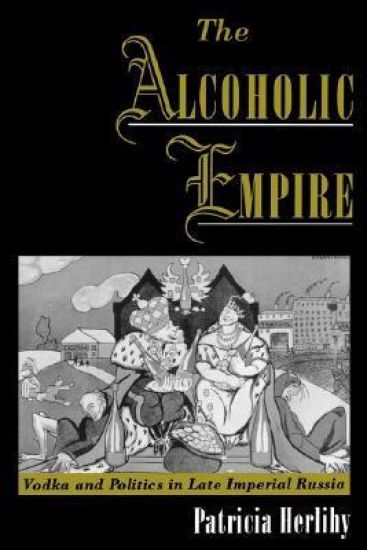
The Alcoholic Empire examines the prevalance of alcohol in Russian social, economic, religious, and political life. Herlihy looks at how the state, the church, the military, doctors, lay societies, and the czar all tried to battle the problem of overconsumption of alcohol in the late imperial period. Since vodka produced essential government revenue and was a backbone of the state economy, many who fought for a sober Russia believed that the only way to save the country was through Revolutionary change. This book traces temperance activity and politics side by side with the end of the tsarist regime, while showing how the problem of alcoholism continued to pervade Soviet and post-Soviet society. Illustrated by timeless and incisive sayings about the Russian love of vodka and by poster art and paintings, this book will appeal to Russian and European historians and those interested in temperance history.
The Alcoholic Empire examines the prevalence of alcohol in Russian social, economic, religious, and political life. Herlihy looks at how the state, the church, the military, doctors, lay societies, and the czar all tried to battle the problem of overconsumption of alcohol in the late imperial period. Since vodka produced essential government revenue and was a backbone of the state economy, many who fought for a sober Russia believed that the only way to save the country through Revolutionary change. This book traces temperance activity and politics side by side with the end of the tsarist regime, while showing how the problem of alcohoism continued to pervade Soviet and post-Soviet society. Illustrated by timeless and incisive sayings about the Russian love of vodka and by poster art and paintings, this book will appeal to Russian and European historians and those interested in temperance history.
In this pathbreaking study, Patricial Bonomi argues that religion was as instrumental as either politics or the economy in shaping early American life and values. Looking at the middle and southern colonies as well as at Puritan New England, Bonomi finds an abundance of religious vitality through the colonial years among clergy and churchgoers of diverse religious backgrounds. The book also explores the tightening relationship between religion and politics and illuminates the vital role religion played in the American Revolution. A perennial backlist title first published in 1986, this updated edition includes a new preface on research in the field on African Americans, Indians, women, and the Great Awakening, and Atlantic history and how these impact her interpretations.
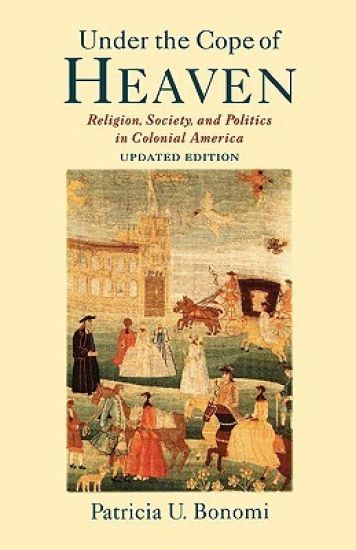
In this pathbreaking study, Patricia Bonomi argues that religion was as instrumental as either politics or the economy in shaping early American life and values. Looking at the middle and southern colonies as well as at Puritan New England, Bonomi finds an abundance of religious vitality through the colonial years among clergy and churchgoers of diverse religious background. The book also explores the tightening relationship between religion and politics and illuminates the vital role religion played in the American Revolution. A perennial backlist title first published in 1986, this updated edition includes a new preface on research in the field on African Americans, Indians, women, the Great Awakening, and Atlantic history and how these impact her interpretations.
Documentary film can encompass anything from Robert Flaherty's pioneering ethnography Nanook of the North to Michael Moore's anti-Iraq War polemic Fahrenheit 9/11, from Dziga Vertov's artful Soviet propaganda piece Man with a Movie Camera to Luc Jacquet's heart-tugging wildlife epic March of the Penguins. In this concise, crisply written guide, Patricia Aufderheide takes readers along the diverse paths of documentary history and charts the lively, often fierce debates among filmmakers and scholars about the best ways to represent reality and to tell the truths worth telling. Beginning with an overview of the central issues of documentary filmmaking--its definitions and purposes, its forms and founders--Aufderheide focuses on several of its key subgenres, including public affairs films, government propaganda (particularly the works produced during World War II), historical documentaries, and nature films. Her thematic approach allows readers to enter the subject matter through the kinds of films that first attracted them to documentaries, and it permits her to make connections between eras, as well as revealing the ongoing nature of documentary's core controversies involving objectivity, advocacy, and bias. Interwoven throughout are discussions of the ethical and practical considerations that arise with every aspect of documentary production. A particularly useful feature of the book is an appended list of "100 great documentaries" that anyone with a serious interest in the genre should see. Drawing on the author's four decades of experience as a film scholar and critic, this book is the perfect introduction not just for teachers and students but also for all thoughtful filmgoers and for those who aspire to make documentaries themselves. ABOUT THE SERIES: The Very Short Introductions series from Oxford University Press contains hundreds of titles in almost every subject area. These pocket-sized books are the perfect way to get ahead in a new subject quickly. Our expert authors combine facts, analysis, perspective, new ideas, and enthusiasm to make interesting and challenging topics highly readable.
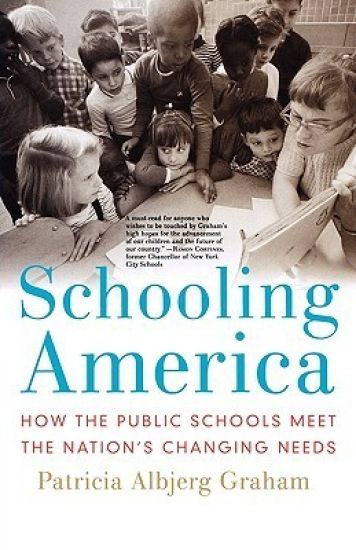
Patricia Graham is one of America's most esteemed historians of education, formerly Dean of Harvard's Graduate School of Education and Director of the National Institute of Education. In this informative volume, Graham offers a vibrant history of American education in the last century. Drawing on a wide array of sources, from government reports to colorful anecdotes, Graham skillfully illustrates Americans' changing demands for our schools, and how schools have responded by providing what critics want, though never as completely or as quickly as they would like. In 1900, as waves of immigrants swept the nation, the American public wanted schools to assimilate students into American life, combining the basics of English and arithmetic with emphasis on patriotism, hard work, fair play and honesty. In the 1920s, the focus shifted from schools serving a national need to serving individual needs; education was to help children adjust to life. By 1954 the emphasis moved to access, particularly for African-American children to desegregated classrooms, but also access to special programs for the gifted, the poor, the disabled, and non-English speakers. Now Americans want achievement for all, defined as higher test scores. The public largely ignored colleges until after World War II when research received international recognition and enrollments grew. Throughout the narrative, we meet the passionate educators, scholars and journalists who drove particular agendas, and we also meet Graham's own family, starting with her immigrant father's first day of school and moving through her experiences as a teacher. Invaluable background in the ongoing debate on education in the United States, this book offers an insightful look at what the public has sought from its educational institutions, what educators have delivered, and what remains to be done.
Evaluation of Competence to Stand Trial
Patricia Zapf; Ronald Roesch
Oxford University Press Inc
2008
nidottu
Forensic mental health assessment (FMHA) has grown into a specialization informed by research and professional guidelines. This series presents up-to-date information on the most important and frequently conducted forms of FMHA. The 19 topical volumes address best approaches to practice for particular types of evaluation in the criminal, civil, and juvenile/family areas. Each volume contains a thorough discussion of the relevant legal and psychological concepts, followed by a step-by-step description of the assessment process from preparing for the evaluation to writing the report and testifying in court. Volumes include the following helpful features: - Boxes that zero in on important information for use in evaluations - Tips for best practice and cautions against common pitfalls - Highlighting of relevant case law and statutes - Separate list of assessment tools for easy reference - Helpful glossary of key terms for the particular topic In making recommendations for best practice, authors consider empirical support, legal relevance, and consistency with ethical and professional standards. These volumes offer invaluable guidance for anyone involved in conducting or using forensic evaluations.
Although Berg decided immediately after seeing Büchner's play Woyzeck in May 1914 to set it to music, he did not complete his opera until 1922, with the Berlin premiere taking place in 1925. Berg's Wozzeck traces the composer's slow but determined progress. Using compositional sketches, diaries, notebooks and other archival material, author Patricia Hall reveals the challenges Berg faced—from his induction as a soldier in World War I, to the hyper-inflation of the twenties. In addition to the precise chronology of the opera, the sketches show how Berg derived large-scale form from the Büchner text, and how his compositional style evolved during the nine years in which he composed the opera. A comprehensive visual database on the book's companion website of the extant sketches from seven archives in the United States, Germany and Austria allows the reader to examine, for the first time, Berg's sketches in high resolution color scans.