Kirjojen hintavertailu. Mukana 11 717 486 kirjaa ja 12 kauppaa.

Kirjahaku

Etsi kirjoja tekijän nimen, kirjan nimen tai ISBN:n perusteella.

1000 tulosta hakusanalla Paul Tengesdal

Paul as Missionary

Paul as Missionary

T. T.Clark Ltd
2012
nidottu
Paul as Missionary: Identity, Activity, Theology and Practice takes the view that before anything else Paul must first and foremost be identified as a missionary. Using the entire Pauline corpus the contributors to this volume assess what Paul's correspondence can tell us about how he perceived his role and identity. The work comprises four parts: in section one, Paul's identity as priest, eschatological herald, and missionary-pastor are explored while in part two topics such as the apostle's activity among pagans, his suffering, and Paul's missionary message; to the church at Rome are considered. Section three comprises essays on the Spirit as the governing dynamic, the glory of God as the apostles missionary goal, and the importance of Paul's Christology in shaping his mission to the Gentiles. Finally, part four addresses Paul's missionary praxis, including his support of his missionary enterprise.
Paul as Missionary

Paul as Missionary

T. T.Clark Ltd
2011
sidottu
Paul as Missionary: Identity, Activity, Theology and Practice takes the view that before anything else Paul must first and foremost be identified as a missionary. Using the entire Pauline corpus the contributors to this volume assess what Paul's correspondence can tell us about how he perceived his role and identity. The work comprises four parts: in section one, Pauls identity as priest, eschatological herald, and missionary-pastor are explored while in part two topics such as the apostle's activity among pagans, his suffering, and Pauls missionary message; to the church at Rome are considered. Section three comprises essays on the Spirit as the governing dynamic, the glory of God as the apostles missionary goal, and the importance of Pauls Christology in shaping his mission to the Gentiles. Finally, part four addresses Pauls missionary praxis, including his support of his missionary enterprise.
Paul and the Dynamics of Power

Paul and the Dynamics of Power

Kathy Ehrensperger

T. T.Clark Ltd
2009
nidottu
In this illuminating study Kathy Ehrensperger looks at the question of Paul's use of power and authority as an apostle who understands himself as called to proclaim the Gospel among the gentiles. Ehrensperger examines the broad range of perspectives on how this use of power should be evaluated. These range from the traditional interpretation of unquestioned, taken for granted for a church leader, to a feminist interpretation. She examines whether or not Paul's use of power presents an open or hidden re-inscription of hierarchical structures in what was previously a discipleship of equals. Paul and the Dynamics of Power questions whether such hierarchical tendencies are rightly identified within Paul's discourse of power. Furthermore it considers whether these are inherently and necessarily expressions of domination and control and are thus in opposition to a 'discipleship of equals'? In her careful analysis Ehrensperger draws on such wide-ranging figures as Derrida, Michel Foucault and James Scott. This enables fresh insights into Paul's use of authority and power in its first century context.
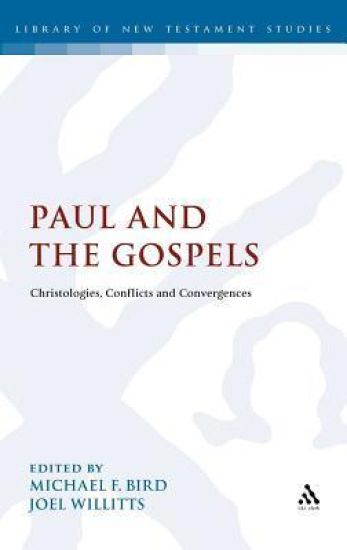
Paul and the Gospels

Paul and the Gospels

T. T.Clark Ltd
2011
sidottu
This volume, which collects together the work of several established scholars attempts to situate the Apostle Paul, the Pauline writings, and the earliest Christian Gospels together in the context of early Christianity. It addresses the issue of how the Christianity depicted in and represented by the individual Gospels relates to the vision of Christianity represented by Paul and the Pauline writings.This raises such questions as to what extent did Paul influence the canonical and non-canonical Gospels? In what way are the Gospels reactions to Paul and his legacy? A comparison of the Gospels and Paul on topics such as Old Testament Law, Gentile mission, Christology, and early church leadership structures represents a fruitful area of study. While a number of volumes have appeared that attempt to assess the relationship between the historical Jesus and the Apostle Paul relatively few studies on Paul and the Gospels have been published. This volume excellently fills this gap in New Testament Studies and makes a valuable contribution to studies on Christian Origins, Pauline research, and the Gospels.
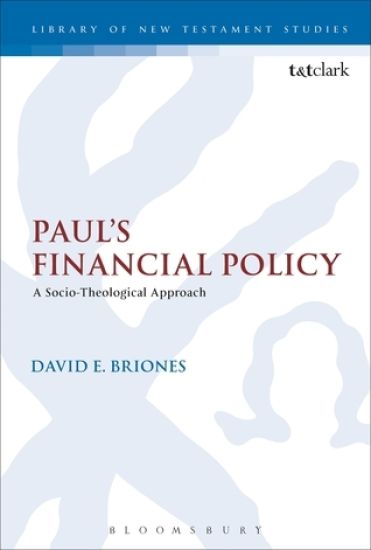
Paul's Financial Policy

Paul's Financial Policy

David E. Briones

T. T.Clark Ltd
2013
sidottu
This book attempts to prove the consistent nature of Paul's financial policy by drawing from his social environment and theological convictions to tease out a three-way relational pattern with God as the source of all possessions. This three-way relational framework not only dictates Paul's decision to accept or reject finances from his churches but also directly challenges long-standing claims made about Paul's financial policy. After outlining the various approaches that scholars have taken to make sense of Paul's seemingly inconsistent financial policy, this book provides a close exegetical analysis of relevant passages in Philippians, 1 Corinthians, and 2 Corinthians in order to unearth a three-way relational pattern found in Philippians but that is absent from the Corinthian Correspondence. In Paul's positive gift-exchange relationship with the Philippians, God is acknowledged as the source of all possessions, whereas the Corinthians are criticized for striving after two-way exchanges that result in honor, power, and prestige.After this is demonstrated, a socio-theological reason for Paul's refusal of Corinthian gifts is propounded. Paul refused Corinthian support, not because they desired to patronise him as a dependent client, but because they sought to be under Paul as their superior, an act that neglected God as the superior source of all gifts in the divine economy. Paul therefore refuses their support to avoid two-way relationships of gift so prevalent in ancient society and to underscore the source of the gift of the gospel, the one from whom and through whom and to whom are all things - God.
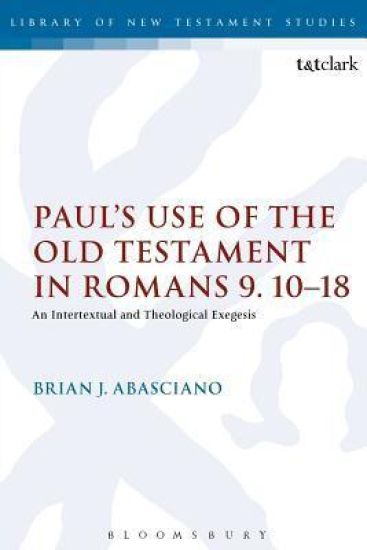
Paul's Use of the Old Testament in Romans 9.10-18

Paul's Use of the Old Testament in Romans 9.10-18

Brian J. Abasciano

T. T.Clark Ltd
2012
nidottu
Abasciano builds upon his previous LNTS volume, Paul's Use of the Old Testament in Romans 9.1-9, continuing the project begun in that volume and its intertextual methodology. This method incorporates a thorough traditional exegesis into a comprehensive analysis of Paul's use of Scripture, set against the background of interpretive traditions which surround the texts alluded to. Great emphasis is placed on analyzing the original contexts of Paul's citations and allusions. Such an intertextual exegesis is conducted in Romans 9:10-18, with an awareness of the broader unit of chapters 9-11 especially, and the epistle as a whole. Conclusions for the meaning of these passages and their theological significance are thence drawn.
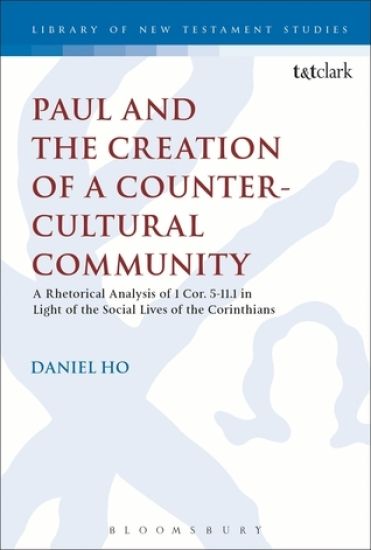
Paul and the Creation of a Counter-Cultural Community
This study offers a new interpretation of 1 Corinthians 5—11:1. Taking a social identity approach, Ho investigates the inner logic of Paul from the ears of the Corinthian correspondence. Ho argues that Paul consistently indoctrinates new values for the audience to uphold which are against the mainstream of social values in the surrounding society. It is shown that Paul does not engage in issues of internal schism per se, but rather in the question of the distinctive values insiders should uphold so as to be recognisable to outsiders. While church is neither a sectarian nor an accommodating community, it should maintain constant social contact with outsiders so as to bring the gospel of Christ to them. In addition, insiders should practice radical values that could challenge the existing shared social values prevalent in the urban city of Corinth. These new values are based mainly on Scripture, ancient Jewish literature and the new social identity of the church defined by Jesus Christ. This fresh interpretation renders the logical flow, unitary design and coherence of 1 Cor 5 -11.1 more apparent.
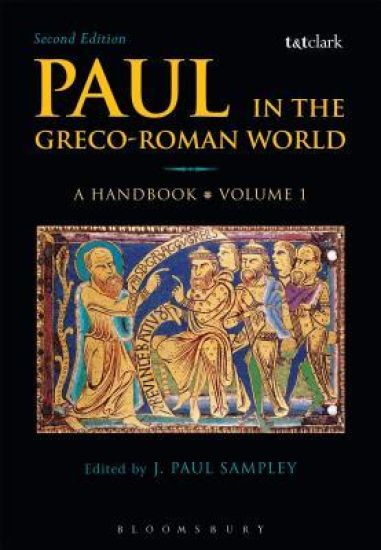
Paul in the Greco-Roman World: A Handbook
This landmark handbook, written by distinguished Pauline scholars, and first published in 2003, remains the first and only work to offer lucid and insightful examinations of Paul and his world in such depth. Together the two volumes that constitute the handbook in its much revised form provide a comprehensive reference resource for new testament scholars looking to understand the classical world in which Paul lived and work. Each chapter provides an overview of a particular social convention, literary of rhetorical topos, social practice, or cultural mores of the world in which Paul and his audiences were at home. In addition, the sections use carefully chosen examples to demonstrate how particularly features of Greco-Roman culture shed light on Paul's letters and on his readers' possible perception of them. For the new edition all the contributions have been fully revised to take into account the last ten years of methodological change and the helpful chapter bibliographies fully updated. Wholly new chapters cover such issues as Paul and Memory, Paul's Economics, honor and shame in Paul's writings and the Greek novel.
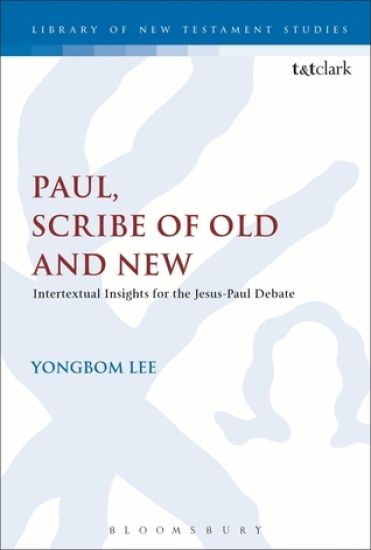
Paul, Scribe of Old and New

Paul, Scribe of Old and New

Yongbom Lee

T. T.Clark Ltd
2015
sidottu
In this study Yongbom Lee re-examines the old Jesus-Paul debate with insights from current studies on intertextuality in Paul. Lee identifies Paul’s typical ways of handling authoritative traditions in a number of cases providing a set of expectations as to how his use of them elsewhere might look. Lee begins by investigating the use of the Scriptures in the Rule of the Community and the Damascus Document. He then examines five cases of Paul’s use of the Scriptures and contemporary Jewish exegetical traditions and three cases of his use of the Jesus tradition. Despite the skepticism concerning Paul’s knowledge and appreciation of the Jesus tradition, the fact that his use of the Jesus tradition is similar to that of the Scriptures and contemporary Jewish exegetical traditions—with respect to its presumption of authority, various citation methods, and its creative application to the situation of his readers—provides the evidence for its importance to him.
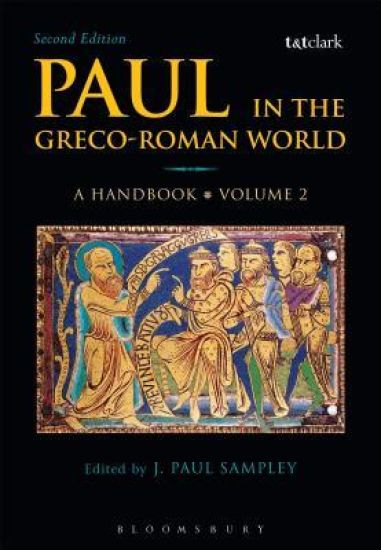
Paul in the Greco-Roman World: A Handbook

Paul in the Greco-Roman World: A Handbook

J. Paul Sampley

T. T.Clark Ltd
2016
sidottu
This landmark handbook, written by distinguished Pauline scholars, and first published in 2003, remains the first and only work to offer lucid and insightful examinations of Paul and his world in such depth. Together the two volumes that constitute the handbook in its much revised form provide a comprehensive reference resource for new testament scholars looking to understand the classical world in which Paul lived and work. Each chapter provides an overview of a particular social convention, literary of rhetorical topos, social practice, or cultural mores of the world in which Paul and his audiences were at home. In addition, the sections use carefully chosen examples to demonstrate how particularly features of Greco-Roman culture shed light on Paul's letters and on his readers' possible perception of them. For the new edition all the contributions have been fully revised to take into account the last ten years of methodological change and the helpful chapter bibliographies fully updated. Wholly new chapters cover such issues as Paul and Memory, Paul's Economics, honor and shame in Paul's writings and the Greek novel.
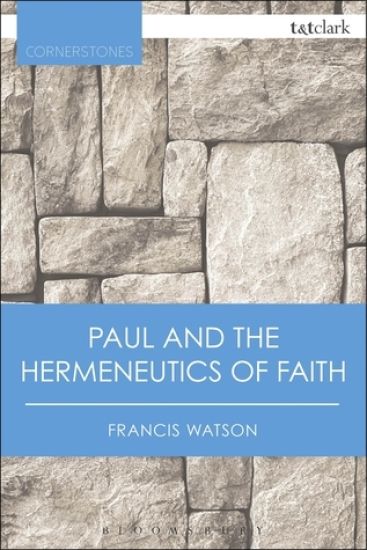
Paul and the Hermeneutics of Faith

Paul and the Hermeneutics of Faith

Francis Watson

T. T.Clark Ltd
2015
nidottu
In recent years, scholars from both Christian and Jewish backgrounds have tried to rethink the relationship between earliest Christianity and its Jewish milieu; and Paul has emerged as a central figure in this debate. Francis Watson contributes to this scholarly discussion by seeing Paul and his Jewish contemporaries as, above all, readers of scripture. However different the conclusions they draw, they all endeavour to make sense of the same normative scriptural texts - in the belief that, as they interpret the scriptural texts, the texts will themselves interpret and illuminate the world of contemporary experience. In that sense, Paul and his contemporaries are standing on common ground. Far from relativizing their differences, however, it is this common ground that makes such differences possible. In this new edition Watson provides a comprehensive new introduction entitled 'A Response to My Critics' in which he directly engages with the critics of the previous edition. There is a substantial new Preface and two new Appendices, and the text has been fully revised throughout.
Paul and the Greco-Roman Philosophical Tradition
Paul and the Greco-Roman Philosophical Tradition provides a fresh examination of the relationship of Greco-Roman philosophy to Pauline Christianity. It offers an in-depth look at different approaches employed by scholars who draw upon philosophical settings in the ancient world to inform their understanding of Paul. The volume houses an international team of scholars from a range of diverse traditions and backgrounds, which opens up a platform for multiple voices from various corridors. Consequently, some of the chapters seek to establish new potential resonances with Paul and the Greco-Roman philosophical tradition, but others question such connections. While a number of them propose radically new relationships between Paul and GrecoRoman philosophy, a few seek to tweak or modulate current discussions. There are arguments in the volume which are more technical and exegetical, and others that remain more synthetic and theological. This diversity, however, is accentuated by a goal shared by each author – to further our understanding of Paul’s relationship to and appropriation of Greco-Roman philosophical traditions in his literary and missionary efforts.
Paul at the Crossroads of Cultures

Paul at the Crossroads of Cultures

Kathy Ehrensperger

T. T.Clark Ltd
2015
nidottu
Based on recent studies in intercultural communication Kathy Ehrensperger applies the paradigm of multilingualism, which includes the recognition of cultural distinctiveness, to the study of Paul. Paul’s role as apostle to the nations is seen as the role of a go-between – as that of cultural translator. This role requires that he is fully embedded in his own tradition but must also be able to appreciate and understand aspects of gentile culture. Paul is viewed as involved in a process in which the meaning of the Christ event is being negotiated ‘in the space between’ cultures, with their diverse cultural coding systems and cultural encyclopaedias. It is argued that this is not a process of imposing Jewish culture on gentiles at the expense of gentile identity, nor is it a process of eradication of Jewish identity. Rather, Paul’s theologizing in the space between implies the task of negotiating the meaning of the Christ event in relation to, and in appreciation of both, Jewish and gentile identity.
Paul's Financial Policy

Paul's Financial Policy

David E. Briones

T. T.Clark Ltd
2015
nidottu
This book attempts to prove the consistent nature of Paul's financial policy by drawing from his social environment and theological convictions to tease out a three-way relational pattern with God as the source of all possessions. This three-way relational framework not only dictates Paul's decision to accept or reject finances from his churches but also directly challenges long-standing claims made about Paul's financial policy. After outlining the various approaches that scholars have taken to make sense of Paul's seemingly inconsistent financial policy, this book provides a close exegetical analysis of relevant passages in Philippians, 1 Corinthians, and 2 Corinthians in order to unearth a three-way relational pattern found in Philippians but that is absent from the Corinthian Correspondence. In Paul's positive gift-exchange relationship with the Philippians, God is acknowledged as the source of all possessions, whereas the Corinthians are criticized for striving after two-way exchanges that result in honor, power, and prestige.After this is demonstrated, a socio-theological reason for Paul's refusal of Corinthian gifts is propounded. Paul refused Corinthian support, not because they desired to patronise him as a dependent client, but because they sought to be under Paul as their superior, an act that neglected God as the superior source of all gifts in the divine economy. Paul therefore refuses their support to avoid two-way relationships of gift so prevalent in ancient society and to underscore the source of the gift of the gospel, the one from whom and through whom and to whom are all things - God.
Paul's 'Spirit of Adoption' in its Roman Imperial Context
Robert Lewis examines Paul’s use of the phrase “Spirit of Adoption” in Romans 8:12-17 against the background of its Roman Imperial context in order to shed light on interpretation of Paul's Letter to the Romans. Whereas other scholars have explored what Paul may have meant when he uses the term “adoption” Lewis instead explores the reasons behind Paul's coupling of it with the term “spirit”. Having examined theories for a possible Jewish antecedent for Paul’s use of this phrase, and found them less than persuasive, Lewis unlocks the data within the term's Roman Imperial context that significantly clarifies what Paul means when he uses the phrase “Spirit of adoption". Lewis shows that when Paul wrote his letter to the Romans, adoption had become a feature of Imperial succession. Roman religion gave a great deal of prominence to the Roman family spirit - the genius. The Emperor’s genius became identified as a deity in Roman religion and its veneration was widespread in Rome as well as the provinces. When Romans 8.12-17 is read against this background, a very different kind of exegetical picture emerges.
Paul Among the Apocalypses?

Paul Among the Apocalypses?

J. P. Davies

T. T.Clark Ltd
2016
sidottu
A vibrant and growing field of discussion in contemporary New Testament studies is the question of ‘apocalyptic’ thought in Paul. What is often lacking in this discussion, however, is a close comparison of Paul’s would-be apocalyptic theology with the Jewish and Christian apocalyptic literature of his time, and the worldview that literature expresses. This book addresses that challenge. Covering four key theological themes (epistemology, eschatology, cosmology and soteriology), J. P. Davies places Paul ‘among the apocalypses’ in order to evaluate recent attempts at outlining an ‘apocalyptic’ approach to his letters. While affirming much of what those approaches have argued, and agreeing that ‘apocalyptic’ is a crucial category for an understanding of the apostle, Davies also raises some important questions about the dichotomies which lie at the heart of the ‘apocalyptic Paul’ movement.
Paul's Large Letters

Paul's Large Letters

Steve Reece

T. T.Clark Ltd
2016
sidottu
At the end of several of his letters the apostle Paul claims to be penning a summary and farewell greeting in his own hand: 1 Corinthians, Galatians, Philemon, cf. Colossians, 2 Thessalonians. Paul’s claims raise some interesting questions about his letter-writing practices. Did he write any complete letters himself, or did he always dictate to a scribe? How much did his scribes contribute to the composition of his letters? Did Paul make the effort to proofread and correct what he had dictated? What was the purpose of Paul's autographic subscriptions? What was Paul's purpose in calling attention to their autographic nature? Why did Paul write in large letters in the subscription of his letter to the Galatians? Why did he call attention to this peculiarity of his handwriting?A good source of answers to these questions can be found among the primary documents that have survived from around the time of Paul, a large number of which have been discovered over the past two centuries and in fact continue to be discovered to this day. From around the time of Paul there are extant several dozen letters from the caves and refuges in the desert of eastern Judaea (in Hebrew, Aramaic, Nabataean, Greek, and Latin), several hundred from the remains of a Roman military camp in Vindolanda in northern England (in Latin), and several thousand from the sands of Middle and Upper Egypt (in Greek, Latin, and Egyptian Demotic). Reece has examined almost all these documents, many of them unpublished and rarely read, with special attention to their handwriting styles, in order to shed some light on these technical aspects of Paul's letter-writing conventions.
Paul, Scribe of Old and New

Paul, Scribe of Old and New

Yongbom Lee

T. T.Clark Ltd
2016
nidottu
In this study Yongbom Lee re-examines the old Jesus-Paul debate with insights from current studies on intertextuality in Paul. Lee identifies Paul’s typical ways of handling authoritative traditions in a number of cases providing a set of expectations as to how his use of them elsewhere might look. Lee begins by investigating the use of the Scriptures in the Rule of the Community and the Damascus Document. He then examines five cases of Paul’s use of the Scriptures and contemporary Jewish exegetical traditions and three cases of his use of the Jesus tradition. Despite the skepticism concerning Paul’s knowledge and appreciation of the Jesus tradition, the fact that his use of the Jesus tradition is similar to that of the Scriptures and contemporary Jewish exegetical traditions—with respect to its presumption of authority, various citation methods, and its creative application to the situation of his readers—provides the evidence for its importance to him.
Paul and the Creation of a Counter-Cultural Community
This study offers a new interpretation of 1 Corinthians 5—11:1. Taking a social identity approach, Ho investigates the inner logic of Paul from the ears of the Corinthian correspondence. Ho argues that Paul consistently indoctrinates new values for the audience to uphold which are against the mainstream of social values in the surrounding society. It is shown that Paul does not engage in issues of internal schism per se, but rather in the question of the distinctive values insiders should uphold so as to be recognisable to outsiders. While church is neither a sectarian nor an accommodating community, it should maintain constant social contact with outsiders so as to bring the gospel of Christ to them. In addition, insiders should practice radical values that could challenge the existing shared social values prevalent in the urban city of Corinth. These new values are based mainly on Scripture, ancient Jewish literature and the new social identity of the church defined by Jesus Christ. This fresh interpretation renders the logical flow, unitary design and coherence of 1 Cor 5 -11.1 more apparent.
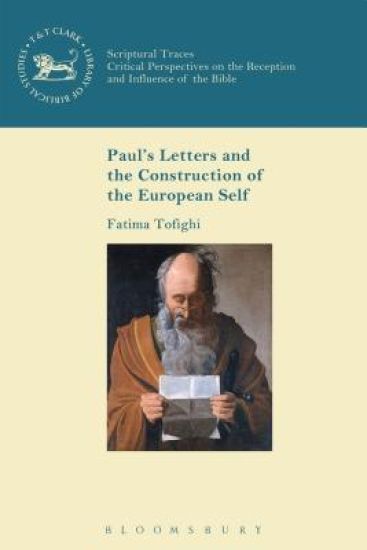
Paul's Letters and the Construction of the European Self
Even when he was a prototype of European identity, Paul transgressed the limits of Europe. It is not clear whether he was conformist or rebellious, orthodox or liberal, sexist, or egalitarian. Instead of pushing the Apostle into the arbitrary categories of modern European identity, Fatima Tofighi takes into account the challenge that Paul brings to normative conceptions of political theology (Rom 13), 'religion' (Gal 2.12-14), and women's veiling (1 Cor 11. 5-16). Alternative interpretations of these passages, with the help of postmodern theory, both solve the major problems of biblical exegesis and offer a critique of the allegedly well-defined European categories.