Kirjahaku
Etsi kirjoja tekijän nimen, kirjan nimen tai ISBN:n perusteella.
1000 tulosta hakusanalla Peter J Fast
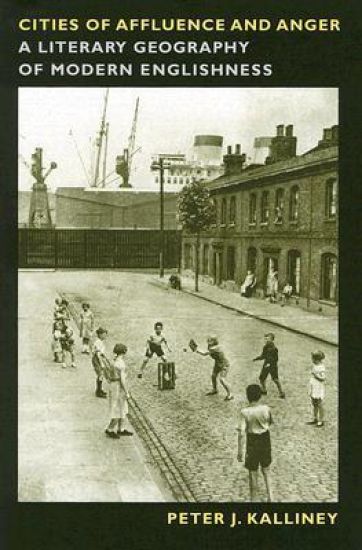
Providing a compact literary history of the twentieth century in England, ""Cities of Affluence and Anger"" studies the problematic terms of national identity during England's transition from an imperial power to its integration in the global cultural marketplace. While the countryside had been the dominant symbol of Englishness throughout the previous century, modern literature began to turn more and more to the city to redraw the boundaries of a contemporary cultural polity. The urban class system, paradoxically, still functioned as a marker of wealth, status, and hierarchy throughout this long period of self-examination, but it also became a way to project a common culture and mitigate other forms of difference. Local class politics were transformed in such a way that enabled the English to reframe a highly provisional national unity in the context of imperial disintegration, postcolonial immigration, and, later, globalization. Kalliney plots the decline of the country-house novel through an analysis of Forster's ""Howards End"" and Waugh's ""Brideshead Revisited"", each ruthless in its sabotage of the trope of bucolic harmony. The traditionally pastoral focus of English fiction gives way to a high-modernist urban narrative, exemplified by Woolf's ""Mrs. Dalloway"", and, later, to realists such as Osborne and Sillitoe, through whose work Kalliney explores postwar urban expansion and the cultural politics of the welfare state. Offering fresh new readings of Lessing's ""The Golden Notebook"" and Rushdie's ""The Satanic Verses"", the author considers the postwar appropriation of domesticity, the emergence of postcolonial literature, and the renovation of travel narratives in the context of globalization. Kalliney suggests that it is largely one city - London - through which national identity has been reframed. How and why this transition came about is a process that ""Cities of Affluence and Anger"" depicts with exceptional insight and originality.
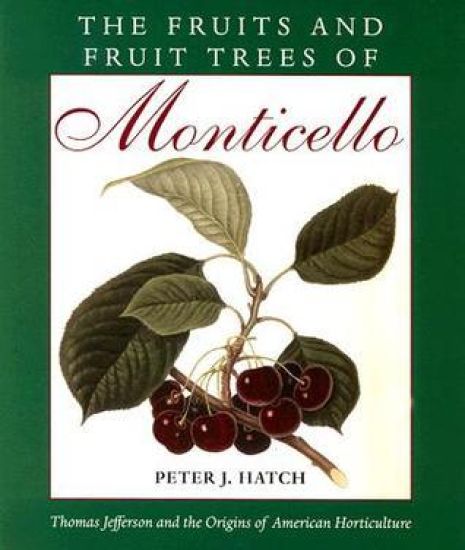
Presents a detailed history of Jefferson's gardens and their re-creation.
The essential collection on the psychiatric phenomenon Since Freud's first mention of object relations in his seminal paper Three Essays on the Theory of Sexuality, analysts have been arguing about its role in the psychological development and mental life of individuals. Essential Papers on Object Relations gathers together the critical papers by major figures in the field. Reflecting the changes and conflicts over the past hundred years, the volume includes the work of key scholars as they attempt to define, delineate, and describe object relations theory. It includes work by: Sigmund Freud, Melanie Klein, Arnold H. Modell, W. R. D. Fairbairn, Jacob A. Arlow, Annie Reich, John Bowlby, Margaret S. Mahler, Harry Guntrip, D. W. Winnicott, Joseph Sandler and Anne-Marie Sandler, Otto Kernberg, T. F. Main, Edith Jacobson, and Hans W. Loewald. The book, which includes explanatory introductions to each part, is an invaluable resource for those seeking a thorough examination of object relations theory and the classical and contemporary work of major analytic thinkers. y.
Addresses one of the most pressing issues of international political economy Conventional wisdom has it that government management of the economy is the means to transform a backward economy into a dynamic, modern one. Yet, after decades of international aid programs, development planning is today largely perceived as a failure paralyzed by its own bureaucracy and inefficiency. Despite billions of dollars of investment, development successes are few and far between and waste and mismanagement abounds. This book showcases a diverse range of development experiences in order to ascertain the reasons for this quagmire. Case studies of development planning in China, India, post-WWII Japan, South Korea, Africa, and Eastern Europe, and of foreign aid programs (including the Marshall Plan) illustrate the insights an Austrian approach provides toward an understanding of the failure of government development planning. While economists working within the Austrian tradition have previously addressed development issues, this volume represents the first full-length treatment of the subject from a modern market process perspective. Exploding the hegemony of the traditional development paradigm, The Collapse of Development Planning addresses one of the most pressing issues of international political economy. Contributing to the volume are: George Ayittey (American University), Wayne T. Brough (Citizens for a Sound Economy, Washington, DC), Young Back Choi (St. John's University), Steven Hanke (Johns Hopkins University), Steve Horwitz (St. Lawrence University), Shyam J. Kamath (California State University, Hayward), Shigeto Naka (Hiroshima City University), David Osterfeld (St. Joseph's College), Manisha Perera (University of Northern Colorado), Jan S. Prybyla (Pennsylvania State University), Ralph Raico (State University College, Buffalo), Parth Shah (University of Michigan, Dearborn), Kurt Schuller (Johns Hopkins University), Kiyokazu Tanaka (Sophia University, Tokyo), and Mark Thorton (Auburn University).
Japan's legal and political system, enshrined in the 1947 Constitution and imposed on the Japanese people without their involvement during the U.S. occupation, is largely alien to its history and culture. Peter Herzog examines the effects of that foreign value system in this detailed and fascinating book, highlighting instances in such areas as the judiciary, human rights, minorities, religion and education, where abuse and exploitation of the law has taken on disturbing proportions at many levels of Japanese public life.
The History of the Riverside Church in the City of New York
Peter J. Paris; John W. Cook; James Hudnut-Beumler; Lawrence Mamiya
New York University Press
2004
sidottu
It was from the pulpit of the Riverside Church that Martin Luther King, Jr., first publicly voiced his opposition to the Vietnam War, that Nelson Mandela addressed U.S. church leaders after his release from prison, and that speakers as diverse as Cesar Chavez, Jesse Jackson, Desmond Tutu, Fidel Castro, and Reinhold Niebuhr lectured church and nation about issues of the day. The greatest of American preachers have served as senior minister, including Harry Emerson Fosdick, Robert J. McCracken, Ernest T. Campbell, William Sloane Coffin, Jr., and James A. Forbes, Jr., and at one time the New York Times printed reports of each Sunday's sermon in its Monday morning edition. For seven decades the church has served as the premier model of Protestant liberalism in the United States. Its history represents the movement from white Protestant hegemony to a multiracial and multiethnic church that has been at the vanguard of social justice advocacy, liberation theologies, gay and lesbian ministries, peace studies, ethnic and racial dialogue, and Jewish-Christian relations. A collaborative effort by a stellar team of scholars, The History of the Riverside Church in the City of New York offers a critical history of this unique institution on Manhattan's Upper West Side, including its cultural impact on New York City and beyond, its outstanding preachers, and its architecture, and assesses the shifting fortunes of religious progressivism in the twentieth century.
Read Peter's Op-ed on Trump's Immigration Ban in The New York Times The rise of dual citizenship could hardly have been imaginable to a time traveler from a hundred or even fifty years ago. Dual nationality was once considered an offense to nature, an abomination on the order of bigamy. It was the stuff of titanic battles between the United States and European sovereigns. As those conflicts dissipated, dual citizenship continued to be an oddity, a condition that, if not quite freakish, was nonetheless vaguely disreputable, a status one could hold but not advertise. Even today, some Americans mistakenly understand dual citizenship to somehow be "illegal", when in fact it is completely tolerated. Only recently has the status largely shed the opprobrium to which it was once attached. At Home in Two Countries charts the history of dual citizenship from strong disfavor to general acceptance. The status has touched many; there are few Americans who do not have someone in their past or present who has held the status, if only unknowingly. The history reflects on the course of the state as an institution at the level of the individual. The state was once a jealous institution, justifiably demanding an exclusive relationship with its members. Today, the state lacks both the capacity and the incentive to suppress the status as citizenship becomes more like other forms of membership. Dual citizenship allows many to formalize sentimental attachments. For others, it's a new way to game the international system. This book explains why dual citizenship was once so reviled, why it is a fact of life after globalization, and why it should be embraced today.
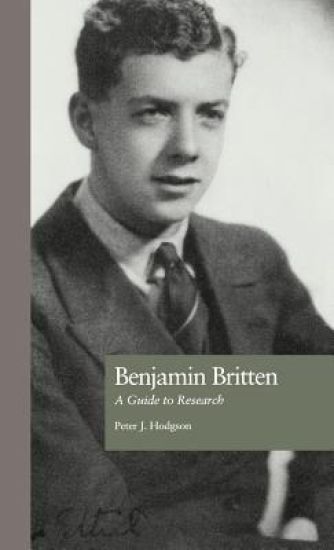
This work constitutes the largest and most comprehensive research guide ever published about Benjamin Britten. Entries survey the most significant published materials relating to the composer, including bibliographies, catalogs, letters and documents, conference reports, biographies, and studies of Britten's music.
The Child Welfare Challenge
Peter J. Pecora; James K. Whittaker; Richard P. Barth; Sharon Borja; William Vesneski
CRC Press Inc
2018
sidottu
Using both historical and contemporary contexts, The Child Welfare Challenge examines major policy practice and research issues as they jointly shape child welfare practice and its future. This text focuses on families and children whose primary recourse to services has been through publicly funded child welfare agencies, and considers historical areas of service—foster care and adoptions, in-home family-centered services, child-protective services, and residential treatment services—where social work has an important role. This fourth edition features new content on child maltreatment and prevention that is informed by key conceptual frameworks informed by brain science, public health, and other research. This edition uses cross-sector data and more sophisticated predictive and other analytical processes to enhance planning and practice design. The authors have streamlined content on child protective services (CPS) to allow for new chapters on juvenile justice/cross-over youth, and international innovations, as well as more content on biology and brain science. The fourth edition includes a glossary of terms as well as instructor and student resource papers available online.
The Child Welfare Challenge
Peter J. Pecora; James K. Whittaker; Richard P. Barth; Sharon Borja; William Vesneski
CRC Press Inc
2018
nidottu
Using both historical and contemporary contexts, The Child Welfare Challenge examines major policy practice and research issues as they jointly shape child welfare practice and its future. This text focuses on families and children whose primary recourse to services has been through publicly funded child welfare agencies, and considers historical areas of service—foster care and adoptions, in-home family-centered services, child-protective services, and residential treatment services—where social work has an important role. This fourth edition features new content on child maltreatment and prevention that is informed by key conceptual frameworks informed by brain science, public health, and other research. This edition uses cross-sector data and more sophisticated predictive and other analytical processes to enhance planning and practice design. The authors have streamlined content on child protective services (CPS) to allow for new chapters on juvenile justice/cross-over youth, and international innovations, as well as more content on biology and brain science. The fourth edition includes a glossary of terms as well as instructor and student resource papers available online.
This text is among the first to reveal the intricacies of an airline’s Operations Control Centre; especially the thought processes, information flows, and strategies taken to mitigate disruptions.Airline Operations Control provides a deep level of description, explanation and detail into the activities of a range of highly professional and expert staff managing the ‘sharp’ end of the airline. It aims to fill a void as little is understood about this area, and very little is written for practitioners in the airline business. The book offers a comprehensive look at the make-up of the Operations Centre, its component sections, and the processes that occur both in preparing for and executing the current day’s schedules. Several chapters provide real-life scenarios and demonstrate how Operations Centres manage evolving situations – what they need to take into account, and how they need to have Plan B and Plan C ready when things don’t go right. This book is designed to deliver knowledge gains to both new and experienced aviation industry practitioners with regards to vital operational aspects. Additionally, it also offers students of air transport management a readily accessible and real-world-perspective guide to a crucial function present within every airline.
The Elements of Inquiry covers the basic guidelines for graduate students doing an investigation or inquiry project. It distils the rubrics necessary for teaching research methods and completing research projects, and gives the student researcher a list of steps to follow to complete any type of inquiry project – including formal research projects such as doctoral dissertations. It was written to support the work of students in an educational leadership doctoral program, but it will also assist the research efforts of college students at any level in any discipline.The book begins by establishing the underlying philosophical concepts upon which all good research is based, preparing students to get down to the "nuts and bolts" of conducting their own research and evaluating the research of others. Fundamental concepts and rules of research are explained both for producers and consumers of social science and educational research. Numerous practical examples illustrate the steps in the research process presented in the text. There are end-of-chapter exercises for students to apply the concepts discussed in the chapter. Templates for organizing and presenting research provide students with a game plan for success with their research. The book ends with an up-to-date annotated bibliography of beginning and advanced research texts allowing students easy access to books that detail the more specialized research topics.While most research books detail one or more method in depth, this text provides a broad introduction to many techniques and models used in doctoral dissertations, and will be of particular value to those who are consumers of inquiry studies and research reports. Key to the overview provided is the annotated bibliography that leads the reader to the next stage of understanding or doing research.
A fascinating look at how the culture of today’s life sciences affects our culture.In laboratories all over the world, life-even the idea of life-is changing. And with these changes, whether they result in square tomatoes or cyborgs, come transformations in our social order-sometimes welcome, sometimes troubling, depending on where we stand. Changing Life offers a close look at how the mutable forms and concepts of life link the processes of science to those of information, finance, and commodities.The contributors, drawn from disciplines within science and technology studies and from geography, ecology, and developmental biology, provide a range of interpretive angles on the metaphors, narratives, models, and practices of the life sciences. Their essays-about planetary management and genome sequencing, ecologies and cyborgs-address actual and imagined transformations at the center and at the margins of transnational relations, during the post-Cold War era and in times to come. They consider such topics as the declining regulatory state, ascendant transnational networks, and capital’s legal reign over intellectual property, life-form patents, and marketable pollution licenses.Changing Life argues that we cannot understand the power of the life sciences in modern society without exploring the intersections of science and technology with other cultural realms. To that end, this book represents a collective attempt to join the insights of science and technology studies and cultural studies. As a work of cultural politics, it makes a contribution to changing life in a context of changing social order. Contributors: Simon Cole, Cornell U; Scott Gilbert, Swarthmore College; Herbert Gottweis, U of Salzburg; YrjÖ Haila, U of Tampere, Finland; Rosaleen Love, Victoria U of Technology, Melbourne, Australia; and Richard A. Schroeder, Rutgers.
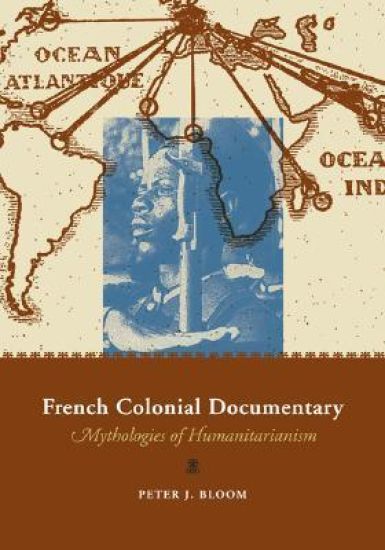
Despite altruistic goals, humanitarianism often propagates foreign, and sometimes unjust, power structures where it is employed. Tracing the visual rhetoric of French colonial humanitarianism, Peter J. Bloom’s unexpected analysis reveals how the project of remaking the colonies in the image of France was integral to its national identity. French Colonial Documentary investigates how the promise of universal citizenship rights in France was projected onto the colonies as a form of evolutionary interventionism. Bloom focuses on the promotion of French education efforts, hygienic reform, and new agricultural techniques in the colonies as a means of renegotiating the social contract between citizens and the state on an international scale. Bloom’s insightful readings disclose the pervasiveness of colonial iconography, including the relationship between “natural man” and colonial subjectivity; representations of the Senegalese Sharpshooters as obedient, brave, and sexualized colonial subjects; and the appeal of exotic adventure narratives in the trans-Saharan film genre.Examining the interconnection between French documentary realism and the colonial enterprise, Bloom demonstrates how the colonial archive is crucial to contemporary debates about multiculturalism in France. Peter J. Bloom is associate professor of film and media studies at the University of California-Santa Barbara.y debates about multiculturalism in France.
Your Teeth was first published in 1941. Minnesota Archive Editions uses digital technology to make long-unavailable books once again accessible, and are published unaltered from the original University of Minnesota Press editions.Are your teeth perfect? If they are, you are one in a hundred, for 99 per cent of the population suffers from some dental disease at some time or other. Caries and pyorrhea are the most widespread diseases of civilized man, more common than the common cold. Despite wide educational efforts, our teeth are worse than they have ever been before.In this popular book Dr. Brekhus reviews virtually all known facts and theories about the teeth of civilized man. Fish teeth five hundred million years old, Stone-Age human skulls, and the increasing number of people born without a complete set of teeth are analyzed. Public health programs of Scandinavia and New Zealand are described.Every dentist and his patients should read this book. A fascinating introduction for dental students; a helpful reference for practitioners with clear, readable answers to hundreds of patients' questions.
The Dynamic Character of Christian Culture
Peter J. Cataldo
University Press of America
1984
sidottu
This collection of essays studies the thought of Christopher Dawson (1889ó1970), the premier Catholic thinker on the subject of Christian culture, and his influence in the West, both past and present. Co-published with the Society for Christian Culture.
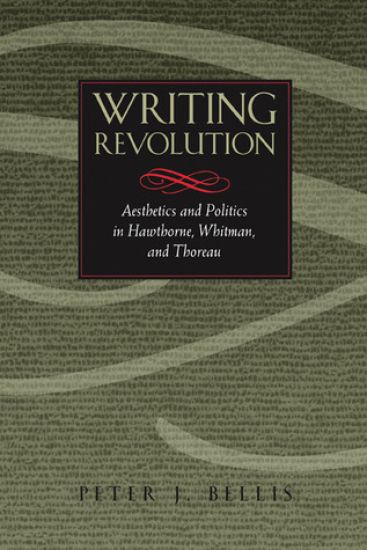
In recent years, formalist and deconstructive approaches to literary studies have been under attack, charged by critics with isolating texts as distinctive aesthetic or linguistic objects, separate from their social and historical contexts. Historicist and cultural approaches have often responded by simply reversing the picture, reducing texts to no more than superstructural effects of historical or ideological forces. In Writing Revolution, Peter J. Bellis explores the ways in which literature can engage with—rather than escape from or obscure—social and political issues.Bellis argues that a number of nineteenth-century American writers, including Nathaniel Hawthorne, Henry David Thoreau, and Walt Whitman, saw their texts as spaces where alternative social and cultural possibilities could be suggested and explored. All writing in the same historical moment, Bellis's subjects were responding to the same cluster of issues: the need to redefine American identity after the Revolution, the problem of race slavery, and the growing industrialization of American society.Hawthorne, Bellis contends, sees the romance as "neutral territory" where the Imaginary and the Actual—the aesthetic and the historical—can interpenetrate and address crucial issues of class, race, and technological modernity. Whitman conceives of Leaves of Grass as a transformative democratic space where all forms of meditation, both political and literary, are swept away. Thoreau oscillates between these two approaches. Walden, like the romance, aims to fashion a mediating space between nature and society. His abolitionist essays, however, shift sharply away from both linguistic representation and the political, toward an apocalyptic cleansing violence.In addition to covering selected works by Hawthorne, Whitman, and Thoreau, Bellis also examines powerful works of social and political critique by Louisa May Alcott and Margaret Fuller. With its suggestions for new ways of reading antebellum American writing, Writing Revolution breaks through the thickets of contemporary literary discourse and will spark debate in the literary community.