Kirjojen hintavertailu. Mukana 12 083 983 kirjaa ja 12 kauppaa.

Kirjahaku

Etsi kirjoja tekijän nimen, kirjan nimen tai ISBN:n perusteella.

1000 tulosta hakusanalla Philip W. Cook

A Soldier's Silent Prayer: The Survival Story of Phillip W. Coon
Phillip W. Coon's life is an incredible journey - one that took him from a small Indian community near Mason, Oklahoma in the 1920s to the world stage as the United States declared war againstGermany and Japan in December 1941. Phillip's story is a tale of tragedy and triumph as he overcame insurmountable odds to survive the Bataan Death March and three-and-a-half yearsas a prisoner of war during World War II.
Peter Lombard

Peter Lombard

Philipp W. Rosemann

Oxford University Press Inc
2004
sidottu
Peter Lombard is best known as the author of a celebrated work entitled Book of Sentences, which for several centuries served as the standard theological textbook in the Christian West. It was the subject of more commentaries than any other work of Christian literature besides the Bible itself. The Book of Sentences is essentially a compilation of older sources, from the Scriptures and Augustine down to several of the Lombard's contemporaries, such as Hugh of Saint Victor and Peter Abelard. Its importance lies in the Lombard's organisation of the theological material, his method of presentation, and the way in which he shaped doctrine in several major areas. Despite his importance, however, there is no accessible introduction to Peter Lombard's life and thought available in any modern language. This volume fills this considerable gap. Philipp W. Rosemann begins by demonstrating how the Book of Sentences grew out of a long tradition of Christian reflection-a tradition, ultimately rooted in Scripture, which by the twelfth century had become ready to transform itself into a theological system. Turning to the Sentences , Rosemann then offers a brief exposition of the Lombard's life and work. He proceeds to a book-by-book examination and interpretation of its main topics, including the nature and attributes of God, the Trinity, creation, angelology, human nature and the Fall, original sin, Christology, ethics, and the sacraments. He concludes by exploring how the Sentences helped shape the further development of the Christian tradition, from the twelfth century through the time of Martin Luther.
Peter Lombard

Peter Lombard

Philipp W. Rosemann

Oxford University Press Inc
2004
nidottu
Peter Lombard is best known as the author of a celebrated work entitled Book of Sentences, which for several centuries served as the standard theological textbook in the Christian West. It was the subject of more commentaries than any other work of Christian literature besides the Bible itself. The Book of Sentences is essentially a compilation of older sources, from the Scriptures and Augustine down to several of the Lombard's contemporaries, such as Hugh of Saint Victor and Peter Abelard. Its importance lies in the Lombard's organisation of the theological material, his method of presentation, and the way in which he shaped doctrine in several major areas. Despite his importance, however, there is no accessible introduction to Peter Lombard's life and thought available in any modern language. This volume fills this considerable gap. Philipp W. Rosemann begins by demonstrating how the Book of Sentences grew out of a long tradition of Christian reflection-a tradition, ultimately rooted in Scripture, which by the twelfth century had become ready to transform itself into a theological system. Turning to the Sentences , Rosemann then offers a brief exposition of the Lombard's life and work. He proceeds to a book-by-book examination and interpretation of its main topics, including the nature and attributes of God, the Trinity, creation, angelology, human nature and the Fall, original sin, Christology, ethics, and the sacraments. He concludes by exploring how the Sentences helped shape the further development of the Christian tradition, from the twelfth century through the time of Martin Luther.
Vanguardism

Vanguardism

Phillip W. Gray

Routledge
2019
sidottu
Providing an innovative conceptualization to extremist political movements founded upon "world-historic" populations and vanguard party organizations, Vanguardism sets out a new path in investigating the intellectual and historical influences that created extremist politics, the totalitarian movements and regimes of the twentieth century, and a framework for interpreting extremism in the present. Expanding its view across the turbulent intellectual currents of the nineteenth century, Philip W. Gray illustrates how these ideas shaped the shared ideational and organizational structures that would develop into Leninism, Fascism, and Nazism in the early twentieth century. Moving beyond the Second World War, the book explicates how vanguardism did not vanish with the war’s conclusion, but was modified throughout the period of national liberation movements and Western extremist groups over the ensuing decades. Concluding in the present with an eye to the future, Gray presents a framework for comprehending the extremist movement of today, and how organizational shifts can give us clues to the forms of totalitarian politics of tomorrow.Original and provocative, Vanguardism will become essential reading for everyone looking to understand totalitarianism and extremist politics of our time.
Vanguardism

Vanguardism

Phillip W. Gray

Routledge
2019
nidottu
Providing an innovative conceptualization to extremist political movements founded upon "world-historic" populations and vanguard party organizations, Vanguardism sets out a new path in investigating the intellectual and historical influences that created extremist politics, the totalitarian movements and regimes of the twentieth century, and a framework for interpreting extremism in the present. Expanding its view across the turbulent intellectual currents of the nineteenth century, Philip W. Gray illustrates how these ideas shaped the shared ideational and organizational structures that would develop into Leninism, Fascism, and Nazism in the early twentieth century. Moving beyond the Second World War, the book explicates how vanguardism did not vanish with the war’s conclusion, but was modified throughout the period of national liberation movements and Western extremist groups over the ensuing decades. Concluding in the present with an eye to the future, Gray presents a framework for comprehending the extremist movement of today, and how organizational shifts can give us clues to the forms of totalitarian politics of tomorrow.Original and provocative, Vanguardism will become essential reading for everyone looking to understand totalitarianism and extremist politics of our time.
World Bank Financing of Education

World Bank Financing of Education

Phillip W. Jones

Routledge
2006
sidottu
Based on detailed analysis of thousands of confidential World Bank documents, this book demonstrates that the World Bank lies at the centre of the major changes in global education of our time. It outlines the evolution of World Bank lending policies in education, and assesses the policy impact of the Bank's educational projects, looking at how it has: shaped the economic and social policies of many governments, including policies that affect education been an influential proponent of the rapid expansion of formal education systems around the world, financing much of that expansion been instrumental in forging those policies that see education as a precursor to modernisationserved as a major purveyor of Western ideas about how education and the economy are, or should be, related. Following on from the success of the first edition, this revised edition covers topical issues of globalisation and looks into the political debate concerning aid to developing countries. It will be of enormous value to those studying, or working in, educational policy in developing countries, international organisations and financial institutions, and aid agencies.
World Bank Financing of Education

World Bank Financing of Education

Phillip W. Jones

Routledge
2009
nidottu
Based on detailed analysis of thousands of confidential World Bank documents, this book demonstrates that the World Bank lies at the centre of the major changes in global education of our time. It outlines the evolution of World Bank lending policies in education, and assesses the policy impact of the Bank's educational projects, looking at how it has: shaped the economic and social policies of many governments, including policies that affect education been an influential proponent of the rapid expansion of formal education systems around the world, financing much of that expansion been instrumental in forging those policies that see education as a precursor to modernisationserved as a major purveyor of Western ideas about how education and the economy are, or should be, related. Following on from the success of the first edition, this revised edition covers topical issues of globalisation and looks into the political debate concerning aid to developing countries. It will be of enormous value to those studying, or working in, educational policy in developing countries, international organisations and financial institutions, and aid agencies.
Charred Root of Meaning

Charred Root of Meaning

Philipp W Rosemann; John Milbank

William B. Eerdmans Publishing Company
2018
pokkari
Ecologists tell us that periodic wildfires, though devastating, are necessary to the rhythm of nature. The death of the old allows something new to grow, sometimes straight back from the charred roots. Christian tradition functions much the same way, says Philipp Rosemann. In this book he examines how transgression and destruction are crucial in the foundation and preservation of tradition.Theories of tradition have emphasized the handing-down of identity rather than continuity through difference. Rosemann shows that divine revelation occurs as an irruption that challenges the existing order. The preservation of tradition, he argues, requires that this challenge be periodically repeated. Offering a historical, theological, and philosophical approach to Christian tradition, Charred Root of Meaning shows how transgression and reformation keep the Christian faith alive.
When Was God Born?

When Was God Born?

Phillip W. Rodgers

Kregel Publications,U.S.
2008
sidottu
Full of bright illustrations and rhyming text, this sequel to How Tall Is God? and When Does God Sleep? teaches children to reflect on God's plan for each person. "Phillip W. Rodger's books are delightful-from the engaging illustrations to the clever poetry to the eternal truths they teach. I am using them with my grandchildren-and enjoying them as much, if not more, than the children. As I read them I am reminded of the great realities about God that sometimes get forgotten in my busy grown-up world. Thank you Phillip Rodgers for new classics." -Ruth Graham Author, speaker Founder and president of Ruth Graham and Friends
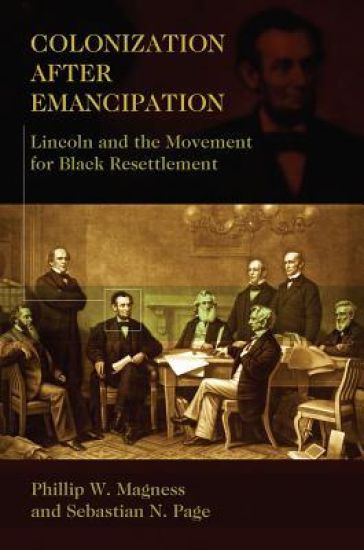
Colonization After Emancipation

Colonization After Emancipation

Phillip W. Magness; Stephen N. Page

University of Missouri Press
2018
nidottu
History has long acknowledged that President Abraham Lincoln, the Great Emancipator, had considered other approaches to rectifying the problem of slavery during his administration. Prior to Emancipation, Lincoln was a proponent of colonization: the idea of sending African American slaves to another land to live as free people. Lincoln supported resettlement schemes in Panama and Haiti early in his presidency and openly advocated the idea through the fall of 1862. But the bigoted, flawed concept of colonization never became a permanent fixture of U.S. policy, and by the time Lincoln had signed the Emancipation Proclamation on January 1, 1863, the word “colonization” had disappeared from his public lexicon. As such, history remembers Lincoln as having abandoned his support of colonization when he signed the proclamation. Documents exist, however, that tell another story.Colonization after Emancipation: Lincoln and the Movement for Black Resettlement explores the previously unknown truth about Lincoln’s attitude toward colonization. Scholars Phillip W. Magness and Sebastian N. Page combed through extensive archival materials, finding evidence, particularly within British Colonial and Foreign Office documents, which exposes what history has neglected to reveal—that Lincoln continued to pursue colonization for close to a year after emancipation. Their research even shows that Lincoln may have been attempting to revive this policy at the time of his assassination.Using long-forgotten records scattered across three continents—many of them untouched since the Civil War—the authors show that Lincoln continued his search for a freedmen’s colony much longer than previously thought. Colonization after Emancipation reveals Lincoln’s highly secretive negotiations with the British government to find suitable lands for colonization in the West Indies and depicts how the U.S. government worked with British agents and leaders in the free black community to recruit emigrants for the proposed colonies. The book shows that the scheme was never very popular within Lincoln’s administration and even became a subject of subversion when the president’s subordinates began battling for control over a lucrative “colonization fund” established by Congress.Colonization after Emancipation reveals an unexplored chapter of the emancipation story. A valuable contribution to Lincoln studies and Civil War history, this book unearths the facts about an ill-fated project and illuminates just how complex, and even convoluted, Abraham Lincoln’s ideas about the end of slavery really were.
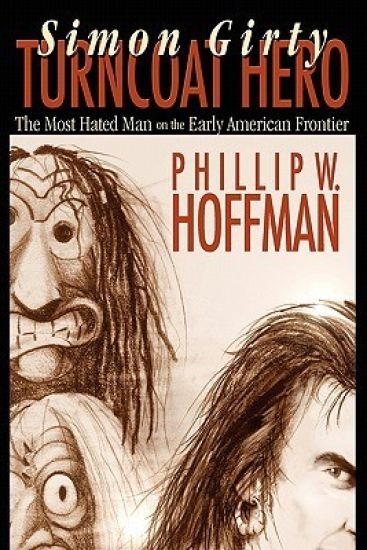
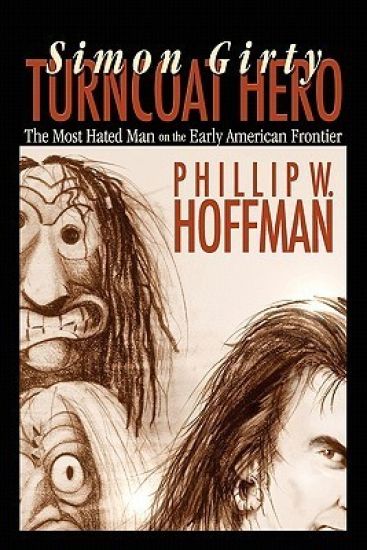
Simon Girty Turncoat Hero

Simon Girty Turncoat Hero

Phillip W. Hoffman

American History Press
2008
sidottu
The subject of this masterful, panoramic biography is one of the most mysterious, misunderstood icons of early American history. Simon Girty was a sharp-witted, rascally, many-tongued frontiersman whose epic adventures span the French and Indian War, Dunmore's War, the American War for Independence, the Indian Wars, and finally, the War of 1812.When he defected from the Patriot cause to serve the British in March 1778, Girty achieved instant infamy - becoming one of young America's most notorious characters. To understand his motivation one must discover, as he did, that the real, underlying cause of the American Revolution was the unquenchable thirst for Indian land of many of our so-called founding fathers - including George Washington - and their unrelenting dissatisfaction with the restrictions imposed upon their land speculation ambitions by the King's Proclamation of 1763.Like a detective doggedly combing through old evidence, author Phillip Hoffman spent 17 years studying every detail of Girty's life and times, amassing more than 4,000 computer windows of research. By exploring microfilm, ledgers, military records, congressional records, newspaper and magazine articles, and dozens of early American and Canadian fiction and non-fiction works, Hoffman was able to peel away the mythic legend that has hidden Girty's real persona for two and a half centuries.Little in Simon Girty's life was conventional or predictable. One of four sons raised by an Irish Indian trader settled near Harrisburg in eastern Pennsylvania, Simon's earliest experiences quickly isolate him from the majority of the colonists in his region, most of whom were German immigrants. To these people, the Girtys are Indian lovers, and the Indians are all savages and spawn of the devil. During the French and Indian War, when he is fifteen, Simon and his family are captured by hostile Shawnee and Delaware warriors led by French officers. Given away to a war party of Senecas, Simon is carried north and adopted, emerging eight years later at age twenty-three, a gifted linguist and a trained interpreter fluent in eleven native languages.Brought by a Seneca chief to Alexander McKee of the British Indian Department at Fort Pitt, Girty begins his career as a spy-interpreter-intermediary serving both English and Native American leaders. Girty's contacts include the great Seneca sachem Guyasuta, Sir William Johnson, merchant George Morgan, businessman John Connolly, William Crawford, Matthew Elliott, John Murray (Lord Dunmore), Simon Kenton, George Rogers Clark, Mingo chief John Logan, Mohawk chief Joseph Brant, Half King of the Wyandots, Captain Pipe of the Delawares, Moravian missionaries David Zeisberger and John Heckewelder, Shawnee chiefs Blue Jacket and Tecumseh, and Miami war chief Little Turtle, Detroit Governor Henry Hamilton, U.S. general Anthony Wayne, and even Daniel Boone. Land speculators George Washington and Ben Franklin are also woven through Girty's story.Through Girty's eyes we re-live the ill-fated Squaw Campaign, his rescue of Simon Kenton whom the Shawnees were about to torture and burn, the deadly ambush of Rogers' Flotilla, the Battle of Sandusky, William Crawford's trial and death by fire, the conquest of Martin's and Ruddle's Stations, the disastrous American defeat at Blue Licks (where Daniel Boone's son Israel was killed), and the incredible victories over Harmar and St. Clair by a confederation of Western and Northern Tribes. Finally, with Girty and his companions Alex McKee and Matthew Elliott, we witness the climactic defeat of the Indians by "Mad" Anthony Wayne at Fallen Timbers.Hoffman's dedication to detail, combined with his superb talent as a storyteller, brings us an intimate view of the full sweep of early American frontier conflicts, as experienced by a devoted adventurer whose heart was as much Indian as it was white. "Simon Girty Turncoat Hero" is American history at its best.
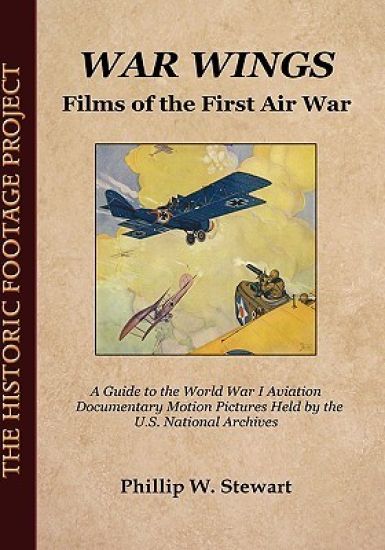
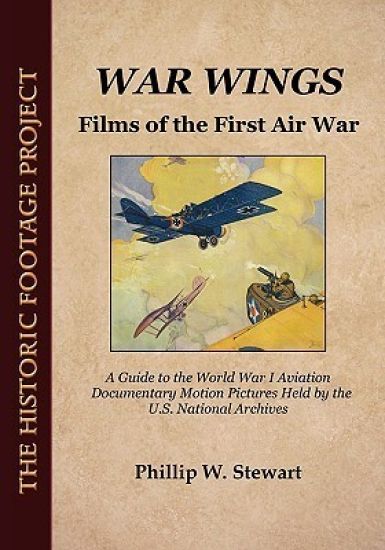
War Wings: Films of the First Air War

War Wings: Films of the First Air War

Phillip W. Stewart

PMS Press
2008
sidottu
Ever wish you could see a World War I Curtiss "Jenny" do a triple loop? How about a squadron of American-made DH-4 "Liberty" bombers taking off on a mission over the front? You can, in glorious black-and-white--shot on location by the military's own movie makers, using state of the art (1918-style) wooden boxes with crude brass-encased glass lenses, metal hand cranks, and cumbersome tripods. Thousands of WWI-related motion picture reels sit in the vaults at the National Archives and Records Administration facility in College Park, Maryland--but only 71 titles contain aviation footage. This amazing real-time visual history of the first ever air war could have been lost to time. Luckily, with the publication of WAR WINGS: Films of the First Air War, you can locate those needles in the giant haystack of the Archives, and know precisely what moving images are on each reel. "Absolutely indispensable to a student of World War I aviation. I wish I had it when co-founding Wingspan, the Air & Space Channel...Phil Stewart's succinct real by reel, scene by scene, analysis is complemented by a wonderful index." --Walter J. Boyne, Author and National Aviation Hall of Fame Enshrinee. "Allows the reader to almost watch the films themselves unroll...the next best thing to seeing the films themselves." --Leonard E. Opdycke, Author, Editor, and Publisher. WAR WINGS chronicles over 2,550 individual scenes of filmed action--while hundreds more are summarized. Scenes of pilot training, airplane manufacturing, fighting in the skies over France, and the post-Armistice testing of enemy airplanes, were all captured on film during 1917-1919. This superbly-researched landmark work is a boon to scholars, librarians, museum curators, historians, students of film, and those interested in genealogy. The detailed information contained within the pages of this invaluable research tool provides an accurate and timeless word-picture record of the aviation-related moving images of the "War to End All Wars."
War Wings: Films of the First Air War

War Wings: Films of the First Air War

Phillip W. Stewart

PMS Press
2008
nidottu
Ever wish you could see a World War I Curtiss "Jenny" do a triple loop? How about a squadron of American-made DH-4 "Liberty" bombers taking off on a mission over the front? You can, in glorious black-and-white--shot on location by the military's own movie makers, using state of the art (1918-style) wooden boxes with crude brass-encased glass lenses, metal hand cranks, and cumbersome tripods. Thousands of WWI-related motion picture reels sit in the vaults at the National Archives and Records Administration facility in College Park, Maryland--but only 71 titles contain aviation footage. This amazing real-time visual history of the first ever air war could have been lost to time. Luckily, with the publication of WAR WINGS: Films of the First Air War, you can locate those needles in the giant haystack of the Archives, and know precisely what moving images are on each reel. "Absolutely indispensable to a student of World War I aviation. I wish I had it when co-founding Wingspan, the Air & Space Channel...Phil Stewart's succinct real by reel, scene by scene, analysis is complemented by a wonderful index." --Walter J. Boyne, Author and National Aviation Hall of Fame Enshrinee. "Allows the reader to almost watch the films themselves unroll...the next best thing to seeing the films themselves." --Leonard E. Opdycke, Author, Editor, and Publisher. WAR WINGS chronicles over 2,550 individual scenes of filmed action--while hundreds more are summarized. Scenes of pilot training, airplane manufacturing, fighting in the skies over France, and the post-Armistice testing of enemy airplanes, were all captured on film during 1917-1919. This superbly-researched landmark work is a boon to scholars, librarians, museum curators, historians, students of film, and those interested in genealogy. The detailed information contained within the pages of this invaluable research tool provides an accurate and timeless word-picture record of the aviation-related moving images of the "War to End All Wars."
Totalitarianism

Totalitarianism

Phillip W. Gray

TAYLOR FRANCIS LTD
2023
nidottu
Totalitarianism: The Basics is an easy-to-read introduction into the main concepts, ideologies, and regimes associated with totalitarianism.Starting with an overview of how scholars have attempted to define totalitarianism, Phillip W. Gray begins with an examination of the various types of terms used, helping the reader think about how these terms do – and do not – apply to different ideologies and governments. Easily accessible language and the use of numerous examples aid readers in seeing the connections between certain types of ideologies and some forms of organization/movements in their relation to historically well-known totalitarian regimes. Gray concludes with the tools necessary to think through how to distinguish between an actual (or potential) totalitarian system and regimes that, while oppressive or authoritarian, would not be totalitarian in nature. A rich bibliography containing additional readings bookend the text.Totalitarianism: The Basics offers an essential introduction for students from all backgrounds seeking to understand totalitarianism and for general readers with an interest in political ideologies and extremism. For those knowledgeable in this field, it adds conceptual relevance and a variety of ways of thinking about the term.