Kirjojen hintavertailu. Mukana 12 595 353 kirjaa ja 12 kauppaa.

Kirjahaku

Etsi kirjoja tekijän nimen, kirjan nimen tai ISBN:n perusteella.

1000 tulosta hakusanalla RANDALL PARRISH
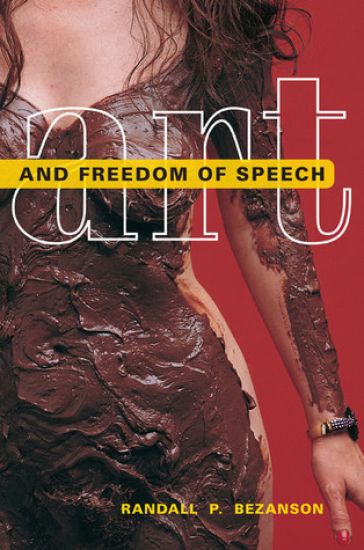
Art and Freedom of Speech

Art and Freedom of Speech

Randall P. Bezanson

University of Illinois Press
2009
sidottu
This book analyzes the broad range of Supreme Court cases that concern the protection of art and free speech under the First Amendment. Finding that debates about free expression (whether in speech or art) swirl around sex and cultural blasphemy, Randall P. Bezanson tracks and interprets the Court's decisions on film, nude dancing, music, painting, and other visual expressions.Showing how the Court has dealt with judgments of art, quality, meaning, and how to distinguish types of speech and expression, Bezanson explores issues as diverse as homosexuality in the Boy Scouts, gay and lesbian parade floats, 2 Live Crew's alleged copyright infringement, National Endowment for the Arts grants and diversity, dangerous art, and screenings of the film Carnal Knowledge. In considering the transformative meaning of art, the importance of community judgments, and the definition of speech in Court rulings, Bezanson focuses on the fundamental questions underlying the discussion of art as protected free speech: What are the boundaries of art? What are the limits on the government's role as supporter and "patron" of the arts? And what role, if any, may core social values of decency, respect, and equality play in limiting the production or distribution of art?Accessibly written and evocatively argued, Art and Freedom of Speech explores these questions and concludes with the argument that, for legal purposes, art should be absolutely free under the First Amendment--in fact, even more free than other forms of speech.
The Europeanization of Cinema

The Europeanization of Cinema

Randall Halle

University of Illinois Press
2014
sidottu
In this innovative study, German and film studies scholar Randall Halle advances the concept of "interzones"--geographical and ideational spaces of transit, interaction, transformation, and contested diversity--as a mechanism for analyzing European cinema. He focuses especially on films about borders, borderlands, and cultural zones as he traces the development of interzones from the inception of central European cinema to the avant-garde films of today. Throughout, he shows how cinema both reflects and engenders interzones that explore the important questions of Europe's social order: imperialism and nation-building in the late nineteenth and early twentieth centuries; "first contact" between former adversaries (such as East and West Germany) following World War II and the Cold War; and migration, neo-colonialism, and cultural imperialism in the twenty-first century. Ultimately, Halle argues that today's cinema both produces and reflects imaginative communities. He demonstrates how, rather than simply erasing boundaries, the European Union instead fosters a network of cultural interzones that encourage cinematic exploration of the new Europe's processes and limits of connectivity, tolerance, and cooperation.
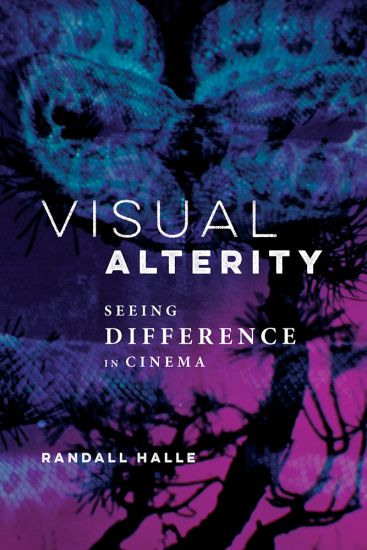
Visual Alterity

Visual Alterity

Randall Halle

University of Illinois Press
2021
sidottu
Reconsidering the dynamics of perception Using cinema to explore the visual aspects of alterity, Randall Halle analyzes how we become cognizant of each other and how we perceive and judge another person in a visual field. Halle draws on insights from philosophy and recent developments in cognitive and neuroscience to argue that there is no pure "natural" sight. We always see in a particular way, from a particular vantage point, and through a specific apparatus, and Halle shows how human beings have used cinema to experiment with the apparatus of seeing for over a century. Visual alterity goes beyond seeing difference to being conscious of how one sees difference. Investigating the process allows us to move from mere perception to apperception, or conscious perception. Innovative and insightful, Visual Alterity merges film theory with philosophy and cutting-edge science to propose new ways of perceiving and knowing.
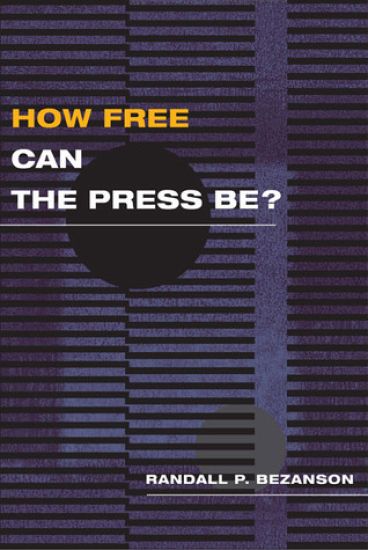
How Free Can the Press Be?

How Free Can the Press Be?

Randall P. Bezanson

University of Illinois Press
2007
nidottu
Randall P. Bezanson explores the contradictions embedded in understanding press freedom in America by discussing nine of the most pivotal and provocative First Amendment cases in US judicial history. Each case resulted in a ruling that refined or reshaped judicial definition of the limits of press freedom. The cases concerned matters ranging from The New York Times's publication of the Pentagon Papers to Hugo Zacchini's claim that TV broadcasts of his human cannonball act threatened his livelihood. Bezanson also examines the case of politician blackballed by the Miami Herald; the Pittsburgh Press's argument that it had the right to use gender based column headings in its classifieds; and a crime victim suing the Des Moines Register over the paper's publication of intimate details, including the victim's name.
German Film After Germany

German Film After Germany

Randall Halle

University of Illinois Press
2008
nidottu
What is the work of film in the age of transnational production? To answer that question, Randall Halle focuses on the film industry of Germany, one of Europe's largest film markets and one of the world's largest film-producing nations. In the 1990s Germany experienced an extreme transition from a state-subsidized mode of film production that was free of anxious concerns about profit and audience entertainment to a mode dominated by private interest and big capital. At the same time, the European Union began actively drawing together the national markets of Germany and other European nations, sublating their individual significances into a synergistic whole. This book studies these changes broadly, but also focuses on the transformations in their particular national context. It balances film politics and film aesthetics, tracing transformations in financing along with analyses of particular films to describe the effects on the film object itself. Halle concludes that we witness currently the emergence of a new transnational aesthetic, a fundamental shift in cultural production with ramifications for communal identifications, state cohesion, and national economies.
How Free Can Religion Be?

How Free Can Religion Be?

Randall P. Bezanson

University of Illinois Press
2010
nidottu
In tracking the evolution of the First Amendment's Free Exercise and Establishment Clause doctrine through Key Supreme Court decisions on religious freedom, legal scholar Randall P. Bezanson focuses on the court's shift from strict separation of church and state to a position where the government accommodates and even fosters religion. Beginning with samples from the latter half of the nineteenth century, the detailed case studies present new problems and revisit old ones as well: the purported belief of polygamy in the Mormon Church; state support for religious schools; the teaching of evolution and creationism in public schools; Amish claims for exemption from compulsory education laws; comparable claims for Native American religion in relation to drug laws; and rights of free speech and equal access by religious groups in colleges and public schools.
The Europeanization of Cinema

The Europeanization of Cinema

Randall Halle

University of Illinois Press
2014
nidottu
In this innovative study, German and film studies scholar Randall Halle advances the concept of "interzones"--geographical and ideational spaces of transit, interaction, transformation, and contested diversity--as a mechanism for analyzing European cinema. He focuses especially on films about borders, borderlands, and cultural zones as he traces the development of interzones from the inception of central European cinema to the avant-garde films of today. Throughout, he shows how cinema both reflects and engenders interzones that explore the important questions of Europe's social order: imperialism and nation-building in the late nineteenth and early twentieth centuries; "first contact" between former adversaries (such as East and West Germany) following World War II and the Cold War; and migration, neo-colonialism, and cultural imperialism in the twenty-first century. Ultimately, Halle argues that today's cinema both produces and reflects imaginative communities. He demonstrates how, rather than simply erasing boundaries, the European Union instead fosters a network of cultural interzones that encourage cinematic exploration of the new Europe's processes and limits of connectivity, tolerance, and cooperation.
Too Much Free Speech?

Too Much Free Speech?

Randall P. Bezanson

University of Illinois Press
2015
nidottu
Randall P. Bezanson takes up an essential and timely inquiry into the Constitutional limits of the Supreme Court's power to create, interpret, and enforce one of the essential rights of American citizens. Analyzing contemporary Supreme Court decisions from the past fifteen years, Bezanson argues that judicial interpretations have fundamentally and drastically expanded the meaning and understanding of "speech." Bezanson focuses on judgments such as the much-discussed Citizens United case, which granted the full measure of constitutional protection to speech by corporations, and the Doe vs. Reed case in Washington state, which recognized the signing of petitions and voting in elections as acts of free speech. In each case study, he questions whether the meaning of speech has been expanded too far and critically assesses the Supreme Court's methodology in reaching and explaining its expansive conclusions.
Visual Alterity

Visual Alterity

Randall Halle

University of Illinois Press
2021
nidottu
Reconsidering the dynamics of perception Using cinema to explore the visual aspects of alterity, Randall Halle analyzes how we become cognizant of each other and how we perceive and judge another person in a visual field. Halle draws on insights from philosophy and recent developments in cognitive and neuroscience to argue that there is no pure "natural" sight. We always see in a particular way, from a particular vantage point, and through a specific apparatus, and Halle shows how human beings have used cinema to experiment with the apparatus of seeing for over a century. Visual alterity goes beyond seeing difference to being conscious of how one sees difference. Investigating the process allows us to move from mere perception to apperception, or conscious perception. Innovative and insightful, Visual Alterity merges film theory with philosophy and cutting-edge science to propose new ways of perceiving and knowing.
Remixing the Classroom

Remixing the Classroom

Randall Everett Allsup

Indiana University Press
2016
sidottu
In a delightfully self-conscious philosophical "mash-up," Randall Everett Allsup provides alternatives for the traditional master-apprentice teaching model that has characterized music education. By providing examples across the arts and humanities, Allsup promotes a vision of education that is open, changing, and adventurous at heart. He contends that the imperative of growth at the core of all teaching and learning relationships is made richer, though less certain, when it is fused with a student's self-initiated quest. In this way, the formal study of music turns from an education in teacher-directed craft and moves into much larger and more complicated fields of exploration. Through vivid stories and evocative prose, Randall Everett Allsup advocates for an open, quest-driven teaching model that has repercussions for music education and the humanities more generally.
Remixing the Classroom

Remixing the Classroom

Randall Everett Allsup

Indiana University Press
2016
pokkari
In a delightfully self-conscious philosophical "mash-up," Randall Everett Allsup provides alternatives for the traditional master-apprentice teaching model that has characterized music education. By providing examples across the arts and humanities, Allsup promotes a vision of education that is open, changing, and adventurous at heart. He contends that the imperative of growth at the core of all teaching and learning relationships is made richer, though less certain, when it is fused with a student's self-initiated quest. In this way, the formal study of music turns from an education in teacher-directed craft and moves into much larger and more complicated fields of exploration. Through vivid stories and evocative prose, Randall Everett Allsup advocates for an open, quest-driven teaching model that has repercussions for music education and the humanities more generally.
Remixing the Classroom in Practice

Remixing the Classroom in Practice

Randall Everett Allsup

INDIANA UNIVERSITY PRESS
2025
sidottu
"Remixing the Classroom" In Practice engages directly with Randall Allsup's groundbreaking Remixing the Classroom: Toward an Open Philosophy of Music Education by sharing what democratic, creative, and student-centered approaches to music education look like when applied in the field. Through narrative essays covering a spectrum of contexts, including piano studios, choir ensembles, pre-service teacher education, and digital music spaces, "Remixing the Classroom" in Practice explores how issues of music teacher quality are intertwined with ethical and moral considerations that are central to educational practice in any setting. The authors share a wide array of examples and stories of educators striving toward pluralistic understandings of open forms of music education practice and beginning to teach outside the frames offered by traditional institutions and approaches: moving away from the teacher-centered craft, breaking the master/apprenticeship cycle, and drawing from student-initiated approaches. These stories touch on matters ranging from identity construction to patriotism and decolonization, analyzing and reframing implications for elementary and secondary schools, higher education, and other educational contexts within a diverse and ever-changing society. An imaginative collection aimed at furthering Allsup's philosophy, "Remixing the Classroom" in Practice narrates the experiences and stories of music educators who continue to strive for openness within contemporary music education.
Remixing the Classroom in Practice

Remixing the Classroom in Practice

Randall Everett Allsup

INDIANA UNIVERSITY PRESS
2025
pokkari
"Remixing the Classroom" In Practice engages directly with Randall Allsup's groundbreaking Remixing the Classroom: Toward an Open Philosophy of Music Education by sharing what democratic, creative, and student-centered approaches to music education look like when applied in the field. Through narrative essays covering a spectrum of contexts, including piano studios, choir ensembles, pre-service teacher education, and digital music spaces, "Remixing the Classroom" in Practice explores how issues of music teacher quality are intertwined with ethical and moral considerations that are central to educational practice in any setting. The authors share a wide array of examples and stories of educators striving toward pluralistic understandings of open forms of music education practice and beginning to teach outside the frames offered by traditional institutions and approaches: moving away from the teacher-centered craft, breaking the master/apprenticeship cycle, and drawing from student-initiated approaches. These stories touch on matters ranging from identity construction to patriotism and decolonization, analyzing and reframing implications for elementary and secondary schools, higher education, and other educational contexts within a diverse and ever-changing society. An imaginative collection aimed at furthering Allsup's philosophy, "Remixing the Classroom" in Practice narrates the experiences and stories of music educators who continue to strive for openness within contemporary music education.
Reforming U.S. Financial Markets

Reforming U.S. Financial Markets

Randall S. Kroszner; Robert J. Shiller

MIT Press
2013
pokkari
Two top economists outline distinctive approaches to post-crisis financial reform.Over the last few years, the financial sector has experienced its worst crisis since the 1930s. The collapse of major firms, the decline in asset values, the interruption of credit flows, the loss of confidence in firms and credit market instruments, the intervention by governments and central banks: all were extraordinary in scale and scope. In this book, leading economists Randall Kroszner and Robert Shiller discuss what the United States should do to prevent another such financial meltdown. Their discussion goes beyond the nuts and bolts of legislative and regulatory fixes to consider fundamental changes in our financial arrangements. Kroszner and Shiller offer two distinctive approaches to financial reform, with Kroszner providing a systematic analysis of regulatory gaps and Shiller addressing the broader concerns of democratizing and humanizing finance. After brief discussions by four commentators (Benjamin M. Friedman, George G. Kaufman, Robert C. Pozen, and Hal S. Scott), Kroszner and Shiller each offer a response to the other's proposals, creating a fruitful dialogue between two major figures in the field.
Living Well Now and in the Future

Living Well Now and in the Future

Randall Curren; Ellen Metzger

MIT Press
2018
pokkari
A philosopher and a scientist propose that sustainability can be understood as living well together without diminishing opportunity to live well in the future.Most people acknowledge the profound importance of sustainability, but few can define it. We are ethically bound to live sustainably for the sake of future generations, but what does that mean? In this book Randall Curren, a philosopher, and Ellen Metzger, a scientist, clarify normative aspects of sustainability. Combining their perspectives, they propose that sustainability can be understood as the art of living well together without diminishing opportunity to live well in the future.Curren and Metzger lay out the nature and value of sustainability, survey the problems, catalog the obstacles, and identify the kind of efforts needed to overcome them. They formulate an ethic of sustainability with lessons for government, organizations, and individuals, and illustrate key ideas with three case studies. Curren and Metzger put intergenerational justice at the heart of sustainability; discuss the need for fair (as opposed to coercive) terms of cooperation to create norms, institutions, and practices conducive to sustainability; formulate a framework for a fundamental ethic of sustainability derived from core components of common morality; and emphasize the importance of sustainability education. The three illustrative case studies focus on the management of energy, water, and food systems, examining the 2010 Gulf of Mexico oil spill, Australia's National Water Management System, and patterns of food production in the Mekong region of Southeast Asia.
Contracts, third edition

Contracts, third edition

Randall Kennedy

MIT PRESS LTD
2023
nidottu
A casebook to be used as the primary text for first-year law school contracts courses, written by a leading scholar in contract law. Renting a home, buying a ticket, downloading an app--humans enter into contracts constantly, often with little consciousness of the legal implications. We typically become alert to the consequences only when a problem arises. Contracting can increase our happiness by enabling us to do things that we would be otherwise unable to do, but heartbreak follows when things go wrong. This casebook, which can be used as a primary text for a first-year law school contracts course, covers a wide spectrum of quandaries that emerge in contract law, from problems of overreach and interpretation to enforcement and fraud. Taken together, these cases offer an exploration of contract pathology and introduce students to concepts that are essential to understanding the vast subject of Anglo-American contract law. This book is part of the Open Casebook series from Harvard Law School Library and the MIT Press. Primary text for a first-year law school contracts course Developed for use at Harvard Law School by a leading scholar in contract law Diverse cases show differing approaches to a range of problems within contractingClassroom tested
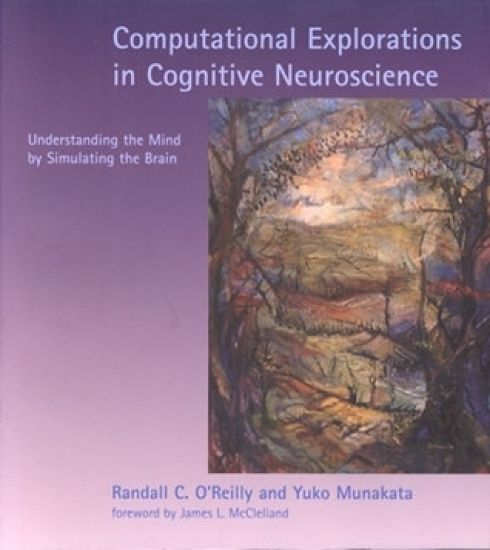
Computational Explorations in Cognitive Neuroscience

Computational Explorations in Cognitive Neuroscience

Randall C. O'Reilly; Yuko Munakata; James L. McClelland

MIT Press
2000
pokkari
This text, based on a course taught by Randall O'Reilly and Yuko Munakata over the past several years, provides an in-depth introduction to the main ideas in the computational cognitive neuroscience.The goal of computational cognitive neuroscience is to understand how the brain embodies the mind by using biologically based computational models comprising networks of neuronlike units. This text, based on a course taught by Randall O'Reilly and Yuko Munakata over the past several years, provides an in-depth introduction to the main ideas in the field. The neural units in the simulations use equations based directly on the ion channels that govern the behavior of real neurons, and the neural networks incorporate anatomical and physiological properties of the neocortex. Thus the text provides the student with knowledge of the basic biology of the brain as well as the computational skills needed to simulate large-scale cognitive phenomena.The text consists of two parts. The first part covers basic neural computation mechanisms: individual neurons, neural networks, and learning mechanisms. The second part covers large-scale brain area organization and cognitive phenomena: perception and attention, memory, language, and higher-level cognition. The second part is relatively self-contained and can be used separately for mechanistically oriented cognitive neuroscience courses. Integrated throughout the text are more than forty different simulation models, many of them full-scale research-grade models, with friendly interfaces and accompanying exercises. The simulation software (PDP++, available for all major platforms) and simulations can be downloaded free of charge from the Web. Exercise solutions are available, and the text includes full information on the software.
Image and Word in the Theology of John Calvin

Image and Word in the Theology of John Calvin

Randall C. Zachman

University of Notre Dame Press
2009
nidottu
In his groundbreaking new study of the Swiss reformer, Randall C. Zachman reveals and analyzes John Calvin's understanding of image and word both comprehensively and chronologically, with attention to the way that each theme develops in Calvin's theology. Most scholars allege that John Calvin (1509–1564) insisted on the essential invisibility of God in order to deny that God could be represented in any kind of visible image. This claim formed one of his foundational arguments against the display of man-made images in worship. Given the transcendence of God, Calvin rejected the human attempt to create signs and symbols of God's presence on earth, especially the statues, images, and paintings present in Roman Catholic churches. Zachman argues, in contrast, that although Calvin rejects the use of what he calls "dead images" in worship, he does so to focus our attention on the "living images of God" in which the invisible God becomes somewhat visible. Calvin insists that these images cannot rightly be contemplated without the Word of God to clarify their meaning; we are only led to the true knowledge of God when we hold together the living images of God that we see with the Word of God that we hear. This combination of seeing and hearing pervades Calvin's theology, from his understanding of the self-revelation of God the Creator to his development of the self-manifestation of God the Redeemer in Jesus Christ. According to Zachman, Calvin maintains the same linking of seeing and hearing in our relationships with other human beings: we must always hold together what we see in others' gestures and actions with what we hear in their words, so that the hidden thoughts of their hearts might be manifested to us. Zachman's nuanced argument that Calvin holds image and word, manifestation and proclamation, in an inseparable relationship is relevant to all the major themes of Calvin's theology. It constitutes a highly significant and surprising contribution to our knowledge of the Reformation and an invitation to further study of theological aesthetics.