

Kirjahaku
Etsi kirjoja tekijän nimen, kirjan nimen tai ISBN:n perusteella.
1000 tulosta hakusanalla Ray Thompson


Name Index (INDEX ONLY) of the 26,000 grtx-grandchildren of Richard Sears of Yarmouth, Plymouth Colony circa 1639. This index will point you to a record at Ancestry.com or Wikitree.com or into one of the twelve volumes of details about each generation of Richard's descendants. These descendants have been a critical part of every element of the history of the United States and the world. (INDEX ONLY)
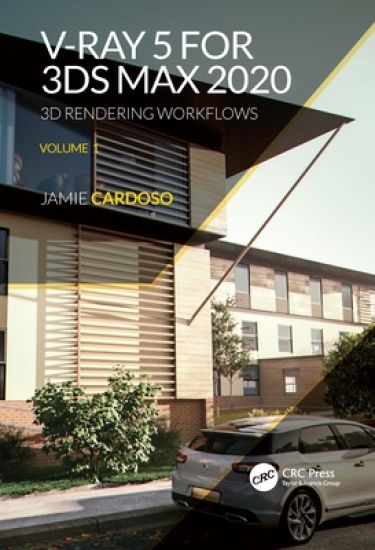
Increase the photorealism of your 3d visualizations with enhanced toolsets of V-Ray 5 for 3ds Max 2020. The book is filled with colorful illustrations depicting step-by-step tutorials about the process of creating a photorealistic day-and-night exterior scene. Each tutorial includes a 3d project scene to guide users through the production and the post-production processes. The book begins with an overview of the best techniques to approach clients via emails, calls, meetings, and via social media. There are also key insights into the best practices of handling projects, pricing, contracts, invoices, the pre-production, production, and the post-production, to name but a few. Throughout the book, users are taken through VRayMtl functions such as Diffuse, Roughness, Reflect, Glossiness, Metalness, Refract, Index of Refraction (IOR), Abbe number, Fog color, Translucency, BRDF, Coat, Sheen, and Bump.Also, users will learn how to use procedural maps such as VRayBitmap, VRayTriplanarTex, Bricks, Metals, Carpaint, VRayDisplacementMod, VRayUVWRandomizer, VRayMultiSubTex, VRayPointCloudColor, VRayDirt, VRayAerialPersepective, VRayLightMtl, VRayMtlWrapper, VRayOverrideMtl, VRay2SidedMtl, VRayBlendMtl, and VRayEdgesTex.In addition, there are tips and tricks accompanied with videos highlighting how to create VR interactive apps using Verge 3d; how to create verified views; and how to use plug-ins and scripts such as Project Manager, Auto grid pivot point, GarageFarm, Zmapping, gobotree, and VIShopper.Finally, users will have a rare insight into all functionalities of a VRay camera, VRayLight objects, Render settings, Frame buffer, Global switches, IPR options, Bucket and Progressive image samplers, Image filters, Global DMC, Color mapping, Brute force global illumination, Light cache, Color management, Distributed rendering, Render elements, VRay image file format, VFB History settings, VFB Lens Effects, LightMix, Film tonemap, Hue/Saturation, Lookup Table, and much more. Key Features This book deals with real projects/3d scenes and delivers up-to-date V-Ray 5 functionalities and production workflows using 3ds Max 2020 This book has professional supporting files ready to open and explore This book details the meticulous step-by-step processes of creating jaw-dropping 3d renderings This book includes unrivaled in-depth coverage of V-Ray 5 for 3ds Max 2020 This book includes 3d rendering methodologies currently used by key industry playersAuthorJamie Cardoso is a renowned author, reviewer, computer artist, and technologist, withyears of experience in creating state-of-the-art 3d photomontages, verified views, VR, AR,XR, MR, Stereos, and photorealistic interior and exterior visualizations for architects anddesigners.
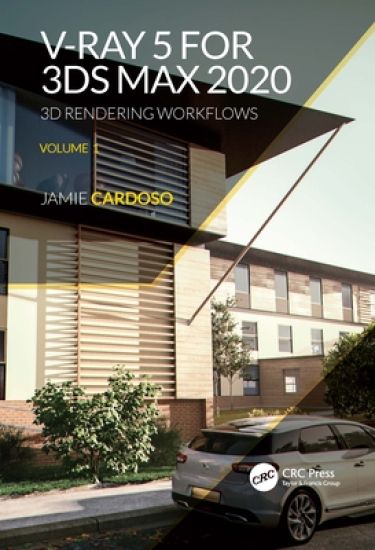
Increase the photorealism of your 3d visualizations with enhanced toolsets of V-Ray 5 for 3ds Max 2020. The book is filled with colorful illustrations depicting step-by-step tutorials about the process of creating a photorealistic day-and-night exterior scene. Each tutorial includes a 3d project scene to guide users through the production and the post-production processes. The book begins with an overview of the best techniques to approach clients via emails, calls, meetings, and via social media. There are also key insights into the best practices of handling projects, pricing, contracts, invoices, the pre-production, production, and the post-production, to name but a few. Throughout the book, users are taken through VRayMtl functions such as Diffuse, Roughness, Reflect, Glossiness, Metalness, Refract, Index of Refraction (IOR), Abbe number, Fog color, Translucency, BRDF, Coat, Sheen, and Bump.Also, users will learn how to use procedural maps such as VRayBitmap, VRayTriplanarTex, Bricks, Metals, Carpaint, VRayDisplacementMod, VRayUVWRandomizer, VRayMultiSubTex, VRayPointCloudColor, VRayDirt, VRayAerialPersepective, VRayLightMtl, VRayMtlWrapper, VRayOverrideMtl, VRay2SidedMtl, VRayBlendMtl, and VRayEdgesTex.In addition, there are tips and tricks accompanied with videos highlighting how to create VR interactive apps using Verge 3d; how to create verified views; and how to use plug-ins and scripts such as Project Manager, Auto grid pivot point, GarageFarm, Zmapping, gobotree, and VIShopper.Finally, users will have a rare insight into all functionalities of a VRay camera, VRayLight objects, Render settings, Frame buffer, Global switches, IPR options, Bucket and Progressive image samplers, Image filters, Global DMC, Color mapping, Brute force global illumination, Light cache, Color management, Distributed rendering, Render elements, VRay image file format, VFB History settings, VFB Lens Effects, LightMix, Film tonemap, Hue/Saturation, Lookup Table, and much more. Key Features This book deals with real projects/3d scenes and delivers up-to-date V-Ray 5 functionalities and production workflows using 3ds Max 2020 This book has professional supporting files ready to open and explore This book details the meticulous step-by-step processes of creating jaw-dropping 3d renderings This book includes unrivaled in-depth coverage of V-Ray 5 for 3ds Max 2020 This book includes 3d rendering methodologies currently used by key industry playersAuthorJamie Cardoso is a renowned author, reviewer, computer artist, and technologist, withyears of experience in creating state-of-the-art 3d photomontages, verified views, VR, AR,XR, MR, Stereos, and photorealistic interior and exterior visualizations for architects anddesigners.
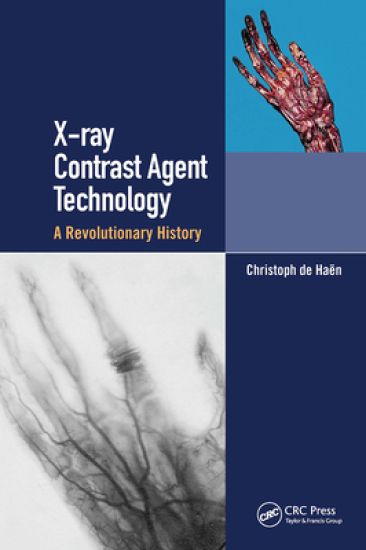
This book documents the fascinating history of radiological techniques that use contrast agents. The text includes many of the fundamental documentary sources that bring to life the social and scientific background of the discoveries, the personalities of the discoverers, and implementation of new technologies. Such agents when used with X-rays allow clinicians to distinguish anatomical structures with nearly identical densities. Focus is on urological and angiographic uses of contrast agents.Key selling features:Documents and thoroughly references the history of contrast agent developmentReviews the priority and importance of patentsDiscusses the role that important individual scientists and leading research institutions have played in technology development and implementation

V-Ray My Way: A Practical Designers Guide to Creating Realistic Imagery Using V-Ray & 3ds Max is a practical, hands-on guide to creating some of the most stunning computer-generated images possible. It caters to the design masses; architects, engineers, interior designers, industrial designers, photographers, and enthusiasts will find this book essential in their quest to express themselves through visual communication. V-Ray My Way is an accumulation of 13 years of experimental experience and will have you creating content within minutes, help grow your company, help develop your portfolio, and help you make that career leap. Additional resources and exercises are available at the book’s companion website, http://routledgetextbooks.com/textbooks/_author/wylde-9780415709637/

A photographic exploration into the beauty and magic of light from the creator of the bestselling A Drop of Water and the Can You See What I See? series.The wonder of light has fascinated readers for ages. Walter Wick's mesmerizing photographs paired with simple yet fascinating text and scientific observations help readers understand the secrets and complexity of light. You will learn what light is made of and how it fits alongside everything else in the world. Walter introduces readers into the mystery behind incandescence, light waves, the color spectrum, and iridescence as well as how we perceive light in our world and beyond. Walter Wick demonstrates that science and art both offer ways to observe the world around us. A Ray of Light is perfect for the STEM curriculum as it incorporates the early disciplines of science, technology, engineering, and mathematics.
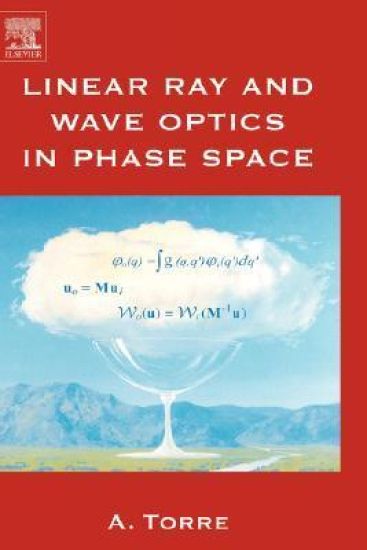
Ray, wave and quantum concepts are central to diverse and seemingly incompatible models of light. Each model particularizes a specific ''manifestation'' of light, and then corresponds to adequate physical assumptions and formal approximations, whose domains of applicability are well-established. Accordingly each model comprises its own set of geometric and dynamic postulates with the pertinent mathematical means. At a basic level, the book is a complete introduction to the Wigner optics, which bridges between ray and wave optics, offering the optical phase space as the ambience and the Wigner function based technique as the mathematical machinery to accommodate between the two opposite extremes of light representation: the localized ray of geometrical optics and the unlocalized wave function of wave optics. At a parallel level, the analogies with other branches of both classical and quantum physics, like classical and quantum mechanics, quantum optics, signal theory as well as magnetic optics, are evidenced by pertinent comments and/or rigorous mathematics. So, the Lie algebra and group methods are introduced and explained through the elementary optical systems within both the ray and wave optics contexts, the former being related to the symplectic group and the latter to the metaplectic group. In a like manner, the Wigner function is introduced by following the original issue to individualize a phase space representation of quantum mechanics, which is mirrored by the issue to individualize a local frequency spectrum within the signal theory context. The basic analogy with the optics of charged particles inherently underlying the ray-optics picture in phase space is also evidenced within the wave-optics picture in the Wigner phase space.
Linear Ray and Wave Optics in Phase Space, Second Edition, is a comprehensive introduction to Wigner optics. The book connects ray and wave optics, offering the optical phase space as the ambience and the Wigner function based technique as the mathematical machinery to accommodate between the two opposite extremes of light representation: the localized ray of geometrical optics and the unlocalized wave function of wave optics. Analogies with other branches of classical and quantum physics-such as classical and quantum mechanics, quantum optics, signal theory and magnetic optics-are evidenced by pertinent comments and/or rigorous mathematics. Lie algebra and group methods are introduced and explained through the elementary optical systems within the ray and wave optics contexts, the former being related to the symplectic group and the latter to the metaplectic group. In a similar manner, the Wigner function is introduced by following the original issue to individualize a phase space representation of quantum mechanics, which is mirrored by the issue to individualize a local frequency spectrum within the signal theory context. The basic analogy with the optics of charged particles inherently underlying the ray-optics picture in phase space is also evidenced within the wave-optics picture in the Wigner phase space. This second edition contains 150 pages of new material on Wigner distribution functions, ambiguity functions for partially coherent beams, and phase-space picture and fast optics. All chapters are fully revised and updated. All topics have been developed to a deeper level than in the previous edition and are now supported with Mathematica and Mathcad codes.
X-ray fluorescence spectroscopy, one of the most powerful and flexible techniques available for the analysis and characterization of materials today, has gone through major changes during the past decade. Fully revised and expanded by 30%, X-Ray Fluorescence Spectrometry, Second Edition incorporates the latest industrial and scientific trends in all areas. It updates all previous material and adds new chapters on such topics as the history of X-ray fluorescence spectroscopy, the design of X-ray spectrometers, state-of-the-art applications, and X-ray spectra. Ron Jenkins draws on his extensive experience in training and consulting industry professionals for this clear and concise treatment, covering first the basic aspects of X rays, then the methodology of X-ray fluorescence spectroscopy and available instrumentation. He offers a comparison between wavelength and energy dispersive spectrometers as well as step-by-step guidelines to X-ray spectrometric techniques for qualitative and quantitative analysis-from specimen preparation to real-world industrial application. Favored by the American Chemical Society and the International Centre for Diffraction Data, X-Ray Fluorescence Spectrometry, Second Edition is an ideal introduction for newcomers to the field and an invaluable reference for experienced spectroscopists-in chemical analysis, geology, metallurgy, and materials science. An up-to-date review of X-ray spectroscopic techniques. This proven guidebook for industry professionals is thoroughly updated and expanded to reflect advances in X-ray analysis over the last decade. X-Ray Fluorescence Spectrometry, Second Edition includes: The history of X-ray fluorescence spectrometry-new to this edition.A critical review of the most useful X-ray spectrometers.Techniques and procedures for quantitative and qualitative analysis.Modern applications and industrial trends.X-ray spectra-new to this edition.
X-Ray Spectrometry
John Wiley Sons Inc
2004
sidottu
During the last decade, remarkable and often spectacular progress has been made in the methodological and instrumental aspects of x-ray spectrometry. This progress includes considerable technological improvements in the design and production of detectors as well as significant advances in x-ray optics, special configurations and computing approaches. All this has resulted in improved analytical performance and new applications, as well as in the perspective of a dramatic enhancement in the potential of x-ray based analysis techniques for the near future. The book is divided into the following sections: *Introduction *X-Ray Sources *X-Ray Optics *X-Ray Detectors *Special Configurations *New Computerization Methods *New Applications each covering the most advanced and high-tech aspects of the chemical analysis techniques based on x-rays. By its nature, such a book cannot cover the fundamental, well-known and more routine aspects of the technique; for this, reference is made to seve ral existing handbooks and textbooks. Each chapter is prepared by internationally recognized scientists, all of whom are eminent specialists in each of the sub-fields. This book will assist all analytical chemists and other users of x-ray spectrometry to fully exploit the capabilities of this set of powerful analytical tools and to further expand applications in such fields as material and environmental sciences, medicine, toxicology, forensics, archaeometry and many others.
A complete view of x-ray diffraction procedures For those working in the field who wish to go beyond push-button applications, X-Ray Diffraction Procedures for Polycrystalline and Amorphous Materials provides a strong guide to the science and practical techniques of geometrical crystallography and x-ray diffraction of crystals. The book then moves on to provide more complete coverage of space lattices, point groups and space groups, the production of x-rays, measurement of x-rays, photographic powder techniques, and a host of other related topics. The book is then rounded out with a number of appendices for further reference.
Closely follows an actual structural determination. After some introductory material on the nature of x-rays, the diffraction process, and the internal geometry of crystals, the selection and preparation of a crystal are considered. Techniques of measuring raw x-ray data are covered, plus their reduction into a useable form. The second part discusses both traditional and novel methods of solving the ``phase'' problem, the principal difficulty in x-ray structure determination. The third part considers how to extract the most information from the data and how to evaluate its reliability. Finally, there is a discussion of sources of error in practice and interpretation.
X-Ray Absorption
John Wiley Sons Inc
1987
sidottu
Describes several specific spectrometric techniques that are very useful in elucidating the fundamental nature of matter: EXAFS--Extended X-Ray Absorption of Fine Structure; SEXAFS--which is EXAFS applied to Surface Phenomena; and XANES--X-Ray Absorption Near Edge Structures. Articles explain the phenomena and describe examples of X-ray absorption applications in several fields, including chemistry, biochemistry, catalysis, amorphous and liquid systems, synchrotron radiation, and surface phenomena. Contributors explain the underlying theory, how to set up X-ray absorption experiments, and how to analyze the details of the resulting spectra. This volume will be of particular interest to physicists, chemists, biologists, and materials scientists.
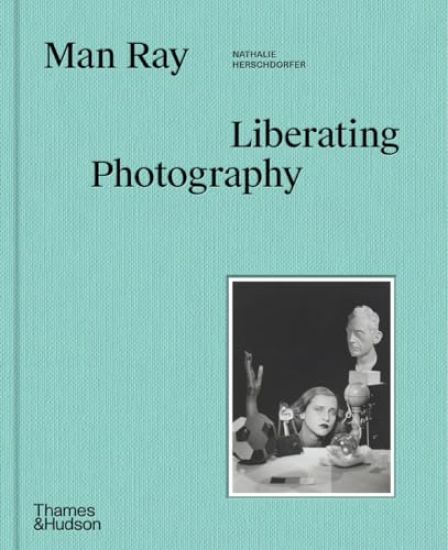
Published in connection with an exhibition opening at Photo Elysée in spring 2024, this book presents more than 150 of Man Ray’s portraits, primarily from the 1920s and 30s. Man Ray (1890–1976) was a man both of and ahead of his time. With his conceptual approach and innovative techniques, he liberated photography from previous constraints and opened the floodgates to new ways of thinking about the medium. A close friend of Marcel Duchamp and André Breton, he was one of the few photographers to be mentioned among the Dada artists and Surrealists. He also worked as a fashion photographer, first for Vogue, and later for Harper’s Bazaar and Vanity Fair. Renowned as the creator of Ingres’ Violin – a photograph from 1924 that broke records when it was sold for $12.4 million in 2022 – Man Ray remains an influential figure in the worlds of art, fashion and pop culture, with many other artists referencing his work. Published in connection with an exhibition at Photo Elysée and in the centenary year of the publication of André Breton’s Surrealist Manifesto, this book presents more than 150 of Man Ray’s portraits, primarily from the 1920s and 30s. It includes portraits of the leading lights of the Paris art scene, among them Marcel Duchamp, Robert Delaunay, Georges Braque, Alberto Giacometti and Pablo Picasso, as well as a selection of his fashion work. As an innovator of photographic techniques and compositional form, Man Ray found the studio portrait – be it of the artists and writers with whom he had longstanding friendships, or of the objects and sculptures he collected – to be the playground in which he could express the visual wit and experimentation for which he is renowned.
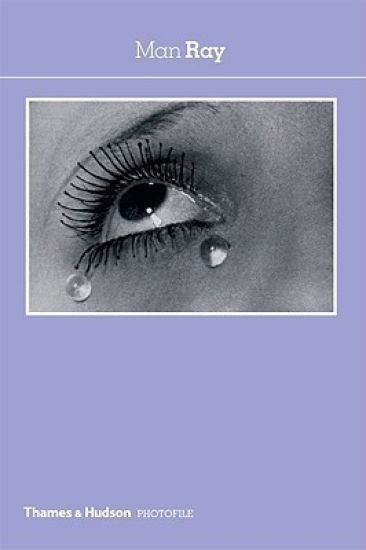
Man Ray
Thames Hudson Ltd
2007
pokkari
A collection of some of the most significant experimental creations of the famous twentieth-century photographer traces his role as a Dadaist and Surrealism pioneer; offers insight into his use of solarization, negative images, and multiple exposures; and describes his 1921 creation of the "rayograph." Original.
Seismic Ray Theory presents a comprehensive treatment of the seismic ray method. This method plays an important role in seismology, seismic exploration, and in the interpretation of seismic measurements. Many concepts which extend the possibilities and increase the efficiency of the seismic ray method are included. The book has a tutorial character: derivations start with a relatively simple problem, in which the main ideas are easier to explain, and then advance to more complex problems. Most of the derived equations in the book are expressed in algorithmic form and may be used directly for computer programming. This book will prove to be an invaluable advanced textbook and reference volume in all academic institutions in which seismology is taught or researched. It will also be an invaluable resource in the research and exploration departments of the petroleum industry and in geological surveys.