

Kirjahaku
Etsi kirjoja tekijän nimen, kirjan nimen tai ISBN:n perusteella.
1000 tulosta hakusanalla Robert L Perry


While Charlie Brown, Snoopy, Lucy, Linus, and the rest of the Peanuts gang have enjoyed the kind of success most cartoon characters can only dream about--becoming pop culture icons of the highest order and entering the global consciousness practically as family members--Robert Short's The Gospel According to Peanuts also has found a place in the hearts of many readers, with sales now totaling more than ten million copies. This anniversary edition features a new cover, a new interior design, and a new foreword by Martin E. Marty. Whether coming to the book for the first time or taking a second look, a delightful experience awaits in this modern-day guide to the Christian faith, fully illustrated with Peanuts.

This breezy and engaging book will delight the Dr. Seuss fan in all of us. Robert Short looks at spirituality in the stories of children's book author and illustrator Theodore "Dr. Seuss" Geisel, arguing that Geisel was "a first-class Christian thinker." The book explores Green Eggs and Ham, Horton Hears a Who, How the Grinch Stole Christmas, and others.Short writes in the introduction, "When I first became acquainted with his books and was struck by the many parallels I saw between his work and what is said in the Bible and by Christian faith, I considered these similarities to be merely 'happy accidents.' Today I still see these parallels as 'happy,' but I'm now convinced that they are not merely 'accidents.'"
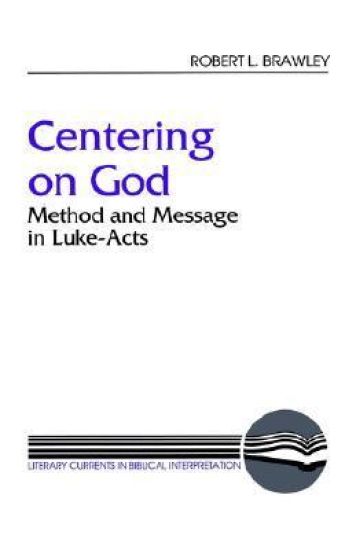
This comprehensive consideration of Luke-Acts offers lucid introductions to a wide variety of exegetical methods. Emphasizing the use of literary criticism, and relating the methods of Roland Barthes's five literary voices, the author analyzes point of view, levels of reliability, and strategies for reformulating reader response, narrative structure, characterization, textual gaps, the cultural repertoire, and redundant antitheses. This book advocates synthesis as the ultimate aim of reading and interpreting and opens new avenues for understanding this important unit of New Testament literature.

Short Meditations on the Bible and Peanuts
Robert L. Short
Westminster/John Knox Press,U.S.
1990
nidottu
Robert L. Short, author of the best-selling The Gospel According to Peanuts, presents a book of biblical meditations on everyday life. Charlie Brown, Linus, Lucy, Snoopy, Woodstock, and friends consider their religious beliefs, and the resulting cartoons offer some delightful insights into life. Short seizes the opportunity to explore these insights one step further, to help us laugh at our own foibles and learn from our own collisions with reality.

The U.S. Constitution opens by proclaiming the sovereignty of all citizens: “We the People.” Robert Tsai’s gripping history of alternative constitutions invites readers into the circle of those who have rejected this ringing assertion—the defiant groups that refused to accept the Constitution’s definition of who “the people” are and how their authority should be exercised.America’s Forgotten Constitutions is the story of America as told by dissenters: squatters, Native Americans, abolitionists, socialists, internationalists, and racial nationalists. Beginning in the nineteenth century, Tsai chronicles eight episodes in which discontented citizens took the extraordinary step of drafting a new constitution. He examines the alternative Americas envisioned by John Brown (who dreamed of a republic purged of slavery), Robert Barnwell Rhett (the Confederate “father of secession”), and Etienne Cabet (a French socialist who founded a utopian society in Illinois). Other dreamers include the University of Chicago academics who created a world constitution for the nuclear age; the Republic of New Afrika, which demanded a separate country carved from the Deep South; and the contemporary Aryan movement, which plans to liberate America from multiculturalism and feminism.Countering those who treat constitutional law as a single tradition, Tsai argues that the ratification of the Constitution did not quell debate but kindled further conflicts over basic questions of power and community. He explains how the tradition mutated over time, inspiring generations and disrupting the best-laid plans for simplicity and order. Idealists on both the left and right will benefit from reading these cautionary tales.
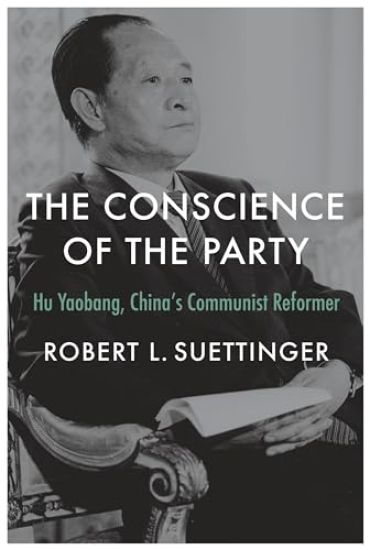
The definitive story of a top Chinese politician’s ill-fated quest to reform the Communist Party.When Hu Yaobang died in April 1989, throngs of mourners converged on the Martyrs’ Monument in Tiananmen Square to pay their respects. Following Hu’s 1987 ouster by party elders, Chinese propaganda officials had sought to tarnish his reputation and dim his memory, yet his death galvanized the nascent pro-democracy student movement, setting off the dramatic demonstrations that culminated in the Tiananmen massacre.The Conscience of the Party is the comprehensive, authoritative biography of the Chinese Communist Party’s most avid reformer and its general secretary for a key stretch of the 1980s. A supremely intelligent leader with an exceptional populist touch, Hu Yaobang was tapped early by Mao Zedong as a capable party hand. But Hu’s principled ideas made him powerful enemies, and during the Cultural Revolution he was purged, brutally beaten, and consigned to forced labor. After Mao’s death, Hu rose again as an ally of Deng Xiaoping, eventually securing the party’s top position. In that role, he pioneered many of the economic reforms subsequently attributed to Deng. But Hu also pursued political reforms with equal vigor, pushing for more freedom of expression, the end of lifetime tenure for CCP leaders, and the dismantling of Mao’s personality cult. Alarmed by Hu’s growing popularity and increasingly radical agenda, Deng had him purged again in 1987.Historian and former intelligence analyst Robert L. Suettinger meticulously reconstructs Hu’s life, providing the kind of eye-opening account that remains impossible in China under state censorship. Hu Yaobang, a decent man operating in a system that did not always reward decency, suffered for his principles but inspired millions in the process.

Containing about 30 percent new material, this edition of ECONOMICS EXPLAINED offers readers not only an invaluable primer on economic theory, but a clear understanding of the causes and treatments of the problems confronting us today, as well as the possible risks and the potential rewards we face in the future. Previous Edition ISBN: 0671884220

Six Steps to Increased Fertility
Robert L. Barbieri; Alice D. Domar; Kevin R. Loughlin
Simon Schuster
2001
pokkari
YES, YOU PROBABLY CAN GET PREGNANT ...and the really good news is that most of you can conceive naturally, without expensive high-tech intervention. The six-step mind/body fertility enhancement program from Harvard Medical School could give you the answer. How can I relax when I'm worried sick about getting pregnant? Can antidepressants affect my fertility? Is there some medicine I can take to increase my sperm production? Does being a vegetarian increase or decrease my chances of conception? Start to help yourself by learning the newest information on how simple lifestyle changes affect fertility.
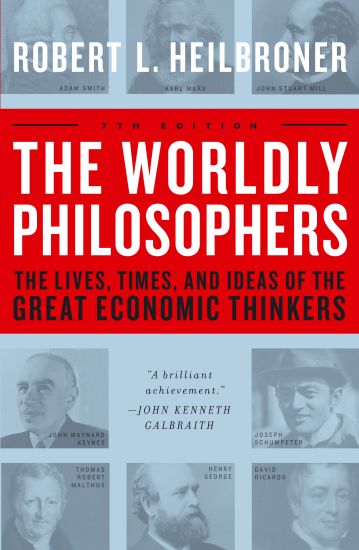
The bestselling classic that examines the history of economic thought from Adam Smith to Karl Marx--"all the economic lore most general readers conceivably could want to know, served up with a flourish" (The New York Times). The Worldly Philosophers not only enables us to see more deeply into our history but helps us better understand our own times. In this seventh edition, Robert L. Heilbroner provides a new theme that connects thinkers as diverse as Adam Smith and Karl Marx. The theme is the common focus of their highly varied ideas--namely, the search to understand how a capitalist society works. It is a focus never more needed than in this age of confusing economic headlines. In a bold new concluding chapter entitled "The End of the Worldly Philosophy?" Heilbroner reminds us that the word "end" refers to both the purpose and limits of economics. This chapter conveys a concern that today's increasingly "scientific" economics may overlook fundamental social and political issues that are central to economics. Thus, unlike its predecessors, this new edition provides not just an indispensable illumination of our past but a call to action for our future.

In this honest, sympathetic book, marital and family therapist Robert L. Barker offers real help for men and women suffering the emotional costs of a jealous partner's suspicion and rage. Based on his extensive work with troubled couples, "The Green-Eyed Marriage" answers these and many other questions about pathological jealousy and its causes and offers practical techniques to minimize jealous confrontations and control them.

In many physical sciences, the most natural description of a system is with a function of position or time. In principle, infinitely many numbers are needed to specify that function, but in practice only finitely many measurements can be made. Inverse theory concerns the mathematical techniques that enable researchers to use the available information to build a model of the unknown system or to determine its essential properties. In Geophysical Inverse Theory, Robert Parker provides a systematic development of inverse theory at the graduate and professional level that emphasizes a rigorous yet practical solution of inverse problems, with examples from experimental observations in geomagnetism, seismology, gravity, electromagnetic sounding, and interpolation. Although illustrated with examples from geophysics, this book has broad implications for researchers in applied disciplines from materials science and engineering to astrophysics, oceanography, and meteorology. Parker's approach is to avoid artificial statistical constructs and to emphasize instead the reasonable assumptions researchers must make to reduce the ambiguity that inevitably arises in complex problems. The structure of the book follows a natural division in the subject into linear theory, in which the measured quantities are linear functionals of the unknown models, and nonlinear theory, which covers all other systems but is not nearly so well understood. The book covers model selection as well as techniques for drawing firm conclusions about the earth independent of any particular model.

From uttering a prayer before boarding a plane, to exploring past lives through hypnosis, has superstition become pervasive in contemporary culture? Robert Park, the best-selling author of Voodoo Science, argues that it has. In Superstition, Park asks why people persist in superstitious convictions long after science has shown them to be ill-founded. He takes on supernatural beliefs from religion and the afterlife to New Age spiritualism and faith-based medical claims. He examines recent controversies and concludes that science is the only way we have of understanding the world. Park sides with the forces of reason in a world of continuing and, he fears, increasing superstition. Chapter by chapter, he explains how people too easily mistake pseudoscience for science. He discusses parapsychology, homeopathy, and acupuncture; he questions the existence of souls, the foundations of intelligent design, and the power of prayer; he asks for evidence of reincarnation and astral projections; and he challenges the idea of heaven. Throughout, he demonstrates how people's blind faith, and their confidence in suspect phenomena and remedies, are manipulated for political ends. Park shows that science prevails when people stop fooling themselves. Compelling and precise, Superstition takes no hostages in its quest to provoke. In shedding light on some very sensitive--and Park would say scientifically dubious--issues, the book is sure to spark discussion and controversy.

This is a sweeping, colorful, and concise narrative history of Egypt from the beginning of human settlement in the Nile River valley 5000 years ago to the present day. Accessible, authoritative, and richly illustrated, this is an ideal introduction and guide to Egypt's long, brilliant, and complex history for general readers, tourists, and anyone else who wants a better understanding of this vibrant and fascinating country, one that has played a central role in world history for millennia - and that continues to do so today. Respected historian Robert Tignor, who has lived in Egypt at different times over the course of five decades, covers all the major eras of the country's ancient, modern, and recent history. A cradle of civilization, ancient Egypt developed a unique and influential culture that featured a centralized monarchy, sophisticated art and technology, and monumental architecture in the form of pyramids and temples. But the great age of the pharaohs is just the beginning of the story and "Egypt: A Short History" also gives a rich account of the tumultuous history that followed - from Greek and Roman conquests, the rise of Christianity, Arab-Muslim triumph, and Egypt's incorporation into powerful Islamic empires to Napoleon's 1798 invasion, the country's absorption into the British Empire, and modern, postcolonial Egypt under Nasser, Sadat, and Mubarak. This book provides an indispensable key to Egypt in all its layers - ancient and modern, Greek and Roman, and Christian and Islamic. In a new afterword the author analyzes the recent unrest in Egypt and weighs in on what the country might look like after Mubarak.
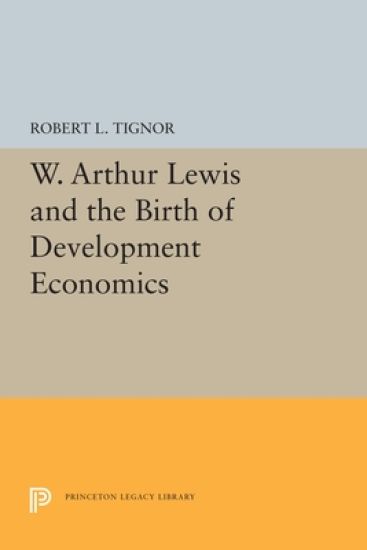
W. Arthur Lewis and the Birth of Development Economics
Robert L. Tignor
Princeton University Press
2020
pokkari
W. Arthur Lewis was one of the foremost intellectuals, economists, and political activists of the twentieth century. In this book, the first intellectual biography of Lewis, Robert Tignor traces Lewis's life from its beginnings on the small island of St. Lucia to Lewis's arrival at Princeton University in the early 1960s. A chronicle of Lewis's unfailing efforts to promote racial justice and decolonization, it provides a history of development economics as seen through the life of one of its most important founders.If there were a record for the number of "firsts" achieved by one man during his lifetime, Lewis would be a contender. He was the first black professor in a British university and also at Princeton University and the first person of African descent to win a Nobel Prize in a field other than literature or peace. His writings, which included his book The Theory of Economic Growth, were among the first to describe the field of development economics.Quickly gaining the attention of the leadership of colonized territories, he helped develop blueprints for the changing relationship between the former colonies and their former rulers. He made significant contributions to Ghana's quest for economic growth and the West Indies' desire to create a first-class institution of higher learning serving all of the Anglophone territories in the Caribbean.This book, based on Lewis's personal papers, provides a new view of this renowned economist and his impact on economic growth in the twentieth century. It will intrigue not only students of development economics but also anyone interested in colonialism and decolonization, and justice for the poor in third-world countries.
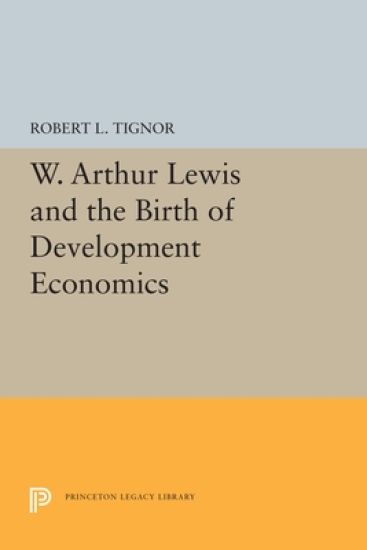
W. Arthur Lewis and the Birth of Development Economics
Robert L. Tignor
PRINCETON UNIVERSITY PRESS
2020
sidottu
W. Arthur Lewis was one of the foremost intellectuals, economists, and political activists of the twentieth century. In this book, the first intellectual biography of Lewis, Robert Tignor traces Lewis's life from its beginnings on the small island of St. Lucia to Lewis's arrival at Princeton University in the early 1960s. A chronicle of Lewis's unfailing efforts to promote racial justice and decolonization, it provides a history of development economics as seen through the life of one of its most important founders.If there were a record for the number of "firsts" achieved by one man during his lifetime, Lewis would be a contender. He was the first black professor in a British university and also at Princeton University and the first person of African descent to win a Nobel Prize in a field other than literature or peace. His writings, which included his book The Theory of Economic Growth, were among the first to describe the field of development economics.Quickly gaining the attention of the leadership of colonized territories, he helped develop blueprints for the changing relationship between the former colonies and their former rulers. He made significant contributions to Ghana's quest for economic growth and the West Indies' desire to create a first-class institution of higher learning serving all of the Anglophone territories in the Caribbean.This book, based on Lewis's personal papers, provides a new view of this renowned economist and his impact on economic growth in the twentieth century. It will intrigue not only students of development economics but also anyone interested in colonialism and decolonization, and justice for the poor in third-world countries.

The threat to the survival of humankind posed by nuclear weapons has been a frightening and essential focus of public debate for the last four decades and must continue to be so if we are to avoid destroying ourselves and the natural world around us. One unfortunate result of preoccupation with the nuclear threat, however, has been a new kind of "respectability" accorded to conventional war. In this radical and cogent argument for pacifism, Robert Holmes asserts that all war--not just nuclear war--has become morally impermissible in the modern world. Addressing a wide audience of informed and concerned readers, he raises dramatic questions about the concepts of "political realism" and nuclear deterrence, makes a number of persuasive suggestions for nonviolent alternatives to war, and presents a rich panorama of thinking about war from St. Augustine to Reinhold Niebuhr and Herman Kahn. Holmes's positions are compellingly presented and will provoke discussion both among convinced pacifists and among those whom he calls "militarists." "Militarists," we realize after reading this book, include the majority of us who live a friendly and peaceful personal life while supporting a system which, if Holmes is correct, guarantees war and risks eventual human extinction. Originally published in 1989. The Princeton Legacy Library uses the latest print-on-demand technology to again make available previously out-of-print books from the distinguished backlist of Princeton University Press. These editions preserve the original texts of these important books while presenting them in durable paperback and hardcover editions. The goal of the Princeton Legacy Library is to vastly increase access to the rich scholarly heritage found in the thousands of books published by Princeton University Press since its founding in 1905.

Capitalism and Nationalism at the End of Empire
Robert L. Tignor
Princeton University Press
2015
pokkari
The two decades that followed World War II witnessed the end of the great European empires in Asia and Africa. Robert Tignor's new study of the decolonization experiences of Egypt, Nigeria, and Kenya elucidates the major factors that led to the transfer of power from British to African hands in these three territories. Employing a comparative method in order to explain the different decolonizing narratives in each territory, he argues that the different state policies toward the private business sector and foreign capital were the result of nationalist policies and attitudes and the influence of Cold War pressures on local events. Using business records as well as official government sources, the work highlights the economic aspects of decolonization and weighs the influence of nationalist movements, changes in metropolitan attitudes toward the empire, and shifts in the international balance of power in bringing about the transfer of authority. The author concludes that the business communities did not play decisive roles, adhering instead to their time-honored role of leaving political issues to colonial officials and their nationalist critics. Tignor also finds that the nationalist movements, far from being ineffective, largely realized the primary goals of nationalist leaders that had been articulated for many decades. Originally published in 1997. The Princeton Legacy Library uses the latest print-on-demand technology to again make available previously out-of-print books from the distinguished backlist of Princeton University Press. These editions preserve the original texts of these important books while presenting them in durable paperback and hardcover editions. The goal of the Princeton Legacy Library is to vastly increase access to the rich scholarly heritage found in the thousands of books published by Princeton University Press since its founding in 1905.