Frances Eliza Hodgson Burnett (24 November 1849 - 29 October 1924) was an English-American novelist and playwright. She is best known for the three children's novels Little Lord Fauntleroy (published in 1885-1886), A Little Princess (1905), and The Secret Garden (1911). Frances Eliza Hodgson was born in Cheetham, England. After her father died in 1852, the family fell on straitened circumstances and in 1865 immigrated to the United States, settling near Knoxville, Tennessee. There Frances began writing to help earn money for the family, publishing stories in magazines from the age of 19. In 1870, her mother died, and in 1872 Frances married Swan Burnett, who became a medical doctor. The Burnetts lived for two years in Paris, where their two sons were born, before returning to the United States to live in Washington, D.C., Burnett then began to write novels, the first of which (That Lass o' Lowrie's), was published to good reviews. Little Lord Fauntleroy was published in 1886 and made her a popular writer of children's fiction, although her romantic adult novels written in the 1890s were also popular. She wrote and helped to produce stage versions of Little Lord Fauntleroy and A Little Princess. Burnett enjoyed socializing and lived a lavish lifestyle. Beginning in the 1880s, she began to travel to England frequently and in the 1890s bought a home there where she wrote The Secret Garden. Her oldest son, Lionel, died of tuberculosis in 1890, which caused a relapse of the depression she had struggled with for much of her life. She divorced Swan Burnett in 1898, married Stephen Townsend in 1900, and divorced him in 1902. A few years later she settled in Nassau County, Long Island, where she died in 1924 and is buried in Roslyn Cemetery. In 1936 a memorial sculpture by Bessie Potter Vonnoh was erected in her honour in Central Park's Conservatory Garden. The statue depicts her two famous Secret Garden characters, Mary and Dickon. Childhood in Manchester Frances Eliza Hodgson was born in 1849 at 141 York Street in the Cheetham Hill township of the Borough of Manchester, England. She was the third of five children of Edwin Hodgson, an ironmonger from Doncaster in Yorkshire, and his wife Eliza Boond, from a well-to-do Manchester family. Hodgson owned a business in Deansgate, selling quality ironmongery and brass goods. The family lived comfortably, employing a maid and a nurse-maid.Frances was the middle of the five Hodgson children, with two older brothers and two younger sisters. In 1852 the family moved to a more spacious home with greater access to outdoor space.Barely a year later, with his wife pregnant for a fifth time, Hodgson died of a stroke, leaving the family without income. Frances was cared for by her grandmother while her mother took over running the family business. From her grandmother, who bought her books, Frances learned to love reading, in particular her first book The Flower Book which had coloured illustrations and poems. Because of their reduced income, Eliza had to give up their house and moved with her children to Seedley Grove, near Pendleton; there they lived with relatives in a home that included a large enclosed garden, in which Frances enjoyed playing. For a year Frances went to a small school run by two women, where she first saw a book about fairies. When her mother moved the family to Salford, Frances mourned the lack of flowers and gardens. Their home was located in Islington Square, adjacent to an area with severe overcrowding and poverty, that "defied description", as described by Friedrich Engels who lived in Manchester at the time....
Las haza as de Robin Hood se narran en una serie de baladas que fueron transmiti ndose de forma oral, durante siglos y siglos. La balada es el g nero medieval de la literatura inglesa equi-valente a los romances de nuestra literatura. En ellas se conta-ban las distintas aventuras de un h roe. Las baladas son an nimas y fueron concebidas para ser can-tadas o recitadas por los juglares. Por eso, debido a la transmi-si n oral y a la intervenci n de numerosos juglares, las baladas presentan diversas versiones sobre un mismo hecho. En el caso de Robin Hood, sus haza as se narran en m s de treinta baladas. stas fueron recogidas en un verdadero poema pico: The gest of Robin Hood. La obra, impresa alrededor del a o 1500, agrupa los distintos episodios sobre la vida del h roe. A lo largo del tiempo, las andanzas de Robin Hood han ins¬pirado obras literarias como es el caso de Ivanhoe (I8I9), de Walter Scott. Asimismo, la vida del h roe de Shervvood ha sido llevada al cine. Robin Hood ha sido protagonista de numerosas pel culas, algunas de ellas de dibujos animados. A este personaje tambi n se le conoce en Espa a con el nombre de Robin de los Bosques.
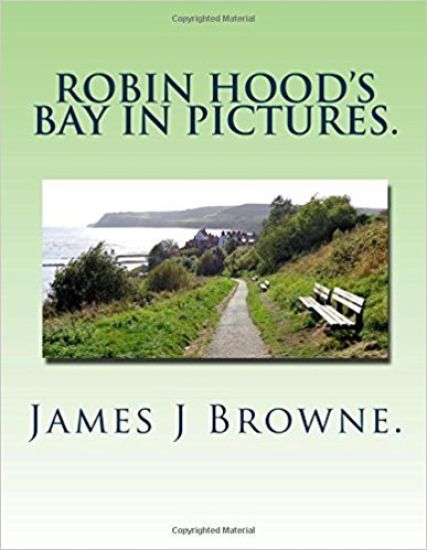
By the way, no local calls Robin Hood's Bay by its full name and usually it is referred to as "The Bay", or just "Baytown". Discover something of its rich history through this collection of contemporary photographs. In the eleventh century the neighbouring hamlet of Raw and the village of Fylingthorpe, in Fylingdales, had been settled by Danes and Norwegians. Following the Norman Conquest, in 1069, a great deal of land in the North of England, including Fylingdales, was laid waste. Tancred the Fleming received Fylingdales from William the Conqueror and later sold it to the Abbot of Whitby. However, by about 1500 a settlement, "Robin Hoode Baye", had grown up on the coast. The village was described by Leland in 1536 as - "A fischer tounlet of 20 bootes with Dok or Bosom of a mile yn length." Leland, by the way, has often been described as "the father of English local history and bibliography". Louis I, Count of Flanders, in the period 1324-1346 corresponded with King Edward III and complained that Flemish fishermen, together with their boats and catches, were being taken by force to Robin Hood's Bay. Looking south towards Ravenscar from above the sea wall. After the Dissolution of the Monasteries in 1540, Whitby Abbey and its lands became the property of King Henry VIII. It was during Henry's reign that King Street and the King's Beck came into being. In the 16th century Whitby was a less significant port than Robin Hood's Bay. "The Bay" was described by a tiny picture of tall houses and an anchor on old North Sea charts published by Waghenaer in 1586. During the late 18th century smuggling was a way of life on the Yorkshire coast and the Bay was a very much a smuggler's haunt. The town was, and still is, practically a labyrinth of tiny streets and there are believed to be many underground passageways linking the cottages.
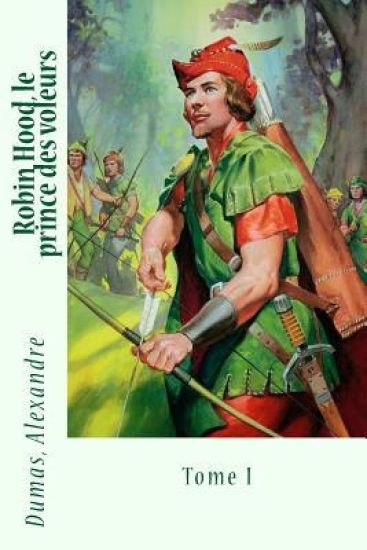
Vous connaissez tous Robin des Bois, dont l'histoire est assez proche de celle d'Ivanho crit par Walter Scott une cinquantaine d'ann e auparavavant. Alors, en avant pour l'aventure historique...
Vous connaissez tous Robin des Bois, dont l'histoire est assez proche de celle d'Ivanho crit par Walter Scott une cinquantaine d'ann e auparavavant. Alors, en avant pour l'aventure historique...
L'air tait froid; les arbres, sur lesquels commen ait poindre la faible verdure de mars, frissonnaient au souffle des derni res bises de l'hiver, et un sombre brouillard s' panchait sur la contr e mesure que les rayonnements du soleil cou- chant s' teignaient dans les nuages empourpr s de l'horizon. Bient t le ciel devint obscur, et des rafales passant sur la for t pr sag rent une nuit orageuse.
Le retour d'Allan vaut Robin de s'occuper d'emp cher l'union de Christabel avec un vieux mais riche ami de son p re et de sauver de la pendaison Will, un de ses amis ayant quitt brutalement l'arm e. Apr s les mariages de Christabel et Allan, de Robin et Marianne, et de Will et Maude, Robin et ses joyeux compagnons continuent de plus belle d pouiller les riches Normands et le clerg de leurs richesses afin de soulager la mis re des pauvres, augmentant encore le ressentiment du sheriff qui mourra sans avoir eu la joie de capturer Robin ni par la force ni par la ruse.
This second book by the Vancouver Sun columnist, author of the successful Robin Ward's Vancouver, offers 60 drawings of structures in Vancouver, Victoria, Seattle and points between. The Sun Yat Sen Gardens and Cathedral Place in downtown Vancouver, the Empress Hotel and Eaton Centre in Victoria, historic structures in Britannia Beach and Port Townsend - Ward brings to all of them his special eye for detail, his insatiable curiosity about social history and his love for the unique character of each town and city. His drawings are accompanied by spirited commentary on decisions we make about our heritage sites - from the innovative and responsible to the downright scandalous.
Although nearly everyone has heard the name of Robin Hood, few have actually read any medieval tales about the legendary outlaw. Stephen Knight and Thomas Ohlgren set out to correct this discrepancy in their comprehensive collection of all pre-seventeenth-century Robin Hood tales. The editors include such other "outlaw" figures as Hereward the Wake, Eustache the Monk, and Fouke le Fitz Waryn to further contextualize the tradition of English outlaw tales. In this text the figure of Robin Hood can be viewed in historical perspective, from the early accounts in the chronicles through the ballads, plays, and romances that grew around his fame and impressed him on our fictional and historical imaginations. This edition is particularly useful for classrooms, with its extensive introductions, notes, and glosses, enabling students of any level to approach the texts in their original Middle English.
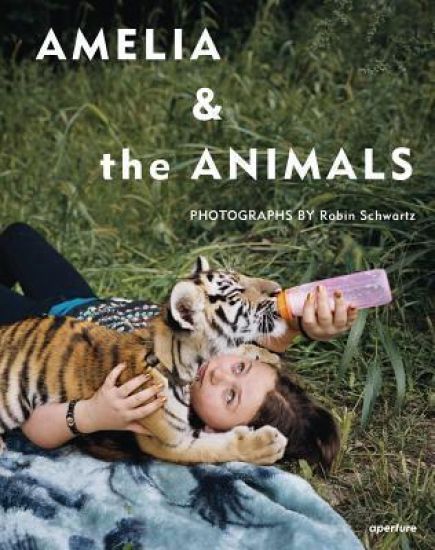
Amelia is fourteen years old. In many ways, she is your average American teenager: since she was three years old, she has been her mother’s muse and the subject of her photographs. However, not every mom is a world-class photographer with a predilection for photographing animals. And it’s not every teenager who has portraits of herself with elephants, llamas, ponies, tigers, kangaroos, chimpanzees, and endless dogs, cats, and other animals—portraits that hang in the collections of major art museums around the world. Amelia and the Animals is Robin Schwartz’s second monograph featuring this collaborative photographic series dedicated to documenting her and Amelia’s adventures among the animals. As Schwartz puts it, “Photography is a means for Amelia to meet animals. Until recently, she took these opportunities for granted. She didn’t realize how unusual her encounters were until everyone started to tell her how lucky she was to meet so many animals.” Nonetheless, these images are more than documents of Amelia and her rapport with animals; they offer a meditation on the nature of interspecies communication and serve as evidence of a shared motherdaughter journey into invented worlds, of fables they enact together. Schwartz concludes, “Photography gives us the opportunity to access our dreams, to discover the extraordinary.”
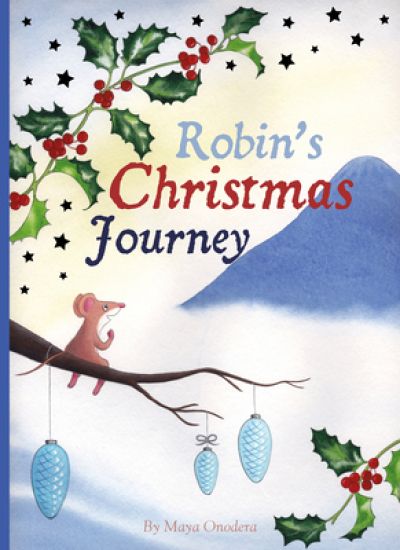
"With snowy woodland scenes and a chipper protagonist up for any challenge, Onodera brings readers along on a suspenseful ride to a welcoming destination filled with Christmas spirit." - Publishers Weekly "This is a beautifully touching Christmas story stressing the importance of the most meaningful Christmas gift of all. The story is filled with adventure, determination, and the yearning to follow through with your goal while facing one challenge after another. Young students will love this story. It highlights the strength of the little mouse to complete his journey to be with his grandfather for Christmas. The illustrations are eye-catching, alive, and very colorful." - ITEEA It’s almost Christmas Eve. Robin wants to celebrate Christmas Day with his grandfather. But Grandpa lives on the other side of the mountain. So, with his backpack and a lot of courage, Robin takes off on an adventure. An exciting and moving Christmas story about a brave little mouse. For adventurers ages 4 and up. Guided Reading Level K