This textbook provides a thorough and precise account of all the major areas of English grammar. For practical reasons the author concentrates on Standard English and only selected aspects of its regional variation. The book is written for students who may have no previous knowledge of linguistics and little familiarity with ‘traditional’ grammar. All grammatical terms, whether traditional or more recent, are therefore carefully explained, and in the first three chapters the students is introduced to the theoretical concepts and methodological principles needed to follow the later descriptive chapters. Nevertheless, the book is more than a straightforward ‘grammar of English’. Rodney Huddleston does not espouse any formalised contemporary model of syntax and morphology, but he adopts the framework of modern ‘structural’ linguistics, in a very broad understanding of that term. The grammatical categories postulated derive from a study of the combinational and contrastive relationships the words and other forms enter into, and Dr Huddleston pays particular attention to the problem of choosing between alternative analyses and justifying the analysis he proposes. In this sense his book is addressed to the student of linguistics, who will find Introduction to the Grammar of English a much needed foundation for more advanced work in theoretical linguistics.
A thorough and precise account of all the major areas of English grammar. For practical reasons Rodney Huddleston concentrates on Standard English and only selected aspects of its regional variation. The book is written for students who may have no previous knowledge of linguistics and little familiarity with 'traditional' grammar. All grammatical terms, whether traditional or more recent, are therefore carefully explained, and in the first three chapters the student is introduced to the theoretical concepts and methodological principles needed to follow the later descriptive chapters.
This book presents a new and comprehensive descriptive grammar of English, written by the principal authors in collaboration with an international research team of a dozen linguists in five countries. It represents a major advance over previous grammars by virtue of drawing systematically on the linguistic research carried out on English during the last forty years. It incorporates insights from the theoretical literature but presents them in a way that is accessible to readers without formal training in linguistics. It is based on a sounder and more consistent descriptive framework than previous large-scale grammars, and includes much more explanation of grammatical terms and concepts, together with justification for the ways in which the analysis differs from traditional grammar. The book contains twenty chapters and a guide to further reading. Its usefulness is enhanced by diagrams of sentence structure, cross-references between sections, a comprehensive index, and user-friendly design and typography throughout.
This is a comparative study of the role of English and French towns in feudal society in the middle ages. In bringing together much material which dissolves old categories and simplifications in the study of medieval towns, Professor Hilton provides an important new perspective on medieval society and on the nature of feudalism. He argues that medieval towns were not, as is often thought, the harbingers of capitalism, and emphasises the way in which urban social structures fitted into, rather than challenged, feudalism.
The Hessians are infamous in American history for their role as part of the British forces sent to crush the colonists’ rebellion in 1776. Yet these German auxiliaries, or mercenaries were only one instance of a frequent military practice, approved by international jurists of the time and used by the British in all their eighteenth-century wars. This study (dealing with one of the six contingents known inaccurately as the Hessians) is the first to make extensive use of manuscript sources in Germany, Britain and America to put the Hessians in their historical context and to examine a number of the myths about them. The encounter of the Americans with the Hessian troops from a disciplined paternalistic society organized for war, with special thoroughness, was not merely the meeting of two military systems, but also of two ways of life, and is thus worthy of study in an age of conflict.
The title of this book was inspired by a passage in Charles Sherrington’s Man on his Nature. When that famous physiologist died in 1952, the prospects for a scientific explanation of consciousness seemed remote. Enchanted Looms shows how the situation has changed dramatically, and provides what is probably the most wide-ranging account of the phenomenon ever written. Rodney Cotterill bridges the gap between the bottom-up approach to understanding consciousness, anchored in the brain’s biochemistry, anatomy and physiology, and the top-down strategy, which concerns itself with behaviour and the nervous system’s interaction with the environment. The author argues that an explanation of consciousness is now at hand, and extends the discussion to include intelligence and creativity. This beautifully written and illustrated book will be valued for its easy access to one of science’s last great challenges. It will change forever our view of consciousness, and our concept of the human being.
This introductory account of commutative algebra is aimed at advanced undergraduates and first year graduate students. Assuming only basic abstract algebra, it provides a good foundation in commutative ring theory, from which the reader can proceed to more advanced works in commutative algebra and algebraic geometry. The style throughout is rigorous but concrete, with exercises and examples given within chapters, and hints provided for the more challenging problems used in the subsequent development. After reminders about basic material on commutative rings, ideals and modules are extensively discussed, with applications including to canonical forms for square matrices. The core of the book discusses the fundamental theory of commutative Noetherian rings. Affine algebras over fields, dimension theory and regular local rings are also treated, and for this second edition two further chapters, on regular sequences and Cohen–Macaulay rings, have been added. This book is ideal as a route into commutative algebra.
This book presents the current state of the art in computational models for turbulent reacting flows, and analyzes carefully the strengths and weaknesses of the various techniques described. The focus is on formulation of practical models as opposed to numerical issues arising from their solution. A theoretical framework based on the one-point, one-time joint probability density function (PDF) is developed. It is shown that all commonly employed models for turbulent reacting flows can be formulated in terms of the joint PDF of the chemical species and enthalpy. Models based on direct closures for the chemical source term as well as transported PDF methods are covered in detail. An introduction to the theory of turbulent and turbulent scalar transport is provided for completeness. The book is aimed at chemical, mechanical, and aerospace engineers in academia and industry, as well as developers of computational fluid dynamics codes for reacting flows.
Keywords in Australian Politics is much more than a dictionary. It outlines the main meanings of over one hundred words essential to understanding contemporary Australian politics. Political language is often used without explanation in the media, public debate, textbooks and lectures. Here at last is a book that provides Australians with the necessary information to use these terms with confidence in public discussion and debate, from the dinner party to the end-of-semester essay. This book defines each keyword, highlights links between different keywords, outlines the main debates concerning each keyword and indicates how they came to be part of Australian political language. Although the book is arranged alphabetically, systematic cross-referencing allows readers to follow their own trails of enquiry. This book is essential reading for everyone who wants to understand Australian political culture and ideas.
Race and racial diversity are important aspects of America and have been shown to substantially affect social relations and the political system, often in ways inconsistent with the values of equality. However, greater civic association and a general sense of community, embodied in the concept of social capital, are said to have tremendous beneficial effects and profoundly influence American society. This 2007 study juxtaposes and critically assesses two bodies of research that have reached different conclusions on these issues. Is America's legacy of racial inequality an 'evil twin' of the benefits of social capital? By analysing the social outcomes for racial minorities, in addition to other dimensions of American politics, the author shows that the impact of racial diversity consistently outweighs that of social capital.
How Australia Compares is a handy reference that compares Australia with seventeen other developed countries across a wide range of social, economic and political dimensions. Whenever possible, it gives not only snapshot comparisons from the present, but charts trends over recent decades or even longer. Encyclopaedic in scope, it provides statistics for a huge range of human activity, from taxation to traffic accidents, homicide rates to health expenditure, interest rates to internet usage. This new edition is fully revised and updated, and features two new chapters: The Howard Impact and The Search for Scoreboards. New sections include obesity, advertising, broadband internet access, childcare and corruption. Information is highly accessible with double-page spreads for each topic. Tables and graphs are presented on one page, and clear explanation and analysis on the facing page. In each discussion the focus is to put the Australian experience into international perspective, drawing out the implications for the nation's performance, policies and prospects.
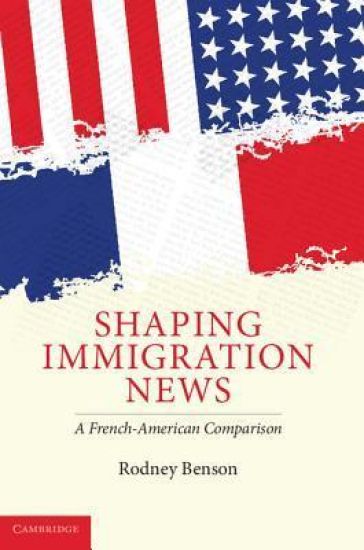
This book offers a comprehensive portrait of French and American journalists in action as they grapple with how to report and comment on one of the most important issues of our era. Drawing on interviews with leading journalists and analyses of an extensive sample of newspaper and television coverage since the early 1970s, Rodney Benson shows how the immigration debate has become increasingly focused on the dramatic, emotion-laden frames of humanitarianism and public order. In both countries, less commercialized media tend to offer the most in-depth, multi-perspective and critical news. Benson challenges classic liberalism's assumptions about state intervention's chilling effects on the press, suggests costs as well as benefits to the current vogue in personalized narrative news, and calls attention to journalistic practices that can help empower civil society. This book offers new theories and methods for sociologists and media scholars and fresh insights for journalists, policy makers and concerned citizens.
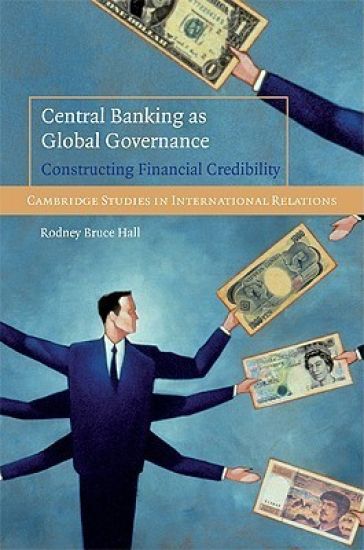
Money is a social convention, but with what social consequences? In this innovative study, Rodney Bruce Hall argues that those who govern the parameters of money's creation, its destruction, and its valuation are responsible for the governance of international finance. The volume is an analysis of central banking as global governance, employing the institutional philosophy of John Searle as a theoretical basis for exploring the consequences of money as a social institution, and the social relations of credit and debt. While previous studies in this field have made forays into the political economy of monetary institutions, this book breaks new ground by offering a constructivist social analysis that identifies the mechanisms of governance as social rather than material processes. The volume will therefore be of great interest to a wide range of scholars and students, particularly those with an interest in international relations, international finance and international political economy.
The title of this book was inspired by a passage in Charles Sherrington’s Man on his Nature. When that famous physiologist died in 1952, the prospects for a scientific explanation of consciousness seemed remote. Enchanted Looms shows how the situation has changed dramatically, and provides what is probably the most wide-ranging account of the phenomenon ever written. Rodney Cotterill bridges the gap between the bottom-up approach to understanding consciousness, anchored in the brain’s biochemistry, anatomy and physiology, and the top-down strategy, which concerns itself with behaviour and the nervous system’s interaction with the environment. The author argues that an explanation of consciousness is now at hand, and extends the discussion to include intelligence and creativity. This beautifully written and illustrated book will be valued for its easy access to one of science’s last great challenges. It will change forever our view of consciousness, and our concept of the human being.
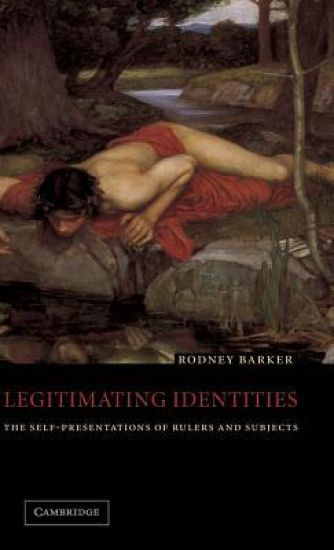
Rulers of all kinds, from feudal monarchs to democratic presidents and prime ministers, justify themselves to themselves through a variety of rituals, rhetoric, and dramatisations, using everything from architecture and coinage to etiquette and portraiture. This kind of legitimation - self-legitimation - has been overlooked in an age which is concerned principally with how government can be justified in the eyes of its citizens. In this book, Rodney Barker argues that at least as much time is spent by rulers legitimating themselves in their own eyes, and cultivating their own sense of identity, as is spent in trying to convince ordinary subjects. Once this dimension of ruling is taken into account, a far fuller understanding can be gained of what rulers are doing when they rule. It can also open the way to a more complete grasp of what subjects are doing, both when they obey and when they rebel.
Race and racial diversity are important aspects of America and have been shown to substantially affect social relations and the political system, often in ways inconsistent with the values of equality. However, greater civic association and a general sense of community, embodied in the concept of social capital, are said to have tremendous beneficial effects and profoundly influence American society. This 2007 study juxtaposes and critically assesses two bodies of research that have reached different conclusions on these issues. Is America's legacy of racial inequality an 'evil twin' of the benefits of social capital? By analysing the social outcomes for racial minorities, in addition to other dimensions of American politics, the author shows that the impact of racial diversity consistently outweighs that of social capital.
This book offers a comprehensive portrait of French and American journalists in action as they grapple with how to report and comment on one of the most important issues of our era. Drawing on interviews with leading journalists and analyses of an extensive sample of newspaper and television coverage since the early 1970s, Rodney Benson shows how the immigration debate has become increasingly focused on the dramatic, emotion-laden frames of humanitarianism and public order. In both countries, less commercialized media tend to offer the most in-depth, multi-perspective and critical news. Benson challenges classic liberalism's assumptions about state intervention's chilling effects on the press, suggests costs as well as benefits to the current vogue in personalized narrative news, and calls attention to journalistic practices that can help empower civil society. This book offers new theories and methods for sociologists and media scholars and fresh insights for journalists, policy makers and concerned citizens.
Money is a social convention, but with what social consequences? In this innovative study, Rodney Bruce Hall argues that those who govern the parameters of money's creation, its destruction, and its valuation are responsible for the governance of international finance. The volume is an analysis of central banking as global governance, employing the institutional philosophy of John Searle as a theoretical basis for exploring the consequences of money as a social institution, and the social relations of credit and debt. While previous studies in this field have made forays into the political economy of monetary institutions, this book breaks new ground by offering a constructivist social analysis that identifies the mechanisms of governance as social rather than material processes. The volume will therefore be of great interest to a wide range of scholars and students, particularly those with an interest in international relations, international finance and international political economy.
A Good Death is Rodney Syme's extraordinarily candid and controversial account of the many terminally ill people who he has assisted to end their lives. Over the last 30 years Syme, at first clandestinely and now publicly, has challenged the law on voluntary euthanasia, risking prosecution in doing so. He again risks prosecution for writing this book. ""A Good Death"" is a moving journey with those who came to Rodney Syme for help and a meditation on what it means to confront death in our culture. It is also a doctor's personal story about the moral dilemmas and ethical choices he faces working within the grey areas of the law.In ""A Good Death"" Rodney Syme argues for the end of the unofficial 'conspiracy' of silence within the medical profession and the decriminalisation of voluntary euthanasia in Australia. Through Syme's determination to tell the stories of those who he has assisted to die with dignity, ""A Good Death"" also draws wider lessons of value for those who find themselves in a similar situation.