
Kirjahaku
Etsi kirjoja tekijän nimen, kirjan nimen tai ISBN:n perusteella.
1000 tulosta hakusanalla Sebastian Flock
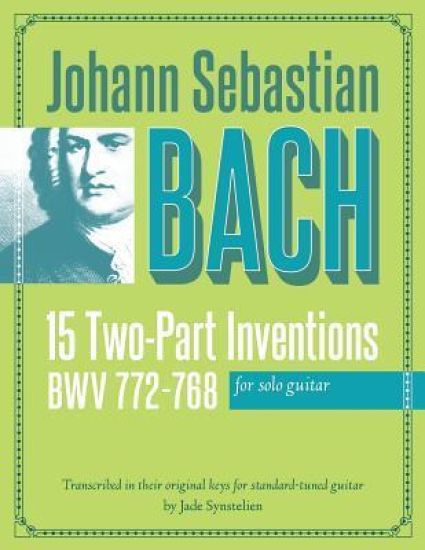
J.S. Bach's 15 Two-Part Inventions transcribed in their original keys for standard-tuned solo guitar without losing the continuity or integrity of either the upper or lower lines. All the intervals, accidentals, and ornaments are transcribed according to Bach's original handwritten manuscripts. *For advanced (or ambitious) guitarists.*
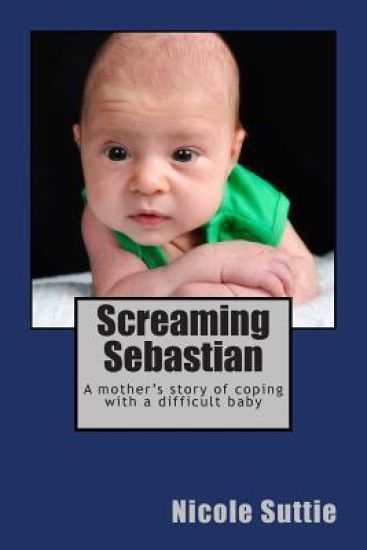
Screaming Sebastian: A mother's story of coping with a difficult baby
Nicole Suttie
Createspace Independent Publishing Platform
2013
nidottu
Johann Sebastian Bach, V1: The Well Tempered Clavichord
Literary Licensing, LLC
2013
nidottu
Johann Sebastian Bach - Fugue in A minor BWV 1000: Transcribed for Guitar Solo, Duet and Trio
Jeffrey Goodman
Createspace Independent Publishing Platform
2013
nidottu
San Sebastián coso taurino
Antonio De Hoyos y. Vinent
Createspace Independent Publishing Platform
2014
nidottu
"San Sebasti n coso taurino", de Antonio de Hoyos y Vinent. Antonio de Hoyos y Vinent fue un periodista y narrador espa ol, perteneciente a la corriente est tica del Decadentismo (1885-1940)
Johann Sebastian Bach - Cello Suite VI, Bwv 1012: Arranged for Guitar
Jeffrey Goodman
Createspace Independent Publishing Platform
2014
nidottu
Bach's Suites Violoncello Solo senza Basso are thought to have been composed during 1717-1723, when Bach served as Kapellmeister in K then. Although no manuscript in Bach's own hand has survived, there is a manuscript in the hand of Bach's second wife Anna Magdalena Bach.This is the historical source from which this arrangement has been made. Bach's Cello Suite VI, BWV 1012, is in the key of D major, and this arrangement keeps the original key. A low D tuning of the 6th string is used throughout all the movements of the suite. This adds a rich sonority, and by extending the bass range, allows for a more authentic rendering of melodic lines, and also preserves much of the original voicing of chords.
Johann Sebastian Bach 25 chorale for small brass ensemble
Daniel M. Pintea
Createspace Independent Publishing Platform
2015
nidottu
Johann Sebastian Bach
Johann Nikolaus Forkel
Createspace Independent Publishing Platform
2015
nidottu


Spiritual Teachings of Father Sebastian Bowden of the London Oratory
Father Sebastian Bowden
Createspace Independent Publishing Platform
2015
nidottu
Summertime Blues in the Vast Old North: A Book of Poetry by Jonathan Sebastian Maxwell Johnson
Jonathan Sebastian Maxwell Johnson
Independently Published
2017
nidottu
I wrote these poems in the summer of 2015 by hand in a little black sketch book. They are mostly random but somehow stick together. A lot of them were written in the early morning after work. There is no rhyme or reason to them except for that which you the reader creates. Thank you for taking the time to read this work.
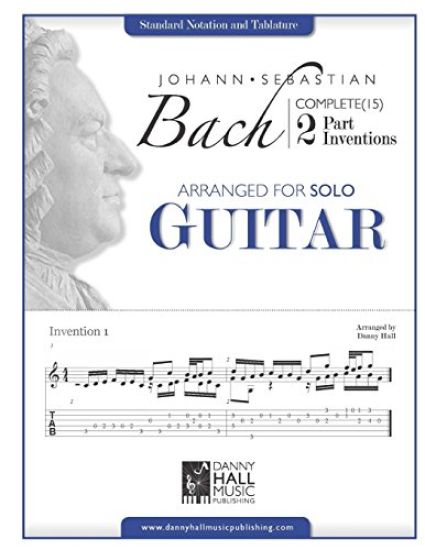
Johann Sebastian Bach Complete 2 Part Inventions Arranged for Solo Guitar
Danny Hall
Createspace Independent Publishing Platform
2016
nidottu
San Sebastian, coso taurino
Antonio Hoyos y. Vinent
Createspace Independent Publishing Platform
2016
nidottu
De familia aristocr tica recibi una esmerada educaci n en Viena, Oxford y Madrid. Hered el mayorazgo, pero su homosexualidad, que no se ocup en ocultar, y sus defectos, que hoy pasar an por virtudes, le convirtieron en una oveja negra para la parte menos tolerante de la buena sociedad (su madre le retirar el saludo por haber colgado en el sal n su colecci n de retratos de j venes p giles), aunque no para su amiga e introductora en el mundillo literario, Emilia Pardo Baz n.
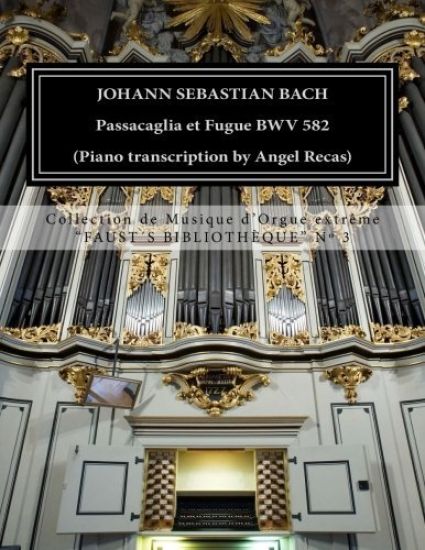
Johann Sebastian Bach Passacaglia et Fugue BWV 852 (piano transcription by Angel Recas): Johann Sebastian Bach Passacaglia BWV 852 (piano transcriptio
Angel Recas; Johann Sebastian Bach
Createspace Independent Publishing Platform
2016
nidottu
"In principio erat rhythmus et rhythmum erat Bach" (En el principio era el ritmo y el ritmo era Bach). As , de esta manera ligeramente parafraseada y tan expl citamente contundente, se expresaba el gran pianista Hans von B low, celeb rrimo director de orquesta, alumno predilecto de Liszt, y uno de los mayores pianistas que ha dado la historia musical interpretativa del piano, acerca de la fundamental trascendencia de la figura de Johann Sebastian Bach en la historia de la m sica. Ser a en 1848 cuando el pianista y compositor h ngaro Franz Liszt, posiblemente el mayor virtuoso que hab a dado la historia de la m sica se instalar a en Weimar, dejando atr s una impresionante y prol fica carrera como virtuoso, los a os que en su biograf a habr an de llamarse Ann es de P lerinage. En Weimar, en este hist rico principado alem n, en octubre de 1842 Liszt ya hab a sido nombrado como "Kapellmeister in au erordentlichen Diensten" (Maestro de capilla de servicios extraordinarios), y seria all al fijar su residencia en 1848 donde permanecer a, siendo nombrado adem s director del gran Teatro de la pera de Weimar, la joya musical de la bell sima aunque un poco provinciana y decadente por entonces ciudad de Goethe y Schiller. En la inmortal ciudad de Weimar, que se convertir a en esos a os de estancia lisztiana en uno de los centros art sticos de peregrinaje musical de toda Europa. Liszt poco pod a sospechar que, en cierta forma, de manera inconsciente, estaba tomando el testigo e incluso el legado hist rico musical, reviviendo la gran tradici n organ stica heredada desde Bach y que llegaba hasta las pocas m ticas y oscuramente legendarias del viejo Buxtehude y del mism simo Pachebel. Ser a esta herencia a trav s de organistas (muchos de ellos alumnos propios o colaboradores de Liszt en aquellos a os de estancia en Weimar) como Alexander Winterberger, Julius Reubke, Alexander Wilhelm Gottschalg, Christian Bernhard Sulze y entre todos el gran organista y te rico Johann Gottlob T pfer, cuya influencia en Liszt ser a decisiva. Sin apenas ser consciente de ello, Liszt abrir a, a principios de la d cada de 1850, el camino y las premisas est tico-musicales de este neog tico rom ntico alem n a los autores e interpretes que posteriormente seguir an sus pasos; ya bien a trav s del rgano rom ntico; T pfer, Winterberger, Reubke, Gottschalg, Rheinberger, Gigout, Vierne, Widor, Guillou etc...o mediante un nuevo estilo pian stico que se podr a definir est ticamente como de pianismo neog tico rom ntico; Tausig, Busoni, Reger, Godowsky, Horowitz, Lewenthal, Nyiregyhazi, Feinberg etc... La Passacaglia y fuga BWV 582 es posiblemente una de las piezas compuestas para rgano del compositor alem n Johann Sebastian Bach m s dif ciles y valoradas de todo el repertorio organ stico. Se la podr a considerar, con toda justicia y tal vez junto con algunas piezas de Max Reger o de Charles-Marie Widor, como una de las piezas cumbres, y t cnicamente culminantes, de todo el cat logo escrito para rgano. Parece ser que habr a sido compuesta en una poca temprana del desarrollo art stico creativo en la carrera del m sico. Sin duda, las caracter sticas y las premisas est tico musicales de la creaci n de una escuela pian stica g tica rom ntica, y que tiene sus ra ces en la Alemania del norte y sus maestros organ sticos del pasado, y m s concretamente en la figura compositiva de Johan Sebastian Bach. Esta transcripci n que presentamos dentro de esta colecci n, est dedicada a la memoria de Ferrucio Busoni, verdadero Fausto-organ stico, quien ejemplifica a la perfecci n el ideal de artista recreador y en cierta forma creador del estilo neo-g tico pian stico. Esta transcripci n se inspira en la escritura caracter stica de las transcripciones pian stico-organ sticas del gran maestro Ferrucio Busoni.
Don Sebastian, Or The House of Braganza. An Historical Romance - Vol. I and II
Anna Maria Porter
Createspace Independent Publishing Platform
2016
nidottu
Brother Sebastian's Friendship
Harold Frederic
Createspace Independent Publishing Platform
2017
nidottu
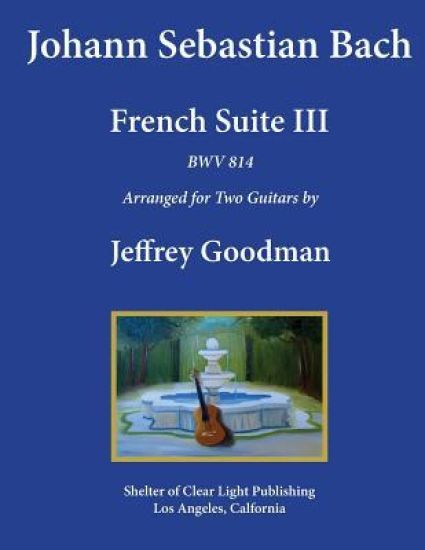
Johann Sebastian Bach - French Suite III, BWV 814: Arranged for Two Guitars
Jeffrey Goodman
Createspace Independent Publishing Platform
2017
nidottu
At the age of thirty-seven, soon after Bach's wedding to Anna Magdalena on December 3, 1721, Bach presented her with a gift of his keyboard music. The Clavierb chlein of 1722 contained Bach's hand-copied manuscripts of the first five of the French Suites, as well as other of his keyboard compositions. Much of that original book has been lost, but the title page and several of the dance movements of French Suite III have survived. No other copies in Bach's hand exist today. Fortunately, a handful of manuscripts of the French Suites, often copied by Bach's pupils, have survived. Scholars of the renowned Bach-Gesellschaft created their definitive editions based on a study of all existing versions of Bach's works.This arrangement of Bach's French Suite III, BWV 814, is based on the Bach-Gesellschaft edition of his keyboard works. It contains both a fully notated score for two guitars, and individual guitar parts.
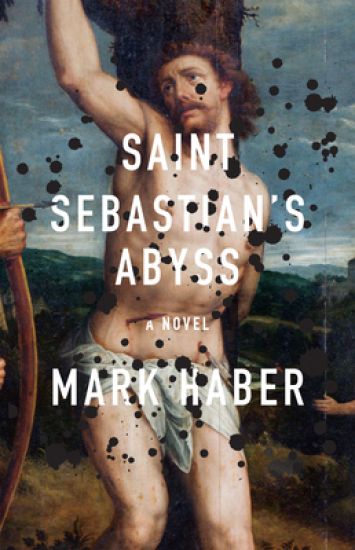
“What I wanted more than anything was to be standing beside Schmidt, in concert with Schmidt, at the foot of Saint Sebastian’s Abyss along with Schmidt, hands cupped to the sides of our faces, debating art, transcendence, and the glory of the apocalypse.” Former best friends who built their careers writing about a single work of art meet after a decades-long falling-out. One of them, called to the other’s deathbed for unknown reasons by a “relatively short” nine-page email, spends his flight to Berlin reflecting on Dutch Renaissance painter Count Hugo Beckenbauer and his masterpiece, Saint Sebastian’s Abyss, the work that established both men as important art critics and also destroyed their relationship. A darkly comic meditation on art, obsession, and the enigmatic power of friendship, Saint Sebastian’s Abyss stalks the museum halls of Europe, feverishly seeking salvation, annihilation, and the meaning of belief.