Kirjojen hintavertailu. Mukana 12 016 292 kirjaa ja 12 kauppaa.

Kirjahaku

Etsi kirjoja tekijän nimen, kirjan nimen tai ISBN:n perusteella.

1000 tulosta hakusanalla Sharon Monteith

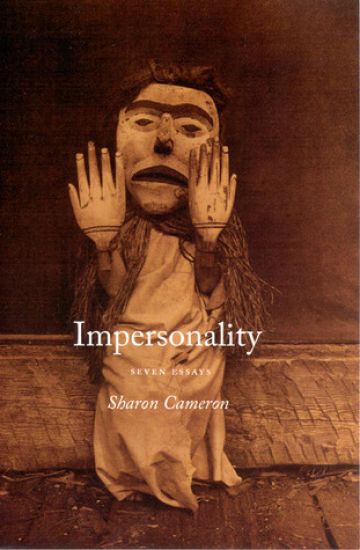
Impersonality

Impersonality

Sharon Cameron

University of Chicago Press
2007
nidottu
Philosophers have long debated the subjects of person and personhood. Sharon Cameron ushers this debate into the literary realm by considering impersonality in the works of major American writers and figures of international modernism—writers for whom personal identity is inconsequential and even imaginary. In essays on William Empson, Jonathan Edwards, Ralph Waldo Emerson, Herman Melville, T. S. Eliot, and Simone Weil, Cameron examines the impulse to hollow out the core of human distinctiveness, to construct a voice that is no one’s voice, to fashion a character without meaningful attributes, a being that is virtually anonymous. “To consent to being anonymous,” Weil wrote, “is to bear witness to the truth. But how is this compatible with social life and its labels?” Throughout these essays Cameron examines the friction, even violence, set in motion from such incompatibility—from a “truth” that has no social foundation. Impersonality investigates the uncompromising nature of writing that suspends, eclipses, and even destroys the person as a social, political, or individual entity, of writing that engages with personal identity at the moment when its usual markers vanish or dissolve.

Writing Nature

Writing Nature

Sharon Cameron

University of Chicago Press
1989
nidottu
At his death, Henry Thoreau left the majority of his writing unpublished. The bulk of this material is a journal that he kept for twenty-four years. Sharon Cameron's major claim is that this private work (the Journal) was Thoreau's primary work, taking precedence over the books that he published in his lifetime. Her controversial thesis views Thoreau's Journal as a composition that confounds the distinction between public and private—the basis on which our conventional treatment of discourse depends.
Thinking in Henry James

Thinking in Henry James

Sharon Cameron

University of Chicago Press
1991
nidottu
Thinking in Henry James identifies what is genuinely strange and radical about James's concept of consciousness—first, the idea that it may not always be situated within this or that person but rather exists outside or "between," in some transpersonal place; and second, the idea that consciousness may have power over things and people outside the person who thinks. Examining these and other counterintuitive representations of consciousness, Cameron asks, "How do we make sense of these conceptions of thinking?"
Choosing Not Choosing

Choosing Not Choosing

Sharon Cameron

University of Chicago Press
1993
sidottu
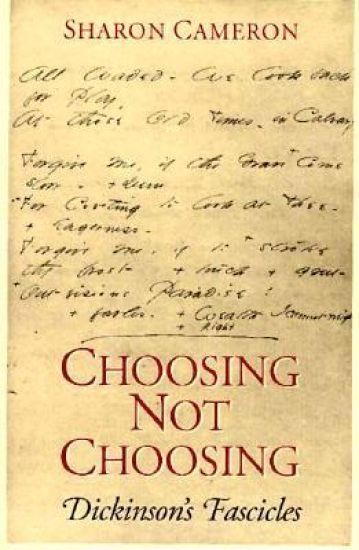
Although Emily Dickinson copied and bound her poems into manuscript notebooks, in the century since her death her poems have been read as single lyrics with little or no regard for the context she created for them in her fascicles. Choosing Not Choosing is the first book-length consideration of the poems in their manuscript context. Sharon Cameron demonstrates that to read the poems with attention to their placement in the fascicles is to observe scenes and subjects unfolding between and among poems rather than to think of them as isolated riddles, enigmatic in both syntax and reference. Thus Choosing Not Choosing illustrates that the contextual sense of Dickinson is not the canonical sense of Dickinson. Considering the poems in the context of the fascicles, Cameron argues that an essential refusal of choice pervades all aspects of Dickinson's poetry. Because Dickinson never chose whether she wanted her poems read as single lyrics or in sequence (nor is it clear where any fascicle text ends, or even how, in context, a poem is bounded), "not choosing" is a textual issue; it is also a formal issue because Dickinson refused to chose among poetic variants; it is a thematic issue; and, finally, it is a philosophical one, since what is produced by "not choosing" is a radical indifference to difference. Extending the readings of Dickinson offered in her earlier book Lyric Time, Cameron continues to enlarge our understanding of the work of this singular American poet.
Choosing Not Choosing

Choosing Not Choosing

Sharon Cameron

University of Chicago Press
1993
nidottu
Although Emily Dickinson copied and bound her poems into manuscript notebooks, in the century since her death her poems have been read as single lyrics with little or no regard for the context she created for them in her fascicles. Choosing Not Choosing is the first book-length consideration of the poems in their manuscript context. Sharon Cameron demonstrates that to read the poems with attention to their placement in the fascicles is to observe scenes and subjects unfolding between and among poems rather than to think of them as isolated riddles, enigmatic in both syntax and reference. Thus Choosing Not Choosing illustrates that the contextual sense of Dickinson is not the canonical sense of Dickinson. Considering the poems in the context of the fascicles, Cameron argues that an essential refusal of choice pervades all aspects of Dickinson's poetry. Because Dickinson never chose whether she wanted her poems read as single lyrics or in sequence (nor is it clear where any fascicle text ends, or even how, in context, a poem is bounded), "not choosing" is a textual issue; it is also a formal issue because Dickinson refused to chose among poetic variants; it is a thematic issue; and, finally, it is a philosophical one, since what is produced by "not choosing" is a radical indifference to difference. Extending the readings of Dickinson offered in her earlier book Lyric Time, Cameron continues to enlarge our understanding of the work of this singular American poet.
Freedom Beyond Sovereignty

Freedom Beyond Sovereignty

Sharon R. Krause

University of Chicago Press
2015
sidottu
What does it mean to be free? We invoke the word frequently, yet the freedom of countless Americans is compromised by social inequalities that systematically undercut what they are able to do and to become. If we are to remedy these failures of freedom, we must move beyond the common assumption, prevalent in political theory and American public life, that individual agency is best conceived as a kind of personal sovereignty, or as self-determination or control over one's actions. In Freedom Beyond Sovereignty, Sharon R Krause shows that individual agency is best conceived as a non-sovereign experience because our ability to act and affect the world depends on how other people interpret and respond to what we do. The intersubjective character of agency makes it vulnerable to the effects of social inequality, but it is never in a strict sense socially determined. The agency of the oppressed sometimes surprises us with its vitality. Only by understanding the deep dynamics of agency as simultaneously non-sovereign and robust can we remediate the failed freedom of those on the losing end of persistent inequalities and grasp the scope of our own responsibility for social change. Freedom Beyond Sovereignty brings the experiences of the oppressed to the center of political theory and the study of freedom. It fundamentally reconstructs liberal individualism and enables us to see human action, personal responsibility, and the meaning of liberty in a totally new light.
Democratic Art

Democratic Art

Sharon Ann Musher

University of Chicago Press
2015
sidottu
Throughout the Great Recession American artists and public art endowments have had to fight for government support to keep themselves afloat. It wasn't always this way. At its height in 1935, the New Deal devoted $27 million - roughly $469 million today - to supporting tens of thousands of needy artists, who used that support to create more than 100,000 works. Why did the government become so involved with these artists, and why weren't these projects considered a frivolous waste of funds, as surely many would be today? In Democratic Art, Sharon Ann Musher explores these questions and uses them as a springboard for an examination of the role art can and should play in contemporary society. Drawing on close readings of government-funded architecture, murals, plays, writing, and photographs, Democratic Art examines the New Deal's diverse cultural initiatives and outlines five perspectives on art that were prominent at the time: art as grandeur, enrichment, weapon, experience, and subversion. Musher argues that those engaged in New Deal art were part of an explicitly cultural agenda that sought not just to create art but to democratize and Americanize it as well. By tracing a range of aesthetic visions that flourished during the 1930s, this highly original book outlines the successes, shortcomings, and lessons of the golden age of government funding for the arts.
The Bond of the Furthest Apart

The Bond of the Furthest Apart

Sharon Cameron

University of Chicago Press
2017
sidottu
In French filmmaker Robert Bresson's cinematography, the linkage of fragmented, dissimilar images challenges our assumption that we know either what things are in themselves or the infinite ways in which they are entangled. The "bond" of Cameron's title refers to the astonishing connections found both within Bresson's films and across literary works by Tolstoy, Dostoevsky, and Kafka, whose visionary rethinkings of experience are akin to Bresson's in their resistance to all forms of abstraction and classification that segregate aspects of reality. Whether exploring Bresson's efforts to reassess the limits of human reason and will, Dostoevsky's subversions of Christian conventions, Tolstoy's incompatible beliefs about death, or Kafka's focus on creatures neither human nor animal, Cameron illuminates how the repeated juxtaposition of disparate, even antithetical, phenomena carves out new approaches to defining the essence of being, one where the very nature of fixed categories is brought into question. An innovative look at a classic French auteur and three giants of European literature, The Bond of the Furthest Apart will interest scholars of literature, film, ethics, aesthetics, and anyone drawn to an experimental venture in critical thought.
The Bond of the Furthest Apart

The Bond of the Furthest Apart

Sharon Cameron

University of Chicago Press
2017
nidottu
In French filmmaker Robert Bresson's cinematography, the linkage of fragmented, dissimilar images challenges our assumption that we know either what things are in themselves or the infinite ways in which they are entangled. The "bond" of Cameron's title refers to the astonishing connections found both within Bresson's films and across literary works by Tolstoy, Dostoevsky, and Kafka, whose visionary rethinkings of experience are akin to Bresson's in their resistance to all forms of abstraction and classification that segregate aspects of reality. Whether exploring Bresson's efforts to reassess the limits of human reason and will, Dostoevsky's subversions of Christian conventions, Tolstoy's incompatible beliefs about death, or Kafka's focus on creatures neither human nor animal, Cameron illuminates how the repeated juxtaposition of disparate, even antithetical, phenomena carves out new approaches to defining the essence of being, one where the very nature of fixed categories is brought into question. An innovative look at a classic French auteur and three giants of European literature, The Bond of the Furthest Apart will interest scholars of literature, film, ethics, aesthetics, and anyone drawn to an experimental venture in critical thought.
And a Time to Die

And a Time to Die

Sharon R. Kaufman

University of Chicago Press
2006
nidottu
Over the past thirty years, the way Americans experience death has been dramatically altered. The advent of medical technology capable of sustaining life without restoring health has changed where, when, and how we die. In this revelatory study, medical anthropologist Sharon R. Kaufman examines the powerful center of those changes: the hospital, where most Americans die today. She deftly links the experiences of patients and families, the work of hospital staff, and the ramifications of institutional bureaucracy to show the invisible power of the hospital system in shaping death and our individual experience of it. In doing so, Kaufman also speaks to the ways we understand what it means to be human and to be alive. “An act of courage and a public service.”—San Francisco Chronicle “This beautifully synthesized and disquieting account of how hospital patients die melds disciplined description with acute analysis, incorporating the voices of doctors, nurses, social workers, and patients in a provocative analysis of the modern American quest for a ‘good death.’”—Publishers Weekly “Kaufman exposes the bureaucratic and ethical quandaries that hover over the modern deathbed.”—Psychology Today “Kaufman’s analysis illuminates the complexity of the care of critically ill and dying patients [and] the ambiguity of slogans such as ‘death with dignity,’ ‘quality of life,’ and ‘stopping life support.’ . . . Thought-provoking reading for everyone contemplating the fate of us all.”—New England Journal of Medicine
Modeling Nature

Modeling Nature

Sharon E. Kingsland

University of Chicago Press
1995
nidottu
A history of population ecology which traces two generations of science and scientists from the opening of the 20th century through 1970. Kingsland chronicles the careers of key figures and the field's theoretical, empirical and institutional development, with attention paid to tensions between the descriptive studies of field biologists and later mathematical models. This text debates the rise of "the new natural history" and examines the ecology's future as a large-scale scientific enterprize.
Human Rights In Camera

Human Rights In Camera

Sharon Sliwinski

University of Chicago Press
2011
sidottu
From the fundamental rights proclaimed in the American and French declarations of independence to the 1948 Universal Declaration of Human Rights and Hannah Arendt's furious critiques, the definition of what it means to be human has been hotly debated. But the history of human rights - and their abuses - is also a richly illustrated one. Following this picture trail, "Human Rights In Camera" takes an innovative approach by examining the visual images that have accompanied human rights struggles and the passionate responses people have had to them. Sharon Sliwinski considers a series of historical events, including the 1755 Lisbon earthquake and the Holocaust, to illustrate that universal human rights have come to be imagined through aesthetic experience. The circulation of images of distant events, she argues, forms a virtual community between spectators and generates a sense of shared humanity. Joining a growing body of scholarship about the cultural forces at work in the construction of human rights, "Human Rights In Camera" is a novel take on this potent political ideal.
Human Rights In Camera

Human Rights In Camera

Sharon Sliwinski

University of Chicago Press
2011
nidottu
From the fundamental rights proclaimed in the American and French declarations of independence to the 1948 Universal Declaration of Human Rights and Hannah Arendt's furious critiques, the definition of what it means to be human has been hotly debated. But the history of human rights - and their abuses - is also a richly illustrated one. Following this picture trail, "Human Rights In Camera" takes an innovative approach by examining the visual images that have accompanied human rights struggles and the passionate responses people have had to them. Sharon Sliwinski considers a series of historical events, including the 1755 Lisbon earthquake and the Holocaust, to illustrate that universal human rights have come to be imagined through aesthetic experience. The circulation of images of distant events, she argues, forms a virtual community between spectators and generates a sense of shared humanity. Joining a growing body of scholarship about the cultural forces at work in the construction of human rights, "Human Rights In Camera" is a novel take on this potent political ideal.
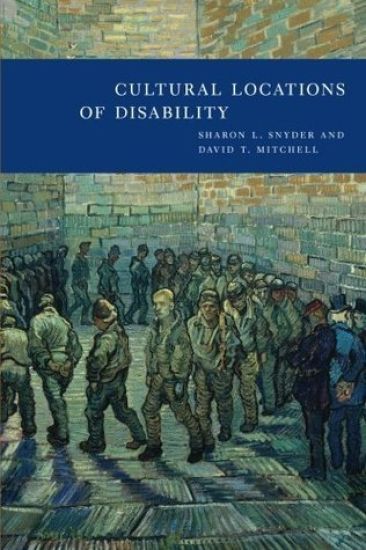
Cultural Locations of Disability

Cultural Locations of Disability

Sharon L. Snyder; David T. Mitchell

University of Chicago Press
2005
sidottu
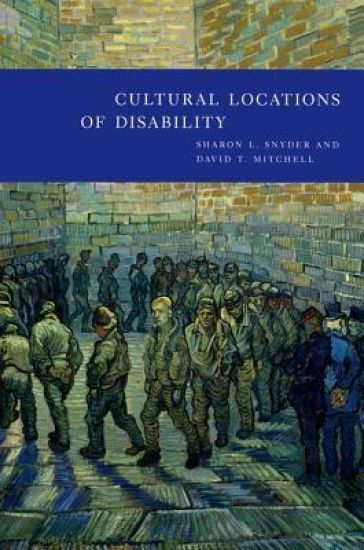
In "Cultural Locations of Disability", Sharon L. Snyder and David T. Mitchell trace how disabled people came to be viewed as biologically deviant. The eugenics era pioneered techniques that managed "defectives" through the application of therapies, invasive case histories, and acute surveillance techniques, turning disabled persons into subjects for a readily available research pool. In its pursuit of normalization, eugenics implemented disability regulations that included charity systems, marriage laws, sterilization, institutionalization, and even extermination. Enacted in enclosed disability locations, these practices ultimately resulted in expectations of segregation from the mainstream, leaving today's disability politics to focus on reintegration, visibility, inclusion, and the right of meaningful public participation. Snyder and Mitchell reveal cracks in the social production of human variation as aberrancy. From our modern obsessions with tidiness and cleanliness to our desire to attain perfect bodies, notions of disabilities as examples of human insufficiency proliferate. These disability practices infuse more general modes of social obedience at work today. Consequently, this important study explains how disabled people are instrumental to charting the passage from a disciplinary society to one based upon regulation of the self.
Cultural Locations of Disability

Cultural Locations of Disability

Sharon L. Snyder; David T. Mitchell

University of Chicago Press
2005
nidottu
In "Cultural Locations of Disability", Sharon L. Snyder and David T. Mitchell trace how disabled people came to be viewed as biologically deviant. The eugenics era pioneered techniques that managed "defectives" through the application of therapies, invasive case histories, and acute surveillance techniques, turning disabled persons into subjects for a readily available research pool. In its pursuit of normalization, eugenics implemented disability regulations that included charity systems, marriage laws, sterilization, institutionalization, and even extermination. Enacted in enclosed disability locations, these practices ultimately resulted in expectations of segregation from the mainstream, leaving today's disability politics to focus on reintegration, visibility, inclusion, and the right of meaningful public participation. Snyder and Mitchell reveal cracks in the social production of human variation as aberrancy. From our modern obsessions with tidiness and cleanliness to our desire to attain perfect bodies, notions of disabilities as examples of human insufficiency proliferate. These disability practices infuse more general modes of social obedience at work today. Consequently, this important study explains how disabled people are instrumental to charting the passage from a disciplinary society to one based upon regulation of the self.
Banking on Slavery

Banking on Slavery

Sharon Ann Murphy

THE UNIVERSITY OF CHICAGO PRESS
2023
sidottu
A sobering excavation of how deeply nineteenth-century American banks were entwined with the institution of slavery. It’s now widely understood that the fullest expression of nineteenth-century American capitalism was found in the structures of chattel slavery. It’s also understood that almost every other institution and aspect of life then was at least entangled with—and often profited from—slavery’s perpetuation. Yet as Sharon Ann Murphy shows in her powerful and unprecedented book, the centrality of enslaved labor to banking in the antebellum United States is far greater than previously thought. Banking on Slavery sheds light on precisely how the financial relationships between banks and slaveholders worked across the nineteenth-century South. Murphy argues that the rapid spread of slavery in the South during the 1820s and ’30s depended significantly upon southern banks’ willingness to financialize enslaved lives, with the use of enslaved individuals as loan collateral proving central to these financial relationships. She makes clear how southern banks were ready—and, in some cases, even eager—to alter time-honored banking practices to meet the needs of slaveholders. In the end, many of these banks sacrificed themselves in their efforts to stabilize the slave economy. Murphy also details how banks and slaveholders transformed enslaved lives from physical bodies into abstract capital assets. Her book provides an essential examination of how our nation’s financial history is more intimately intertwined with the dehumanizing institution of slavery than scholars have previously thought.
Banking on Slavery

Banking on Slavery

Sharon Ann Murphy

THE UNIVERSITY OF CHICAGO PRESS
2023
nidottu
A sobering excavation of how deeply nineteenth-century American banks were entwined with the institution of slavery. It’s now widely understood that the fullest expression of nineteenth-century American capitalism was found in the structures of chattel slavery. It’s also understood that almost every other institution and aspect of life then was at least entangled with—and often profited from—slavery’s perpetuation. Yet as Sharon Ann Murphy shows in her powerful and unprecedented book, the centrality of enslaved labor to banking in the antebellum United States is far greater than previously thought. Banking on Slavery sheds light on precisely how the financial relationships between banks and slaveholders worked across the nineteenth-century South. Murphy argues that the rapid spread of slavery in the South during the 1820s and ’30s depended significantly upon southern banks’ willingness to financialize enslaved lives, with the use of enslaved individuals as loan collateral proving central to these financial relationships. She makes clear how southern banks were ready—and, in some cases, even eager—to alter time-honored banking practices to meet the needs of slaveholders. In the end, many of these banks sacrificed themselves in their efforts to stabilize the slave economy. Murphy also details how banks and slaveholders transformed enslaved lives from physical bodies into abstract capital assets. Her book provides an essential examination of how our nation’s financial history is more intimately intertwined with the dehumanizing institution of slavery than scholars have previously thought.
Insurgent Communities

Insurgent Communities

Sharon M. Quinsaat

THE UNIVERSITY OF CHICAGO PRESS
2024
sidottu
Sociologist Sharon M. Quinsaat sheds new light on the formation of diasporic connections through transnational protests. When people migrate and settle in other countries, do they automatically form a diaspora? In Insurgent Communities, Sharon M. Quinsaat explains the dynamic process through which a diaspora is strategically constructed. Quinsaat looks to Filipinos in the United States and the Netherlands-examining their resistance against the dictatorship of Ferdinand Marcos, their mobilization for migrants' rights, and the construction of a collective memory of the Marcos regime-to argue that diasporas emerge through political activism. Social movements provide an essential space for addressing migrants' diverse experiences and relationships with their homeland and its history. A significant contribution to the interdisciplinary field of migration and social movements studies, Insurgent Communities illuminates how people develop collective identities in times of social upheaval.
Insurgent Communities

Insurgent Communities

Sharon M. Quinsaat

THE UNIVERSITY OF CHICAGO PRESS
2024
nidottu
Sociologist Sharon M. Quinsaat sheds new light on the formation of diasporic connections through transnational protests. When people migrate and settle in other countries, do they automatically form a diaspora? In Insurgent Communities, Sharon M. Quinsaat explains the dynamic process through which a diaspora is strategically constructed. Quinsaat looks to Filipinos in the United States and the Netherlands—examining their resistance against the dictatorship of Ferdinand Marcos, their mobilization for migrants’ rights, and the construction of a collective memory of the Marcos regime—to argue that diasporas emerge through political activism. Social movements provide an essential space for addressing migrants’ diverse experiences and relationships with their homeland and its history. A significant contribution to the interdisciplinary field of migration and social movements studies, Insurgent Communities illuminates how people develop collective identities in times of social upheaval.
The Likeness of Things Unlike

The Likeness of Things Unlike

Sharon Cameron

THE UNIVERSITY OF CHICAGO PRESS
2025
sidottu
A study of the incommensurable, often discordant elements that define major works of American literature. In Sharon Cameron’s essays, a magnetic constellation gathers works of Emerson, Whitman, Dickinson, Cather, and Stevens—each manifesting in its own terms “the likeness of things unlike”—to form a loose commonality in a strain of American writing in which incommensurable elements can’t be integrated and can’t be separated. The Likeness of Things Unlike is concerned with discordant elements of an aesthetic work and argues that these elements refigure the aesthetic wholes whose integrity they apparently violate. These intertwined, subversive elements are challenges to literary systems and are essentially philosophical in their rethinking of categories, and thus go beyond the aesthetic particulars that exemplify them. Cameron is known for rigorously and brilliantly connecting artistic achievement to radical ways of thinking. Georg Lukcás describes the essayist as one who “adapts himself to the essay’s ‘smallness’ of form—the eternal smallness of the most profound work of the intellect in [the] face of life.” With The Likeness of Things Unlike Cameron powerfully demonstrates Lukács’s remarkable insight.