Kirjojen hintavertailu. Mukana 11 717 486 kirjaa ja 12 kauppaa.

Kirjahaku

Etsi kirjoja tekijän nimen, kirjan nimen tai ISBN:n perusteella.

1000 tulosta hakusanalla Society Promoting Christian Knowledge

Society and Nature

Society and Nature

Peter Dickens

Temple University Press,U.S.
1992
nidottu
In this wide - ranging effort to theorize about the relationships between society and nature, Peter Dickens attempts to reconstruct social theory in a way that enables it to speak to contemporary environmental issues. After reviewing existing sociological traditions, he draws on the early work of Karl Marx to suggest that processes and relations in the workplace are the main source of people's separation from nature. In addition, people's understanding of "nature" tends to mirror their experience of the social world. Redefining the work of Anthony Giddens in an ecological direction, Dickens analyzes developments in biological thinking that seem consistent with this approach. He considers the role of culture, and he critiques the contemporary "deep green" and "deep ecology" movements. Focusing on the alienation of human begins from the natural world and the place of nature in their "deep mental structures," the author works in part from a Marxist perspective but draws a wide variety of social psychological, and biological theories into the discussion. Society and Nature not only addresses a central debate in contemporary social science regarding this interrelationship but also responds to the intellectual challenge presented by natural scientific concepts of environmental problems that oversimplify or ignore their political or social relational dimensions. Author note: Peter Dickens is Senior Lecturer in Urban Studies and Social Policy at the University of Sussex (UK) and the author of Urban Sociology: Society, Locality and Human Nature.
Society in America

Society in America

Harriet Martineau

Transaction Publishers
1981
nidottu
Harriet Martineau brought to her observations the convictions of a vehement English liberal and an astonishingly modern sociological approach. In 1834 she wrote the first draft of How to Observe Manners and Morals--perhaps the earliest book on the methodology of social research. In abridging the 800-page original for the modern reader, Lipset has concentrated on Martineau's brilliant discussion of religious practices, social status, and childrearing; political apathy and the position of women, blacks, and immigrants; and the American's casual approach to indebtedness and his speculative wealth-or-ruin schemes.
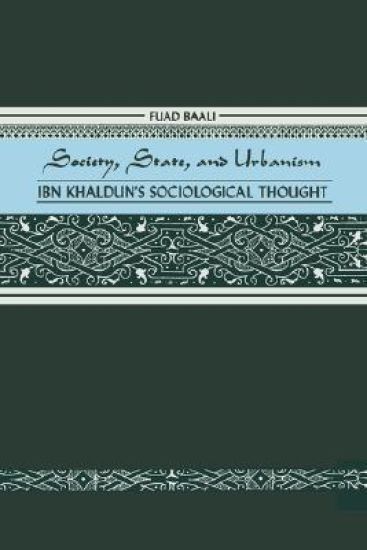
Society, State, and Urbanism

Society, State, and Urbanism

Fuad Baali

State University of New York Press
1988
pokkari
This book probes the nature, scope, and methods of 'ilm al- 'umran, the new science of human social organization, as it is developed in Ibn Khaldun's 14th-century masterpiece, the Mugaddimah. It explores his ideas and observations on society, culture, socialization, social control, the state, asabiyah (social solidarity), history as a cyclical movement, urbanization, and the typology of badawa (primitive life) and hadara (civilized life or urbanism).Through a comparative perspective, this study illustrates that Khaldun's ideas about society have conceptually preceded those of Machiavelli, Vico, and Turgot, as well as those of Montesqueau, Comte, Durkheim, Gumplowicz, Spengler, Tonnies, and even Marx. Society, State, and Urbanism demonstrates that Ibn Khaldun's thought is relevant to contemporary sociological theory, and that his very language differs little from that of classical and modern sociologists.
Society and Personality

Society and Personality

Tamotsu Shibutani

Transaction Publishers
1988
nidottu
Being an "interactionist" approach to social psychology, Society and Personality deals with people, not as isolated individuals, but as participants in groups. The aim of the book is to help the reader develop an orderly perspective—a consistent point of view from which to see his (or her) own conduct and that of his (or her) fellows. Propositions about behavior seen from the viewpoint are presented, and relevant evidence, both descriptive and experimental, is examined and evaluated.The author draws upon the two great intellectual traditions of pragmatism and psychoanalysis, and attempts to integrate them into a single, consistent approach. All concepts are reduced to behavioristic terms—defined always in terms of what people do. In this way, it is possible to draw freely on these two schools, and at the same time, avoid much of the jargon of both. Other approaches to the study of human behavior are frequently mentioned and sometimes discussed, but the objective is to give the reader one perspective rather than confuse him with many. Of course, this standpoint is presented as only one of many possible ways of looking at people.Although the book's basic ideas are drawn from two main schools of psychological thought, relevant material has been gathered from other sources as well—sociology, ethnography, linguistics, experimental psychology, and clinical data from psychiatry. One very important extra feature is the List of Personal Documents, compiled by the author to guide interested readers to first-person accounts—biographies, diaries, clinical records—each of which provides a valuable record of human experience.
Society, the Sacred and Scripture in Ancient Judaism

Society, the Sacred and Scripture in Ancient Judaism

Jack N. Lightstone

Wilfrid Laurier University Press
1988
nidottu
This work explores the relationship between religion, social patterns, and the perception of the character of scripture in four modes of Ancient Judaism: (1) the Jerusalem community of the fifth to fourth centuries B.C.E. (ie, the Early Second Temple Period); (2) the Judaism of the Graeco-Roman Disapora down to the end of the fourth century of the Christian Era; (3) earliest rabbinic Judaism in the second century C.E> in the land of Israel; (4) Late Antique Talmudic Rabbinism, primarily inn Babylonia, down to the sixth century of the Christian Era. Lightstone attempts not only to describe these perceptions and relationships but also to account for them, to explore why scripture should be thus perceived. His imaginative approach to the challenging descriptive and theoretical tasks is influenced by literary and form-critical methods as well as by the methods and perspectives of social anthropology and sociology of the mind. This unique attempts at revising the perception of the character of scripture should arouse the interest of scholars and students of Ancient Judaism.
Society Against the State

Society Against the State

Pierre Clastres

Zone Books
1989
pokkari
"The thesis is radical," writes Marshall Sahlins of this landmark text in anthropology and political science. "We conventionally define the state as the regulation of violence; it may be the origin of it. Clastres's thesis is that economic expropriation and political coercion are inconsistent with the character of tribal society - which is to say, with the greater part of human history."Can there be a society that is not divided into oppressors and oppressed, or that refuses coercive state apparatuses? In this beautifully written book, Pierre Clastres offers examples of South American Indian groups that, although without hierarchical leadership, were both affluent and complex. In so doing he refutes the usual negative definition of tribal society and poses its order as a radical critique of our own Western state of power.Born in 1934, Pierre Clastres was educated at the Sorbonne; throughout the 1960s he lived with Indian groups in Paraguay and Venezuela. From 1971 until his death in 1979 he was Director of Studies at the fifth section of the Ecole Pratique des Hautes Etudes in Paris and held the Chair of Religion and Societies of the South American Indians there.Robert Hurley is the translator of the History of Sexuality by Michel Foucault and cotranslator of Anti-Oedipus by Gilles Deleuze and Felix Guattari.
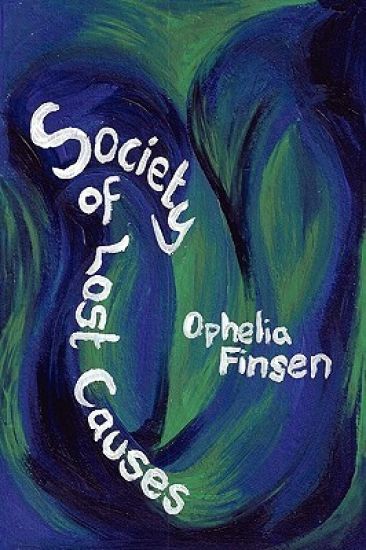
Society of Lost Causes

Society of Lost Causes

Ophelia Finsen

Louise Clark
2009
pokkari
In a small town in the Yorkshire Dales there is a select gathering known as the Society of Lost Causes. A gathering of eccentric and unknown people; people who feel that they or their work will have no consequence for the world. Until a murder without motive is committed in their small community, and three potential witnesses are drawn together permanently through the twist and turns of a crime scene and an organisation dedicated to remembering contemporary and historical oddities. This is a tale of the joy of story-telling; of the fascination in the detail and the small curiosities of life that are there for anyone to find if they are only prepared to stop and listen.
Society: The Struggles of Hatred and Righteous Betrayal

Society: The Struggles of Hatred and Righteous Betrayal

Misty L. Bishop

Love Spirit and Truth Publishing
2011
nidottu
Society: The Struggles of Hatred and Righteous Betrayal is a screenplay that revolves around a young African American woman by the name of Ashlyn Richardson who moves from a black community in Inglewood, California, in the summer of '97, the beginning of her senior year in high school, with her parents, Rev. Jeff Richardson and Debbie Richardson, and older brother, Carlton, to the suburban area, Sugarland, Texas. The Richardson family made this transition because Rev. Richardson had been promoted to be the director of Texas Health and Human Services in his childhood home state in the Southwest region. They reunite with Ashlyn's older sister, Vanessa, and her husband, Darnell, and also touch base with her oldest brother, Speedy.In addition, the Richardson family reconnects with their old hometown church in the heart of Third Ward as their spiritual foundation. However, this physical transition brought about changes in young Ashlyn's life as she transforms from a teenager to a full-grown woman. In this transformation, society has exposed and placed obstacles, such as racism, loss of a loved one, early motherhood, betrayal, workplace animosity, and sibling rivalry in Ashlyn's life that will either hinder her from or strengthen her to become a successful television executive producer
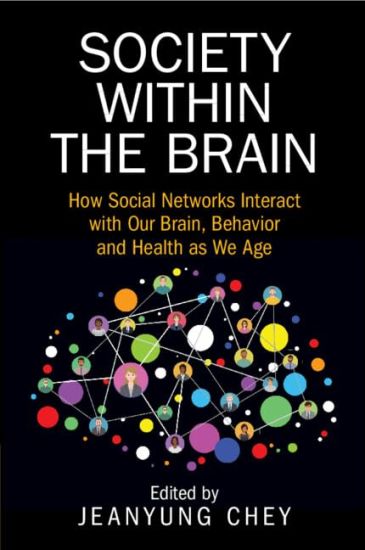
Society within the Brain

Society within the Brain

Cambridge University Press
2025
pokkari
Society within the Brain provides insightful accounts of scientific research linking social connection with brain and cognitive aging through state-of-the-art research. This involves comprehensive social network analysis, social neuroscience, neuropsychology, psychoneuroimmunology, and sociogenomics. This book provides a scientific discourse on how a society, community, or friends and family interact with individuals' cognitive aging. Issues concerning social isolation, rapidly increasing in modern societies, and the controversy in origins of individual difference in social brain and behaviour are discussed. An integrative framework is introduced to explicate how social networks and support alleviate the effects of aging in brain health and reduce dementia risks. This book is of interest and useful to a wide readership: from gerontologists, psychologists, clinical neuroscientists and sociologists, to those involved in developing community-based interventions or public health policy for brain health, to people interested in how social life influences brain aging or in the prevention of dementia.
Essays in Memory of Sir Hilary Jenkinson / Edited for the Society of Archivists by Albert E.J. Hollaender
This work has been selected by scholars as being culturally important and is part of the knowledge base of civilization as we know it.This work is in the public domain in the United States of America, and possibly other nations. Within the United States, you may freely copy and distribute this work, as no entity (individual or corporate) has a copyright on the body of the work.Scholars believe, and we concur, that this work is important enough to be preserved, reproduced, and made generally available to the public. To ensure a quality reading experience, this work has been proofread and republished using a format that seamlessly blends the original graphical elements with text in an easy-to-read typeface.We appreciate your support of the preservation process, and thank you for being an important part of keeping this knowledge alive and relevant.
Ninety-Fourth Annual Report, The Society for the Relief of the Destitute Blind

Ninety-Fourth Annual Report, The Society for the Relief of the Destitute Blind

Society for the Relief of the Destitute

Hassell Street Press
2021
nidottu
This work has been selected by scholars as being culturally important and is part of the knowledge base of civilization as we know it.This work is in the public domain in the United States of America, and possibly other nations. Within the United States, you may freely copy and distribute this work, as no entity (individual or corporate) has a copyright on the body of the work.Scholars believe, and we concur, that this work is important enough to be preserved, reproduced, and made generally available to the public. To ensure a quality reading experience, this work has been proofread and republished using a format that seamlessly blends the original graphical elements with text in an easy-to-read typeface.We appreciate your support of the preservation process, and thank you for being an important part of keeping this knowledge alive and relevant.