Kirjojen hintavertailu. Mukana 11 241 044 kirjaa ja 12 kauppaa.

Kirjahaku

Etsi kirjoja tekijän nimen, kirjan nimen tai ISBN:n perusteella.

1000 tulosta hakusanalla Stephanie Lessing

The Fame of C. S. Lewis

The Fame of C. S. Lewis

Stephanie L. Derrick

Oxford University Press
2018
sidottu
C. S. Lewis, long renowned for his children's books as well as his Christian apologetics, has been the subject of wide interest since he first stepped-up to the BBC's microphone during the Second World War. Until now, however, the reasons why this medievalist began writing books for a popular audience, and why these books have continued to be so popular, had not been fully explored. In fact Lewis, who once described himself as by nature an 'extreme anarchist', was a critical controversialist in his time-and not to everyone's liking. Yet, somehow, Lewis's books directed at children and middlebrow Christians have continued to resonate in the decades since his death in 1963. Stephanie L. Derrick considers why this is the case, and why it is more true in America than in Lewis's home-country of Britain. The story of C. S. Lewis's fame is one that takes us from his childhood in Edwardian Belfast, to the height of international conflict during the 1940s, to the rapid expansion of the paperback market, and on to readers' experiences in the 1980s and 1990s, and, finally, to London in November 2013, where Lewis was honoured with a stone in Poet's Corner in Westminster Abbey. Derrick shows that, in fact, the author himself was only one actor among many shaping a multi-faceted image. The Fame of C. S. Lewis is the most comprehensive account of Lewis's popularity to date, drawing on a wealth of fresh material and with much to interest scholars and C. S. Lewis admirers alike.
Group Duties

Group Duties

Stephanie Collins

Oxford University Press
2019
sidottu
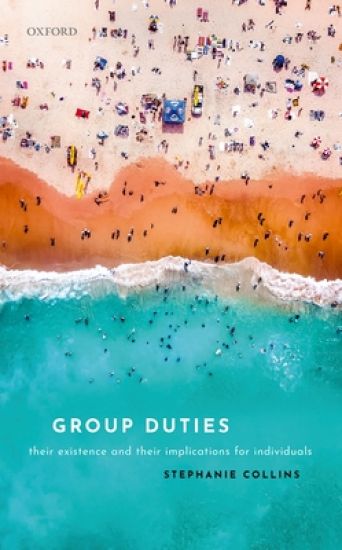
Moral duties are regularly attributed to groups. In the media or on the street, we might hear that a specific country has a moral duty to defend human rights, that environmentalists have a moral duty to push for global systemic reform, or that the affluent have a moral duty to alleviate poverty. Do such attributions make conceptual sense or are they mere political rhetoric? And what does that imply for the individual members of these groups? Group Duties offers the first comprehensive answer to these questions. Stephanie Collins defends a Tripartite Model of group duties - so-called because it divides groups into three fundamental categories. First, we have combinations - collections of agents that don't have any goals or decision-making procedures in common. These groups cannot bear moral duties. Instead, we should re-cast their purported duties as a series of duties, one held by each agent in the combination. Each duty demands its bearer to 'I-reason': to do the best they can, given whatever they happen to believe the others will do. Second, there are groups whose members share goals but lack decision-making procedures. These are coalitions. Coalitions also cannot bear duties, but their alleged duties should be replaced with members' several duties to 'we-reason': to do one's part in a particular group pattern of actions, on the presumption that others will do likewise. Third and finally, collectives have group-level procedures for making decisions. They can bear duties. Collectives' duties imply duties for collectives' members to use their role in the collective with a view to the collective doing its duty. With the Tripartite Model in-hand, Collins argues that we can target our political demands at the right entities, in the right way, for the right reasons.
Global Politics

Global Politics

Stephanie Lawson

Oxford University Press
2021
nidottu
Global Politics is a concise and engaging introduction to international relations. In it, Stephanie Lawson introduces the key theories and concepts underpinning the discipline, giving readers a foundation to study politics on both a personal and global scale, including issues relating to gender, sexuality, and ethnicity, as well as the economy, environment, and concepts of justice. The textbook presents theories in their historical context, demonstrating how they can evolve over time. Case studies, both contemporary and historical, and biographies of key figures, help bring these issues to life. Additional features, such as key debates and summary questions, provide opportunities to analyse issues from a range of perspectives. Digital formats and resources Global Politics is available for students and institutions to purchase in a variety of formats, and is supported by online resources. The e-book offers a mobile experience and convenient access: www.oxfordtextbooks.co.uk/ebooks The online resources include: For Students: - Multiple choice questions test your knowledge of the chapters and provide instant feedback - Extended case studies demonstrate theory in practice - Videos illustrate contemporary issues in International Relations For Lecturers: - Customisable PowerPoint slides support effective teaching preparation
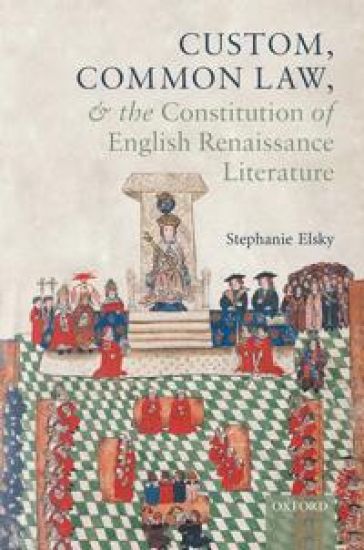
Custom, Common Law, and the Constitution of English Renaissance Literature
Custom, Common Law, and the Constitution of English Renaissance Literature argues that, ironically, custom was a supremely generative literary force for a range of Renaissance writers. Custom took on so much power because of its virtual synonymity with English common law, the increasingly dominant legal system that was also foundational to England's constitutionalist politics. The strange temporality assigned to legal custom, that is, its purported existence since 'time immemorial', furnished it with a unique and paradoxical capacity--to make new and foreign forms familiar. This volume shows that during a time when novelty was suspect, even insurrectionary, appeals to the widespread understanding of custom as a legal concept justified a startling array of fictive experiments. This is the first book to reveal fully the relationship between Renaissance literature and legal custom. It shows how writers were able to reimagine moments of historical and cultural rupture as continuity by appealing to the powerful belief that English legal custom persisted in the face of conquests by foreign powers. Custom, Common Law, and the Constitution of English Renaissance Literature thus challenges scholarly narratives in which Renaissance art breaks with a past it looks back upon longingly and instead argues that the period viewed its literature as imbued with the aura of the past. In this way, through experiments in rhetoric and form, literature unfolds the processes whereby custom gains its formidable and flexible political power. Custom, a key concept of legal and constitutionalist thought, shaped sixteenth-century literature, while this literature, in turn, transformed custom into an evocative mythopoetic.
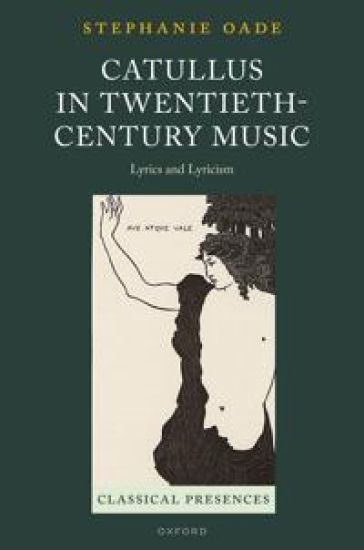
Catullus in Twentieth-Century Music

Catullus in Twentieth-Century Music

Stephanie Oade

Oxford University Press
2024
sidottu
One of the most famous voices to have survived from the Roman world, Catullus's poetry is still amongst the most popular and widely read. But what is it that makes this 2,000-year-old voice so relevant, so personal, and so endlessly fascinating? Reinvigorating discussions around the nature of Catullus's lyricism, Catullus in Twentieth-Century Music takes a completely new approach to Catullus and ideas of lyric. It centres around four musical works from the twentieth century, each one capturing the essence of Catullus in musical retellings and showcasing a very personal response to the original text. Considering how and why these musical composers used Catullus's poetry as their stimulus allows us to uncover new ideas about Catullus's poetry. By considering the very process of reception, Stephanie Oade takes a broader view of lyric, identifying traits and characteristics that are common to both music and poetry, thus transcending the boundaries of individual art forms in order to consider the genre in larger, interdisciplinary terms. It offers insights into compositional processes and challenges audiences to think about ways of engaging with music and poetry. More than anything, it shows how ancient voices continue to resound in modernity and offer everlasting expression for our own experiences and emotions.
Esther's Revenge at Susa

Esther's Revenge at Susa

Stephanie Dalley

Oxford University Press
2007
sidottu
Why are the names of the chief characters in the biblical Book of Esther those of Mesopotamian deities? Stephanie Dalley argues that the narrative reflects real happenings in seventh-century Assyria, where the widespread belief that revenge belongs to the gods explains why Assyrian kings described punitive campaigns as divine acts, leading to the mythologizing of certain historical events. Ashurbanipal's sack of Susa, led by the deities Ishtar and Marduk, underlies the Hebrew story of Esther, and that story contains traces of the cultic calendar of Ishtar-of-Nineveh. Dalley traces the way in which the long-term settlement of `lost tribes' in Assyria, revealed by the fruits of excavation in Iraq and Syria, inspired a blend of pagan and Jewish traditions.
Old Babylonian Texts in the Ashmolean Museum

Old Babylonian Texts in the Ashmolean Museum

Stephanie Dalley

Clarendon Press
2005
nidottu
This volume completes the publication of all identified Old Babylonian tablets in the Ashmolean Museum accessed before 1966. Although many of them were acquired from dealers in the 1920s and 1930s, most can be assigned to sites and connected with similar holdings in other museums. The combination of full catalogue, indices, and copies provides an invaluable tool for further research on three of the most important cities of the 18th century BC. Links with Mycenaean administrative practices, and information about the hitherto dubious Sealand dynasty, are two interesting aspects highlighted in the introduction.
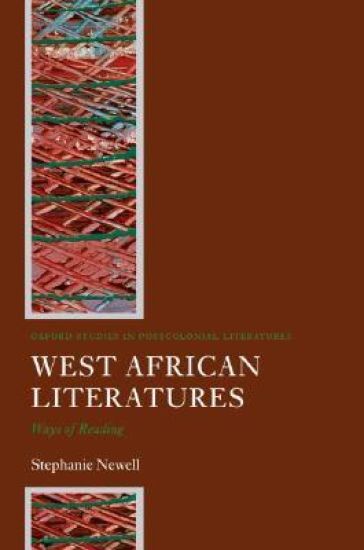
West African Literatures

West African Literatures

Stephanie Newell

Oxford University Press
2006
nidottu
The Oxford Studies in Postcolonial Literatures series (general editor: Elleke Boehmer) offers stimulating and accessible introductions to definitive topics and key genres and regions within the rapidly diversifying field of postcolonial literary studies in English. This study of West African literatures interweaves the analysis of fiction, drama, and poetry with an exploration of the broader political, cultural, and intellectual contexts within which West African writers work. Anglophone literatures form the central focus of the book, with comparative comments on vernacular literature, francophone writing and oral literatures, and detailed discussion of selected francophone texts in translation (e.g., Senghor, Tadjo, Beyala, Bâ, Sembene). Moving from a discussion of nationalist and anti-colonial writing in the period before independence, towards the more experimental writings of contemporary authors such as Véronique Tadjo (Ivory Coast), Syl Cheney-Coker (Sierra Leone), and Kojo Laing (Ghana), the book constantly relates texts to the social and political history of West Africa. Canonical, internationally well-known writers such as Chinua Achebe and Wole Soyinka are positioned in relation to the literary cultures and debates which surrounded them when they first produced their seminal texts; the discussions and disagreements which have grown up around their work in subsequent decades are also considered. The work of new and lesser-known writers is also considered, including Niyi Osundare (Nigeria) and Kofi Anyidoho (Ghana). In order to convey a sense of the rich and complex societies that are clustered beneath the umbrella-term 'postcolonial', emphasis is placed on West Africa's diverse oral and popular cultures, and the ways in which local intellectuals and readers have responded to the most prominent authors through the aesthetic frameworks generated by these forms.
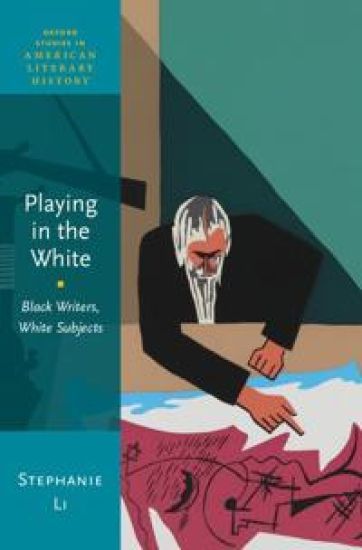
Playing in the White

Playing in the White

Stephanie Li

Oxford University Press Inc
2015
sidottu
The postwar period witnessed an outpouring of white life novels, that is texts by African American writers focused almost exclusively on white characters. Almost every major mid-twentieth century black writer, including Zora Neale Hurston, Richard Wright, Ann Petry and James Baldwin, published one of these anomalous texts. Controversial since their publication in the 1940s and 50s, these novels have since fallen into obscurity given the challenges they pose to traditional conceptions of the African American literary canon. Playing in the White: Black Writers, White Subjects aims to bring these neglected novels back into conversations about the nature of African American literature and the unique expectations imposed upon black texts. In a series of nuanced readings, Li demonstrates how postwar black novelists were at the forefront of what is now commonly understood as whiteness studies. Novels like Hurston's Seraph on the Suwanee and Wright's Savage Holiday, once read as abdications of the political imperative of African American literature, are revisited with an awareness of how whiteness signifies in multivalent ways that critique America's abiding racial hierarchies. These novels explore how this particular racial construction is freighted with social power and narrative meaning. Whiteness repeatedly figures in these texts as a set of expectations that are nearly impossible to fulfill. By describing characters who continually fail at whiteness, white life novels ask readers to reassess what race means for all Americans. Along with its close analysis of key white life novels, Playing in the White also provides important historical context to understand how these texts represented the hopes and anxieties of a newly integrated nation.
Clare's Lyric

Clare's Lyric

Stephanie Kuduk Weiner

Oxford University Press
2014
sidottu
This book considers the lyric poems written by John Clare and three twentieth-century poets--Arthur Symons, Edmund Blunden, and John Ashbery--who turned to him at pivotal moments in their own development. These writers crafted a distinctive mode of lyric, 'Clare's lyric', that emphatically grounds its truth claims in mimetic accuracy. For these writers, accurate representation involves not only words that name objects, describe scenes, and create images pointing to a shared reality but also patterns of sound, the syntactic organization of lines, and the shapes of whole poems and collections of poems. Their works masterfully investigate how poetic language and form can refer to the world, word by word, line by line, and poem by poem. Written in a lively and accessible style, Clare's Lyric sheds light on a richly diverse body of poems and on enduring questions about how literature represents reality. Weiner's attentive close readings bring the writings of Clare, Symons, Blunden, and Ashbery to life by revealing precisely how they captured a vital, arresting, and complex world in their poems. Their unique approach to lyric is traced from Clare's poems about birdsong, his sonnets, and his later poems of loss and absence to Symons's efforts to make 'amends to nature' Blunden's vivid depictions of a European and English countryside scarred by the First World War, and Ashbery's unbounded and bountiful landscapes. This inventive study refines our understanding of the aesthetic of Romanticism, the genre of lyric, and the practice of literary representation, and it makes a compelling case for the ongoing importance of poems about nature and social life.
Living Oil

Living Oil

Stephanie LeMenager

Oxford University Press Inc
2014
sidottu
Living Oil is a work of environmental cultural studies that engages with a wide spectrum of cultural forms, from museum exhibits and oil industry tours to poetry, documentary film, fiction, still photography, novels and memoirs. The book's unique focus is the aesthetic, sensory and emotional legacies of petroleum, from its rise to the preeminent modern fossil fuel during World War I through the current era of so-called Tough Oil. LeMenager conceives Tough Oil as a bid for continuity with the charismatic lifestyles of the American twentieth century that carries distinct and extreme external costs. She explores the uncomfortable, mixed feelings produced by oil's omnipresence in cultural artifacts such as books, films, hamburgers, and Aspirin tablets. The book makes a strong argument for the region as a vital intellectual frame for the study of fossil fuels, because at the regional level we can better recognize the material effects of petroleum on the day-to-day lives of humans and other, non-human lives. Varied forms of art, too, localize the material impacts of petro-culture. The fluid mobility of oil carries the book outside the United States, for instance to Alberta and Nigeria, emphasizing how both international and domestic resource regions have been mined to produce the idealized modern cultures of the so-called American Century.
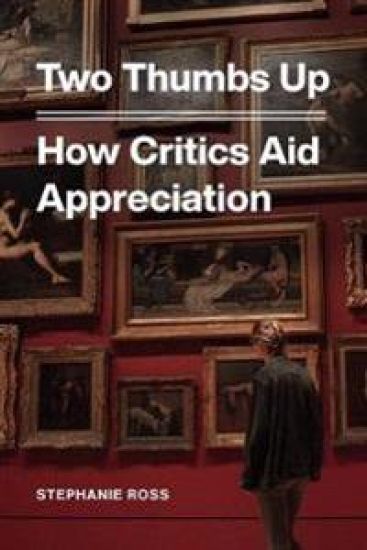
Two Thumbs Up

Two Thumbs Up

Stephanie Ross

University of Chicago Press
2020
sidottu
Far from an elite practice reserved for the highly educated, criticism is all around us. We turn to the Yelp reviewers to decide what restaurants are best, to Rotten Tomatoes to guide our movie choices, and to a host of voices on social media for critiques of political candidates, beach resorts, and everything in between. Yet even amid this ever-expanding sea of opinions, professional critics still hold considerable power in guiding how we make aesthetic judgements. Philosophers and lovers of art continue to grapple with questions that have fascinated them for centuries: How should we engage with works of art? What might enhance such encounters? Should some people's views be privileged? Who should count as a critic? And do critics actually help us appreciate art? In Two Thumbs Up, philosopher Stephanie Ross tackles these questions, revealing the ways that critics influence our decisions, and why that's a good thing. Starting from David Hume's conception of ideal critics, Ross refines his position and makes the case that review-based journalistic or consumer reporting criticism proves the best model for helping us find and appreciate quality. She addresses and critiques several other positions and, in the process, she demonstrates how aesthetic and philosophical concerns permeate our lives, choices, and culture. Ultimately, whether we're searching for the right wine or the best concert, Ross encourages us all to find and follow critics whose taste we share.
Wondrous Curiosities

Wondrous Curiosities

Stephanie Moser

University of Chicago Press
2012
nidottu
When the British Museum opened its doors more than two centuries ago, scores of visitors waited eagerly outside for a first glimpse of ancient relics from Egypt, Greece, and Rome. Even today, in this age of satellite television and high-speed Internet access, museums maintain their unique allure, continuing to play a vital role in connecting us with little-known terrains and the deep mysteries of our historical past. That's because, as Stephanie Moser argues in "Wondrous Curiosities", museum displays don't just transmit knowledge - they actually create it. Based on her exploration of the British Museum's world-famous collection of Egyptian antiquities, this pioneering study reveals the powerful role of museums in shaping our understanding of science, culture, and history. Drawing on guidebooks and archival documents, Moser demonstrates that this British exhibition of ancient Egyptian artifacts was central to the way we came to define the remarkable society that produced them.
What Gardens Mean

What Gardens Mean

Stephanie Ross

University of Chicago Press
2001
nidottu
Are gardens works of art? What is involved in creating a garden? How are gardens experienced by those who stroll through them? In What Gardens Mean, Stephanie Ross draws on philosophy as well as the histories of art, gardens, culture, and ideas to explore the magical lure of gardens. Paying special attention to the amazing landscape gardens of eighteenth-century England, she situates gardening among the other fine arts, documenting the complex messages gardens can convey and tracing various connections between gardens and the art of painting.What Gardens Mean offers a distinctive blend of historical and contemporary material, ranging from extensive accounts of famous eighteenth-century gardens to incisive connections with present-day philosophical debates. And while Ross examines aesthetic writings from the seventeenth and eighteenth centuries, including Joseph Addison's Spectator essays on the pleasures of imagination, the book's opening chapter surveys more recent theories about the nature and boundaries of art. She also considers gardens on their own terms, following changes in garden style, analyzing the phenomenal experience of viewing or strolling through a garden, and challenging the claim that the art of gardening is now a dead one.Showing that an artistic lineage can be traced from gardens in the Age of Satire to current environmental installations, this book is a sophisticated account of the myriad pleasures that gardens offer and a testimony to their enduring sensory and cognitive appeal. Beautifully illustrated and elegantly written, What Gardens Mean will delight all those interested in the history of gardens and the aesthetic and philosophical issues that they invite.
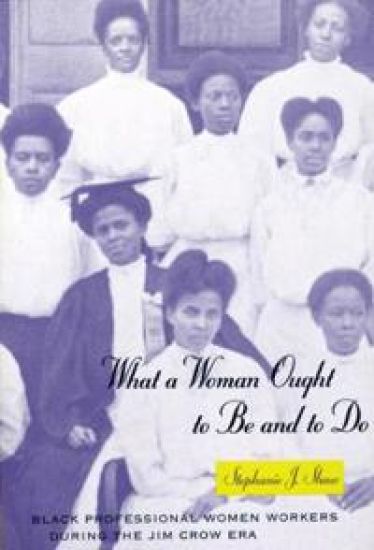
What a Woman Ought to Be and to Do

What a Woman Ought to Be and to Do

Stephanie J. Shaw

University of Chicago Press
1996
sidottu
This work explores the inner world of American black professional women during the Jim Crow era. It is a story of struggle and empowerment, of the strength of a group of women who worked against daunting odds to improve the world for themselves and their people. Shaw has done research into the lives of social workers, librarians, nurses and teachers from the 1870s through the 1950s. The women tell, in their own words, about their families, their values and their expectations. Shaw explains the forces and factors that made them exceptional and of the choices and commitments that made them leaders in their communities. This book explores a world in which African-American families, communities and schools worked to encourage the self-confidence, individual initiative and social responsibility of girls. Shaw shows how, in a society that denied black women full professional status, these girls embraced and in turn defined an ideal of "socially responsible individualism" that balanced private and public sphere responsibilities. A collective portrait of character shaped in the toughest circumstances, this book aims to provide more than a study of the socialization of these women as children and the organization of their work as adults. It also provides a study of leadership - of how African American communities gave their daughters the power to succeed in and change a hostile world.
What a Woman Ought to Be and to Do

What a Woman Ought to Be and to Do

Stephanie J. Shaw

University of Chicago Press
1996
nidottu
This work explores the inner world of American Black professional women during the Jim Crow era. It is a story of struggle and empowerment, of the strength of a group of women who worked against daunting odds to improve the world for themselves and their people. Shaw has done research into the lives of social workers, librarians, nurses and teachers from the 1870s through the 1950s. The women tell, in their own words, about their families, their values and their expectations. Shaw explains the forces and factors that made them exceptional and of the choices and commitments that made them leaders in their communities. This book explores a world in which African-American families, communities and schools worked to encourage the self-confidence, individual initiative and social responsibility of girls. Shaw shows how, in a society that denied black women full professional status, these girls embraced and in turn defined an ideal of "socially responsible individualism" that balanced private and public sphere responsibilities. A collective portrait of character shaped in the toughest circumstances, this book aims to provide more than a study of the socialization of these women as children and the organization of their work as adults. It also provides a study of leadership - of how African American communities gave their daughters the power to succeed in and change a hostile world.
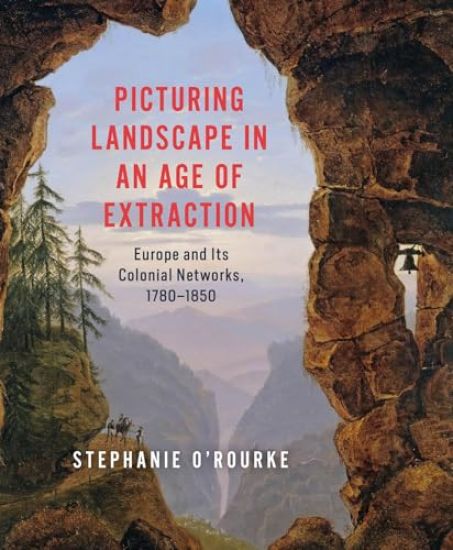
Picturing Landscape in an Age of Extraction

Picturing Landscape in an Age of Extraction

Stephanie O'Rourke

THE UNIVERSITY OF CHICAGO PRESS
2025
sidottu
O’Rourke argues that artistic representations played a pivotal role in shaping how people thought about the natural world during the Industrial Revolution. In the late eighteenth and early nineteenth centuries, European artists confronted the emergence of a new way of thinking about and treating the Earth and its resources. Centered on extraction, this new paradigm was characterized by large-scale efforts to transform and monetize the physical environment across the globe. With this book, Stephanie O’Rourke considers such practices, looking at what was at stake in visual representations of the natural world during the first decades of Europe’s industrial revolutions. O’Rourke argues that key developments in the European landscape painting tradition were profoundly shaped by industries including mining and timber harvesting, as well as by interlinked ideas about race, climate, and waste. Focusing on developments in Britain, France, Germany, and across Europe’s colonial networks, she explores how artworks and technical illustrations portrayed landscapes in ways that promoted—or pushed against—the logic of resource extraction.
rushes from the river disappointment

rushes from the river disappointment

stephanie roberts

McGill-Queen's University Press
2020
nidottu
"those of us who've seen miracles know how to ask. / if you've asked, do you love me, i almost certainly / don't love you." This meditative, musically attentive collection explores the confounding nature of intimate relationships. stephanie roberts's poetic expression is often irreverent, unapologetic, and infused with humour that can take surprisingly grave turns. rushes from the river disappointment traverses city, country, and fantasy using nature as artery through the emotional landscape. As they wrestle to come to terms with the effects of uncertainty and grief on hope and belief, these diverse field notes are interspersed with the fabulous: a polar bear and owl engage in flirtation, a time traveller appears on a lake, an erotic scene takes place on a train, and we confront "people capable of eating popcorn at the movie of your agony." roberts's language is dense with images and sometimes acrobatic. In poems that affirm love and desire as treasures fought for more than just felt, rushes from the river disappointment turns an unblinking gaze on the failures of courage that distance us from love.
Villain, Vermin, Icon, Kin

Villain, Vermin, Icon, Kin

Stephanie Rutherford

MCGILL-QUEEN'S UNIVERSITY PRESS
2022
sidottu
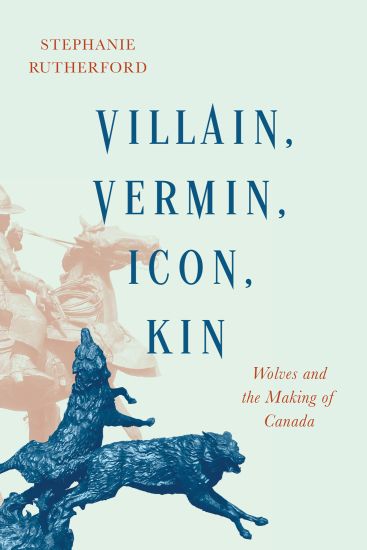
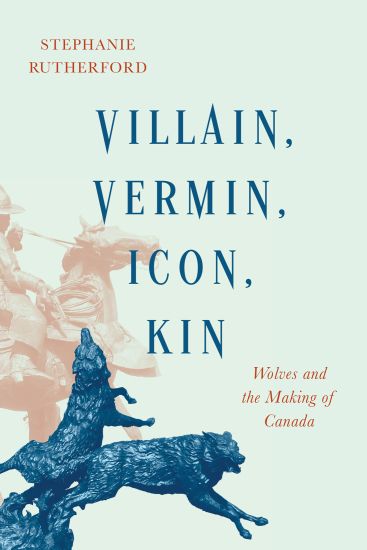
A wolf’s howl is felt in the body. Frightening and compelling, incomprehensible or entirely knowable, it is a sound that may be heard as threat or invitation but leaves no listener unaffected.Toothsome fiends, interfering pests, or creatures wild and free, wolves have been at the heart of Canada’s national story since long before Confederation. Villain, Vermin, Icon, Kin contends that the role in which wolves have been cast – monster or hero – has changed dramatically through time. Exploring the social history of wolves in Canada, Stephanie Rutherford weaves an innovative tapestry from the varied threads of historical and contemporary texts, ideas, and practices in human-wolf relations, from provincial bounties to Farley Mowat’s iconic Never Cry Wolf. These examples reveal that Canada was made, in part, through relationships with nonhuman animals. Wolves have always captured the human imagination. In sketching out the connections people have had with wolves at different times, Villain, Vermin, Icon, Kin offers a model for more ethical ways of interacting with animals in the face of a global biodiversity crisis.
Villain, Vermin, Icon, Kin

Villain, Vermin, Icon, Kin

Stephanie Rutherford

MCGILL-QUEEN'S UNIVERSITY PRESS
2022
nidottu
A wolf’s howl is felt in the body. Frightening and compelling, incomprehensible or entirely knowable, it is a sound that may be heard as threat or invitation but leaves no listener unaffected.Toothsome fiends, interfering pests, or creatures wild and free, wolves have been at the heart of Canada’s national story since long before Confederation. Villain, Vermin, Icon, Kin contends that the role in which wolves have been cast – monster or hero – has changed dramatically through time. Exploring the social history of wolves in Canada, Stephanie Rutherford weaves an innovative tapestry from the varied threads of historical and contemporary texts, ideas, and practices in human-wolf relations, from provincial bounties to Farley Mowat’s iconic Never Cry Wolf. These examples reveal that Canada was made, in part, through relationships with nonhuman animals. Wolves have always captured the human imagination. In sketching out the connections people have had with wolves at different times, Villain, Vermin, Icon, Kin offers a model for more ethical ways of interacting with animals in the face of a global biodiversity crisis.