Kirjojen hintavertailu. Mukana 12 016 292 kirjaa ja 12 kauppaa.

Kirjahaku

Etsi kirjoja tekijän nimen, kirjan nimen tai ISBN:n perusteella.

1000 tulosta hakusanalla Stephanie Scheffler

Hardship Duty

Hardship Duty

Stephanie Bonnes

OXFORD UNIVERSITY PRESS INC
2024
sidottu
In the past thirty years, it has become evident that the U.S. military faces widespread and ongoing challenges related to harassment and sexual assault. Despite prevention efforts, estimated sexual assaults are increasing, reporting is decreasing, and the problem persists across all branches of the military. Servicewomen who have experienced and survived these abuses drive the analysis in this book, and their voices are central to these pages. In Hardship Duty: Women's Experiences with Sexual Harassment, Sexual Assault, and Discrimination in the U.S. Military, Stephanie Bonnes focuses on the puzzle of how sexual abuse remains highly prevalent in an organization that has dynamic policies, prevention strategies, and evolving education programs designed to combat sexual violence. Drawing primarily on in-depth interviews with fifty servicewomen, Hardship Duty uncovers how masculinity and misogyny are entangled in the organization's structure, policies, values, physical spaces, and culture in ways that create sexual abuse vulnerability. Bonnes demonstrates how privileging masculinity and denigrating femininity at the organizational level encourages harassment at the interpersonal level, how servicewomen are often forced to cope with harassment and sexual abuse on their own--despite policies designed to assist victims--and how women who do report are often treated like institutional enemies, harassed more, and face resistance from the institution. With multiple stories of sexual harassment and sexual assault from U.S. servicewomen, this book not only opens the doors to a normally closed institution, but it also gives voice to those who are marginalized and often silenced within it.
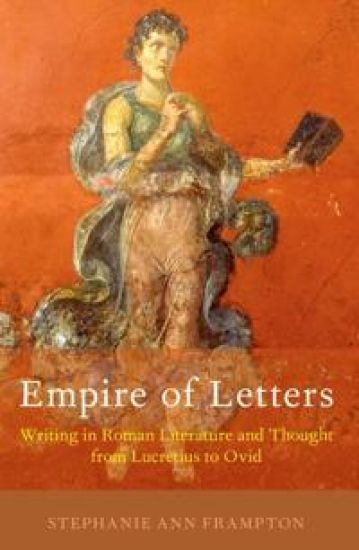
Empire of Letters

Empire of Letters

Stephanie Ann Frampton

OXFORD UNIVERSITY PRESS INC
2022
nidottu
Shedding new light on the history of the book in antiquity, Empire of Letters tells the story of writing at Rome at the pivotal moment of transition from Republic to Empire (c. 55 BCE-15 CE). By uniting close readings of the period's major authors with detailed analysis of material texts, it argues that the physical embodiments of writing were essential to the worldviews and self-fashioning of authors whose works took shape in them. Whether in wooden tablets, papyrus bookrolls, monumental writing in stone and bronze, or through the alphabet itself, Roman authors both idealized and competed with writing's textual forms. The academic study of the history of the book has arisen largely out of the textual abundance of the age of print, focusing on the Renaissance and after. But fewer than fifty fragments of classical Roman bookrolls survive, and even fewer lines of poetry. Understanding the history of the ancient Roman book requires us to think differently about this evidence, placing it into the context of other kinds of textual forms that survive in greater numbers, from the fragments of Greek papyri preserved in the garbage heaps of Egypt to the Latin graffiti still visible on the walls of the cities destroyed by Vesuvius. By attending carefully to this kind of material in conjunction with the rich literary testimony of the period, Empire of Letters exposes the importance of textuality itself to Roman authors, and puts the written word back at the center of Roman literature.
The Republican Civil War

The Republican Civil War

Stephanie Muravchik; Jon A. Shields

OXFORD UNIVERSITY PRESS INC
2026
sidottu
An insightful examination of intra-party conflict in Wyoming, revealing a fundamental disagreement between Republicans that will determine the future of the American right. No state has been more Republican and loyal to Donald Trump than Wyoming. The appearance of homogeneity, though, masks a fierce battle for the future of the party. In The Republican Civil War, Stephanie Muravchik and Jon A. Shields draw on years of on-the-ground research and dozens of interviews with elected officials and activists, finding a party divided over whether it should abandon its traditional focus on governance for a new nationalized form of identity politics. While old guard Republicans aim to solve local problems within an ethos of noblesse oblige, MAGA insurgents position themselves as "true conservatives" leading a censorious crusade against the establishment. More surprisingly, the same social cleavages that divide red and blue American--class and ruralness--shape this civil war. Most of the new insurgents in the legislature don't have college degrees and see themselves as part of a rural uprising. By shedding light on a civil war in the deepest of red states, this book not only advances our understanding of the new conservative politics of identity, it also offers a clear portrait of a GOP establishment resisting--not just capitulating--to Trumpism.
The Republican Civil War

The Republican Civil War

Stephanie Muravchik; Jon A. Shields

OXFORD UNIVERSITY PRESS INC
2025
nidottu
An insightful examination of intra-party conflict in Wyoming, revealing a fundamental disagreement between Republicans that will determine the future of the American right. No state has been more Republican and loyal to Donald Trump than Wyoming. The appearance of homogeneity, though, masks a fierce battle for the future of the party. In The Republican Civil War, Stephanie Muravchik and Jon A. Shields draw on years of on-the-ground research and dozens of interviews with elected officials and activists, finding a party divided over whether it should abandon its traditional focus on governance for a new nationalized form of identity politics. While old guard Republicans aim to solve local problems within an ethos of noblesse oblige, MAGA insurgents position themselves as "true conservatives" leading a censorious crusade against the establishment. More surprisingly, the same social cleavages that divide red and blue American--class and ruralness--shape this civil war. Most of the new insurgents in the legislature don't have college degrees and see themselves as part of a rural uprising. By shedding light on a civil war in the deepest of red states, this book not only advances our understanding of the new conservative politics of identity, it also offers a clear portrait of a GOP establishment resisting--not just capitulating--to Trumpism.
Myth and National Identity in Nineteenth-Century Britain

Myth and National Identity in Nineteenth-Century Britain

Stephanie Barczewski

Oxford University Press
2000
sidottu
Scholars have become increasingly interested in how modern national consciousness comes into being through fictional narratives. Literature is of particular importance to this process, for it is responsible for tracing the nations evolution through glorious tales of its history. In nineteenth-century Britain, the legends of King Arthur and Robin Hood played an important role in construction of contemporary national identity. These two legends provide excellent windows through which to view British culture, because they provide very different perspectives. King Arthur and Robin Hood have traditionally been diametrically opposed in terms of their ideological orientation. The former is a king, a man at the pinnacle of the social and political hierarchy, whereas the latter is an outlaw, and is therefore completely outside conventional hierarchical structures. The fact that two such different figures could simultaneously function as British national heroes suggests that nineteenth-century British nationalism did not represent a single set of values and ideas, but rather that it was forced to assimilate a variety of competing points of view.
The Failure of Democratic Politics in Fiji

The Failure of Democratic Politics in Fiji

Stephanie Lawson

Clarendon Press
1991
sidottu
In 1987 two military coups in Fiji undermined institutions previously thought to be democratic in character. The coup leader, Colonel Sitiveni Rabuka, claimed that the coups were necessary in order to protect the rights of indigenous Fijians against the demands of the large Indian community. Combining the techniques of the historian, the anthropologist, and the political theorist, Stephanie Lawson discusses the contemporary political situation in Fiji from both a historical and a theoretical viewpoint, and tracing the sources of the current divisions in Fiji to the well-intentioned, but in the end misguided, ambitions of colonial administrators to protect the way of life of indigenous Fijians. Dr Lawson's analysis reveals many ironies. The very presence in Fiji of a large Indian community, now made a scapegoat by the coup leaders, is a result of the desire of colonial administrators to avoid forcing the indigenous population to become landless labourers, while at the same time securing a source of labour for a plantation-based agricultural system. She argues that post-colonial political institutions, themselves shaped by generations of colonial administrators, exacerbated and possibly created the very tensions between the indigenous population and Indians that they were designed to temper. Dr Lawson demonstrates why race was never really an issue in recent events but why Rabuka could plausibly claim that it was. She comes to the provocative but convincing conclusion that Fiji has never really been a democracy in the Western sense of the word.
The Mystery of the Hanging Garden of Babylon

The Mystery of the Hanging Garden of Babylon

Stephanie Dalley

Oxford University Press
2015
nidottu
The Mystery of the Hanging Garden of Babylon is an exciting story of detection involving legends, expert decipherment of ancient texts, and a vivid description of a little-known civilization. Recognized in ancient times as one of the Seven Wonders of the World, the legendary Hanging Garden of Babylon and its location have long been steeped in mystery and puzzling myths. In this remarkable volume Stephanie Dalley, a world expert on ancient Babylonian language, exposes new evidence and clarifies all the known material about this enigmatic World Wonder. Placing the Garden within a tradition of royal patronage, Dalley describes how the decipherment of an original text and its link to sculpture in the British Museum has enabled her to pin down where and by which king the Garden was laid out, and to describe in detail what it looked like. Through this dramatic and fascinating reconstruction of the Garden, Dalley also follows its influence on later garden design. Unscrambling layer by layer the many stories that have built up around the Garden, including the parts played by Semiramis and Nebuchadnezzar, Dalley shows why this Garden deserves its place alongside the Pyramids and the Colossus of Rhodes as one of the most astonishing technical achievements of the ancient world.
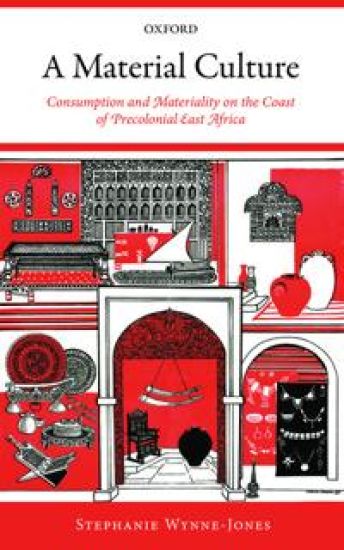
A Material Culture

A Material Culture

Stephanie Wynne-Jones

Oxford University Press
2016
sidottu
A Material Culture focuses on objects in Swahili society through the elaboration of an approach that sees people and things as caught up in webs of mutual interaction. It therefore provides both a new theoretical intervention in some of the key themes in material culture studies, including the agency of objects and the ways they were linked to social identities, through the development of the notion of a biography of practice. These theoretical discussions are explored through the archaeology of the Swahili, on the Indian Ocean coast of eastern Africa. This coast was home to a series of settlements from the seventh century onwards; some grew to become coral-built 'stonetowns'. These precolonial towns, such as Kilwa Kisiwani, Mombasa, and Gede, represent a unique urban tradition. They were deeply involved in maritime trade, carried out by a diverse Islamic population. This book suggests that the Swahili are a highly-significant case study for exploration of the relationship between objects and people in the past, as the society was constituted and defined through a particular material setting. Further, it is suggested that this relationship was subtly different than in other areas, and particularly from western models that dominate prevailing analysis. The case is made for an alternative form of materiality, perhaps common to the wider Indian Ocean world, with an emphasis on redistribution and circulation rather than on the accumulation of wealth. The reader will therefore gain familiarity with a little-known and fascinating culture, as well as appreciating the ways that non-western examples can add to our theoretical models.
Pseudo-Arcadius' Epitome of Herodian's De Prosodia Catholica

Pseudo-Arcadius' Epitome of Herodian's De Prosodia Catholica

Stephanie Roussou

Oxford University Press
2018
sidottu
This volume contains a new critical edition of Pseudo-Arcadius' Epitome of Herodian's De Prosodia Catholica, including an extensive introduction, critical apparatus, apparatus of parallel passages, and full commentary. Misattributed to Arcadius, this epitome is one of the two main sources for Herodian's highly influential lost work, which was the first systematic treatment of ancient Greek prosody to have a substantial and lasting impact on ancient and medieval Greek scholarship and teaching. It is also responsible to a large extent for our knowledge of the ancient rules of Greek accentuation, which we still attempt to follow today, and was also widely used by grammatical and lexicographical writers, not only on accentuation but also on a variety of other aspects of grammar. This new edition employs for the first time two manuscripts which thorough examination of all the surviving sources has revealed to be of primary importance, enabling the text to be improved to a considerable degree in comparison to earlier editions. This ground-breaking research is apparent in the apparatus of parallel passages, which contains a collection of texts that have derived material from Herodian, often enabling us to reconstruct the text of Pseudo-Arcadius' Epitome and illustrating the extent of Herodian's influence on later studies of grammar. Corrupt passages and features of the text that have never been examined before are also discussed in detail in the first full commentary on the work, cementing this edition as a definitive and authoritative contribution to modern Herodianic studies.
The Fame of C. S. Lewis

The Fame of C. S. Lewis

Stephanie L. Derrick

Oxford University Press
2018
sidottu
C. S. Lewis, long renowned for his children's books as well as his Christian apologetics, has been the subject of wide interest since he first stepped-up to the BBC's microphone during the Second World War. Until now, however, the reasons why this medievalist began writing books for a popular audience, and why these books have continued to be so popular, had not been fully explored. In fact Lewis, who once described himself as by nature an 'extreme anarchist', was a critical controversialist in his time-and not to everyone's liking. Yet, somehow, Lewis's books directed at children and middlebrow Christians have continued to resonate in the decades since his death in 1963. Stephanie L. Derrick considers why this is the case, and why it is more true in America than in Lewis's home-country of Britain. The story of C. S. Lewis's fame is one that takes us from his childhood in Edwardian Belfast, to the height of international conflict during the 1940s, to the rapid expansion of the paperback market, and on to readers' experiences in the 1980s and 1990s, and, finally, to London in November 2013, where Lewis was honoured with a stone in Poet's Corner in Westminster Abbey. Derrick shows that, in fact, the author himself was only one actor among many shaping a multi-faceted image. The Fame of C. S. Lewis is the most comprehensive account of Lewis's popularity to date, drawing on a wealth of fresh material and with much to interest scholars and C. S. Lewis admirers alike.
Group Duties

Group Duties

Stephanie Collins

Oxford University Press
2019
sidottu
Moral duties are regularly attributed to groups. In the media or on the street, we might hear that a specific country has a moral duty to defend human rights, that environmentalists have a moral duty to push for global systemic reform, or that the affluent have a moral duty to alleviate poverty. Do such attributions make conceptual sense or are they mere political rhetoric? And what does that imply for the individual members of these groups? Group Duties offers the first comprehensive answer to these questions. Stephanie Collins defends a Tripartite Model of group duties - so-called because it divides groups into three fundamental categories. First, we have combinations - collections of agents that don't have any goals or decision-making procedures in common. These groups cannot bear moral duties. Instead, we should re-cast their purported duties as a series of duties, one held by each agent in the combination. Each duty demands its bearer to 'I-reason': to do the best they can, given whatever they happen to believe the others will do. Second, there are groups whose members share goals but lack decision-making procedures. These are coalitions. Coalitions also cannot bear duties, but their alleged duties should be replaced with members' several duties to 'we-reason': to do one's part in a particular group pattern of actions, on the presumption that others will do likewise. Third and finally, collectives have group-level procedures for making decisions. They can bear duties. Collectives' duties imply duties for collectives' members to use their role in the collective with a view to the collective doing its duty. With the Tripartite Model in-hand, Collins argues that we can target our political demands at the right entities, in the right way, for the right reasons.
Global Politics

Global Politics

Stephanie Lawson

Oxford University Press
2021
nidottu
Global Politics is a concise and engaging introduction to international relations. In it, Stephanie Lawson introduces the key theories and concepts underpinning the discipline, giving readers a foundation to study politics on both a personal and global scale, including issues relating to gender, sexuality, and ethnicity, as well as the economy, environment, and concepts of justice. The textbook presents theories in their historical context, demonstrating how they can evolve over time. Case studies, both contemporary and historical, and biographies of key figures, help bring these issues to life. Additional features, such as key debates and summary questions, provide opportunities to analyse issues from a range of perspectives. Digital formats and resources Global Politics is available for students and institutions to purchase in a variety of formats, and is supported by online resources. The e-book offers a mobile experience and convenient access: www.oxfordtextbooks.co.uk/ebooks The online resources include: For Students: - Multiple choice questions test your knowledge of the chapters and provide instant feedback - Extended case studies demonstrate theory in practice - Videos illustrate contemporary issues in International Relations For Lecturers: - Customisable PowerPoint slides support effective teaching preparation
Custom, Common Law, and the Constitution of English Renaissance Literature
Custom, Common Law, and the Constitution of English Renaissance Literature argues that, ironically, custom was a supremely generative literary force for a range of Renaissance writers. Custom took on so much power because of its virtual synonymity with English common law, the increasingly dominant legal system that was also foundational to England's constitutionalist politics. The strange temporality assigned to legal custom, that is, its purported existence since 'time immemorial', furnished it with a unique and paradoxical capacity--to make new and foreign forms familiar. This volume shows that during a time when novelty was suspect, even insurrectionary, appeals to the widespread understanding of custom as a legal concept justified a startling array of fictive experiments. This is the first book to reveal fully the relationship between Renaissance literature and legal custom. It shows how writers were able to reimagine moments of historical and cultural rupture as continuity by appealing to the powerful belief that English legal custom persisted in the face of conquests by foreign powers. Custom, Common Law, and the Constitution of English Renaissance Literature thus challenges scholarly narratives in which Renaissance art breaks with a past it looks back upon longingly and instead argues that the period viewed its literature as imbued with the aura of the past. In this way, through experiments in rhetoric and form, literature unfolds the processes whereby custom gains its formidable and flexible political power. Custom, a key concept of legal and constitutionalist thought, shaped sixteenth-century literature, while this literature, in turn, transformed custom into an evocative mythopoetic.
Catullus in Twentieth-Century Music

Catullus in Twentieth-Century Music

Stephanie Oade

Oxford University Press
2024
sidottu
One of the most famous voices to have survived from the Roman world, Catullus's poetry is still amongst the most popular and widely read. But what is it that makes this 2,000-year-old voice so relevant, so personal, and so endlessly fascinating? Reinvigorating discussions around the nature of Catullus's lyricism, Catullus in Twentieth-Century Music takes a completely new approach to Catullus and ideas of lyric. It centres around four musical works from the twentieth century, each one capturing the essence of Catullus in musical retellings and showcasing a very personal response to the original text. Considering how and why these musical composers used Catullus's poetry as their stimulus allows us to uncover new ideas about Catullus's poetry. By considering the very process of reception, Stephanie Oade takes a broader view of lyric, identifying traits and characteristics that are common to both music and poetry, thus transcending the boundaries of individual art forms in order to consider the genre in larger, interdisciplinary terms. It offers insights into compositional processes and challenges audiences to think about ways of engaging with music and poetry. More than anything, it shows how ancient voices continue to resound in modernity and offer everlasting expression for our own experiences and emotions.
Esther's Revenge at Susa

Esther's Revenge at Susa

Stephanie Dalley

Oxford University Press
2007
sidottu
Why are the names of the chief characters in the biblical Book of Esther those of Mesopotamian deities? Stephanie Dalley argues that the narrative reflects real happenings in seventh-century Assyria, where the widespread belief that revenge belongs to the gods explains why Assyrian kings described punitive campaigns as divine acts, leading to the mythologizing of certain historical events. Ashurbanipal's sack of Susa, led by the deities Ishtar and Marduk, underlies the Hebrew story of Esther, and that story contains traces of the cultic calendar of Ishtar-of-Nineveh. Dalley traces the way in which the long-term settlement of `lost tribes' in Assyria, revealed by the fruits of excavation in Iraq and Syria, inspired a blend of pagan and Jewish traditions.
Old Babylonian Texts in the Ashmolean Museum

Old Babylonian Texts in the Ashmolean Museum

Stephanie Dalley

Clarendon Press
2005
nidottu
This volume completes the publication of all identified Old Babylonian tablets in the Ashmolean Museum accessed before 1966. Although many of them were acquired from dealers in the 1920s and 1930s, most can be assigned to sites and connected with similar holdings in other museums. The combination of full catalogue, indices, and copies provides an invaluable tool for further research on three of the most important cities of the 18th century BC. Links with Mycenaean administrative practices, and information about the hitherto dubious Sealand dynasty, are two interesting aspects highlighted in the introduction.