Kirjojen hintavertailu. Mukana 11 238 394 kirjaa ja 12 kauppaa.

Kirjahaku

Etsi kirjoja tekijän nimen, kirjan nimen tai ISBN:n perusteella.

1000 tulosta hakusanalla Thomas Witherow

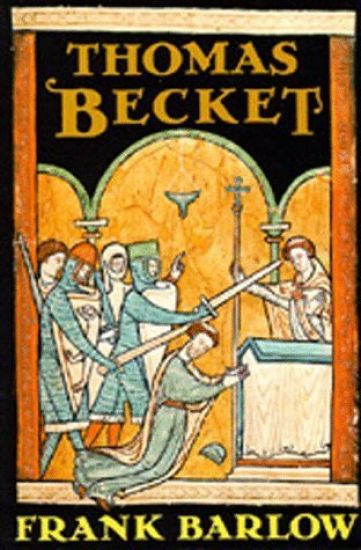
Thomas Becket

Thomas Becket

Frank Barlow

University of California Press
1990
pokkari
On 29 December 1170, Thomas Archbishop of Canterbury was brutally murdered in his cathedral by four knights from the household of his former friend and patron, King Henry II. The horror that the killing inspired and the miraculous cures performed at Thomas's tomb transfigured him into one of the most popular saints in Western Christendom, and Canterbury became one of the greatest pilgrim shrines in the West. Yet these were unexpected results. Thomas's extraordinary career had been, and remains, controversial. The transformation of a handsome, attractive, and worldly courtier into a zealous prelate, a bitter exile and finally a martyr was for many hard to understand. In this brilliant new biography, based on the original sources and informed by the most recent scholarship, Frank Barlow reconstructs Thomas's physical environment and entourage at various stages of his career, exploring the nuances and irregularities in the story that have been ignored in other studies.
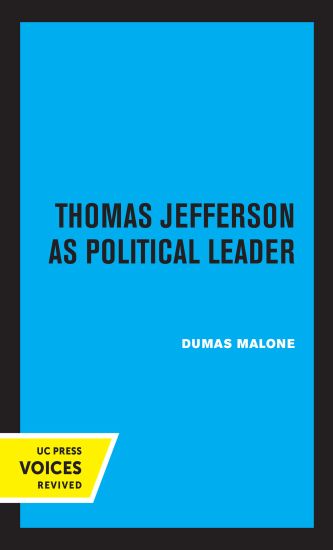
Thomas Jefferson as Political Leader

Thomas Jefferson as Political Leader

Dumas Malone

University of California Press
2021
pokkari
This title is part of UC Press's Voices Revived program, which commemorates University of California Press’s mission to seek out and cultivate the brightest minds and give them voice, reach, and impact. Drawing on a backlist dating to 1893, Voices Revived makes high-quality, peer-reviewed scholarship accessible once again using print-on-demand technology. This title was originally published in 1963.
Thomas Jefferson and the Development of American Public Education

Thomas Jefferson and the Development of American Public Education

James B. Conant

University of California Press
2021
pokkari
This title is part of UC Press's Voices Revived program, which commemorates University of California Press’s mission to seek out and cultivate the brightest minds and give them voice, reach, and impact. Drawing on a backlist dating to 1893, Voices Revived makes high-quality, peer-reviewed scholarship accessible once again using print-on-demand technology. This title was originally published in 1962.
Thomas Jefferson and the Development of American Public Education

Thomas Jefferson and the Development of American Public Education

James B. Conant

University of California Press
2021
sidottu
This title is part of UC Press's Voices Revived program, which commemorates University of California Press’s mission to seek out and cultivate the brightest minds and give them voice, reach, and impact. Drawing on a backlist dating to 1893, Voices Revived makes high-quality, peer-reviewed scholarship accessible once again using print-on-demand technology. This title was originally published in 1962.
Thomas Jefferson as Political Leader

Thomas Jefferson as Political Leader

Dumas Malone

University of California Press
2021
sidottu
This title is part of UC Press's Voices Revived program, which commemorates University of California Press’s mission to seek out and cultivate the brightest minds and give them voice, reach, and impact. Drawing on a backlist dating to 1893, Voices Revived makes high-quality, peer-reviewed scholarship accessible once again using print-on-demand technology. This title was originally published in 1963.
Thomas Aquinas on Human Nature

Thomas Aquinas on Human Nature

Robert Pasnau

Cambridge University Press
2001
pokkari
This is a major new study of Thomas Aquinas, the most influential philosopher of the Middle Ages. The book offers a clear and accessible guide to the central project of Aquinas’ philosophy: the understanding of human nature. Robert Pasnau sets the philosophy in the context of ancient and modern thought, and argues for some groundbreaking proposals for understanding some of the most difficult areas of Aquinas’ thought: the relationship of soul to body, the workings of sense and intellect, the will and the passions, and personal identity. Structured around a close reading of the treatise on human nature from the Summa theologiae and deeply informed by a wide knowledge of the history of philosophy and contemporary philosophy, this study will offer specialists a series of novel and provocative interpretations, while providing students with a reference commentary on one of Aquinas’ core texts.
The Letters of Thomas Babington MacAulay: Volume 1, 1807–February 1831
Some of Macaulay's letters were printed in nineteenth-century memoirs, but a 'Complete Letters' of this eminent Victorian has long been needed. Professor Pinney is editing the whole body of surviving letters by Macaulay, giving accurate texts and textual and explanatory notes. The letters are in chronological order, grouped by historical theme and phases of Macaulay's life. The first two volumes deal with his childhood, career at Cambridge, early legal career and early political career, and end with him about to leave for India. The letters are lively because Macaulay (as lawyer, essayist, historian, politician, administrator, poet) was a man of enormous energy and very wide interests. They will add greatly to our sense of early Victorian political and cultural life as well as to our understanding of Macaulay himself.
The Letters of Thomas Babington MacAulay: Volume 2, March 1831–December 1833

The Letters of Thomas Babington MacAulay: Volume 2, March 1831–December 1833

Thomas MacAulay; Thomas Pinney

Cambridge University Press
2008
pokkari
Some of Macaulay's letters were printed in nineteenth-century memoirs, but a 'Complete Letters' of this eminent Victorian has long been needed. Professor Pinney is editing the whole body of surviving letters by Macaulay, giving accurate texts and textual and explanatory notes. The letters are in chronological order, grouped by historical theme and phases of Macaulay's life. The first two volumes deal with his childhood, career at Cambridge, early legal career and early political career, and end with him about to leave for India. The letters are lively because Macaulay (as lawyer, essayist, historian, politician, administrator, poet) was a man of enormous energy and very wide interests. They will add greatly to our sense of early Victorian political and cultural life as well as to our understanding of Macaulay himself.
The Letters of Thomas Babington MacAulay: Volume 3, January 1834–August 1841

The Letters of Thomas Babington MacAulay: Volume 3, January 1834–August 1841

Thomas MacAulay; Thomas Pinney

Cambridge University Press
2008
pokkari
The third volume of Thomas Pinney's acclaimed edition of Macaulay's letters brings the work to its halfway point. This volume begins with Macaulay preparing to sail for India as a member of the supreme Council, covers his Indian career, his return to England, renewed election to Parliament and appointment to the Whig Cabinet; it ends with the defeat of Melbourne's ministry. Many of the letters are previously unpublished, and are notable for their brisk and vivid style, clear and readable as was all Macaulay's prose. They throw particular light on his Indian years, in which Macaulay played a significant part in liberalising movement begun by Bentinck. The period also took Macaulay through several personal crises, brought about by the death of one favourite sister and the marriage of another. In these letters too Macaulay often concerns himself with his continuing literary career.
The Letters of Thomas Babington MacAulay: Volume 4, September 1841–December 1848
The fourth volume of Thomas Pinney's acclaimed edition of Macaulay's letters covers the period between September 1841 and December 1848, in which Macaulay is shown keeping up an active political life as MP for Edinburgh and member of Lord John Russell's Whig Cabinet. At the same time his literary reputation is extended by The Lays of Ancient Rome, the collected Essays, and, at the end of the period spanned by this volume, the triumphant publication of the first two volumes of the History of England. In the same years Macaulay was enjoying perhaps the most satisfactory period of his private life: we see him comfortably established in the Albany, enjoying the society of his sister and her family, taking part as a leading figure in Whig political and literary circles, and confidently at work on the book which was to crown his fame.
The Letters of Thomas Babington MacAulay: Volume 5, January 1849–December 1855
The years covered in this fifth volume of Macaulay's letters were a striking mixture of triumph and loss. The publication of the first part of The History of England at the end of 1848 set Macaulay at the top of his fame, not merely in England, but on the Continent and in America. Honours came pouring in, and the sales of his books began to make him a rich man. The publication of the second part of the History in 1855 was a publishing event of unparalleled magnitude: 25,000 copies were subscribed at once in England, and four times that number were quickly sold in the United States. To add to his triumph, the people of Edinburgh, who had so rudely and unexpectedly rejected him in 1847 as their representative in parliament, now recanted; though Macaulay refused even to appear before them, they insisted upon returning him to parliament, and did so in 1852.
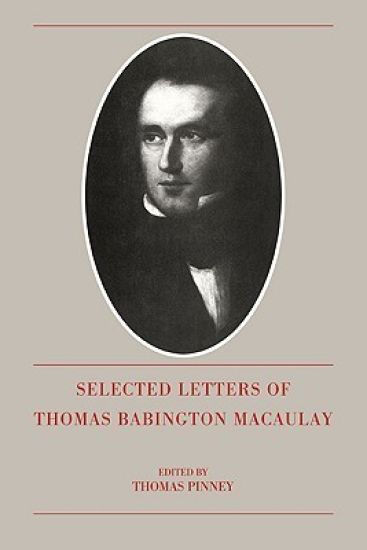
The Selected Letters of Thomas Babington Macaulay

The Selected Letters of Thomas Babington Macaulay

Thomas Babington Macaulay

Cambridge University Press
2008
pokkari
A personal view of England, from the Napoleonic Wars to the high tide of mid-Victorian prosperity, is recorded in these letters of one of the Victorian era's greatest figures. Historian, essayist, poet, orator, statesman, Macaulay saw and recorded - and frequently had part in - some of the most important events of his time. The abolition of slavery and the slave trade, the passage of the Reform Bill, the reform of Indian government, and the struggle over the Corn Laws are among the public interests of Macaulay's letters. At the same time they present a lively picture of the style and behaviour of Macaulay's time as he saw it in many different scenes: among the Evangelicals of Clapham, at Cambridge, amidst the society of Holland House, in Parliament, at the country houses of the grand Whigs, and among the literary, legal and political circles of Victorian London.
The Dramatic Works of Thomas Dekker

The Dramatic Works of Thomas Dekker

Thomas Dekker; George Dekker

Cambridge University Press
2009
pokkari
Originally published in 1953, this was the first edition of Dekker's plays to appear in print since the late nineteenth century. Thus, for many years prior, Dekker had been the least accessible of the prominent Elizabethan dramatists, with the result that his anthologized plays had received undue attention at the expense of other highly readable works of the second rank. Professor Fredson Bowers here presents a critical old-spelling text of the ordinarily accepted canon, together with a few works not collected previously but which seem to merit inclusion in an edition of Dekker's plays. The text of the complete plays is in four volumes and a complementary four-volume set contains detailed introductions and notes to all the plays. In a general textual introduction Professor Bowers sets forth a reasoned account of his editorial method and procedures for a critical edition according to bibliographical principles.
The Dramatic Works of Thomas Dekker

The Dramatic Works of Thomas Dekker

Thomas Dekker

Cambridge University Press
2009
pokkari
This was the first edition of Dekker's plays to appear in print since the late nineteenth century. Thus, for many years prior, Dekker had been the least accessible of the prominent Elizabethan dramatists, with the result that his anthologized plays had received undue attention at the expense of other highly readable works of the second rank. Professor Fredson Bowers here presents a critical old-spelling text of the ordinarily accepted canon, together with a few works not collected previously but which seem to merit inclusion in an edition of Dekker's plays. The text of the complete plays is in four volumes and a complementary four-volume set contains detailed introductions and notes to all the plays. In a general textual introduction Professor Bowers sets forth a reasoned account of his editorial method and procedures for a critical edition according to bibliographical principles. Separate introductions provide textual analyses of the individual plays, including the circumstances of publication and of textual transmission. Apparatus for each play consists of textual notes, tables of press-variants derived from collation of a substantial number of copies of original editions, lists of editorial emendations to the copy-text, and historical collations of all early editions.
The Dramatic Works of Thomas Dekker

The Dramatic Works of Thomas Dekker

Thomas Dekker

Cambridge University Press
2009
pokkari
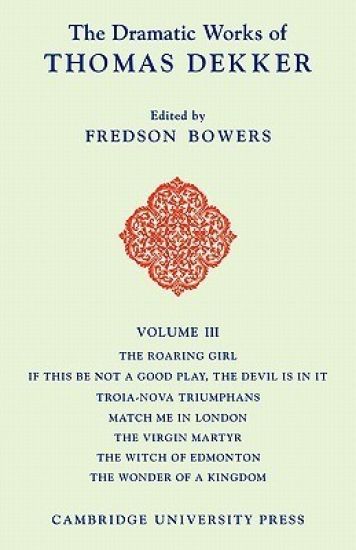
Volume III of the Cambridge Dekker contains The Roaring Girl, If this be not a Good Play..., Troia-Nova Triumphans, Match me in London, The Virgin Martyr, The Witch of Edmonton and The Wonder of a Kingdom. Professor Bowers's edition is recognized as a model critical old-spelling text, where the techniques of strong textual and bibliographical study have been methodically applied to one of the least accessible of the Elizabethan dramatists. The introductions to each play provide textual analyses which set out the circumstances of publication and transmission. The critical apparatus gives press variants derived from collations, editorial emendations to the copy-text and other textual notes.
Thomas Browne and the Writing of Early Modern Science

Thomas Browne and the Writing of Early Modern Science

Preston Claire

Cambridge University Press
2009
pokkari
Claire Preston argues that Thomas Browne's work can be fully understood only within the range of disciplines and practices associated with natural philosophy and early modern empiricism. Early modern methods of cataloguing, collecting, experimentation and observation organised his writing on many subjects from medicine and botany to archaeology and antiquarianism. Browne framed philosophical concerns in the terms of civil behaviour, with collaborative networks of intellectual exchange, investigative selflessness, courtesy, modesty and ultimately the generosity of the natural world itself, all characterising the return to 'innocent' knowledge, which, for Browne, is the proper end of human enquiry. In this major evaluation of Browne's oeuvre, Preston examines how the developing essay form, the discourse of scientific experiment, and above all Bacon's model of intellectual progress and cooperation determined the unique character of Browne's contributions to early modern literature, science and philosophy.
Thomas Arnold on Education

Thomas Arnold on Education

Cambridge University Press
2009
pokkari
Thomas Arnold, headmaster of Rugby School from 1828 till his death, is famous as the reformer of public schools. Dr Bamford sees this reputation as a misleading one and in his introduction he presents Arnold as a paradoxical figure. 'He had a very large family, but did not really understand children at all, he ran a public school but his heart was in the religious and social struggles outside the gates. Again, he adored the classics and despised the moderns but thought that the future hope of mankind lay with industry. As a headmaster it was his duty to educate and prepare boys for the professions and yet openly he despised these occupations. Even after he died the paradox remains, for he is said to have reformed the public schools whereas in fact there is precious little evidence of it.' In this book, a selection of his writings on education is presented to students of education. The writings are preceded by a full introduction which describes Arnold's social, religious and educational ideas and evaluates his influence.
Thomas Hollis of Lincoln's Inn

Thomas Hollis of Lincoln's Inn

W. H. Bond

Cambridge University Press
2009
pokkari
Thomas Hollis, a connoisseur and collector of art and antiquities, devoted the greater part of his substance and his energy to promoting the ideals of civil and religious liberty. Hollis is best known to modern bibliophiles for the distinctive bindings that he commissioned for the many books he distributed in Britain, the American colonies, and all over Europe. This book contains the first comprehensive catalogue and interpretation of his emblematic binding tools and a discussion of the several binders who worked for him. It also explores other activities that are less well known: his patronage of writers, printers, publishers, and artists, and his work as a designer of books and medals. This study should encourage a re-evaluation of Hollis's influence in the Age of Enlightenment and the Age of Revolution.
Thomas Jefferson and Executive Power

Thomas Jefferson and Executive Power

Jeremy D. Bailey

Cambridge University Press
2010
pokkari
By revisiting Thomas Jefferson's understanding of executive power this book offers a new understanding of the origins of presidential power. Before Jefferson was elected president, he arrived at a way to resolve the tension between constitutionalism and executive power. Because his solution would preserve a strict interpretation of the Constitution as well as transform the precedents left by his Federalist predecessors, it provided an alternative to Alexander Hamilton's understanding of executive power. In fact, a more thorough account of Jefferson's political career suggests that Jefferson envisioned an executive that was powerful, or 'energetic', because it would be more explicitly attached to the majority will. Jefferson's Revolution of 1800, often portrayed as a reversal of the strong presidency, was itself premised on energy in the executive and was part of Jefferson's project to enable the Constitution to survive and even flourish in a world governed by necessity.
Thomas Gray

Thomas Gray

Ketton-Cremer

Cambridge University Press
2011
pokkari
This biography of the renowned English eighteenth-century poet and scholar Thomas Gray (1716–1771) was originally published in 1955. The text contains extensive quotations from Gray's literary work and correspondence which are counterpoised by a highly readable narrative of his life, most of which was spent at Cambridge University. Whilst Gray's poetic output was limited for various reasons, including an extremely self-critical attitude towards his own work, he remains a figure of great importance in eighteenth-century literature. This book reflects that importance, and it will be of value to anyone with an interest in English poetry, literary biography, or the cultural environment of the 1700s.