Kirjojen hintavertailu. Mukana 12 390 323 kirjaa ja 12 kauppaa.

Kirjahaku

Etsi kirjoja tekijän nimen, kirjan nimen tai ISBN:n perusteella.

1000 tulosta hakusanalla Tracy Wainwright

Healing Hearts and Minds

Healing Hearts and Minds

Tracy Livecchi; Liza Morton

OXFORD UNIVERSITY PRESS INC
2023
nidottu
Full of evidence-based, easy to understand information about CHD, Healing Hearts and Minds offers strategies for learning to thrive despite living with this condition, but most importantly it will offer hope and connection. Congenital Heart Disease (CHD) is the most commonly diagnosed birth abnormality in the US. With great advances in surgery and medicine, however, survival rates have improved by 75% since the 1940s. Welcome news, of course, as only a few decades ago these birth defects were considered a death sentence, but as with any chronic condition, survival does not mean the issue is cured. With better medical care, babies born today with CHD have a good chance of surviving, but throughout their entire lives they can face surgeries, invasive treatments, lifelong monitoring, frequent medical check-ups, and significant limitations on physical activity, in addition to poor public awareness which can have an impact on social inclusion and understanding. Much attention has rightly been focused on the medical needs of these children and on providing their parents and caretakers with resources and information to navigate the complexities of this chronic condition. Little attention, however, has been paid to the psychosocial impacts on these individuals, especially as they grow, mature, and become adults living with a serious, chronic medical condition. Prevalence rates for anxiety, depression, and PTSD are significantly higher (2-3x in some cases) for people living with CHD than the general adult population. From feeling self-conscious about scars and limitations on physical activity and sense of loss around so many of life's little normalcies, to frequent hospital visits and living in constant fear of an emergency, this condition is ever-present. Liza Morton and Tracy Livecchi are both mental health professionals who have developed a specialty in working with clients who have chronic medical conditions, and they are both themselves living with CHD. In this book they set out to provide the resources and support they have been looking for their entire adult lives. While their powerful personal stories are woven into the narrative, the book is focused on providing evidence-based coping and self-care skills for adults living with CHD.
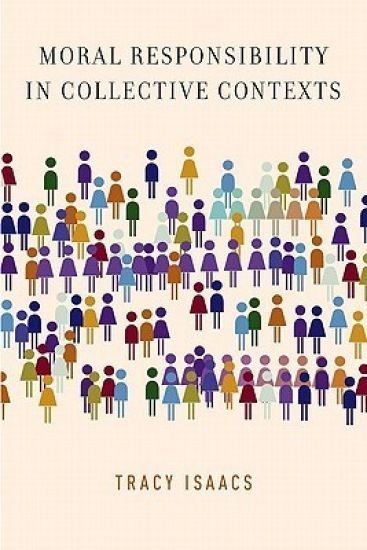
Moral Responsibility in Collective Contexts

Moral Responsibility in Collective Contexts

Tracy Isaacs

Oxford University Press Inc
2011
sidottu
Genocide, global warming, organizational negligence, and oppressive social practices are four examples of moral contexts in which the interplay between individuals and collectives complicate how we are to understand moral responsibility. Moral Responsibility in Collective Contexts is a philosophical investigation of the complex moral landscape we find in collective situations such as these. Tracy Isaacs argues that an accurate understanding of moral responsibility in collective contexts requires attention to responsibility at the individual and collective levels. Part One establishes the normative significance of collective responsibility. Isaacs argues that collective responsibility is indispensible to providing a morally adequate account of collective actions such as genocide, and that without it even individual responsibility in genocide would not make sense. Isaacs explains the concepts of collective intention and collective intentional action, provides accounts of collective moral responsibility and collective guilt, and defends collective responsibility against objections, including the objection that collective responsibility holds some responsible for the actions of others. Part Two focuses on individual responsibility in collective contexts. Isaacs claims that individuals are not morally responsible for collective actions as such, but they can be responsible in collective actions for the parts they play. She argues that the concept of collective obligation can help to address large scale global challenges such as global warming, environmental degradation, and widespread poverty and malnutrition. Finally, Isaacs discusses cases of widespread ignorance and participation in wrongful social practice, whether it constitutes an excuse, and how to effect social change in those conditions.
How Women Represent Women

How Women Represent Women

Tracy L. Osborn

Oxford University Press Inc
2012
sidottu
Though the number of women elected to the U.S. state legislatures has grown substantially in the last forty years, researchers still struggle to connect women's presence in the legislature to public policy outcomes that affect women. One reason for this struggle is that we lack a complete understanding of how political parties modify the relationship between women legislators' interests in representing women and the creation of public policies affecting women. In How Women Represent Women: Political Parties, Gender and Representation in the State Legislatures, Tracy L. Osborn examines the two avenues through which political parties fundamentally affect the ways in which partisan women legislators pursue women's issues policies. She argues that political parties structure representation in two ways. First, women's party identities shape the types of policy alternatives they offer to solve women's policy problems. Second, parties organize the legislative process by holding majority control, to varying degrees, over agenda setting and policy creation, promoting some women legislators' policy proposals over others. Osborn tests these two avenues of influence by comparing partisan women's legislative behavior toward the creation of women's issues policies across different party environments in the U.S. state legislatures. She uses original election, sponsorship, and roll call data in nearly all ninety-nine state legislative chambers in 1999-2000. She concludes that Republican and Democratic women offer different solutions to women's policy problems based on their party identities. Depending on which party controls the legislative process and how strongly they do so, this party control promotes one set of partisan policy alternatives over the other. Thus, political parties determine which women's issues policies become law. Ultimately, this book demonstrates how essential parties are to understanding how women elected to public office translate their interest in women's issues into substantive public policy.
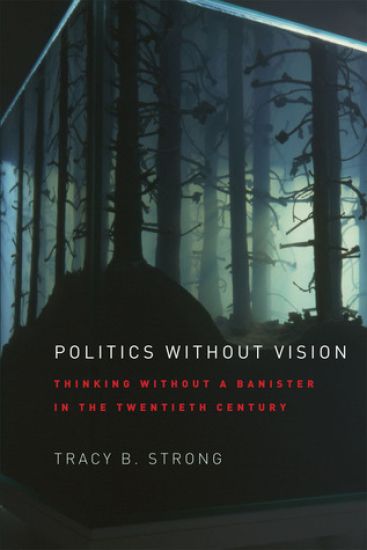
Politics without Vision

Politics without Vision

Tracy B. Strong

University of Chicago Press
2013
nidottu
From Plato through the nineteenth century, the West could draw on comprehensive political visions to guide government and society. Now, for the first time in more than two thousand years, Tracy B. Strong contends, we have lost our foundational supports. In the words of Hannah Arendt, the state of political thought in the twentieth and twenty-first centuries has left us effectively "thinking without a banister." Politics without Vision takes up the thought of seven influential thinkers, each of whom attempted to construct a political solution to this problem. Nietzsche, Weber, Freud, Lenin, Schmitt, Heidegger, and Arendt. None of these theorists were liberals nor, excepting possibly Arendt, were they democrats - and some might even be said to have served as handmaidens to totalitarianism. And all to a greater or lesser extent shared the common conviction that the practices of liberalism are inadequate to the demands and stresses of the present time. In examining their thought, Strong acknowledges the political evil that some of their ideas served to foster but argues that these were not the only paths their explorations could have taken. By uncovering the turning points in their thought - and the paths not taken - Strong strives to develop a political theory that can avoid, and perhaps help explain, the mistakes of the past while furthering the democratic impulse.
School, Society, and State

School, Society, and State

Tracy L. Steffes

University of Chicago Press
2017
nidottu
"Democracy has to be born anew every generation, and education is its midwife," wrote John Dewey in his classic work The School and Society. In School, Society, and State, Tracy Steffes places that idea at the center of her exploration of the connections between public school reform in the early twentieth century and American political development from 1890 to 1940. American public schooling, Steffes shows, was not merely another reform project of the Progressive Era, but a central one. She addresses why Americans invested in public education and explains how an array of reformers subtly transformed schooling into a tool of social governance to address the consequences of industrialization and urbanization. By extending the reach of schools, broadening their mandate, and expanding their authority over the well-being of children, the state assumed a defining role in the education and in the lives of American families. In School, Society, and State, Steffes returns the state to the study of the history of education and brings the schools back into our discussion of state power during a pivotal moment in American political development.
Learning One's Native Tongue

Learning One's Native Tongue

Tracy B Strong

University of Chicago Press
2019
sidottu
Citizenship is much more than the right to vote. It is a collection of political capacities constantly up for debate. From Socrates to contemporary American politics, the question of what it means to be an authentic citizen is an inherently political one. With Learning One's Native Tongue, Tracy B. Strong explores the development of the concept of American citizenship and what it means to belong to this country, starting with the Puritans in the seventeenth century and continuing to the present day. He examines the conflicts over the meaning of citizenship means in the writings and speeches of prominent thinkers and leaders ranging from John Winthrop and Roger Williams to Thomas Jefferson, Nathaniel Hawthorne, Abraham Lincoln, Frederick Douglass, and Franklin Roosevelt, among many others who have participated in these important cultural and political debates. The criteria that define what being a citizen entails change over time and in response to historical developments, and they are thus also often the source of controversy and conflict, as with voting rights for women and African Americans. Strong looks closely at these conflicts and the ensuing changes in the conception of citizenship, paying attention to what difference each change makes and what each particular conception entails socially and politically.
Learning One's Native Tongue

Learning One's Native Tongue

Tracy B Strong

University of Chicago Press
2019
pokkari
Citizenship is much more than the right to vote. It is a collection of political capacities constantly up for debate. From Socrates to contemporary American politics, the question of what it means to be an authentic citizen is an inherently political one. With Learning One's Native Tongue, Tracy B. Strong explores the development of the concept of American citizenship and what it means to belong to this country, starting with the Puritans in the seventeenth century and continuing to the present day. He examines the conflicts over the meaning of citizenship means in the writings and speeches of prominent thinkers and leaders ranging from John Winthrop and Roger Williams to Thomas Jefferson, Nathaniel Hawthorne, Abraham Lincoln, Frederick Douglass, and Franklin Roosevelt, among many others who have participated in these important cultural and political debates. The criteria that define what being a citizen entails change over time and in response to historical developments, and they are thus also often the source of controversy and conflict, as with voting rights for women and African Americans. Strong looks closely at these conflicts and the ensuing changes in the conception of citizenship, paying attention to what difference each change makes and what each particular conception entails socially and politically.
School, Society, and State

School, Society, and State

Tracy L. Steffes

University of Chicago Press
2012
sidottu
"Democracy has to be born anew every generation, and education is its midwife," wrote John Dewey in his classic work "The School and Society". In "School, Society, and State", Tracy L. Steffes places that idea at the center of her exploration of the connections between public school reform in the early twentieth century and American political development from 1890 to 1940. American public schooling, Steffes shows, was not merely another reform project of the Progressive Era, but a central one. She addresses why Americans invested in public education and explains how an array of reformers subtly transformed schooling into a tool of social governance to address the consequences of industrialization and urbanization. By extending the reach of schools, broadening their mandate, and expanding their authority over the well-being of children, the state assumed a defining role in the education - and in the lives - of American families. In "School, Society, and State", Steffes returns the state to the study of the history of education and brings the schools back into our discussion of state power during a pivotal moment in American political development.
Politics without Vision

Politics without Vision

Tracy B. Strong

University of Chicago Press
2012
sidottu
From Plato through the nineteenth century, the West could draw on comprehensive political visions to guide government and society. Now, for the first time in more than two thousand years, Tracy B. Strong contends, we have lost our foundational supports. In the words of Hannah Arendt, the state of political thought in the twentieth and twenty-first centuries has left us effectively "thinking without a banister." "Politics without Vision" takes up the work of seven influential thinkers, each of whom attempted to construct a political solution to this problem: Nietzsche, Weber, Freud, Lenin, Schmitt, Heidegger, and Arendt. None of these theorists were liberals nor, excepting possibly Arendt, were they democrats-and some might even be said to have served as handmaidens to totalitarianism. And all to a greater or lesser extent shared the common conviction that the institutions and practices of liberalism are inadequate to the demands and stresses of the present time. In examining their thought, Strong acknowledges the political evil that some of their ideas served to foster but argues that these were not necessarily the only paths their explorations could have taken. By uncovering the turning points in their thought - and the paths not taken - Strong strives to develop a political theory that can avoid, and perhaps help explain, the mistakes of the past while furthering the democratic impulse. Confronting the widespread belief that political thought is on the decline, Strong puts forth a brilliant and provocative counterargument that in fact it has endured - without the benefit of outside support. A compelling rendering of contemporary political theory, "Politics without Vision" is sure to provoke discussion among scholars in many fields.
To Live Peaceably Together

To Live Peaceably Together

Tracy Elaine K'Meyer

THE UNIVERSITY OF CHICAGO PRESS
2022
sidottu
A groundbreaking look at how a predominantly white faith-based group reset the terms of the fight to integrate US cities. The bitterly tangled webs of race and housing in the postwar United States hardly suffer from a lack of scholarly attention. But Tracy K'Meyer's To Live Peaceably Together delivers something truly new to the field: a lively examination of a predominantly white faith-based group-the Quaker-aligned American Friends Service Committee (AFSC)-that took a unique and ultimately influential approach to cultivating wider acceptance of residential integration. Built upon detailed stories of AFSC activists and the obstacles they encountered in their work in Chicago, Philadelphia, and Richmond, California, To Live Peaceably Together is an engaging and timely account of how the organization allied itself to a cause that demanded constant learning, reassessment, and self-critique. K'Meyer details the spiritual and humanist motivations behind the AFSC, its members' shifting strategies as they came to better understand structural inequality, and how those strategies were eventually adopted by a variety of other groups. Her fine-grained investigation of the cultural ramifications of housing struggles provides a fresh look at the last seventy years of racial activism.
PORTAL

PORTAL

Tracy Fuad

THE UNIVERSITY OF CHICAGO PRESS
2024
nidottu
A poetry collection exploring inheritance and reproduction through the lenses of parenthood, etymology, postcoloniality, and climate anxiety. Tracy Fuad’s second collection of poems, PORTAL, probes the fraught experience of bringing a new life into a world that is both lush and filled with gloom. A baby is born in a brutalist building; the planet shrinks under the new logic of contagion; roses washed up from a shipwreck centuries ago are blooming up and down the cape. PORTAL documents a life that is mediated, even at its most intimate moments, by flattening interfaces of technology and in which language—and even intelligence—is no longer produced only by humans. The voices here are stalked by eco-grief and loneliness, but they also brim with song and ecstasy, reveling in the strangeness of contemporary life while grieving losses that cannot be restored. Through Fuad’s frank, honest poetry, PORTAL vibrates with pleasure and dread. Peeling back the surfaces of words to reveal their etymologies, Fuad embraces playfulness through her formal range, engaging styles from the tersely lineated to the essayistic as she intertwines topics of replication, reproduction, technology, language, history, and biology.
Structuring Inequality

Structuring Inequality

Tracy L. Steffes

THE UNIVERSITY OF CHICAGO PRESS
2024
sidottu
How inequality was forged, fought over, and forgotten through public policy in metropolitan Chicago. As in many American metropolitan areas, inequality in Chicagoland is visible in its neighborhoods. These inequalities are not inevitable, however. They have been constructed and deepened by public policies around housing, schooling, taxation, and local governance, including hidden state government policies. In Structuring Inequality, historian Tracy L. Steffes shows how metropolitan inequality in Chicagoland was structured, contested, and naturalized over time even as reformers tried to change it through school desegregation, affordable housing, and property tax reform. While these efforts had modest successes in the city and the suburbs, reformers faced significant resistance and counter-mobilization from affluent suburbanites, real estate developers, and other defenders of the status quo who defended inequality and reshaped the policy conversation about it. Grounded in comprehensive archival research and policy analysis, Structuring Inequality examines the history of Chicagoland’s established systems of inequality and provides perspective on the inequality we live with today.
Structuring Inequality

Structuring Inequality

Tracy L. Steffes

THE UNIVERSITY OF CHICAGO PRESS
2024
nidottu
How inequality was forged, fought over, and forgotten through public policy in metropolitan Chicago. As in many American metropolitan areas, inequality in Chicagoland is visible in its neighborhoods. These inequalities are not inevitable, however. They have been constructed and deepened by public policies around housing, schooling, taxation, and local governance, including hidden state government policies. In Structuring Inequality, historian Tracy L. Steffes shows how metropolitan inequality in Chicagoland was structured, contested, and naturalized over time even as reformers tried to change it through school desegregation, affordable housing, and property tax reform. While these efforts had modest successes in the city and the suburbs, reformers faced significant resistance and counter-mobilization from affluent suburbanites, real estate developers, and other defenders of the status quo who defended inequality and reshaped the policy conversation about it. Grounded in comprehensive archival research and policy analysis, Structuring Inequality examines the history of Chicagoland’s established systems of inequality and provides perspective on the inequality we live with today.
Unlikely Adventures of the Fearless Five

Unlikely Adventures of the Fearless Five

Tracy-Lee Shannon

Tellwell Talent
2023
pokkari
Every morning in the big old farmhouse, an excited group of chew toys awaits the arrival of their dog, Axel. Today, though, the routine is broken by an unusual change in routine. Axel has not come. This has never happened. It has been hours and the crew are quite out of sorts.His friends Duckdog, Pig, Lambie, Frog, and the blind Rastafarian rhino Rastus come to life in order to find their missing dog. What a motley crew they are, and with hearts of gold. The world outside has some serious life lessons to reveal What unfolds is a story of love, courage, friendship, and acceptance. This is a magical adventure of finding strength to persevere in the most unlikely and challenging of situations.Follow the adventures and challenges of our five little heroes as they learn some serious outside skills in their travels to find their friend, Axel.
Academy Stars Level 6 Workbook

Academy Stars Level 6 Workbook

Tracy Traynor

Macmillan Education
2017
nidottu
The Workbook provides lesson-by-lesson written practice of structural forms, core vocabulary, and reading and writing skills to reinforce the Pupil's Book content. Engaging, contextualised activities make language practice meaningful and purposeful, and specifically designed writing practice supports pupils of all levels in writing independently.
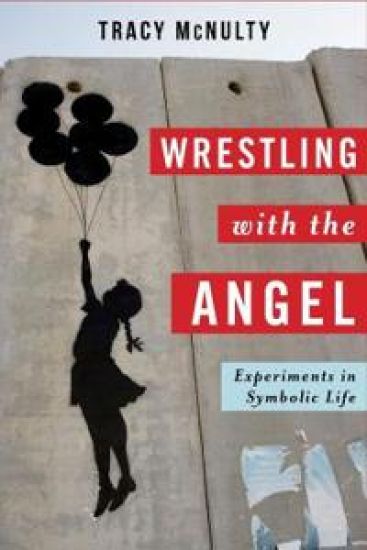
Wrestling with the Angel

Wrestling with the Angel

Tracy McNulty

Columbia University Press
2014
sidottu
Wrestling with the Angel is a meditation on contemporary political, legal, and social theory from a psychoanalytic perspective. It argues for the enabling function of formal and symbolic constraints in sustaining desire as a source of creativity, innovation, and social change. The book begins by calling for a richer understanding of the psychoanalytic concept of the symbolic and the resources it might offer for an examination of the social link and the political sphere. The symbolic is a crucial dimension of social coexistence but cannot be reduced to the social norms, rules, and practices with which it is so often collapsed. As a dimension of human life that is introduced by language-and thus inescapably "other" with respect to the laws of nature-the symbolic is an undeniable fact of human existence. Yet the same cannot be said of the forms and practices that represent and sustain it. In designating these laws, structures, and practices as "fictions," Jacques Lacan makes clear that the symbolic is a dimension of social life that has to be created and maintained and that can also be displaced, eradicated, or rendered dysfunctional. The symbolic fictions that structure and support the social tie are therefore historicizable, emerging at specific times and in particular contexts and losing their efficacy when circumstances change. They are also fragile and ephemeral, needing to be renewed and reinvented if they are not to become outmoded or ridiculous. Therefore the aim of this study is not to call for a return to traditional symbolic laws but to reflect on the relationship between the symbolic in its most elementary or structural form and the function of constraints and limits. McNulty analyzes examples of "experimental" (as opposed to "normative") articulations of the symbolic and their creative use of formal limits and constraints not as mere prohibitions or rules but as "enabling constraints" that favor the exercise of freedom. The first part examines practices that conceive of subjective freedom as enabled by the struggle with constraints or limits, from the transference that structures the "minimal social link" of psychoanalysis to constrained relationships between two or more people in the context of political and social movements. Examples discussed range from the spiritual practices and social legacies of Moses, Jesus, and Teresa of Avila to the political philosophy of Hannah Arendt and Jacques Ranciere. The second part is devoted to legal and political debates surrounding the function of the written law. It isolates the law's function as a symbolic limit or constraint as distinct from its content and representational character. The analysis draws on Mosaic law traditions, the political theology of Paul, and twentieth-century treatments of written law in the work of Carl Schmitt, Walter Benjamin, Sigmund Freud, Pierre Legendre, and Alain Badiou. In conclusion, the study considers the relationship between will and constraint in Kant's aesthetic philosophy and in the experimental literary works of the collective Oulipo.