Kirjojen hintavertailu. Mukana 12 595 353 kirjaa ja 12 kauppaa.

Kirjahaku

Etsi kirjoja tekijän nimen, kirjan nimen tai ISBN:n perusteella.

1000 tulosta hakusanalla Virginia Woolf

Recycling Virginia Woolf in Contemporary Art and Literature
Recycling Virginia Woolf in Contemporary Art and Literature exam>ines Woolf’s life and oeuvre from the perspective of recycling and pro>vides answers to essential questions such as: Why do artists and writers recycle Woolf’s texts and introduce them into new circuits of meaning? Why do they perpetuate her iconic fgure in literature, art and popular culture? What does this practice of recycling tell us about the endurance of her oeuvre on the current literary, artistic and cultural scene and what does it tell us about our current modes of production and consumption of art and literature?This volume offers theoretical defnitions of the concept of recycling applied to a multitude of specifc case studies. The reasons why Woolf’s work and authorial fgure lend themselves so well to the notion of recy>cling are manifold: frst, Woolf was a recycler herself and had a personal theory and practice of recycling; second, her work continues to be a prolifc compost that is used in various ways by contemporary writers and artists; fnally, since Woolf has left the original literary sphere to permeate popular culture, the limits of what has been recycled have ex>panded in unexpected ways. These essays explore today’s trends of fab>ricating new, original artefacts with Woolf’s work, which thus remains completely relevant to our contemporary needs and beliefs
Walking Virginia Woolf’s London

Walking Virginia Woolf’s London

Lisbeth Larsson

Springer International Publishing AG
2017
sidottu
This innovative volume employs theoretical tools from the field of literary geography to explore Virginia Woolf’s writing and the ways in which she constructs her human subjects. It follows the routes of characters from The Voyage, Jacob’s Room, Mrs. Dalloway, To the Lighthouse and more as they walk around London, demonstrating how Woolf constructs the characters in her stories in a very politically conscious way. As Larsson argues, none of Woolf’s characters are able to walk just anywhere, at any time in history, or at any time of the day. Time, place, gender, and class form the conditions of life that the characters must accept or challenge. Featuring an array of detailed maps, Walking Virginia Woolf’s London: An Investigation in Literary Geography brings a fascinating new perspective to Virginia Woolf’s work. It is essential reading for scholars of modernist literature or geocriticism.
Walking Virginia Woolf’s London

Walking Virginia Woolf’s London

Lisbeth Larsson

Springer International Publishing AG
2018
nidottu
This innovative volume employs theoretical tools from the field of literary geography to explore Virginia Woolf’s writing and the ways in which she constructs her human subjects. It follows the routes of characters from The Voyage, Jacob’s Room, Mrs. Dalloway, To the Lighthouse and more as they walk around London, demonstrating how Woolf constructs the characters in her stories in a very politically conscious way. As Larsson argues, none of Woolf’s characters are able to walk just anywhere, at any time in history, or at any time of the day. Time, place, gender, and class form the conditions of life that the characters must accept or challenge. Featuring an array of detailed maps, Walking Virginia Woolf’s London: An Investigation in Literary Geography brings a fascinating new perspective to Virginia Woolf’s work. It is essential reading for scholars of modernist literature or geocriticism.
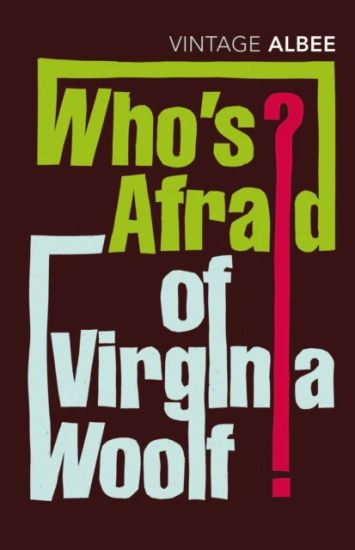
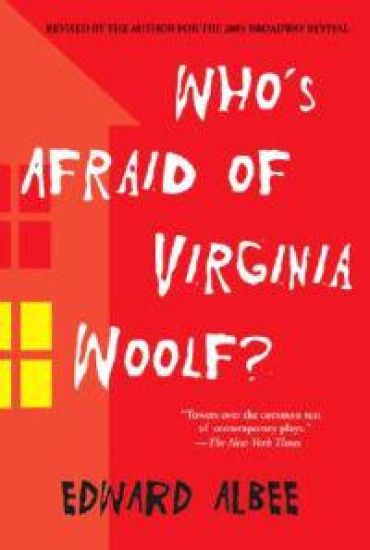
Who's Afraid Of Virginia Woolf
When middle-aged Martha and her husband George are joined by the younger Nick and Honey for late-night drinks after a party, the stage is set for a night of drunken recriminations and revelations. Battle-lines are drawn as Martha and George drag their guests into their own private hell of a marriage.
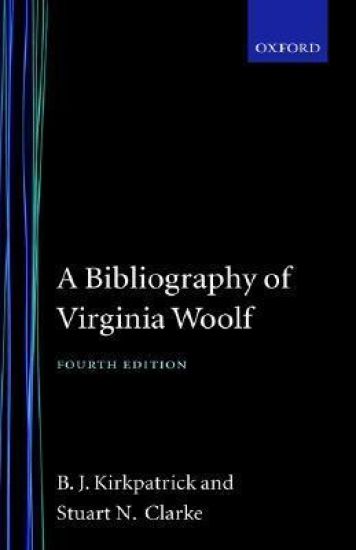
A Bibliography of Virginia Woolf

A Bibliography of Virginia Woolf

B.J. Kirkpatrick; Stuart N. Clarke

Clarendon Press
1997
sidottu
This acclaimed bibliography of Virginia Woolf, prepared with the late Leonard Woolf's agreement and co-operation, has been greatly expanded since its first publication in 1957 and the revised editions of 1967 and 1980. The need for a fourth revised edition is the result both of the explosion of new editions of existing books, and of the appearance of much previously unpublished material. Section A, Books and Pamphlets, has increased from 54 to 79 items; Section AA, Composite Editions, is a new section with nine items; Section C, Contributions to Periodicals, has increased by 78 items, including 56 unsigned reviews; Section D, Translations, has increased from 207 to 557 items; Section F, Letters, is new in that it now itemizes only uncollected letters. Studies of variant editions and texts are noted in the entry for the work concerned. The bibliography is an essential tool for all interested in Woolf.
Katherine Mansfield and Virginia Woolf

Katherine Mansfield and Virginia Woolf

Angela Smith

Clarendon Press
1999
sidottu
Long after the death of Katherine Mansfield (1888-1923), Virginia Woolf (1882-1941) described being haunted by Mansfield in dreams. Through detailed comparative readings of their fiction, letters, and diaries, Smith explores the intense affinity between the two writers. Their particular inflection of modernism is interpreted through their shared experience as `threshold people', familiar with the liminal, for each of them a zone of transition and habitation. Writing at a time when the First World War and changing attitudes to empire problematized boundaries and definitions of foreignness, we see how the fiction of both Mansfield and Woolf is characterized by moments of disorienting suspension in which the perceiving consciousness sees the familiar made strange, the domestic made menacing.
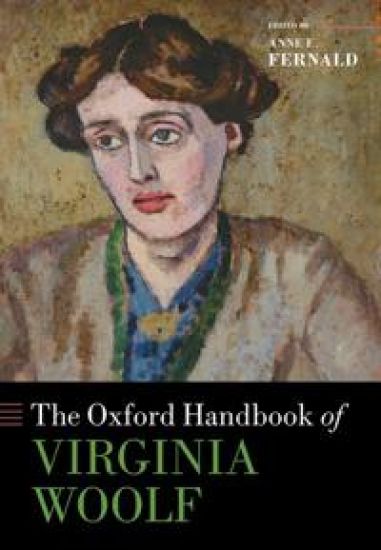
The Oxford Handbook of Virginia Woolf
With thirty-nine original chapters from internationally prominent scholars, The Oxford Handbook of Virginia Woolf is designed for scholars and graduate students. Feminist to the core, each chapter examines an aspect of Woolf's achievement and legacy. Each contribution offers an overview that is at once fresh and thoroughly grounded in prior scholarship. Six sections focus on Woolf's life, her texts, her experiments, her life as a professional, her contexts, and her afterlife. Opening chapters on Woolf's life address the powerful influences of family, friends, and home. The section on her works moves chronologically, emphasizing Woolf's practice of writing essays and reviews alongside her fiction. Chapters on Woolf's experimentalism pay special attention to the literariness of Woolf's writing, with opportunity to trace its distinctive watermark while 'Professions of Writing', invites readers to consider how Woolf worked in cultural fields including and extending beyond the Hogarth Press and the TLS. The 'Contexts' section moves beyond writing to depict her engagement with the natural world as well as the political, artistic, and popular culture of her time. The final section on afterlives demonstrates the many ways Woolf's reputation continues to grow, across the globe, and across media, in ideas and in artistic expression. Of particular note, chapters explore three distinct Woolfian traditions in fiction: the novel of manners, magical realism, and the feminist novel.
The Oxford Handbook of Virginia Woolf
With thirty-nine original chapters from internationally prominent scholars, The Oxford Handbook of Virginia Woolf is designed for scholars and graduate students. Feminist to the core, each chapter examines an aspect of Woolf's achievement and legacy. Each contribution offers an overview that is at once fresh and thoroughly grounded in prior scholarship. Six sections focus on Woolf's life, her texts, her experiments, her life as a professional, her contexts, and her afterlife. Opening chapters on Woolf's life address the powerful influences of family, friends, and home. The section on her works moves chronologically, emphasizing Woolf's practice of writing essays and reviews alongside her fiction. Chapters on Woolf's experimentalism pay special attention to the literariness of Woolf's writing, with opportunity to trace its distinctive watermark while 'Professions of Writing', invites readers to consider how Woolf worked in cultural fields including and extending beyond the Hogarth Press and the TLS. The 'Contexts' section moves beyond writing to depict her engagement with the natural world as well as the political, artistic, and popular culture of her time. The final section on afterlives demonstrates the many ways Woolf's reputation continues to grow, across the globe, and across media, in ideas and in artistic expression. Of particular note, chapters explore three distinct Woolfian traditions in fiction: the novel of manners, magical realism, and the feminist novel.
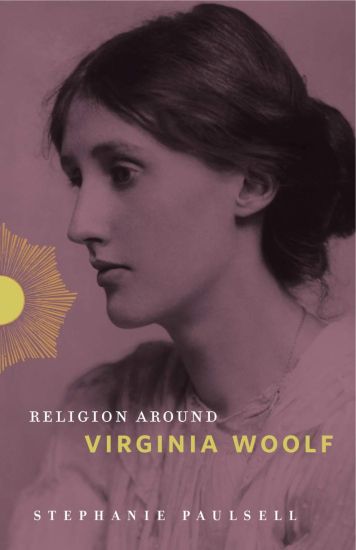
Religion Around Virginia Woolf

Religion Around Virginia Woolf

Stephanie Paulsell

Pennsylvania State University Press
2019
sidottu
Virginia Woolf was not a religious person in any traditional sense, yet she lived and worked in an environment rich with religious thought, imagination, and debate. From her agnostic parents to her evangelical grandparents, an aunt who was a Quaker theologian, and her friendship with T. S. Eliot, Woolf’s personal circle was filled with atheists, agnostics, religious scholars, and Christian converts. In this book, Stephanie Paulsell considers how the religious milieu that Woolf inhabited shaped her writing in unexpected and innovative ways.Beginning with the religious forms and ideas that Woolf encountered in her family, friendships, travels, and reading, Paulsell explores the religious contexts of Woolf’s life. She shows that Woolf engaged with religion in many ways, by studying, reading, talking and debating, following controversies, and thinking about the relationship between religion and her own work. Paulsell examines the ideas about God that hover around Woolf’s writings and in the minds of her characters. She also considers how Woolf, drawing from religious language and themes in her novels and in her reflections on the practices of reading and writing, created a literature that did, and continues to do, a particular kind of religious work.A thought-provoking contribution to the literature on Woolf and religion, this book highlights Woolf’s relevance to our post-secular age. In addition to fans of Woolf, scholars and general readers interested in religious and literary studies will especially enjoy Paulsell’s well-researched narrative.
Religion Around Virginia Woolf

Religion Around Virginia Woolf

Stephanie Paulsell

Pennsylvania State University Press
2019
pokkari
Virginia Woolf was not a religious person in any traditional sense, yet she lived and worked in an environment rich with religious thought, imagination, and debate. From her agnostic parents to her evangelical grandparents, an aunt who was a Quaker theologian, and her friendship with T. S. Eliot, Woolf’s personal circle was filled with atheists, agnostics, religious scholars, and Christian converts. In this book, Stephanie Paulsell considers how the religious milieu that Woolf inhabited shaped her writing in unexpected and innovative ways.Beginning with the religious forms and ideas that Woolf encountered in her family, friendships, travels, and reading, Paulsell explores the religious contexts of Woolf’s life. She shows that Woolf engaged with religion in many ways, by studying, reading, talking and debating, following controversies, and thinking about the relationship between religion and her own work. Paulsell examines the ideas about God that hover around Woolf’s writings and in the minds of her characters. She also considers how Woolf, drawing from religious language and themes in her novels and in her reflections on the practices of reading and writing, created a literature that did, and continues to do, a particular kind of religious work.A thought-provoking contribution to the literature on Woolf and religion, this book highlights Woolf’s relevance to our post-secular age. In addition to fans of Woolf, scholars and general readers interested in religious and literary studies will especially enjoy Paulsell’s well-researched narrative.
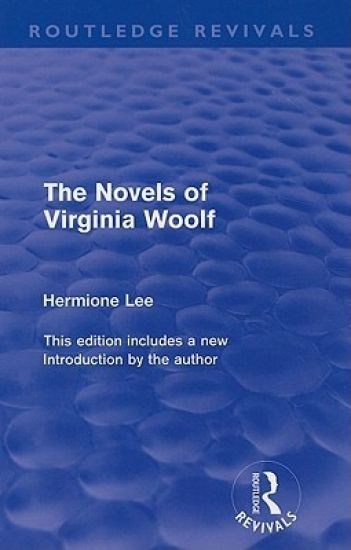
The Novels of Virginia Woolf (Routledge Revivals)
This is a reissue of a critical introduction to the novels of Virginia Woolf, first published in 1977. It makes close, illuminating readings of her nine novels, placing Woolf in her literary context and providing an accessible, clear and valuable guide for students starting out on a study of Woolf as a novelist, and for general readers seeking a fresh, helpful entry-point to the challenge of reading Woolf. Twenty years later, Hermione Lee wrote a prize-winning and acclaimed biography of Virginia Woolf: this critical study represented an early stage in this biographer-critic’s life-long interest and involvement with Woolf’s life and work.
The Novels of Virginia Woolf (Routledge Revivals)
This book, first published in 1977, is not about Bloomsbury, lesbianism, madness or suicide, but is a much-needed introduction to Virginia Woolf’s nine novels, written in the hope of turning attention back from the life to the fictional work. Its clarity and insights will make this book invaluable to a student embarking on a study of Virginia Woolf as a novelist, and to all those whose interest has been aroused by the continuing publication of biographical material. It will, moreover, increase the enjoyment, not only of enthusiasts, but also of those who have hitherto, found her a ‘difficult’ writer.
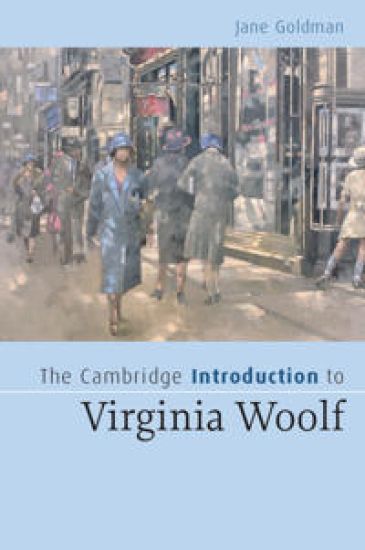
The Cambridge Introduction to Virginia Woolf

The Cambridge Introduction to Virginia Woolf

Jane Goldman

Cambridge University Press
2006
pokkari
For students of modern literature, the works of Virginia Woolf are essential reading. In her novels, short stories, essays, polemical pamphlets and in her private letters she explored, questioned and refashioned everything about modern life: cinema, sexuality, shopping, education, feminism, politics and war. Her elegant and startlingly original sentences became a model of modernist prose. This is a clear and informative introduction to Woolf's life, works, and cultural and critical contexts, explaining the importance of the Bloomsbury group in the development of her work. It covers the major works in detail, including To the Lighthouse, Mrs Dalloway, The Waves and the key short stories. As well as providing students with the essential information needed to study Woolf, Jane Goldman suggests further reading to allow students to find their way through the most important critical works. All students of Woolf will find this a useful and illuminating overview of the field.
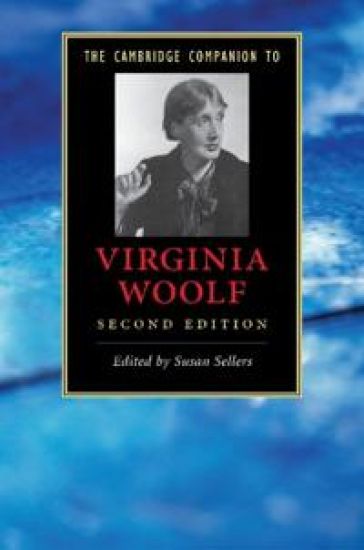
The Cambridge Companion to Virginia Woolf
Virginia Woolf's writing has generated passion and controversy for the best part of a century. Her novels - challenging, moving, and always deeply intelligent - remain as popular with readers as they are with students and academics. The highly successful Cambridge Companion has been fully revised to take account of new departures in scholarship since it first appeared. The second edition includes new chapters on race, nation and empire, sexuality, aesthetics, visual culture and the public sphere. The remaining chapters, as well as the guide to further reading, have all been fully updated. The Cambridge Companion to Virginia Woolf remains the first port of call for students new to Woolf's work, with its informative, readable style, chronology and authoritative information about secondary sources.a
The Feminist Aesthetics of Virginia Woolf

The Feminist Aesthetics of Virginia Woolf

Jane Goldman

Cambridge University Press
2001
pokkari
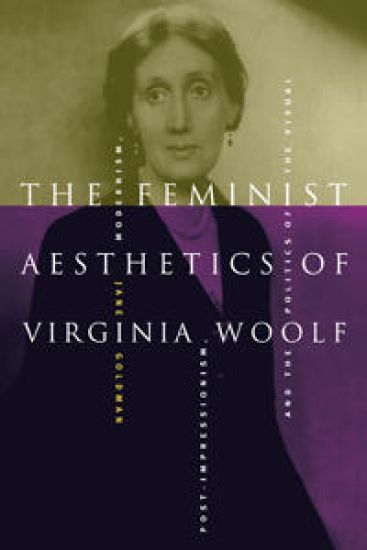
Jane Goldman offers a revisionary, feminist reading of Woolf’s work. Focusing on Woolf’s engagement with the artistic theories of her time, Goldman traces the feminist implication of her aesthetics by reclaiming for the everyday world of history and politics what seem to be private mystical moments. Goldman analyses Woolf’s fascination with the Post-impressionist exhibition of 1920 and the solar eclipse of 1927 by linking her response to a much wider literary and cultural context. She argues that Woolf evolves a kind of ‘feminist prismatics’ through which she is able to express and develop both the challenge and pessimism of her feminist vision. Lavishly illustrated with colour pictures, this book will appeal not only to scholars working on Woolf, but also to students of modernism, art history, and women’s studies.
The Cambridge Introduction to Virginia Woolf

The Cambridge Introduction to Virginia Woolf

Jane Goldman

Cambridge University Press
2006
sidottu
For students of modern literature, the works of Virginia Woolf are essential reading. In her novels, short stories, essays, polemical pamphlets and in her private letters she explored, questioned and refashioned everything about modern life: cinema, sexuality, shopping, education, feminism, politics and war. Her elegant and startlingly original sentences became a model of modernist prose. This is a clear and informative introduction to Woolf's life, works, and cultural and critical contexts, explaining the importance of the Bloomsbury group in the development of her work. It covers the major works in detail, including To the Lighthouse, Mrs Dalloway, The Waves and the key short stories. As well as providing students with the essential information needed to study Woolf, Jane Goldman suggests further reading to allow students to find their way through the most important critical works. All students of Woolf will find this a useful and illuminating overview of the field.
The Cambridge Companion to Virginia Woolf
Virginia Woolf's writing has generated passion and controversy for the best part of a century. Her novels - challenging, moving, and always deeply intelligent - remain as popular with readers as they are with students and academics. The highly successful Cambridge Companion has been fully revised to take account of new departures in scholarship since it first appeared. The second edition includes new chapters on race, nation and empire, sexuality, aesthetics, visual culture and the public sphere. The remaining chapters, as well as the guide to further reading, have all been fully updated. The Cambridge Companion to Virginia Woolf remains the first port of call for students new to Woolf's work, with its informative, readable style, chronology and authoritative information about secondary sources.a