Kirjahaku
Etsi kirjoja tekijän nimen, kirjan nimen tai ISBN:n perusteella.
1000 tulosta hakusanalla Walter Appleton Clark; Richard Harding Davis
Walter Frank Raphael Weldon (1860–1906) was a British evolutionary biologist and a founder of biometry, together with the highly influential journal Biometrika. Originally published in 1906, and written by fellow Biometrika founder Karl Pearson (1857–1936), this volume was created as a memorial for Weldon and his achievements. Although concise, the text is highly informative, containing numerous excerpts from Weldon's correspondence. A variety of illustrations are also incorporated, including material from Biometrika. This is a fascinating book that will be of value to anyone with an interest in Weldon's life and the development of biometrics.
Walter Pater (1839–94) was the foremost Victorian writer on art and on aesthetic experience. His ideas still shape modern assumptions about how art plays on our feelings and intellectual responses. This edition of Pater's complete works was published in 1900–1 in a limited edition of 775 copies. It comprises eight volumes with an additional volume of critical essays first published in The Guardian. The Renaissance, first published as Studies in the Renaissance (1873), is Pater's best known work. These essays on Italian art and the wider question of how the Renaissance may be defined had previously been published as articles, but Pater edited and polished them for this collection. They epitomise what Pater's literary executor called his 'literary grace' and the 'depth and seriousness of his studies'. This version includes the notorious conclusion, withdrawn from the second edition because of the negative attention its homoerotic theme attracted.
Walter Pater (1839–94) was the foremost Victorian writer on art and on aesthetic experience. He brought his extensive knowledge of the history of art to bear on the new problem of how to explain the very personal affective response to beauty, and raised this into a central concern of aesthetic and philosophical thought. His ideas still shape modern assumptions about how art plays on our feelings and intellectual responses. This edition of Pater's complete works was published in 1900–1 in a limited edition of 775 copies. It comprises eight volumes with an additional volume of critical essays first published in The Guardian. This is the first of two volumes of Marius the Epicurean (1885), Pater's only full-length fiction. A novel of ideas, combining history and philosophy with a fictional narrative set in the late Roman Empire, the work is a fascinating experiment in the boundaries of genre.
Walter Pater (1839–94) was the foremost Victorian writer on art and on aesthetic experience. He brought his extensive knowledge of the history of art to bear on the new problem of how to explain the very personal affective response to beauty, and raised this into a central concern of aesthetic and philosophical thought. His ideas still shape modern assumptions about how art plays on our feelings and intellectual responses. This edition of Pater's complete works was published in 1900–1 in a limited edition of 775 copies. It comprises eight volumes with an additional volume of critical essays first published in The Guardian. This is the second of two volumes of Marius the Epicurean (1885), Pater's only full-length fiction. A novel of ideas, combining history and philosophy with a fictional narrative set in the late Roman Empire, the work is a fascinating experiment in the boundaries of genre.
Walter Pater (1839–94) was the foremost Victorian writer on art and aesthetic experience. He brought his knowledge of the history of art to bear on the new problem of how to explain the very personal affective response to beauty, and raised this into a central concern of aesthetic and philosophical thought. His ideas still shape modern assumptions about how art plays on our feelings and intellectual responses. This edition of Pater's complete works was published in 1900–1 in a limited edition of 775 copies. It comprises eight volumes of his major works with an additional volume of critical essays. Following the publication of his novel in 1885, Pater continued his experiments with thinking through fiction in these short portraits of historical figures, published as Imaginary Portraits (1887) and Gaston de Latour (1888–9). The theme of talented, beautiful young men who die young reflects Pater's aesthetic outlook.

Walter Pater (1839–94) was the foremost Victorian writer on art and on aesthetic experience. He brought his extensive knowledge of the history of art to bear on the new problem of how to explain the very personal affective response to beauty, and raised this into a central concern of aesthetic and philosophical thought. His ideas still shape modern assumptions about how art plays on our feelings and intellectual responses. This edition of Pater's complete works was published in 1900–1 in a limited edition of 775 copies. This collection of essays, first published in 1889, was Pater's only literary-critical work until the posthumous publication of his reviews from The Guardian (the ninth volume in this edition). His well-known essay 'Style', written from the perspective of a critic and a novelist, opens the volume. The other essays include his readings of Thomas Browne, Wordsworth and Coleridge, Shakespeare and D. G. Rossetti.
Walter Pater (1839–94) was the foremost Victorian writer on art and on aesthetic experience. He brought his extensive knowledge of the history of art to bear on the new problem of how to explain the very personal affective response to beauty, and raised this into a central concern of aesthetic and philosophical thought. His ideas still shape modern assumptions about how art plays on our feelings and intellectual responses. This edition of Pater's complete works was published in 1900–1 in a limited edition of 775 copies. It comprises eight volumes with an additional volume of critical essays first published in The Guardian. These lectures on Plato were a product of Pater's teaching at the University of Oxford, but underwent several rounds of revision before being published in 1893. Pater analyses several aspects of Plato's thought, his relationship with Socrates, and his major works.
Walter Pater (1839–94) was the foremost Victorian writer on art and on aesthetic experience. He brought his extensive knowledge of the history of art to bear on the new problem of how to explain the very personal affective response to beauty, and raised this into a central concern of aesthetic and philosophical thought. His ideas still shape modern assumptions about how art plays on our feelings and intellectual responses. This edition of Pater's complete works was published in 1900–1 in a limited edition of 775 copies. It comprises eight volumes of his major works with an additional volume of critical essays first published in The Guardian. The collection of Pater's articles on ancient Greek thought, poetry, sculpture and architecture presented in this volume had previously been published in 1895 under the editorship of Pater's friend and literary executor C. L. Shadwell.
Walter Pater (1839–94) was the foremost Victorian writer on art and aesthetic experience. He brought his knowledge of the history of art to bear on the new problem of how to explain the very personal affective response to beauty, and raised this into a central concern of aesthetic and philosophical thought. His ideas still shape modern assumptions about our response to art. This edition of Pater's complete works was published in 1900–1 in a limited edition of 775 copies. It comprises eight volumes of his major works with an additional volume of essays first published in The Guardian. This volume reissues Pater's magazine articles along with his early essay 'Diaphanitè', a work that had been controversial for its homoerotic subtext. The collection was first published in 1895 as part of his literary executor C. L. Shadwell's aim to promote Pater's work. This version includes a chronology of Pater's writings.

By the close of the nineteenth century, the works of Sir Walter Scott (1771–1832) could be found on the bookshelves of every respectable Victorian. Public interest was such that, nearly sixty years after his death, there remained considerable demand for new insights into the man and his milieu. First published in 1890, his two-volume journal for the period 1825–32 immediately attracted press attention. One review observed that 'it shows us the man in prosperity and in adversity, now delightfully humorous … now saddened by the financial troubles which came upon his later years'. Notwithstanding his money worries, Scott's final decade was not without literary achievement. Volume 1 comprises entries from November 1825 to June 1827, soon after Scott had published Tales of the Crusaders (1825) and during which period he wrote his Letters of Malachi Malagrowther (1826).
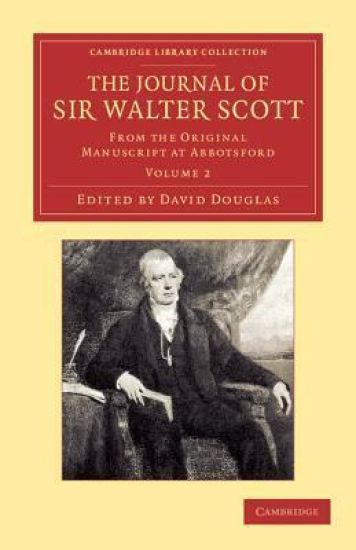
By the close of the nineteenth century, the works of Sir Walter Scott (1771–1832) could be found on the bookshelves of every respectable Victorian. Public interest was such that, nearly sixty years after his death, there remained considerable demand for new insights into the man and his milieu. First published in 1890, his two-volume journal for the period 1825–32 immediately attracted press attention. One review observed that 'it shows us the man in prosperity and in adversity, now delightfully humorous … now saddened by the financial troubles which came upon his later years'. Notwithstanding his money worries, Scott's final decade was not without literary achievement. Volume 2 comprises entries from July 1827 to April 1832, during which time Scott published The Fair Maid of Perth (1828) and Letters on Demonology and Witchcraft (1830).
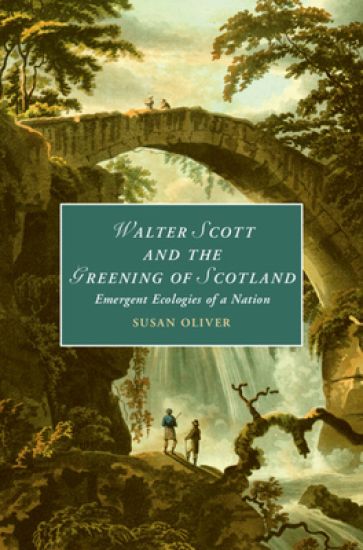
The work of Walter Scott, one of the most globally influential authors of the nineteenth century, provides us with a unique narrative of the changing ecologies of Scotland over several centuries and writes this narrative into the history of environmental literature. Farmed environments, mountains, moors and forests along with rivers, shorelines, islands and oceans are explored, situating Scott's writing about shared human and nonhuman environments in the context of the emerging Anthropocene. Susan Oliver attends to changes and losses acting in counterpoint to the narratives of 'improvement' that underpin modernization in land management. She investigates the imaginative ecologies of folklore and local culture. Each chapter establishes a dialogue between ecocritical theory and Scott as storyteller of social history. This is a book that shows how Scott challenged conventional assumptions about the permanency of stone and the evanescence of air; it begins with the land and ends by looking at the stars.
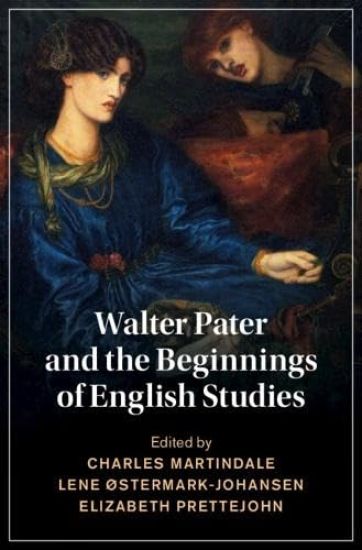
Walter Pater and the Beginnings of English Studies
Cambridge University Press
2023
sidottu
Walter Pater's significance for the institutionalization of English studies at British universities in the nineteenth century is often overlooked. Addressing the importance of his volume Appreciations (1889) in placing English literature in both a national and an international context, this book demonstrates the indebtedness of the English essay to the French tradition and brings together the classic, the Romantic, the English and the European. With essays on drama, prose, and poetry, from Shakespeare and Browne, to Lamb, Coleridge, Wordsworth and Pater's contemporaries Rossetti and Morris, Appreciations exemplifies ideals of aesthetic criticism formulated in Pater's first book, Studies in the History of the Renaissance (1873). Subjectivity pervades Pater's essays on the English authors, while bringing out their exceptional qualities in a manner reaching far into twentieth-century criticism. This title is part of the Flip it Open Programme and may also be available Open Access. Check our website Cambridge Core for details.

The work of Walter Scott, one of the most globally influential authors of the nineteenth century, provides us with a unique narrative of the changing ecologies of Scotland over several centuries and writes this narrative into the history of environmental literature. Farmed environments, mountains, moors and forests along with rivers, shorelines, islands and oceans are explored, situating Scott's writing about shared human and nonhuman environments in the context of the emerging Anthropocene. Susan Oliver attends to changes and losses acting in counterpoint to the narratives of 'improvement' that underpin modernization in land management. She investigates the imaginative ecologies of folklore and local culture. Each chapter establishes a dialogue between ecocritical theory and Scott as storyteller of social history. This is a book that shows how Scott challenged conventional assumptions about the permanency of stone and the evanescence of air; it begins with the land and ends by looking at the stars.

The Works And Life Of Walter Savage Landor V5 (1876)
Walter Savage Landor; John Forster
KESSINGER PUBLISHING, LLC
2009
pokkari

An Abridgment of Sir Walter Raleigh's History of the World
Walter Raleigh
Kessinger Pub
2009
pokkari