

Kirjahaku
Etsi kirjoja tekijän nimen, kirjan nimen tai ISBN:n perusteella.
1000 tulosta hakusanalla Wilson Muoha Maina


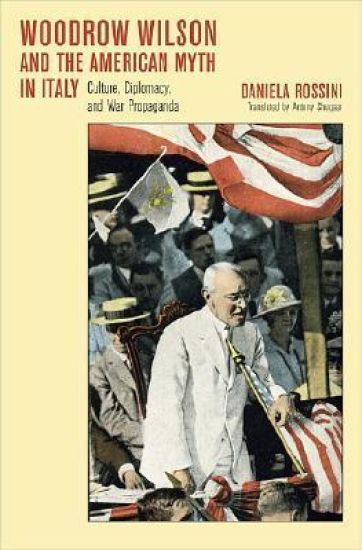
In 1918, Woodrow Wilson’s image as leader of the free world and the image of America as dispenser of democracy spread throughout Italy, filling an ideological void after the rout of Caporetto and diverting attention from a hapless ruling class. Wilson’s popularity depended not only on the modernity of his democratic message, but also on a massive propaganda campaign he conducted across Italy, using as conduits the American Red Cross, the YMCA, and the Committee on Public Information.American popularity, though, did not ensure mutual understanding. The Paris peace negotiations revealed the limits of policies on both sides, illustrated most clearly in Wilson’s disastrous direct appeal to the Italian public. The estranged countries pulled inward, the Americans headed toward isolationism, the Italians toward fascism.Rossini sets the Italian-American political confrontation within the full context of the two countries’ cultural perceptions of each other, different war experiences, and ideas about participatory democracy and peace. A stellar example of the new international history, this timely book highlights the impact of American ideology and sense of mission in the world.

Audubon was not the father of American ornithology. That honorific belongs to Alexander Wilson, whose encyclopedic American Ornithology established a distinctive approach that emphasized the observation of live birds. In the first full-length study to reproduce all of Wilson’s unpublished drawings for the nine-volume Ornithology, Edward Burtt and William Davis illustrate Wilson’s pioneering and, today, underappreciated achievement as the first ornithologist to describe the birds of the North American wilderness.Abandoning early ambitions to become a poet in the mold of his countryman Robert Burns, Wilson emigrated from Scotland to settle near Philadelphia, where the botanist William Bartram encouraged his proclivity for art and natural history. Wilson traveled 12,000 miles on foot, on horseback, in a rowboat, and by stage and ship, establishing a network of observers along the way. He wrote hundreds of accounts of indigenous birds, discovered many new species, and sketched the behavior and ecology of each species he encountered.Drawing on their expertise in both science and art, Burtt and Davis show how Wilson defied eighteenth-century conventions of biological illustration by striving for realistic depiction of birds in their native habitats. He drew them in poses meant to facilitate identification, making his work the model for modern field guides and an inspiration for Audubon, Spencer Fullerton Baird, and other naturalists who followed. On the bicentennial of his death, this beautifully illustrated volume is a fitting tribute to Alexander Wilson and his unique contributions to ornithology, ecology, and the study of animal behavior.

Pronged ants, horned humans, a landscape carved on a fruit pit--some of the displays in David Wilson's Museum of Jurassic Technology are hoaxes. But which ones? As he guides readers through an intellectual hall of mirrors, Lawrence Weschler revisits the 16th-century "wonder cabinets" that were the first museums and compels readers to examine the imaginative origins of both art and science. Illustrations.

This massive collection includes all important letters, speeches, interviews, press conferences, and public papers on Woodrow Wilson. The volumes make available as never before the materials essential to understanding Wilson's personality, his intellectual, religious, and political development, and his careers as educator, writer, orator, and statesman. The Papers not only reveal the private and public man, but also the era in which he lived, making the series additionally valuable to scholars in various fields of history between the 1870's and the 1920's.

This massive collection includes all important letters, speeches, interviews, press conferences, and public papers on Woodrow Wilson. The volumes make available as never before the materials essential to understanding Wilson's personality, his intellectual, religious, and political development, and his careers as educator, writer, orator, and statesman. The Papers not only reveal the private and public man, but also the era in which he lived, making the series additionally valuable to scholars in various fields of history between the 1870's and the 1920's.

This massive collection includes all important letters, speeches, interviews, press conferences, and public papers on Woodrow Wilson. The volumes make available as never before the materials essential to understanding Wilson's personality, his intellectual, religious, and political development, and his careers as educator, writer, orator, and statesman. The Papers not only reveal the private and public man, but also the era in which he lived, making the series additionally valuable to scholars in various fields of history between the 1870's and the 1920's.

This massive collection includes all important letters, speeches, interviews, press conferences, and public papers on Woodrow Wilson. The volumes make available as never before the materials essential to understanding Wilson's personality, his intellectual, religious, and political development, and his careers as educator, writer, orator, and statesman. The Papers not only reveal the private and public man, but also the era in which he lived, making the series additionally valuable to scholars in various fields of history between the 1870's and the 1920's.

This massive collection includes all important letters, speeches, interviews, press conferences, and public papers on Woodrow Wilson. The volumes make available as never before the materials essential to understanding Wilson's personality, his intellectual, religious, and political development, and his careers as educator, writer, orator, and statesman. The Papers not only reveal the private and public man, but also the era in which he lived, making the series additionally valuable to scholars in various fields of history between the 1870's and the 1920's.
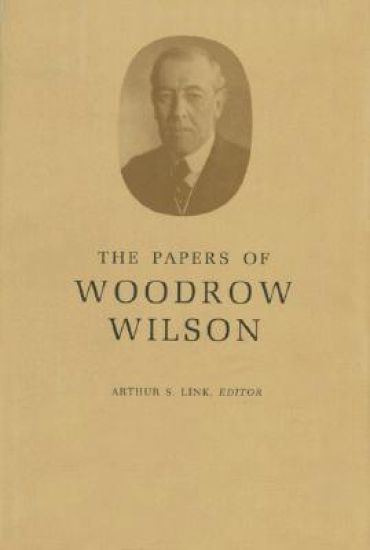
The fifth volume of The Papers of Woodrow Wilson, covering the period July 1885 through August 1888, records dramatic turning points in Woodrow Wilson's life, thought, and professional development. This volume chronicles the beginning of life together for Woodrow and Ellen Wilson. Fortunately for later generations, they were separated for extended periods between 1885 and 1888, and their letters in this volume, printed in their entirety, record in detail their growing mutual love, daily lives, the birth of their first two daughters, and the wider nexus of relationships that built the world in which they lived and moved. These letters are also rich in the social history of the late Victorian era. Volume 5 is replete with documentary evidence of what can only be called fantastic mutations and new directions in Wilson's intellectual development. The young scholar, not yet thirty years old, begins the studies of administration that would make him the pioneer in this field in the United States. He writes the first draft of what promises to be a monumental study of the development of democracy in the modern world. He sets hard to work on the book that would be published as The State, in 1889. Self-taught in German, he begins to discover the new world of German scholarship in political science and legal studies. Finally, new light is shed on Bryn Mawr College during the first three years of its history and particularly on the beginning of Wilson's career as a teacher. The documents in this fifth volume, most of them published here for the first time, are richly annotated and include Editorial Notes that help the scholar find his way through the maze of documentation of this period.
This massive collection includes all important letters, speeches, interviews, press conferences, and public papers on Woodrow Wilson. The volumes make available as never before the materials essential to understanding Wilson's personality, his intellectual, religious, and political development, and his careers as educator, writer, orator, and statesman. The Papers not only reveal the private and public man, but also the era in which he lived, making the series additionally valuable to scholars in various fields of history between the 1870's and the 1920's.
This massive collection includes all important letters, speeches, interviews, press conferences, and public papers on Woodrow Wilson. The volumes make available as never before the materials essential to understanding Wilson's personality, his intellectual, religious, and political development, and his careers as educator, writer, orator, and statesman. The Papers not only reveal the private and public man, but also the era in which he lived, making the series additionally valuable to scholars in various fields of history between the 1870's and the 1920's.
This massive collection includes all important letters, speeches, interviews, press conferences, and public papers on Woodrow Wilson. The volumes make available as never before the materials essential to understanding Wilson's personality, his intellectual, religious, and political development, and his careers as educator, writer, orator, and statesman. The Papers not only reveal the private and public man, but also the era in which he lived, making the series additionally valuable to scholars in various fields of history between the 1870's and the 1920's.
The Papers of Woodrow Wilson is the first comprehensive edition of the documentary record of the life and thought of the twenty-eighth President of the United States and the first full scale edition of the papers of any modern American president. The period from September 1894 through August 1896, covered in this ninth volume, reveals Wilson reaching the height of his powers as an undergraduate teacher, a public lecturer, and a writer. Wilson's lecture notes for his Princeton courses on public law and the history of law, printed here for the first time, demonstrate his skill as a teacher and his mastery of the subject. Other documents illustrate his increasing involvement in the life of the college through leadership in the faculty, numerous addresses to undergraduate organizations, supervision of college athletics, and frequent speeches on the alumni circuit. Wilson's outstanding ability as a public speaker was now nationally recognized, and his book contains many of his speeches. In lectures on political liberty, morality, and expediency, we are given his prescriptions for a society still in the throes of a national crisis of confidence in the wake of the Pullman railroad strikes of 1894. With his delivery of "The Course of American History" in May 1895, and its publication later that year, Wilson emerged as a general interpreter of American history. In an address at the University of Virginia in June 1895, we find Wilson's first self-identification as a Southerner. He also continued his series of lectures on administration at the Johns Hopkins University in 1895 and 1896. Other speeches and documents present his reaction to events on the national and international scene well into the presidential campaign of 1896. During this period, Wilson engaged in a creative collaboration with Howard Pyle, the distinguished American illustrator, while writing the biography, George Washington. Personal letters and other material augment our knowledge of several major events in Wilson's life during these years; the Wilsons planned and built a home of their own in Princeton; Wilson played an important role in a successful reform campaign against an entrenched political machine in Baltimore; he participated in New Jersey politics for the first time; and finally, he suffered a small stroke and made his first trip abroad-to England and Scotland.
The Papers of Woodrow Wilson is the first comprehensive edition of the documentary record of the life and thought of the twenty-eighth President of the United States and the first full-scale edition of the papers of any modern American president. The years 1898-1900 saw the nation's assumption of an active international role. Wilson's reactions to the Spanish-American War and to unfolding events on the national and international scenes are documented in newspaper reports of his speeches during this period. Reluctant to see the United States embark on an imperialistic course, Wilson defended ardently the anti-imperialists' right to dissent, but concluded that America must acquire Puerto Rico and the Philipines and train them in the arduous tasks of self-government. A crystallization of Wilson's political thought is seen in his notes for a new course on constitutional government and for his projected magnum opus, "The Philosophy of Politics." Equally significant are the materials that illuminate Wilson's rise to first rank among American historians: his articles, "State Rights (1850-1860)" and "The Reconstruction of the Southern States," display his powers of generalization and interpretation and his command of clear and unaffected, yet evocative, historical prose. During this period Wilson was also maturing as a leader among the faculty at Princeton -- this aspect of his life is seen in papers relating to a statement of standards for graduate work and in a search for a new Professor of Politics which, incidentally, led him into interesting correspondences with Theodore Roosevelt. "When a Man Comes to Himself," Wilson's report of his address to the Philadelphian Society of Princeton, and other papers document a significant change in his religious beliefs during these years. Other, more personal documents included in the volume are a pocket record of Wilson's bicycle trip around the British Isles in the summer of 1899 and letters to his wife during two lengthy separations.
The Papers of Woodrow Wilson is the first comprehensive edition of the documentary record of the life and thought of the twenty-eighth President of the United States and the first full-scale edition of the papers of any modern American president. Volume 12, covering the years 1900-1902, marks the end of Wilson's early career and the beginning of the next important stage in his life, the presidency of Princeton University. Its climax is a series of letters and documents revealing in startling, day-to-day details the eruption of a crisis in the university's presidential leadership during the springer of 1902. The unexpected denouement, President Patton's resignation and Wilson's election as thirteenth president, may be seen in extracts from the papers of Cyrus H. McCormick (a leader of the anti-Patton trustees) and other sources as well as Wilson's own papers. At the turn of the century, Wilson was deeply involved in a series of articles for Harper's Magazine, which he revised and published as A History of the American People in 1902. Correspondence with the publisher chronicles nearly every stage of his work, while his letters to scholars and to the illustrator, Howard Pyle, yield considerable evidence of his methods of work and attention to detail. While growing in maturity as an historian, Wilson for the first time was thinking broadly about American historical writing and what further work needed to be done. His growing eminence in the profession is reflected in invitations from Johns Hopkins University to succeed Herbert Baxter Adams as Professor of American and Institutional History, and from Albert Bushnell Hart to contribute to the "American Nation Series" being planned for Harper and Brothers. The documents in this volume also disclose a man come to national stature in affairs, affirming America's civilizing mission as a great power while ardently defending the right of anti-imperialists who disagreed with him to speak and be heard. They show a leader of the faculty and a teacher idolized by students, and they shed much light, as earlier volumes have done, upon life in Princeton and the Wilson household.