Trauma-Informed Yoga for Survivors of Sexual Assault provides a comprehensive overview of how to offer yoga to survivors of sexual assault in a safe, effective, evidence-based and healing way. Zahabiyah A. Yamasaki, programme director of Trauma Informed Programs at UCLA and founder of Transcending Sexual Trauma through Yoga, draws on the framework of trauma-informed care and trauma-informed yoga programme development and curriculum, while also weaving in personal narrative and inspiring survivor stories. This book explores practical considerations for survivors, as well as for yoga teachers, mental health professionals, educators, and other healing professionals who are interested in integrating trauma-informed yoga into the scope of their work and/or healing. This book expands the scope and framework for healing and fills a much-needed gap in service delivery for survivors. Yamasaki provides holistic, trauma-informed, body-based, compassionate and culturally affirming options for survivors as they navigate what is oftentimes a lifelong and nonlinear process of healing.
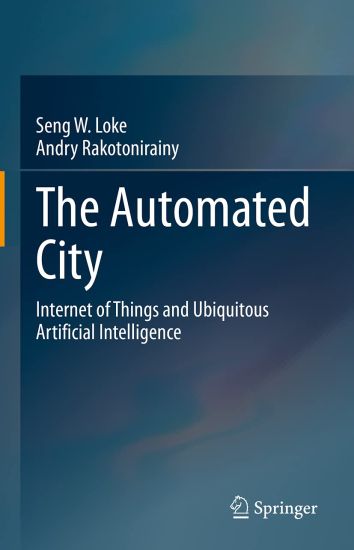
The book outlines the concept of the Automated City, in the context of smart city research and development. While there have been many other perspectives on the smart city such as the participatory city and the data-centric city, this book focuses on automation for the smart city based on current and emerging technologies such as the Internet of Things, Artificial Intelligence and Robotics. The book attempts to provide a balanced view, outlining the promises and potential of the Automated City as well as the perils and challenges of widespread automation in the city. The book discusses, at some depth, automated vehicles, urban robots and urban drones as emerging technologies that will automate many aspects of city life and operation, drawing on current work and research literature. The book also considers broader perspectives of the future city, in the context of automation in the smart city, including aspirational visions of cities, transportation,new business models, and socio-technological challenges, from urban edge computing, ethics of the Automated City and smart devices, to large scale cooperating autonomous systems in the city.
The book outlines the concept of the Automated City, in the context of smart city research and development. While there have been many other perspectives on the smart city such as the participatory city and the data-centric city, this book focuses on automation for the smart city based on current and emerging technologies such as the Internet of Things, Artificial Intelligence and Robotics. The book attempts to provide a balanced view, outlining the promises and potential of the Automated City as well as the perils and challenges of widespread automation in the city. The book discusses, at some depth, automated vehicles, urban robots and urban drones as emerging technologies that will automate many aspects of city life and operation, drawing on current work and research literature. The book also considers broader perspectives of the future city, in the context of automation in the smart city, including aspirational visions of cities, transportation,new business models, and socio-technological challenges, from urban edge computing, ethics of the Automated City and smart devices, to large scale cooperating autonomous systems in the city.