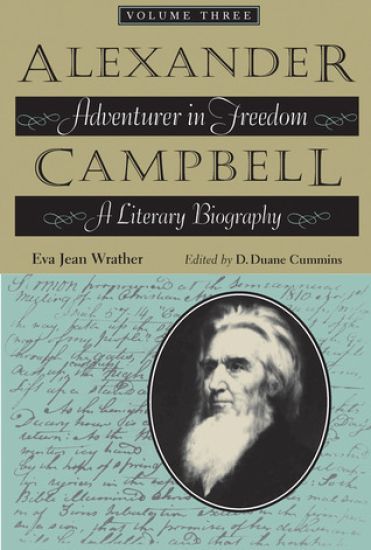
A biography of Christian Church (Disciples of Christ) founder Alexander Campbell that deals with the leader's early manhood, from his schooling to his turning from the Calvinistic doctrine of his youth and his arrival in America.
Eva Jean Wrather (1908-2001) spent most of her adult lifetime writing a biography of Alexander Campbell, founder of the Christian Church (Disciples of Christ), the only Protestant denomination to spring from American soil. Shortly before Wrather's death, the manuscript totaled 800,000 words or 3,254 pages. Historian D. Duane Cummins worked with her until her death and then afterwards to craft a three-volume work comprising Campbell's lifetime of theological doctrine and literary writing. Volume three of this work bears Cummins' organization and structure, along with some of his own research, preserving as much as possible Wrather's inimitable writing style.
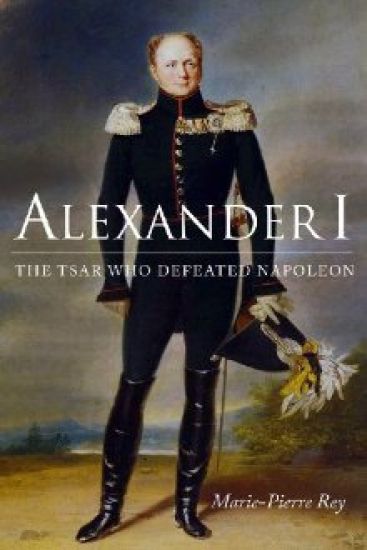
Alexander I was a ruler with high aspirations for the people of Russia. Cosseted as a young grand duke by Catherine the Great, he ascended to the throne in 1801 after the brutal assassination of his father. In this magisterial biography, Marie-Pierre Rey illuminates the complex forces that shaped Alexander's tumultuous reign and sheds brilliant new light on the handsome ruler known to his people as "the Sphinx." Despite an early and ambitious commitment to sweeping political reforms, Alexander saw his liberal aspirations overwhelmed by civil unrest in his own country and by costly confrontations with Napoleon, which culminated in the French invasion of Russia and the burning of Moscow in 1812. Eventually, Alexander turned back Napoleon's forces and entered Paris a victor two years later, but by then he had already grown weary of military glory. As the years passed, the tsar who defeated Napoleon would become increasingly preoccupied with his own spiritual salvation, an obsession that led him to pursue a rapprochement between the Orthodox and Roman churches. When in exile, Napoleon once remarked of his Russian rival: "He could go far. If I die here, he will be my true heir in Europe." It was not to be. Napoleon died on Saint Helena and Alexander succumbed to typhus four years later at the age of forty-eight. But in this richly nuanced portrait, Rey breathes new life into the tsar who stood at the center of the political chessboard of early nineteenth-century Europe, a key figure at the heart of diplomacy, war, and international intrigue during that region's most tumultuous years.
A significant political figure in twentieth-century Russia, Alexander Yakovlev was the intellectual force behind the processes of perestroika (reconstruction) and glasnost (openness) that liberated the Soviet Union and Eastern Europe from Communist rule between 1989 and 1991. Yet, until now, not a single full-scale biography has been devoted to him.In his study of the unsung hero, Richard Pipes seeks to rectify this lacuna and give Yakovlev his historical due. Yakovlev's life provides a unique instance of a leading figure in the Soviet government who evolved from a dedicated Communist and Stalinist into an equally ardent foe of everything the Leninist-Stalinist regime stood for. He quit government service in 1991 and lived until 2005, becoming toward the end of his life a classical western liberal who shared none of the traditional Russian values. Pipes's illuminating study consists of two parts: a biography of Yakovlev and Pipes's translation of two important articles by Yakovlev. It will appeal to specialists and students of Soviet and post-Soviet studies, government officials involved with foreign policy, and general readers interested in the history of Russia and the Soviet Union.
A significant political figure in twentieth-century Russia, Alexander Yakovlev was the intellectual force behind the processes of perestroika (reconstruction) and glasnost (openness) that liberated the Soviet Union and Eastern Europe from Communist rule between 1989 and 1991. Yet, until now, not a single full-scale biography has been devoted to him. In his study of the unsung hero, Richard Pipes seeks to rectify this lacuna and give Yakovlev his historical due. Yakovlev's life provides a unique instance of a leading figure in the Soviet government who evolved from a dedicated Communist and Stalinist into an equally ardent foe of everything the Leninist-Stalinist regime stood for. He quit government service in 1991 and lived until 2005, becoming toward the end of his life a classical western liberal who shared none of the traditional Russian values. Pipes's illuminating study consists of two parts: a biography of Yakovlev and Pipes's translation of two important articles by Yakovlev. It will appeal to specialists and students of Soviet and post-Soviet studies, government officials involved with foreign policy, and general readers interested in the history of Russia and the Soviet Union.
Alexander I was a ruler with high aspirations for the people of Russia. Cosseted as a young grand duke by Catherine the Great, he ascended to the throne in 1801 after the brutal assassination of his father. In this magisterial biography, Marie-Pierre Rey illuminates the complex forces that shaped Alexander's tumultuous reign and sheds brilliant new light on the handsome ruler known to his people as "the Sphinx." Despite an early and ambitious commitment to sweeping political reforms, Alexander saw his liberal aspirations overwhelmed by civil unrest in his own country and by costly confrontations with Napoleon, which culminated in the French invasion of Russia and the burning of Moscow in 1812. Eventually, Alexander turned back Napoleon's forces and entered Paris a victor two years later, but by then he had already grown weary of military glory. As the years passed, the tsar who defeated Napoleon would become increasingly preoccupied with his own spiritual salvation, an obsession that led him to pursue a rapprochement between the Orthodox and Roman churches. When in exile, Napoleon once remarked of his Russian rival: "He could go far. If I die here, he will be my true heir in Europe." It was not to be. Napoleon died on Saint Helena and Alexander succumbed to typhus four years later at the age of forty-eight. But in this richly nuanced portrait, Rey breathes new life into the tsar who stood at the center of the political chessboard of early nineteenth-century Europe, a key figure at the heart of diplomacy, war, and international intrigue during that region's most tumultuous years.
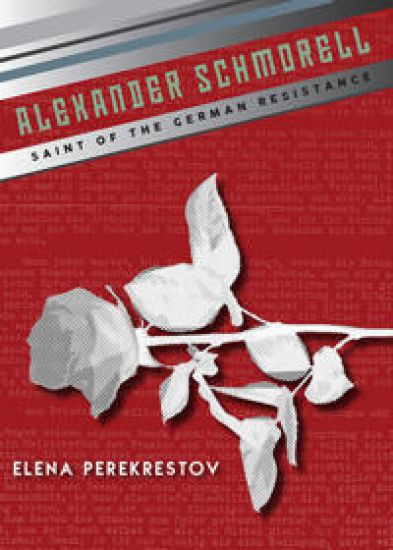
At the height of World War II, a small band of students in Munich, Germany, formed a clandestine organization called the White Rose, which exposed the Nazi regime's murderous atrocities and called for its overthrow. In its first anti-Nazi tract, the group wrote, "...Nothing is so unworthy of a civilized nation as allowing itself to be 'governed' without opposition by an irresponsible clique that has yielded to base instinct..." The students risked everything to struggle against a world that had lost its moorings. Early in 1943 key members of the group were discovered and executed. Among those put to death was Alexander Schmorell, a young man of Russian birth whose family came to Germany when he was a small boy. This biography eloquently recounts the journey of an energetic and talented young man who loved life but who, deeply inspired by his Orthodox Christian faith, was willing to sacrifice it as a testimony to his faith in God that had taught him to love beauty and freedom, both of which the Nazis sought to destroy. In 2012, the Russian Orthodox Church officially recognized him as a martyr and saint. The story of Alexander's life and death is made available to English readers here for the first time, vividly illustrated with black and white photographs.
Born of mixed Scottish/Native Indian blood in what is now Saskatchewan, Isbister emigrated to Britain after he found his ambitions thwarted by Hudson's Bay Company policies regarding native-born employees. There he became a respected educator, but more important to this study, he also became the most persistent critic of the Company, and of British and Canadian policies dealing with the inhabitants of Rupert's Land and the Northwest Territories.
The work of Alexander A. Potebnja, a leading Ukrainian linguist of the nineteenth century, has significantly influenced modern literary criticism, particularly Russian formalism and structuralism. Potebnja's theory, known as potebnjanstvo (Potebnjanism), flourished in the Russian Empire and in the Soviet Union during the 1920s. It attracted scores of adherents and gave rise to an influential literary journal and a formal critical school at Kharkiv. Yet despite his remarkable achievements in linguistics and literary theory, Potebnja's work was officially renounced in the Soviet Union in the 1930s, and in the West he remains virtually unknown.In his study, John Fizer carefully reconstructs Potebnja's theory of literature from the psycholinguistic formulations found in his works on language, mythology, and folklore. Elaborating Potebnja's concept of internal form, energeia, polysemy, and the semiosis of poetic discourse, Fizer develops the central tenets of Potebnja's theory with regard to their philosophical, psychological, and linguistic bases. Largely influenced by Kant and by Humboldt's philosophy of language, Potebnja conceived of language and the verbal arts as coterminous phenomena. He identified the internal form with the etymon of the word, which he considered the preeminent locus in the structure of poetic art. He insisted on the dynamic role of the Self in poetic creation and perception but, unlike many of his contemporaries, he believed that the diachronic depth of the signifiers was ethnic and had measureable limits. According to Potebnja, this depth (or internal form) reveals itself as a semantically multivalent image that induces self-knowledge and transforms the primary data of consciousness into syntagmatic wholes.A great deal of Potebnja's theory shares similarities with the work of Benedetto Croce, Leo Spitzer, and Charles S. Pierce. It anticipated modern literary criticism, and, as the author convincingly argues, retains existential and epistemological cogency even today. Fizer's volume offers the first thorough study of Potebnja's literary theory, and his insightful analysis restores Potebnja to his rightful place in the history of literary criticism.
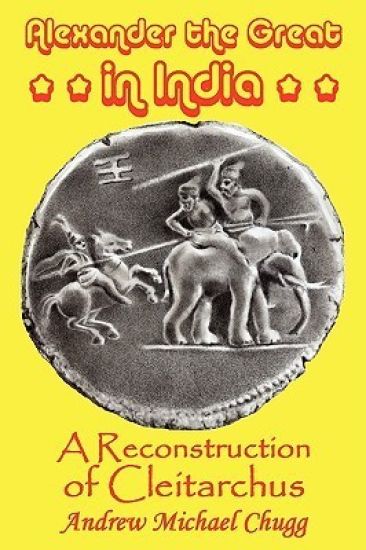
The most influential account of the career of Alexander the Great was penned by Cleitarchus the son of Deinon, a Greek writing in Alexandria in the decades after Alexander's death. Most of the surviving ancient texts on Alexander were more or less based upon his work, but every single copy of the original was discarded or destroyed in antiquity. To what extent might it be possible to reconstruct it from the secondary writings? This book argues that a considerable degree of reconstruction is feasible and demonstrates the point by presenting a full reconstruction of Cleitarchus' version of Alexander's campaigns in India, the first time that this has been done. For more details see also www.alexanderstomb.com.
Alexander's Lovers reveals the personality of Alexander the Great through the mirror of the lives of those with whom he pursued romantic relationships, including his friend Hephaistion, his queen Roxane, his mistress Barsine & Bagoas the Eunuch. Did you know that Alexander got the idea of adopting Persian dress from a book he read in his youth? Had you realised that Alexander's pursuit of divine honours was part of his emulation of Achilles, that Bagoas undertook a diplomatic mission or that Hephaistion's diplomacy kept Athens from joining a Spartan rebellion? Are you aware that Aetion's painting of Alexander's marriage depicted Hephaistion & Bagoas as well as Roxane and really depicted the King's passions? Which girl was betrothed to Alexander's son? Would it surprise you that Alexander's mourning for Hephaistion was conducted according to models from Homer and Euripides? If you would like to get to know Alexander on a more personal level, then you need to read this book. Second edition, revised & updated.
Join Alexander in his colourful quest to find the answer to the question, Do Babies wear pyjamas? The series explores, in a fabulously fun and engaging way, the notion of parent-child communication. Drawing on the writer and illustrator, Fransie Frandsen's experience as mother and art therapist, the books emphasise the importance of communication between parents and children. This box set comprises 4 titles: Do Grannies Have Green Fingers? Do Daddies Have Ants In Their Pants? Are Mummies Scared Of Monsters? Do Babies Wear Pyjamas?
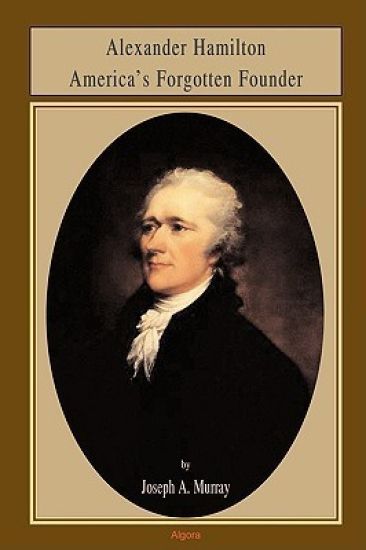
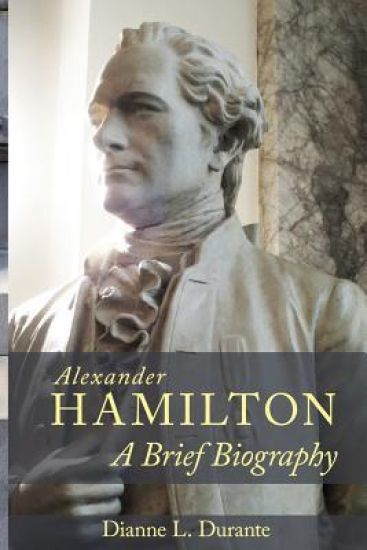
What were the important events of Hamilton's life? What were the ideas that drove him? This brief biography includes substantial quotes from Hamilton's writings, dozens of full-color images of Hamilton and his times, and a timeline setting Hamilton's life in the context of events in Europe and the United States. If you're a fan of *Hamilton: An American Musical, * this bio will give you more reasons to love the man and the musical. If you're a history geek or a fan of Hamilton, it will serve as a gateway to *Alexander Hamilton: A Friend to America, * a two-volume set with extensive excerpts from writings by Hamilton and his contemporaries.
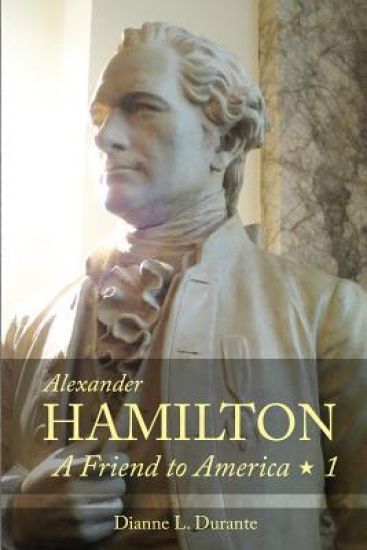
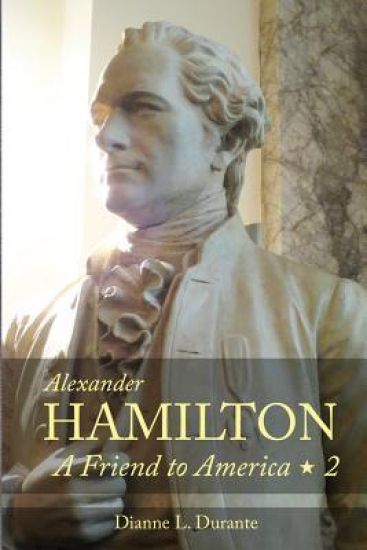
The two volumes of *Alexander Hamilton: A Friend to America* are unique in their emphasis on primary sources. Using writings by Hamilton, Washington, Burr, Eliza, Angelica, and others, they stitch together an image of Hamilton's life, his times, and the ideas that drove him. If you love *Hamilton: An American Musical* and want to know more about Hamilton the man, this is a perfect place to start If you already love Hamilton the man and want to spend more time with him and the other Founding Fathers, you'll find new material here, too. These essays originally appeared as a series of weekly blog posts on intriguing topics such as: * Alexander's "death wish" what's the evidence for it? * Alexander and Angelica: yes, no, maybe? * What made Hamilton's first political essay so attention-grabbing? * Do we know the recipe for Alexander and Eliza's wedding cake? * Was Hamilton a laissez-faire capitalist, a proponent of Big Government, or ...? Where did he draw the line between economics and politics? * Maria Reynolds: What the hell was he thinking? * What's the difference between history and art, and why do we need both? The order of the essays was inspired by the Hamilton musical. If you prefer to read them in chronological order, *Alexander Hamilton: A Brief Biography* (a stand-alone work) serves as a cross-reference. With full-color images.
The two volumes of *Alexander Hamilton: A Friend to America* are unique in their emphasis on primary sources. Using writings by Hamilton, Washington, Burr, Eliza, Angelica, and others, they stitch together an image of Hamilton's life, his times, and the ideas that drove him. If you love *Hamilton: An American Musical* and want to know more about Hamilton the man, this is a perfect place to start If you already love Hamilton the man and want to spend more time with him and the other Founding Fathers, you'll find new material here, too. These essays originally appeared as a series of weekly blog posts on intriguing topics such as: * Alexander's "death wish" what's the evidence for it? * Alexander and Angelica: yes, no, maybe? * What made Hamilton's first political essay so attention-grabbing? * Do we know the recipe for Alexander and Eliza's wedding cake? * Was Hamilton a laissez-faire capitalist, a proponent of Big Government, or ...? Where did he draw the line between economics and politics? * Maria Reynolds: What the hell was he thinking? * What's the difference between history and art, and why do we need both? The order of the essays was inspired by the Hamilton musical. If you prefer to read them in chronological order, *Alexander Hamilton: A Brief Biography* (a stand-alone work) serves as a cross-reference. With full-color images.